When adapting stove-top recipes for smart appliances, start by understanding how your device heats and responds—induction stoves heat quickly, while electric burners may retain residual heat. Adjust your cooking times and temperatures accordingly, and match cookware to your appliance’s requirements. Use your appliance’s features, like precise temperature control or preset modes, to fine-tune the process. If you want to master these adjustments, keep exploring how to get perfect results across different devices.
Key Takeaways
- Understand your smart appliance’s specific features and temperature controls for accurate recipe adjustments.
- Use compatible cookware, such as ferrous or induction-ready pots, to ensure proper heat transfer.
- Adjust cooking times and heat settings based on the appliance’s response and heating speed.
- Monitor food closely during initial attempts to fine-tune settings and prevent overcooking or burning.
- Practice and experiment to develop a reliable method for converting traditional stove-top recipes.
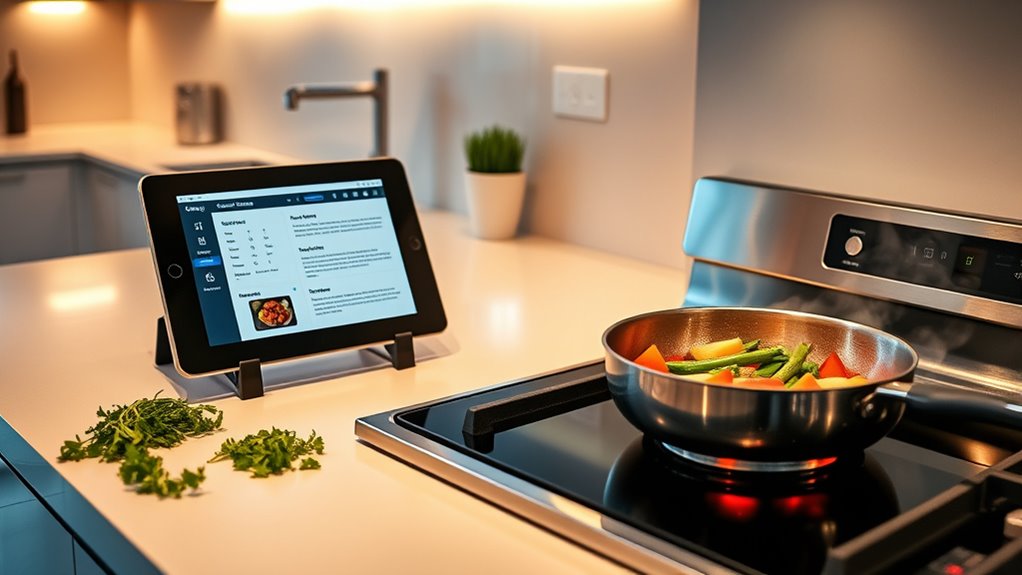
Cooking often requires adjusting recipes to serve different numbers of people or to match the ingredients you have on hand. When doing so, you’ll likely need to rethink how you approach your stove-top recipes, especially if you’re using smart appliances or unconventional cooktop alternatives. Not all appliances are created equal, and understanding appliance compatibility is key to successful recipe conversions.
Traditional recipes often assume a specific type of cooktop, like gas or electric coil burners. If you’re switching to an induction stove, for example, you’ll need to consider cooktop alternatives that require compatible cookware—ferrous pots and pans that respond to magnetic fields. Failing to match your cookware to your appliance can lead to uneven heating or even food burning, ruining your dish. Conversely, if you’re using a portable induction or electric griddle, your cooking times and heat settings might need adjustment since these appliances often heat differently than traditional stovetops.
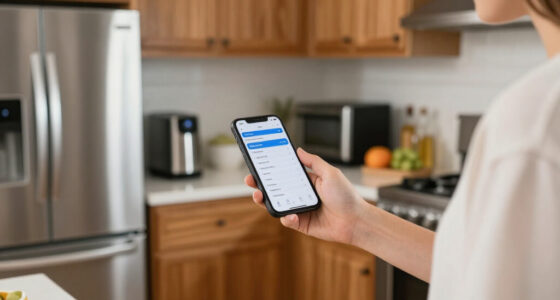
When converting recipes, start by understanding your appliance’s capabilities. Smart stoves often feature precise temperature controls and pre-set cooking modes, but these don’t always directly translate from traditional stovetops. For instance, a recipe calling for medium-high heat on a gas stove might require a different setting on an induction or smart electric cooktop, which often have numbers or descriptive modes like “simmer” or “sear.” Learning how your appliance responds to these settings is essential. Many smart appliances also come with app controls or touch interfaces, so familiarizing yourself with their functions can help you better adjust cook times and heat levels.
In terms of cooktop alternatives, there are many options beyond traditional burners. Portable induction pads, countertop electric burners, or even microwave convection ovens can serve as substitutes, but each has its own quirks. For example, induction cooktops heat very quickly and respond instantly to temperature changes, making it easier to fine-tune your cooking. Electric burners, on the other hand, tend to heat more slowly and hold residual heat longer. When using these alternatives, you might find that recipes need slight modifications—like lowering the heat or reducing cooking times—to prevent overcooking or burning.
Additionally, understanding the net worth of your appliances and how they affect your cooking efficiency can help inform your choices, especially when investing in new smart technology. Ultimately, the key to successful recipe conversion lies in understanding your appliance’s features and limits. Pay attention to how your cooktop alternatives heat and how your cookware interacts with these appliances. With some trial and error, you’ll be able to adapt your recipes confidently, ensuring delicious results regardless of the device you’re using. Properly matching your cookware to your appliance, and adjusting heat accordingly, allows you to maintain control over your dishes and achieve the best possible outcome.
induction compatible cookware set
As an affiliate, we earn on qualifying purchases.
As an affiliate, we earn on qualifying purchases.
Frequently Asked Questions
How Do I Adjust Cooking Times for Different Smart Appliances?
You should start by checking your smart appliance’s manual for recommended temperature adjustments, as they often vary from traditional stove-top settings. Then, monitor your dish closely to account for timing variations—smart appliances might cook faster or slower. Adjust cooking times incrementally, tasting and checking for doneness. Keep notes of what works best, so you can fine-tune future recipes, ensuring perfect results every time.
Can I Convert All Traditional Recipes for Smart Appliances?
Imagine your favorite dish transforming seamlessly in your smart appliance, but not all traditional recipes are a perfect fit. You can’t convert every recipe without adjustments because of appliance compatibility and necessary recipe substitution. Some dishes need different temperatures or cooking methods. Always check your appliance’s features and experiment carefully, keeping in mind that certain recipes may require modifications to turn out just as delicious.
What Are the Best Settings for Slow Cooking on Smart Devices?
For slow cooking on your smart device, start by selecting the appropriate cooking mode, like ‘Slow Cook’ or ‘Simmer.’ Make sure your device is properly calibrated for accurate temperature control. Adjust the cooking time based on your recipe, and check the settings regularly. Proper calibration helps maintain consistent heat, while selecting the right mode ensures your dish cooks evenly. Trust your smart device’s features for perfect slow-cooked results every time.
How Do I Handle Recipes Requiring Precise Temperature Control?
Did you know that 85% of smart appliance users report improved cooking precision? To handle recipes needing precise temperature control, focus on temperature accuracy by regularly calibrating your sensors. Use the appliance’s calibration feature to guarantee consistent readings, and monitor the temperature display closely. This way, you maintain ideal cooking conditions, preventing over- or undercooking, and achieving perfect results every time.
Are There Specific Safety Tips for Using Smart Appliances in Recipes?
When using smart appliances, prioritize safety by regularly performing smart appliance maintenance and checking safety feature integration. Always read the user manual to understand safety functions, such as automatic shut-off or child locks. Keep the appliance clean, avoid overloading, and ensure proper ventilation. Stay attentive during operation, and never bypass safety features. This proactive approach helps prevent accidents and guarantees your smart appliance functions safely and efficiently.
smart electric cooktop with precise temperature control
As an affiliate, we earn on qualifying purchases.
As an affiliate, we earn on qualifying purchases.
Conclusion
Adapting stove-top recipes for smart appliances might seem tricky at first, but with a little practice, you’ll master it in no time. Remember, the key is understanding your device’s features and adjusting your techniques accordingly. So, why not embrace the challenge and explore new culinary possibilities? After all, isn’t cooking about innovation and discovery? With your newfound skills, you’ll turn everyday recipes into smart kitchen triumphs—making mealtime easier and more exciting than ever before.
As an affiliate, we earn on qualifying purchases.
electric griddle with adjustable heat
As an affiliate, we earn on qualifying purchases.
As an affiliate, we earn on qualifying purchases.