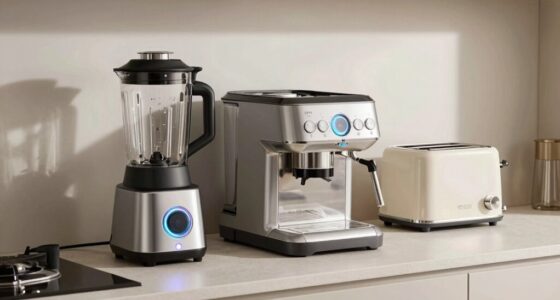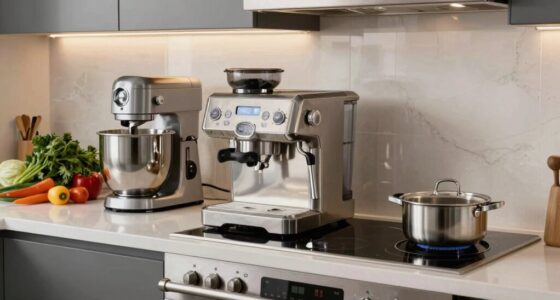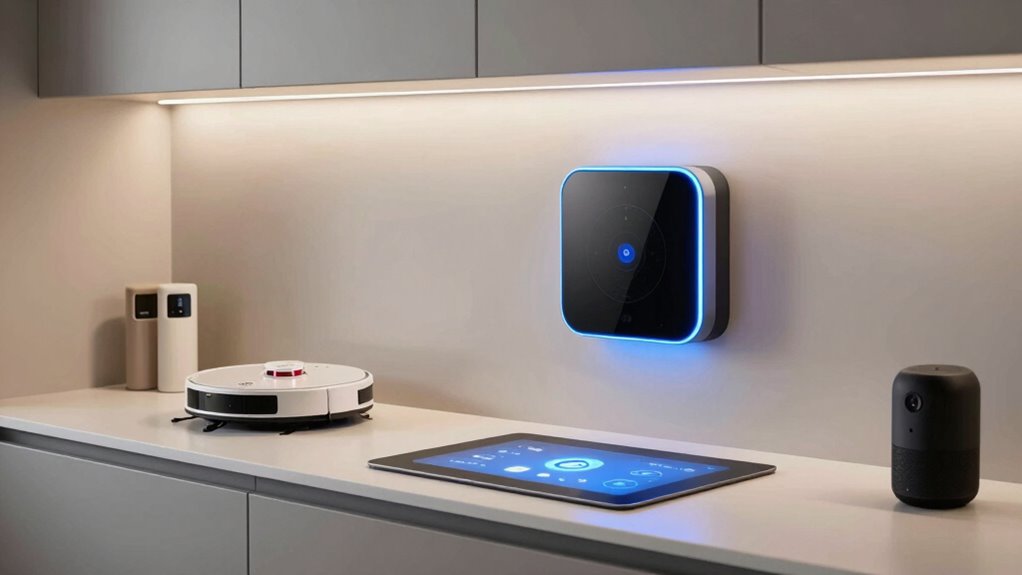
Smart home tech controls and automates your entire house, focusing on security, energy efficiency, and convenience, with devices like security cameras and smart thermostats. In contrast, smart kitchen tech is specialized to improve cooking, food storage, and meal prep with appliances like smart refrigerators and ovens. While home tech offers a broad, integrated environment, kitchen tech targets specific activities. To discover more about how these technologies differ and complement each other, keep exploring the details.

Get kitchen gear delivered free — and shop member deals
- Fast, free delivery on millions of items
- Access to Prime Big Deal Days deals on October 6–7
- Prime Video, Amazon Music and more included
Key Takeaways
- Smart home tech covers security, lighting, climate, and automation for the entire house, while smart kitchen tech focuses on cooking and food management devices.
- Home tech aims for comprehensive integration and security; kitchen tech emphasizes efficiency in meal prep and food storage.
- Smart home devices control multiple household functions remotely and automate routines across the entire house.
- Smart kitchen appliances are specialized for tasks like cooking, cooling, and food inventory, often integrating with home systems.
- The primary goal of home tech is security and automation; kitchen tech focuses on enhancing food-related activities for convenience.
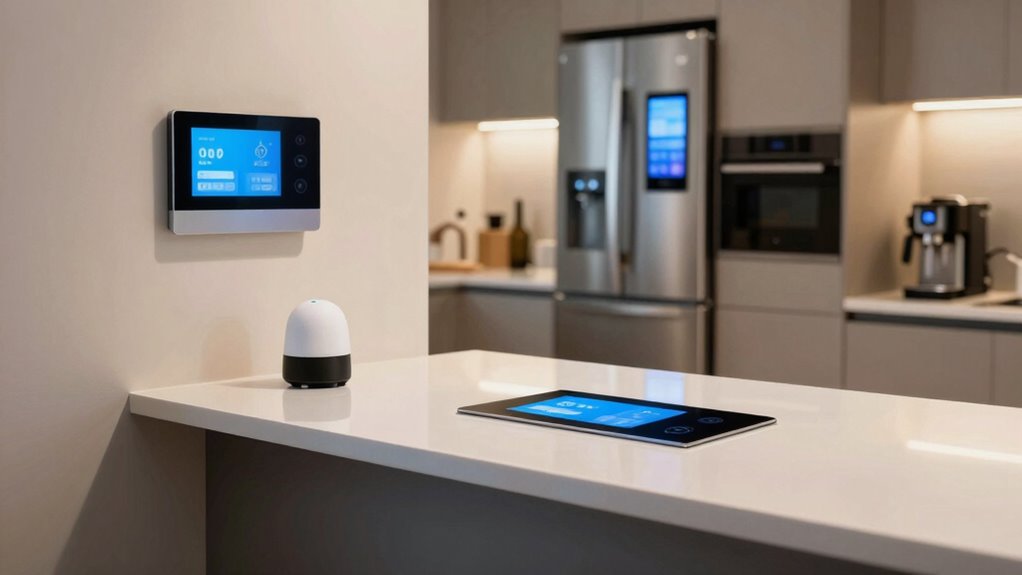
Smart home technology has revolutionized the way you live, offering convenience and automation across your entire house. When you think about smart home systems, you likely picture a centralized setup that controls everything from lighting to climate, making daily routines simpler. These systems focus heavily on enhancing energy efficiency by optimizing heating, cooling, and lighting, which can notably lower your energy bills. Also, one of the key benefits is improved security. With smart security systems, you can monitor your property remotely, receive real-time alerts, and even automate locks and alarms. This all-encompassing approach keeps your home safer while reducing unnecessary energy consumption, giving you peace of mind and savings at the same time. Additionally, the integration of smart home ecosystems allows devices to communicate seamlessly, creating a more cohesive and intuitive living environment. Incorporating interconnected devices further enhances the overall experience by enabling different systems to work together more effectively.
In contrast, smart kitchen tech zeroes in on making your culinary experiences more streamlined and enjoyable. Think of smart appliances like refrigerators that track groceries, ovens you can control remotely, or coffee makers that start brewing as soon as your alarm goes off. These devices may not prioritize security systems as much, but they are designed to boost convenience and efficiency in your daily cooking and food management. Smart kitchen tech often emphasizes energy efficiency as well—like refrigerators that adjust their cooling based on usage or dishwashers that optimize water and power consumption. Many of these devices are also compatible with smart home systems, allowing you to integrate your kitchen appliances into your overall home automation. While the focus isn’t on security, these innovations save you time and effort, making your kitchen a more functional space.
The main difference lies in their scope and purpose. Smart home tech aims to create an integrated environment that enhances overall home security, energy savings, and comfort. It’s about automation that covers every corner of your house, from security cameras to smart thermostats. Smart kitchen tech, however, is more specialized, targeting specific tasks such as cooking, food storage, and meal planning. It’s about making kitchen activities more efficient and connected, often through appliances that communicate with each other or with you via your smartphone. While both types of technology share a focus on energy efficiency, their primary goals diverge—one to secure and automate your entire house, the other to improve your cooking and food management.
As an affiliate, we earn on qualifying purchases.
Frequently Asked Questions
Can Smart Kitchen Devices Integrate With Overall Smart Home Systems?
Yes, smart kitchen devices can integrate with your overall smart home systems. You can control them through voice integration, making it easy to manage cooking or appliances hands-free. Plus, integration enhances energy efficiency by allowing coordinated settings across devices, reducing waste. When connected, your smart kitchen works seamlessly with lighting, security, and thermostats, creating a more convenient and energy-efficient home environment.
What Security Concerns Exist for Smart Kitchen Appliances?
Smart kitchen appliances pose security concerns like privacy vulnerabilities, where hackers could access personal data or control devices. Data encryption helps protect your information during transmission, but weak encryption can still be exploited. Always update firmware regularly, use strong passwords, and enable two-factor authentication to minimize risks. Staying vigilant guarantees your smart kitchen remains secure and private, preventing unauthorized access and safeguarding your personal information.
Are Smart Kitchen Gadgets Compatible With All Smart Home Platforms?
Most smart kitchen gadgets are compatible with popular smart home platforms, but compatibility can vary. You’ll want to check if they support voice recognition, allowing you to control appliances hands-free, or energy monitoring features to track usage. Some devices work seamlessly with platforms like Alexa, Google Home, or Apple HomeKit, but always verify specific compatibility before purchasing to guarantee smooth integration with your existing smart home system.
How Much Do Smart Kitchen Devices Typically Cost?
Smart kitchen devices typically cost between $50 and $300, depending on features and brand. For a cost comparison, basic gadgets like smart plugs or timers are budget-friendly options under $100, while advanced appliances like smart refrigerators or ovens can go over $200. You can find many affordable options that fit different budgets, making it easier to upgrade your kitchen without overspending. Just look for deals and compatibility to maximize value.
Do Smart Kitchen Devices Require Professional Installation?
Smart kitchen devices often come ready to use, like a well-oiled machine, so you usually don’t need professional installation. Many rely on voice control, making setup straightforward, and boost energy efficiency by optimizing usage. However, if you’re adding complex systems or integrating with existing smart home setups, some professional help might be needed. Still, most devices are designed for easy, DIY installation, putting control right at your fingertips.
smart thermostats for energy saving
As an affiliate, we earn on qualifying purchases.
As an affiliate, we earn on qualifying purchases.
Conclusion
Think of smart home and smart kitchen tech as different stars guiding your journey. The home star illuminates your entire living space, offering comfort and security, while the kitchen star focuses on culinary mastery and efficiency. Together, they form a constellation that brightens your daily life, turning routine tasks into effortless dances. Embrace these innovations as your guiding lights, transforming your house into a haven and your kitchen into a canvas of culinary possibilities.
As an affiliate, we earn on qualifying purchases.
As an affiliate, we earn on qualifying purchases.
Fall Picks
fall essentials
As an affiliate, we earn on qualifying purchases.