

TL;DR
With a local-first system, you upload one video and it automatically generates all the related publishing assets—titles, descriptions, clips, social posts—without sending your content to the cloud. This approach boosts privacy, reduces costs, and speeds up your workflow.
Imagine a world where uploading one video instantly gives you a complete publishing kit—titles, descriptions, clips, social posts—all crafted and ready to push out. No cloud, no waiting, no third-party servers logging your content. That’s the promise of a local-first workflow that’s gaining momentum among creators and businesses alike.
Why does it matter? Because privacy, speed, and control now sit at the forefront. When your entire pipeline runs on your own hardware, your content stays private, costs stay predictable, and your process becomes more streamlined. In this article, I’ll show you how a single video can generate a full suite of assets without relying on cloud services—and what tradeoffs come with that power. Learn more about local publishing kits.
Key Takeaways
- A truly local-first workflow processes and analyzes your video entirely on your hardware, keeping content private and costs predictable.
- One video can generate a full set of publishing assets—titles, descriptions, clips, social posts—automatically, saving hours of manual work.
- Choosing the right hardware—powerful CPU, ample storage, and AI acceleration—is crucial for a smooth local workflow.
- Local tools eliminate recurring subscription fees, making long-term publishing more affordable.
- While cloud solutions are easier to set up, local processing offers unmatched control, speed, and privacy—ideal for security-conscious creators and businesses.

MINISFORUM AI X1 Pro-470 Mini PC, AMD Ryzen AI 9 HX470 (12C/24T, up to 5.2 GHz), Radeon 890M, 4K Quad-Display, Dual 2,5G LAN, Wi-Fi 7, Bluetooth 5.4, OCuLink(NO RAM/SSD/OS)
AI-Accelerated Processor: Equipped with an AMD Ryzen AI 9 HX 470 processor (up to 5.2 GHz, 12 cores,…
As an affiliate, we earn on qualifying purchases.
As an affiliate, we earn on qualifying purchases.
What does ‘without the cloud’ really mean for your video workflow?
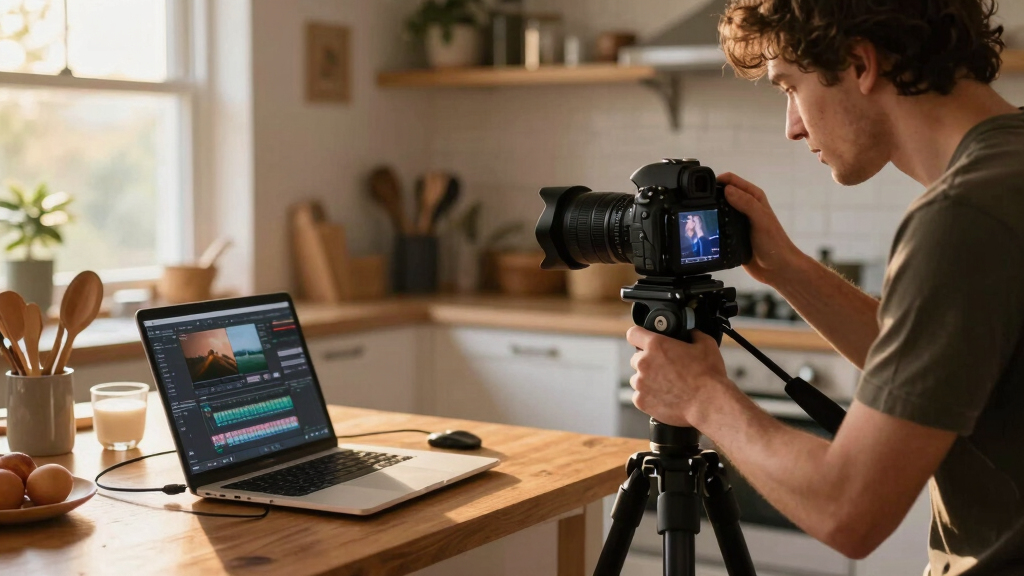
“Without the cloud” means all processing, analysis, and asset generation happen on your local hardware—no off-site servers involved. This setup ensures your footage stays private, and you aren’t locked into monthly subscription fees. For example, a creator can upload a raw video, and their system automatically creates titles, clips, and social media posts right on their workstation, ready for review and publishing.
Think of it like having your own mini media factory—fast, private, and under your control. It’s especially appealing for security-sensitive projects or creators who dislike handing over their footage to third parties. The core idea is that the entire pipeline, from ingestion to output, runs on-site, utilizing AI tools that are locally hosted or embedded.

ARTLIST AI FOR BEGINNERS: Step-by-Step Strategies to Create AI Videos, Generate Images, & Master Royalty-Free Creative Assets for Content Creation
As an affiliate, we earn on qualifying purchases.
As an affiliate, we earn on qualifying purchases.
How one video transforms into a full publishing kit—step by step
Here’s how a single video becomes a multi-platform publishing suite without cloud reliance: Discover more about creating comprehensive publishing kits.
- Upload or link: Drop your file or paste a YouTube link. The system recognizes the source and prepares for analysis.
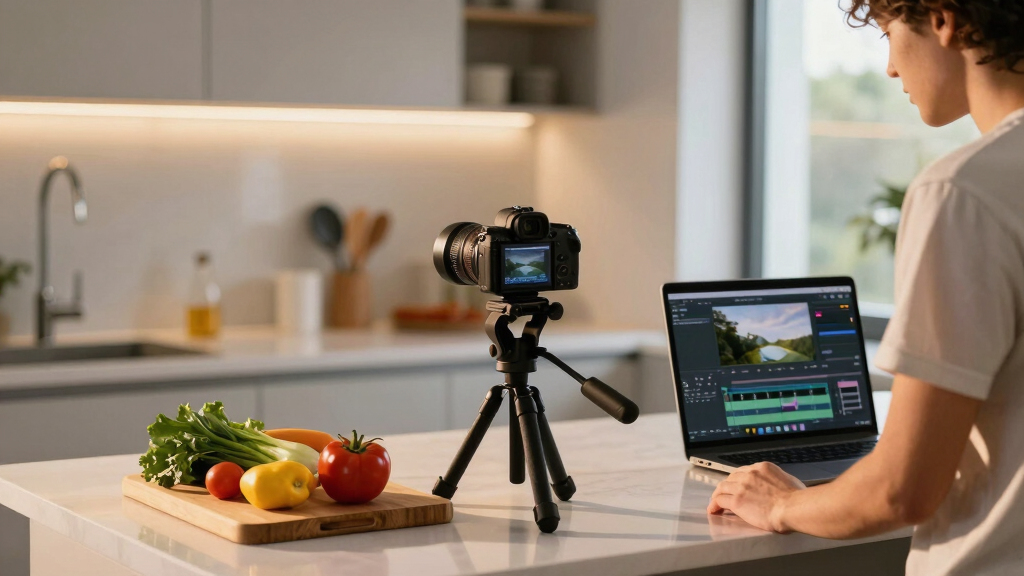
- Understand: Local AI transcribes the audio with speaker separation, analyzes visuals for scene changes, reads on-screen text, and fuses this data into a comprehensive scene log.
- Draft assets: Titles, descriptions, clips, social posts, blog drafts—each generated based on the analyzed data.
- Review & tweak: You review the drafts in an intuitive interface, make edits, regenerate individual assets if needed.
- Publish: Once approved, assets go directly to your platforms, all managed from your local system.
This process takes minutes, not hours, and keeps your content private every step of the way.

Windows 11 for Seniors Made Simple: Your Visual Guide to Digital Independence: Enjoy Easy Video Calls with Grandkids, Breeze Through Printer, Email & Wi-Fi Setup, and Confidently Stay Secure Online
As an affiliate, we earn on qualifying purchases.
As an affiliate, we earn on qualifying purchases.
The power of a full publishing package—what you get from one video
The core unit is a Publishing Package: a bundle of everything needed for multi-channel distribution. It includes:
- Optimized titles scored for engagement and length
- Meta descriptions, chapters, hashtags
- Thumbnail concepts tied to key moments
- Short clips ready for TikTok or Reels
- Blog drafts and newsletter summaries
- Social media posts tailored for each platform
For example, upload a 10-minute explainer video, and the system produces five YouTube titles, a blog intro, three social posts for Twitter, Instagram, and LinkedIn, plus short clips for TikTok— all automatically scored and ready for review.
This holistic approach cuts down the repetitive work and speeds up your publishing cycle.


APPLE CREATOR STUDIO USER GUIDE 2026–2027: The Complete Beginner-to-Pro Reference for Video Editing, Photo Design, Audio Production, and Creative Publishing
As an affiliate, we earn on qualifying purchases.
As an affiliate, we earn on qualifying purchases.
Compare local-first tools with cloud-based video AI — what’s really better?
| Feature | Local-First Workflow |
|---|---|
| Privacy | All processing on your hardware. No data leaves your device. |
| Cost | One-time hardware purchase + no recurring fees. |
| Speed | Faster turnaround—no internet lag or cloud wait times. |
| Complexity | Requires a capable machine but fewer ongoing subscriptions. |
| Flexibility | Full control over customization and updates. |
In contrast, cloud-based tools often charge monthly, depend on stable internet, and risk data leaks. But they can scale easily and require less local setup. Choose based on your priorities: privacy and speed or flexibility and ease.
What hardware do you need for a local-first publishing system?
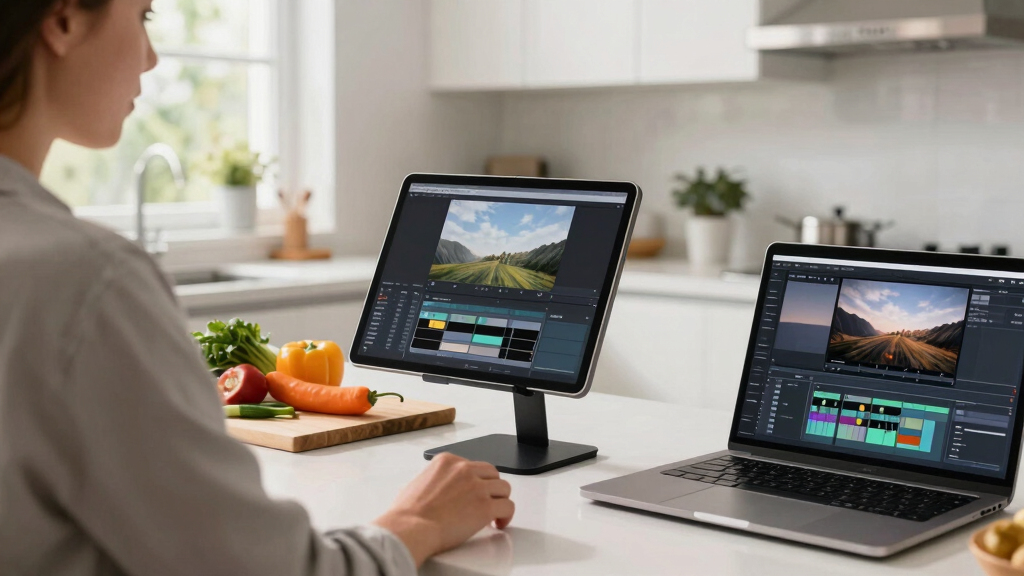
To run a fully local workflow, your machine needs specific capabilities. For instance, a dedicated workstation with at least 16GB RAM, a fast processor like an Intel i7 or AMD Ryzen 7, and a solid-state drive (SSD) for quick data access. Storage capacity varies: a 4TB drive can hold dozens of hours of 4K footage.
For example, a content creator might set up a compact PC with 32GB RAM, a NVIDIA RTX GPU for AI acceleration, and an 8TB SSD. Add a decent microphone and a good monitor, and you’re ready to build an independent media hub. Check out [ChannelHelm’s GitHub](https://github.com/MeyerThorsten/ChannelHelm) for detailed hardware recommendations.
Storage, retention, and managing your assets locally
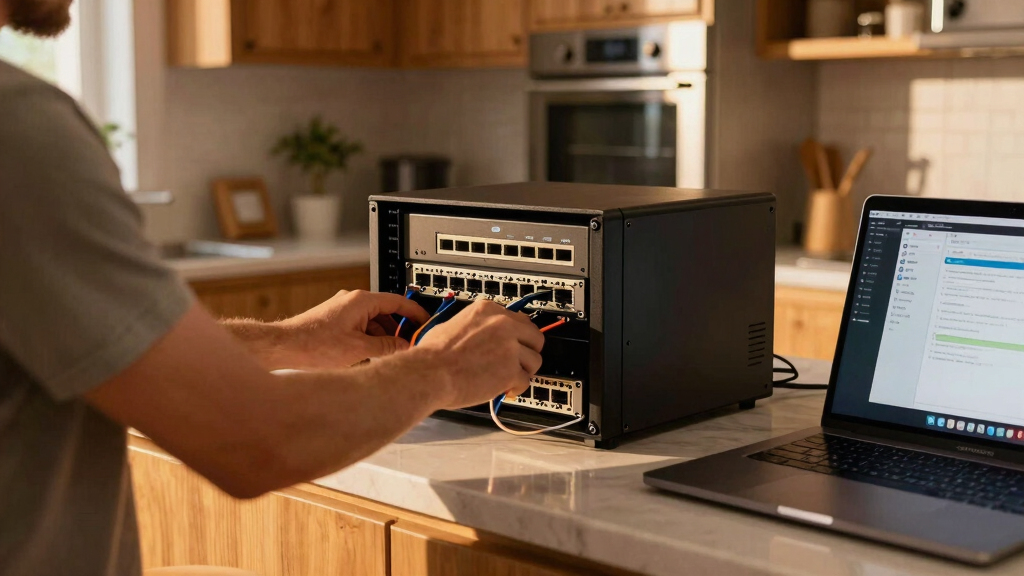
Storage capacity directly impacts how long you can keep raw footage and processed assets on-site. A typical 4K video takes about 2-4GB per minute, so a 10TB drive can hold roughly 2,500 hours of footage. You can set retention policies—keep only recent content or archive older videos externally. For hardware tips, see hardware recommendations for media workflows.
For example, a YouTuber might keep the last 100 videos locally, each 15 minutes long, and back up older content to an external drive or NAS. This setup allows quick access and editing without cloud delays, ensuring your assets are always within reach.

Subscription or licensing fees? Not if you choose local AI tools
Many cloud-based video tools charge ongoing fees—sometimes hundreds of dollars per month. In contrast, local tools like ChannelHelm run on your hardware, often with a one-time purchase or open-source options. This means no recurring charges, just your initial investment.
For example, instead of paying $50/month for a cloud subtitle service, you set up a local AI engine that handles transcriptions for free after a one-time license fee. Over a year, that adds up to significant savings—plus, no risk of service outages affecting your workflow.

How does local processing compare with cloud-based video AI tools?
Local processing offers privacy, speed, and cost control, but can require more technical setup. Cloud tools are easier to start with—just upload, and they handle the rest. However, they often come with recurring fees, data privacy concerns, and potential latency.
For example, a small business using local AI might invest in a dedicated workstation and run everything offline, while a creator might prefer cloud services for quick, on-the-go edits. Your choice depends on your priorities: privacy and control or convenience and scalability.

What types of automation and metadata can a local system generate?
A local-first system can automatically generate titles, descriptions, clips, and social posts based on AI analysis. Metadata like keywords, timestamps, and hooks are extracted directly from the video content, helping you find footage faster later. For example, it can identify high-retention moments and turn them into clips or highlight talking points for titles.
Imagine uploading a product review and instantly getting a thumbnail idea and social caption that emphasizes the most exciting quote. This automation saves hours of manual work and makes your publishing more strategic.
Which cameras or devices work best with local AI publishing?
Most modern cameras that record in high-quality formats like MP4 or MOV are compatible. The key is consistent, high-resolution footage—4K or higher helps the AI analyze scenes accurately. Cameras with clean HDMI output allow live monitoring and recording directly into your system.
For example, a YouTuber using a Sony A7 IV with clean HDMI output can feed footage directly into a local PC for instant analysis and asset generation. Compatibility depends on your editing and processing setup, but most standard cameras work well.

Is local processing really better than cloud, or just different?
Local processing isn’t universally better—it’s about aligning with your priorities. It offers unmatched privacy, faster turnaround, and cost predictability. But it requires more upfront hardware investment and some technical know-how.
For example, a corporate security team may prefer local AI to keep footage private, while a casual creator might opt for cloud because it’s easier to start. The right choice depends on your specific needs and resources.
Frequently Asked Questions
What does ‘without the cloud’ actually mean?
It means all video processing, analysis, and asset creation happen on your own hardware. Your footage never leaves your device, ensuring privacy and eliminating cloud subscription costs.
Is the processing really local, or is some data still sent off-site?
In a well-designed local system, all analysis and AI work happen on your machine. Some setups may use cloud models for specific tasks, but the goal is to keep the bulk of processing on-site.
What hardware do I need to get started?
A capable PC or workstation with at least 16GB RAM, a fast multi-core processor, SSD storage, and optional AI acceleration (like an NVIDIA GPU) will give you smooth performance for video analysis.
How much storage do I need for a decent video library?
A 4TB drive can store roughly 250 hours of 4K footage. Adjust based on your output volume and retention needs, and consider external or network storage for backups.
Are there any recurring fees or licenses?
Most local tools like ChannelHelm are a one-time purchase or open-source. You avoid monthly fees, making your long-term costs predictable and manageable.
Conclusion
Moving to a local-first video publishing system transforms your entire workflow. You get immediate, private control over your content, with assets generated automatically from a single upload. It’s a smarter, safer way to publish—faster, cheaper, and more secure.
Ready to cut the cord? Build your own media machine with the right hardware and software, and watch your content creation speed soar. The future of publishing is local, private, and entirely in your hands.