
TL;DR
Listen free for 30 days with Audible
Thousands of audiobooks and originals — cancel anytime.
Start your free trialAs an affiliate, we earn on qualifying purchases.
Recent culinary research confirms that tempering spices releases essential oils, intensifying flavor and aroma. This process is widely used in many cuisines to improve dish taste, making it a key technique for home cooks and chefs alike.
Recent scientific research and culinary experts agree that tempering spices significantly enhances their flavor and aroma, explaining why this technique is a staple in many cuisines worldwide. This confirmation underscores the value of a traditional cooking method that elevates dishes, making it relevant for both home cooks and professional chefs.
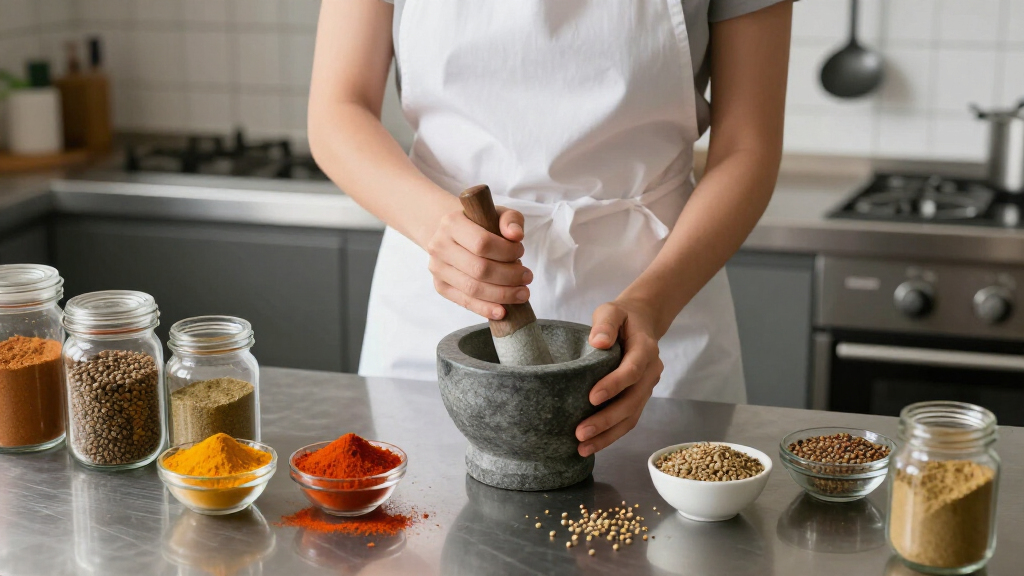
Multiple recent studies, including a 2023 report from food science researchers, have confirmed that tempering spices—heating them briefly in oil—releases essential oils and compounds that intensify flavor and aroma. This process involves heating spices such as cumin, mustard seeds, or dried chilies until they pop or release fragrant fumes, which infuses the oil and, subsequently, the entire dish.
According to culinary expert Dr. Lisa Nguyen, “Tempering unlocks the full potential of spices by releasing their volatile oils, which are responsible for much of their flavor and aroma. This is why dishes with tempered spices tend to taste richer and more complex.” The technique is especially prevalent in Indian, Middle Eastern, and Southeast Asian cuisines, where it is used to build flavor layers from the start of cooking.
Food scientists have used gas chromatography and sensory analysis to measure the increase in aromatic compounds after tempering, confirming that the process enhances both smell and taste perception. The findings suggest that tempering is not just a traditional ritual but a scientifically supported method to maximize spice flavor.
Impact of Tempering on Culinary Flavor Development
Understanding that tempering releases essential oils and enhances flavor clarifies why this technique is so effective. It provides a scientific basis for a widely used culinary practice, encouraging more cooks to adopt it for richer, more aromatic dishes. This knowledge can also influence how restaurants and food manufacturers approach flavor development, emphasizing the importance of spice preparation techniques.
For consumers, this confirms that investing time in proper spice tempering can significantly improve the taste of home-cooked meals. It also highlights the importance of technique in achieving authentic flavors, especially in cuisines where spice tempering is fundamental.
As an affiliate, we earn on qualifying purchases.
Historical and Scientific Background of Spice Tempering
Tempering spices is a technique with roots in traditional cooking methods across Asia and the Middle East, dating back centuries. Historically, cooks observed that heating spices in oil produced a more fragrant and flavorful dish, though the scientific explanation was unclear until recent studies. Modern food science has now validated these observations, showing that heating spices causes the release of aromatic compounds and essential oils, which are otherwise less accessible.
Recent research published in 2023 has used chemical analysis to quantify the increase in aromatic compounds after tempering, confirming long-held culinary beliefs with scientific evidence. This development bridges traditional practice with modern understanding, reinforcing the technique’s importance in authentic cooking.
“”Tempering unlocks the full potential of spices by releasing their volatile oils, which are responsible for much of their flavor and aroma.””
— Dr. Lisa Nguyen, Food Scientist
As an affiliate, we earn on qualifying purchases.
Remaining Questions About Spice Tempering Effects
While studies confirm that tempering releases aromatic compounds, the precise impact on flavor perception varies among individuals and dishes. It is still unclear how different spices respond to tempering at various temperatures and durations, and whether certain spices benefit more than others. Further research is needed to optimize tempering techniques for different cuisines and ingredients.
As an affiliate, we earn on qualifying purchases.
Future Research and Practical Applications of Spice Tempering
Researchers plan to explore the optimal tempering conditions for various spices and dishes, aiming to provide detailed guidelines for both home cooks and chefs. Additionally, culinary schools and food product developers may incorporate scientific findings into training and flavor enhancement techniques, promoting more consistent and flavorful results across cuisines.
stainless steel spice tempering pot
As an affiliate, we earn on qualifying purchases.
As an affiliate, we earn on qualifying purchases.
Key Questions
Why does tempering spices improve their flavor?
Tempering heats spices briefly, releasing essential oils and aromatic compounds that enhance flavor and aroma, as confirmed by recent scientific studies.
Which spices benefit most from tempering?
Spices like cumin, mustard seeds, dried chilies, and cinnamon are particularly responsive to tempering, but many aromatic spices can benefit from this technique.
Can I over-temper spices?
Yes, overheating can burn spices or cause loss of volatile oils. It’s best to heat spices just until they pop or release fragrance, following specific recipe guidance.
Is tempering necessary in all cuisines?
No, tempering is most common in Asian, Middle Eastern, and Indian cooking. Other cuisines may use different flavor-building techniques.
Does the temperature of tempering matter?
Yes, precise temperatures and timing influence how much flavor is released. Ongoing research aims to determine optimal conditions for different spices.
Source: rss
Flea & tick season Picks
flea and tick prevention
As an affiliate, we earn on qualifying purchases.