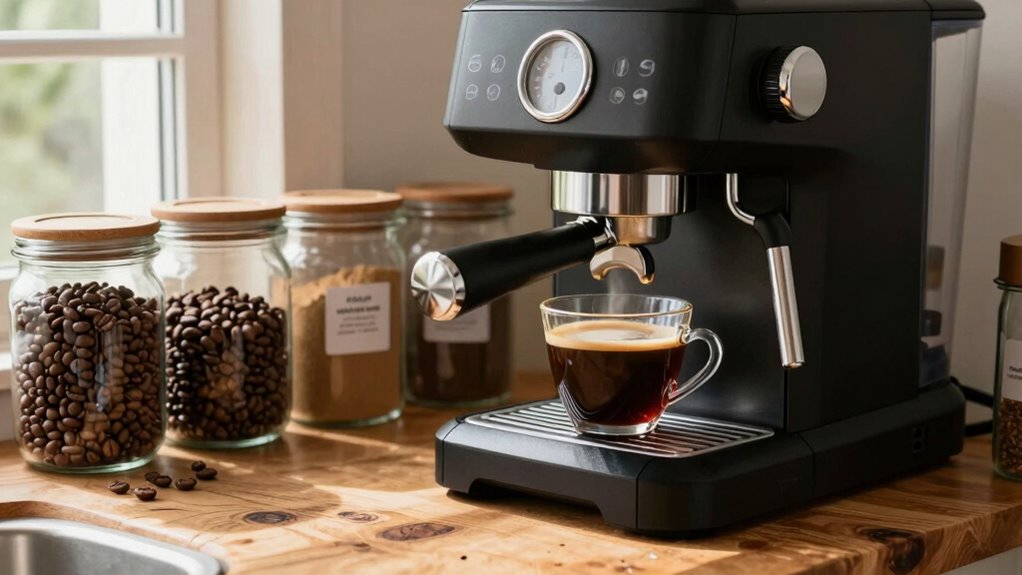

To achieve consistency at home, focus on controlling grind size and brew temperature. Use a burr grinder to get uniform grind settings for better extraction and flavor accuracy. Keep your water temperature between 195°F and 205°F, using a temperature-controlled kettle if possible, to prevent flavor fluctuations. Regularly calibrate your equipment and make small adjustments to refine your results. Mastering these features guarantees each cup tastes just right—stay tuned to learn more about perfecting your brewing routine.
Key Takeaways
- Maintain a consistent grind size using burr grinders to ensure uniform extraction and flavor.
- Use a temperature-controlled kettle or coffee maker to keep brewing water within 195°F to 205°F.
- Regularly calibrate and adjust grind settings and brewing temperatures for predictable results.
- Pre-warm equipment to stabilize temperature and prevent flavor fluctuations.
- Follow a routine, paying attention to water quality, timing, and small adjustments based on taste.
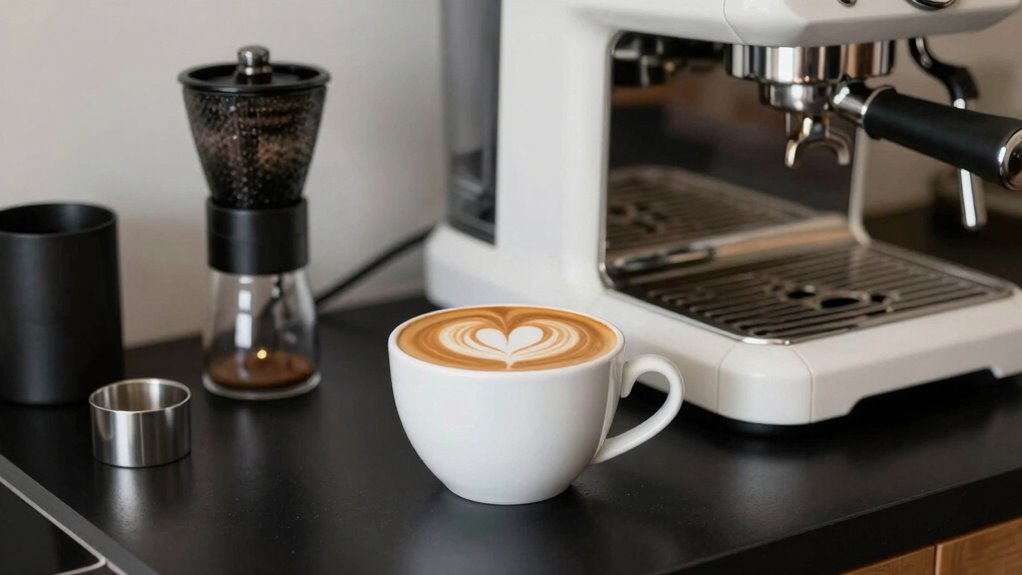
Creating a consistent coffee experience at home can be challenging, especially when small variations in brewing can considerably affect flavor. Two key factors that influence your coffee’s taste and aroma are grind size and brew temperature. Paying close attention to these elements helps guarantee each cup meets your expectations, no matter when you brew it.
Start with grind size. The size of your coffee grounds directly impacts extraction, which determines the strength and flavor profile of your brew. Too fine, and you risk over-extraction, making your coffee bitter and harsh. Too coarse, and you’ll under-extract, resulting in a weak, sour taste. To maintain consistency, use a burr grinder rather than a blade grinder, as burr grinders produce uniform grind sizes. Once you find the right grind setting for your brewing method—whether it’s French press, drip, or AeroPress— stick with it. Consistent grind size means your coffee will extract similarly each time, reducing flavor variations.
Consistent grind size ensures uniform extraction and reduces flavor variations in your home-brewed coffee.
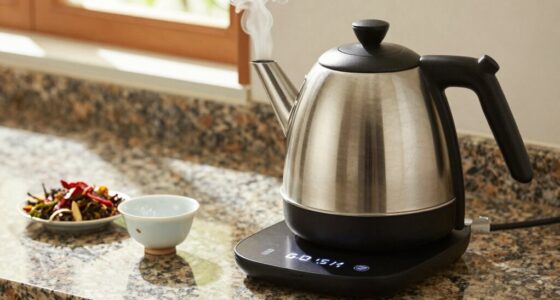
Next, consider brew temperature. The temperature at which you brew your coffee affects extraction as well. Generally, water between 195°F and 205°F (90°C to 96°C) is ideal for extracting flavors without scalding the coffee grounds. Too hot, and you risk over-extraction, which can bring out bitterness and obscure delicate flavors. Too cold, and your coffee might under-extract, leaving it weak and sour. To keep brew temperature consistent, use a kettle with a temperature control feature or a coffee maker with a built-in heater. Pre-warming your brewing equipment also helps maintain a steady temperature during extraction, ensuring each cup is as flavorful as the last. Paying attention to brew temperature consistency helps prevent flavor fluctuations and ensures a balanced cup every time.
Additionally, the consistency of your water quality and the timing of your brew influence overall results, but grind size and brew temperature are the foundational elements. By paying attention to these, you create a reliable process that minimizes flavor fluctuations. Regularly calibrate your grinder and measure water temperature to stay on track. Making small adjustments based on taste can fine-tune your process further, but sticking to a set routine ensures you’re consistently producing good coffee. With practice, controlling these features becomes second nature, transforming your home brewing into a predictable, satisfying routine.
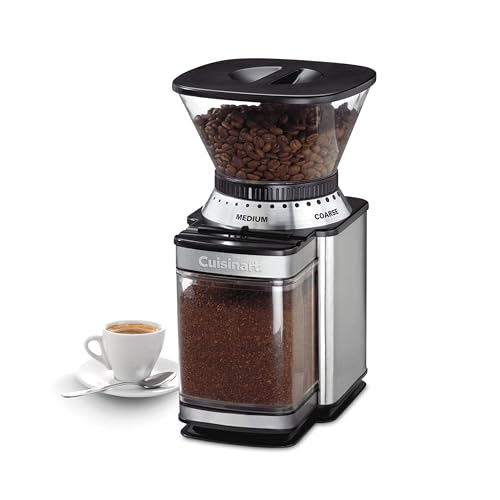
Cuisinart Electric Burr Coffee Grinder, 18-Position Selector, 4-18 Cups
- Variable grind selector: 18-position slide dial for precise grinding
- Removable bean hopper: 8 oz. capacity for easy cleaning
- Removable grind chamber: Holds 4 to 18 cups of coffee
As an affiliate, we earn on qualifying purchases.
As an affiliate, we earn on qualifying purchases.
Frequently Asked Questions
How Does Water Quality Affect Coffee Consistency at Home?
Water quality greatly impacts your coffee’s consistency. When water has proper mineralization, it enhances flavor extraction and maintains consistent taste. Low or high mineral levels can cause uneven brewing or off-flavors. Additionally, maintaining the right pH balance guarantees ideal extraction and prevents over or under-extraction. Using filtered or mineral-balanced water helps you achieve uniform, delicious coffee every time, making water quality a vital factor in your home brewing success.
What Is the Ideal Grind Size for Consistent Brewing?
Think of your coffee grind as a well-orchestrated symphony; uniformity is key. The ideal grind size for consistent brewing depends on your coffee maker, but generally, medium grind works well for drip machines and pour-overs. Focus on grind uniformity, ensuring particle size stays consistent, so water flows evenly through the grounds. This balance guarantees each cup delivers the same rich flavor and aroma, turning every brew into a masterpiece.
How Often Should I Clean My Coffee Equipment?
You should clean your coffee equipment at least once a week to maintain ideal brewing technique and keep flavors fresh. Regular cleaning prevents buildup that can affect coffee bean freshness and taste. If you brew daily, consider more frequent cleanings. Use proper descaling solutions and rinse thoroughly. This routine ensures your machine performs well, preserves the coffee’s flavor, and guarantees consistent, delicious brews every time.
Can Storage Containers Impact Coffee Flavor Consistency?
Storage containers definitely impact your coffee flavor consistency. If you use airtight containers, you help maintain coffee bean freshness by protecting it from air and moisture. Be mindful of storage humidity, as high humidity can cause beans to spoil faster, dulling flavor. Choosing a cool, dry place and a sealed container keeps your beans fresh longer, ensuring each cup maintains the desired richness and aroma you love.
What Role Does Machine Temperature Play in Brewing?
While the allure of perfect flavor contrasts with the chaos of inconsistent brew temperature, maintaining thermal stability is key. Your machine’s brew temperature directly influences extraction, ensuring the right balance of flavors. If the temperature fluctuates, it can lead to over-extraction or under-extraction, ruining the coffee. Prioritizing thermal stability guarantees your brew temperature remains steady, resulting in a more consistent, flavorful cup every time.

Cosori Gooseneck Electric Kettle with Temperature Control, 0.8L, Black
- Five Temperature Presets: Precise temperature settings for brewing
- Warm Keep Function: Keeps water warm for up to 1 hour
- Accurate Temperature Control: Maintains water within 5°F of target
As an affiliate, we earn on qualifying purchases.
As an affiliate, we earn on qualifying purchases.
Conclusion
Ultimately, the secret to consistent home-brewed coffee isn’t just in fancy gadgets or rare beans—it’s in paying attention to the details that matter most. You might find it funny how a simple grind size or water temperature can make or break your cup, almost like fate nudging you toward the perfect brew. So, trust those small adjustments; sometimes, the biggest coffee breakthroughs come from the tiniest coincidences.
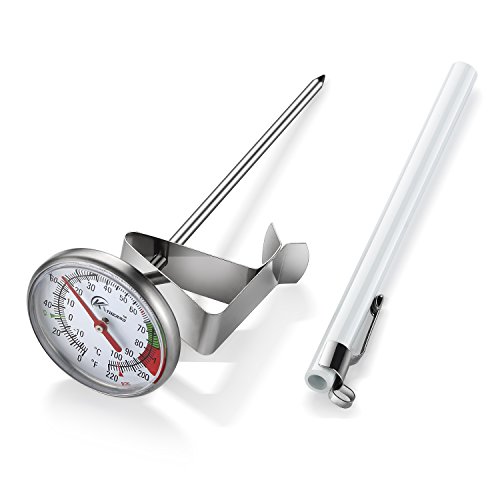
KT THERMO Instand Read 2-Inch Dial Thermometer,Best for The Coffee Drinks,Chocolate Milk Foam
- Design: Multi-stage fixed clip for easy viewing
- Measurement Safety: Direct, accurate temperature readings for drinks
- Temperature Range: 0°F to 220°F for various liquids
As an affiliate, we earn on qualifying purchases.
As an affiliate, we earn on qualifying purchases.

Hamilton Beach Fresh Grind Electric Coffee Grinder For Up To 12 Cups
- Hidden Cord Storage: Keeps cable neat and concealed
- Quiet Operation: Less noise than competitors
- Dishwasher Safe Bowl: Removable and easy to clean
As an affiliate, we earn on qualifying purchases.
As an affiliate, we earn on qualifying purchases.