If you’re after a quick, hassle-free cappuccino, one-touch espresso machines are your best bet. They let you brew with just a tap and automatically froth your milk to your preferred texture, saving you time and effort. On the other hand, manual methods give you complete control over frothing and bean selection but require skill and patience. Want to discover how each method influences flavor and quality? Stick around to learn more.
Key Takeaways
- One-touch machines offer quick, consistent cappuccinos with automatic milk frothing, ideal for convenience.
- Manual methods provide personalized control over froth texture, temperature, and flavor, requiring skill and practice.
- High-quality beans are essential for both methods, affecting flavor richness and overall coffee experience.
- Automated machines streamline preparation, delivering café-quality drinks with minimal effort; manual techniques emphasize craftsmanship.
- Choice depends on preference for speed and convenience versus customization and hands-on involvement.

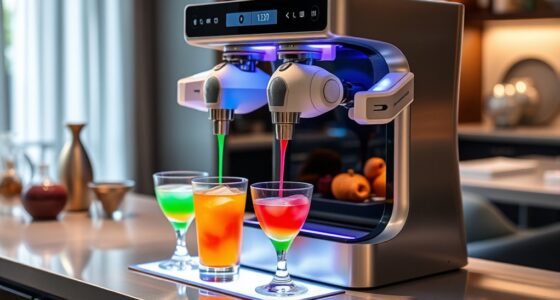
Imagine brewing a perfect cappuccino with just a click. That’s the beauty of one-touch espresso machines—they simplify the process, allowing you to enjoy café-quality drinks without the fuss. But to truly elevate your experience, understanding how these machines handle milk frothing and the importance of coffee bean selection can make all the difference. When you opt for a machine with integrated milk frothing capabilities, you get consistent, velvety foam every time. No more manual foaming or guessing, which means you can focus on savoring each sip rather than struggling with a steam wand. These machines often come with adjustable settings, so you can customize the froth’s texture to match your preference, whether that’s a dense, creamy cap or a light, airy layer. The convenience is unmatched—just pour your milk, press a button, and watch as the machine whips up perfect froth in seconds.
Now, consider your choice of coffee beans. The quality and type of beans you select profoundly impact your cappuccino’s flavor profile. Opting for freshly roasted, high-quality beans makes a noticeable difference. When you pick beans with a rich aroma and balanced acidity, your espresso base becomes more vibrant and flavorful, setting a solid foundation for your drink. The grind size also matters; a fine grind ensures ideal extraction, delivering a robust shot that complements the milk’s creaminess. While automatic machines handle the brewing process seamlessly, the beans you choose influence the depth and complexity of your coffee, regardless of how advanced your equipment is. Additionally, consistent quality of coffee beans ensures that each cup maintains the same rich flavor, which is especially important when using automatic machines.
Choosing high-quality, freshly roasted beans enhances your cappuccino’s flavor and complexity.
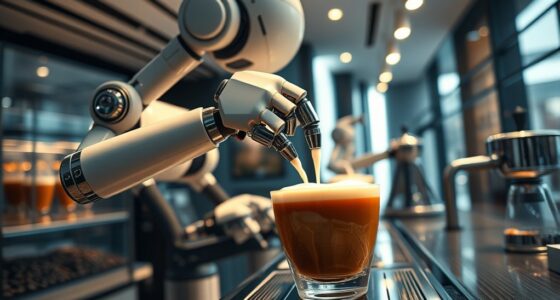
In manual methods, milk frothing requires skill and practice, but it offers a hands-on experience that many coffee aficionados cherish. You control the temperature, texture, and timing, which can result in a personalized froth that matches your mood or recipe. However, this technique demands patience and a steady hand, especially when selecting the right milk and perfecting your frothing technique. Similarly, selecting the best coffee beans is a deliberate process—tasting different roasts, experimenting with grind sizes, and understanding flavor profiles. Manual methods might take longer, but they provide a tactile connection to your craft, making each cup uniquely yours.
On the other hand, one-touch espresso machines streamline the process without sacrificing quality. They combine the precision of good coffee bean selection with automated milk frothing, giving you consistent results with minimal effort. Whether you prefer the ritual of manual methods or the convenience of automation, understanding these aspects ensures you get the most out of your cappuccino experience. With a little knowledge, you can enjoy the perfect cup—whether it’s crafted by hand or made at the push of a button.
Frequently Asked Questions
What Maintenance Is Required for One-Touch Espresso Machines?
You need to regularly follow cleaning routines, like wiping down surfaces and cleaning the milk frother, to keep your machine in top shape. Descaling requirements depend on your water hardness—descale it every few months if you notice a drop in performance. Always use the manufacturer’s recommended cleaning products and follow their instructions to prevent buildup, guarantee great coffee, and prolong your machine’s lifespan.
How Long Does It Take to Prepare a Cappuccino Manually?
You can whip up a cappuccino in about 10 to 15 minutes, starting from steaming milk to pulling espresso shots. As you develop your skill, you’ll notice the process becoming smoother, with fewer pauses. The preparation time depends on your familiarity with each step—frotting milk, timing the espresso, and pouring. With practice, you’ll craft a creamy, frothy cappuccino faster, transforming your kitchen into a cozy café corner.
Are One-Touch Machines More Cost-Effective Than Manual Methods?
One-touch machines can be more cost-effective over time due to their convenience and faster brewing, saving you time and effort. When you do a cost analysis, consider their durability comparison—manual methods often last longer with fewer electronic parts, reducing repair costs. While upfront costs may be higher for one-touch machines, their efficiency and lower maintenance can make them a smarter investment for regular coffee drinkers.
Can Manual Methods Produce Consistent Espresso Quality?
Yes, manual methods can produce consistent espresso quality if you have strong barista skills. Your technique, grind size, and tamping pressure directly impact flavor consistency. With practice, you learn to control variables, ensuring each shot meets your standards. While it takes more effort and skill, manual methods offer personalized control, allowing you to fine-tune flavor and achieve the same quality across multiple espressos.
What Are the Energy Consumption Differences Between Both Methods?
When it comes to energy efficiency, manual methods tend to sip power more sparingly, making them a penny-pincher in the long run. One-touch espresso machines, on the other hand, often gulp down more power due to their electronic components and automated features. So, it’s a classic case of apples and oranges—manual methods save on power consumption, but machines offer convenience at the cost of higher energy use.
Conclusion
Ultimately, whether you opt for a one-touch espresso machine or manual brewing, the truth is simple: convenience often wins. While manual methods might offer a richer experience, studies suggest that modern machines can produce coffee nearly as good, saving you time without sacrificing flavor. So, if you believe technology can replicate craftsmanship, you’re right—sometimes, a quick press is all it takes to enjoy that perfect cup.