Edible tech is transforming how you experience food and medicine, making 3D-printed meals and pills more practical and innovative. You can enjoy personalized, nutritious dishes tailored to your taste and health needs, all with safe, sustainable packaging. As technology integrates further, expect a future where meals and medication are safer, eco-friendly, and customized just for you. If you want to discover what’s driving this exciting frontier, keep exploring the possibilities ahead.
Key Takeaways
- 3D printing enables customized, nutritionally optimized meals and pills tailored to individual preferences and health needs.
- Edible tech incorporates biodegradable, edible packaging to reduce plastic waste and enhance food safety.
- Strict food safety standards ensure the safety and hygiene of innovative 3D-printed foods and supplements.
- Personalized nutrition through 3D-printed doses improves health outcomes and minimizes waste.
- Integration of edible tech promises safer, sustainable, and innovative dining experiences in the future.
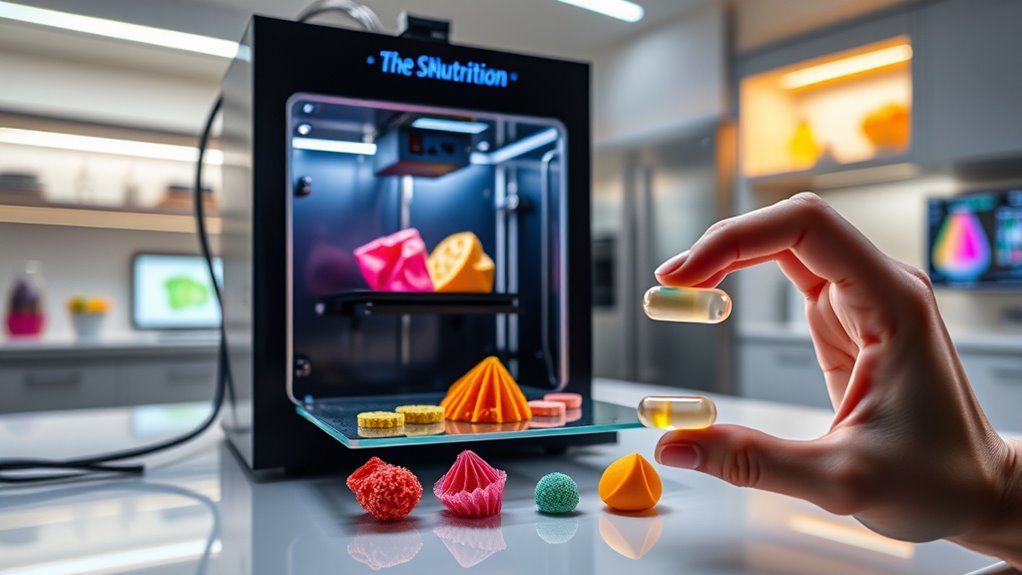
Imagine a future where technology seamlessly integrates into your daily meals, transforming what you eat into a canvas for innovation. You might find yourself enjoying 3D-printed dishes crafted precisely to your taste, nutrition needs, and even mood. This isn’t science fiction; it’s a glimpse into edible tech’s potential to revolutionize food. One of the key advancements fueling this vision is the development of sustainable packaging. Instead of traditional wrappers, edible packaging made from biodegradable, edible materials could become standard, reducing plastic waste and environmental impact. This packaging would be designed to keep food safe and fresh, aligning with stringent food safety standards, so you don’t have to worry about contamination or spoilage. You could enjoy your meals without guilt, knowing the materials used are eco-friendly and meet rigorous safety regulations.
Edible, biodegradable packaging ensures fresh, safe meals while reducing environmental impact.
As 3D printing becomes more refined, you’ll notice a shift from mass-produced food to personalized meals. Imagine ordering a snack tailored to your dietary restrictions or preferences, printed instantly at a local facility. These meals would not only be customized but also safer, thanks to strict adherence to food safety standards that oversee ingredient sourcing, hygiene, and handling. Food safety standards ensure that whether you’re eating a pill, a snack, or a full meal, it’s free from harmful bacteria, toxins, or allergens. This means you can trust that your edible tech is safe, even as it pushes the boundaries of culinary innovation. Additionally, regulatory frameworks are evolving to keep pace with these advancements, ensuring consumer safety and environmental sustainability.
With edible tech, the possibilities extend beyond just convenience. You could be consuming nutritionally optimized pills designed to boost your energy or improve focus, all while maintaining high food safety standards. These pills could be 3D-printed to deliver a precise dose of vitamins, minerals, or medications, reducing waste and improving health outcomes. Meanwhile, sustainable packaging would keep these products safe during transport and storage, minimizing environmental harm. As these innovations mature, regulations and standards will ensure that safety and sustainability go hand in hand, giving you confidence in the products you consume.
In essence, edible tech is poised to redefine how you approach nourishment—making it smarter, safer, and more eco-conscious. The integration of sustainable packaging and strict food safety standards guarantees that these advancements won’t come at the expense of health or the environment. Instead, they’ll enhance your eating experience, offering personalized, safe, and environmentally friendly options. The future of food is exciting, promising a world where technology elevates what you eat, transforming meals into a new frontier of innovation.
3D printed personalized nutrition pills
As an affiliate, we earn on qualifying purchases.
As an affiliate, we earn on qualifying purchases.
Frequently Asked Questions
How Safe Are 3d-Printed Foods for Daily Consumption?
3D-printed foods can be safe for daily consumption if they meet strict food safety standards. However, regulatory challenges remain, as authorities need to establish clear guidelines for ingredient safety, printer calibration, and contamination prevention. You should stay informed about regulations and quality controls, ensuring the 3D-printed meals you consume are produced under rigorous safety protocols. With proper oversight, this innovative tech can become a reliable part of your diet.
What Are the Nutritional Limitations of 3d-Printed Meals and Pills?
You might find that 3D-printed meals and pills face nutritional limitations due to challenges with ingredient stability and consistency. While they offer nutritional customization, maintaining the integrity of nutrients during the printing process can be tricky, potentially leading to nutrient degradation. This means some essential vitamins and minerals might not be as reliably present, making it necessary to carefully monitor and enhance ingredient stability for balanced, nutritious outcomes.
Can Edible Tech Reduce Food Waste Effectively?
Edible tech can effectively reduce food waste by optimizing food distribution and supply chains. You might see 3D printing produce meals tailored to available ingredients, minimizing surplus. This technology allows precise portioning, reducing leftovers and spoilage. As a result, it streamlines supply chains, cuts waste, and ensures food reaches more people efficiently. Embracing edible tech helps you contribute to a more sustainable system, cutting down on unnecessary food loss.
How Accessible Is Edible Tech for the Average Consumer?
Edible tech isn’t widely accessible yet, mainly due to cost barriers and limited user familiarity. You might find 3D-printed meals and pills expensive or complicated to use at first. As technology advances and becomes more affordable, more consumers like you will likely adopt it. For now, it’s mostly in experimental stages or available through specialized services, but expect gradual improvements that could make it more commonplace in the future.
What Are the Environmental Impacts of 3D Food Printing?
Think of 3D food printing as a double-edged sword—while it promises to cut waste and customize meals, it also raises sustainability concerns. This technology can reduce resource consumption, but it may also lead to increased energy use in the process. You should weigh these environmental impacts, understanding that the ecological footprint depends on how efficiently you harness this innovative tool and manage its resource demands.
biodegradable edible food packaging
As an affiliate, we earn on qualifying purchases.
As an affiliate, we earn on qualifying purchases.
Conclusion
You might worry that 3D-printed meals and pills lack the flavor or authenticity of traditional food. But with rapid advancements, these innovations can deliver tasty, nutritious options tailored just for you. Embracing edible tech doesn’t mean sacrificing quality; it offers personalized solutions that fit your lifestyle. So, give it a chance—this future isn’t about replacing food, but enhancing how you nourish and enjoy every bite.
As an affiliate, we earn on qualifying purchases.
sustainable edible food containers
As an affiliate, we earn on qualifying purchases.
As an affiliate, we earn on qualifying purchases.