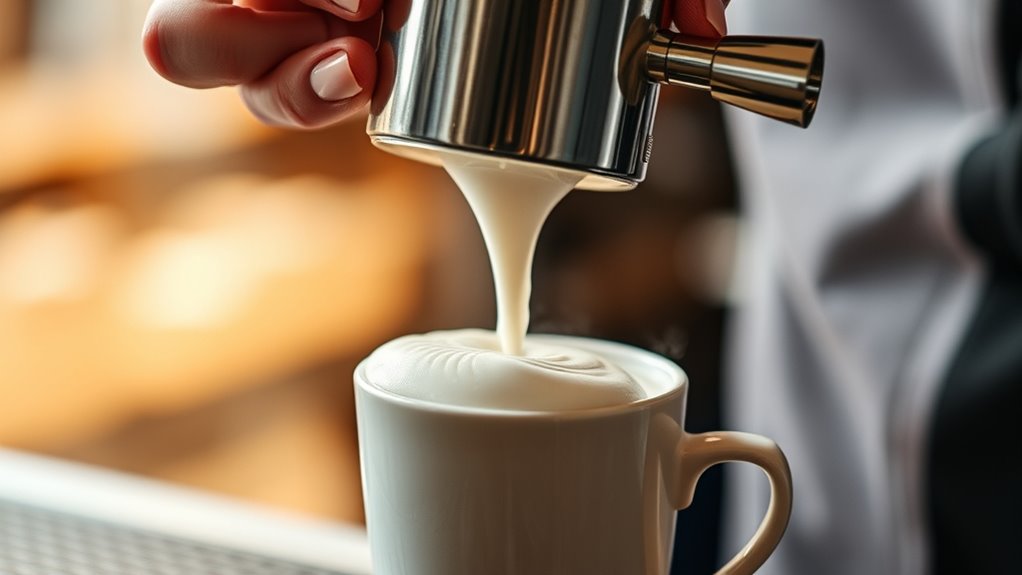

To master milk frothing, focus on controlling the temperature, ideally between 140°F and 150°F (60°C to 65°C), which optimizes protein denaturation for stable foam. Proper technique involves evenly heating milk, whether through steaming or handheld frothers, to guarantee consistent foam quality and texture. Overheating weakens foam by over-denaturing proteins, while too little heat produces thin, unstable froth. Keep experimenting with temperature and technique to achieve perfect, velvety foam every time—you’ll discover how small adjustments make a big difference.
Key Takeaways
- Optimal milk frothing occurs between 140°F and 150°F (60°C to 65°C), promoting ideal protein denaturation for stable foam.
- Proper temperature control prevents over- or under-denaturation, ensuring a resilient, velvety foam.
- Heat influences milk texture and mouthfeel, with balanced temperatures producing smooth, glossy foam.
- Frothing techniques like steaming or handheld devices affect heat distribution and foam quality.
- Using temperature-controlled equipment helps maintain consistent, high-quality milk frothing results.
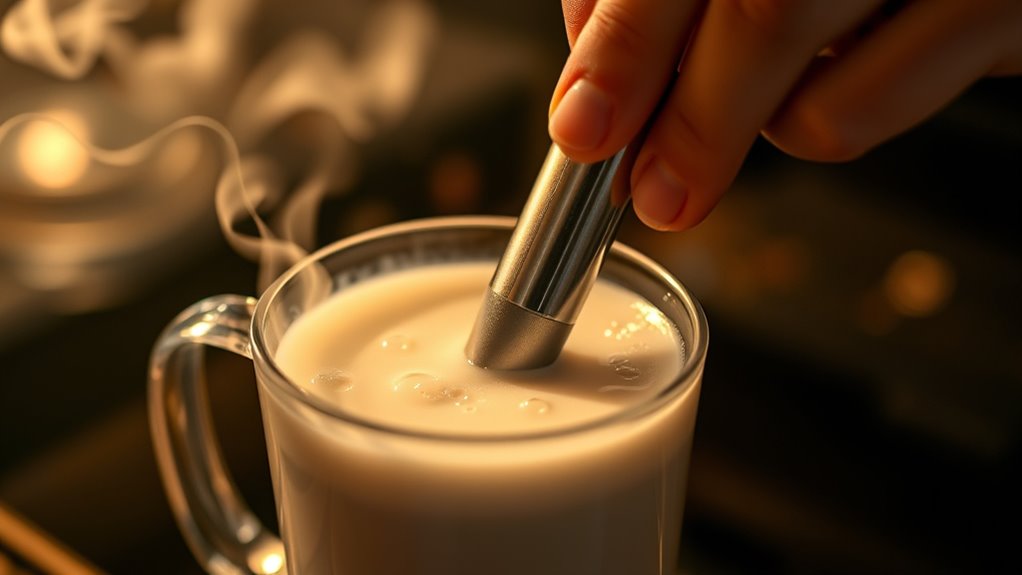
Have you ever wondered what makes perfectly frothed milk so smooth and velvety? The secret lies in the complex science behind milk frothing, especially how milk proteins respond during the process. When you introduce steam or a frother to milk, you’re triggering a series of reactions at the molecular level, primarily involving milk protein denaturation. This process unfolds when the heat causes the proteins—mainly casein and whey—to unfold from their native structures, allowing them to interact more freely. As these proteins denature, they form a network that traps air bubbles, creating the foam you desire. But achieving that ideal consistency isn’t just about heating; it’s about managing how these proteins behave to guarantee foam stability.
Foam stability refers to how long the microfoam maintains its structure without collapsing. When milk proteins denature correctly, they create a strong, resilient network that supports tiny air pockets, resulting in a dense, long-lasting foam. If the proteins are denatured too little, the foam tends to be weak and quickly deflates. Conversely, if the milk gets too hot, the proteins can over-denature, causing the foam to break down prematurely. That’s why maintaining the right temperature during frothing is vital—typically between 140°F and 150°F (60°C to 65°C)—to optimize protein behavior and produce a stable, velvety foam.
The temperature influences not only protein denaturation but also the overall texture and mouthfeel of your milk. As you froth, the heat encourages the proteins to unfold just enough to form a sturdy network without overdoing it. This balance allows for a smooth, glossy foam that feels luxurious on your palate. Using a milk frother with a precise temperature control can help you hit that sweet spot, ensuring consistent results every time. Additionally, the frothing technique itself—whether you’re steaming milk in a machine or using a handheld frother—affects how evenly the heat is distributed and how well the proteins denature. Proper temperature management is essential for achieving ideal foam characteristics.
Frequently Asked Questions
What Is the Ideal Milk Temperature for Different Coffee Drinks?
You should aim for a milk temperature of around 150°F (65°C) when using a milk steamer for most coffee drinks. For lattes and flat whites, keep it closer to 140°F (60°C) to guarantee smooth flavor. For cappuccinos, go slightly higher, about 155°F (68°C), to boost foam stability. Maintaining these temperatures helps you achieve ideal foam quality and prevents overheating, assuring your drinks taste great and look appealing.
How Does Milk Fat Content Affect Frothing Quality?
You might think higher milk fat improves frothing, but it actually affects froth stability. Milk with higher fat content produces richer, creamier textures but can make the foam less stable and more difficult to whisk into a firm froth. Lower-fat milk creates lighter, more stable froth, ideal for lattes and cappuccinos. Adjust your choice based on the texture you prefer, balancing richness with frothing stability.
Can You Froth Plant-Based Milks Effectively?
Yes, you can froth plant-based milks effectively with the right frothing techniques. Use barista-style plant-based milks, which usually froth better due to added stabilizers. Heat the milk to around 140-150°F and use a milk frother or steam wand, moving it steadily through the milk. Keep in mind that some plant-based milks may require a bit more whisking or frothing time to achieve a creamy foam.
Why Do Some Frothers Produce Larger Bubbles Than Others?
You notice some frothers produce larger bubbles because of their design, which affects bubble size and texture. Frother design influences how much air is incorporated, with certain shapes and whisk types creating bigger bubbles. If you want smaller, creamier bubbles, choose a frother with a fine whisk and a design that promotes gentle aeration. Larger bubbles often result from more aggressive frothing or less precise frother construction.
How Does Temperature Influence the Texture of the Foam?
Think of temperature as the magic wand shaping your foam’s texture. When you maintain temperature consistency, your foam becomes velvety and smooth, like a soft cloud. Too hot, and it turns into unstable, quick-dissolving bubbles; too cold, and it’s stiff and hard to froth. Proper temperature regulation ensures foam stability, giving you rich, creamy froth that holds its form and enhances your coffee experience.
Conclusion
So, there you have it—mastering milk frothing isn’t rocket science, but with the right temperatures and techniques, you might just feel like a coffee wizard. Just remember, if your latte isn’t perfect, don’t blame the milk; blame the universe for your frothing failures. Keep experimenting, stay cool, and soon enough, you’ll be the hero of every caffeine-fueled morning. Who knew science could make your coffee taste this good? Cheers to frothing mastery!