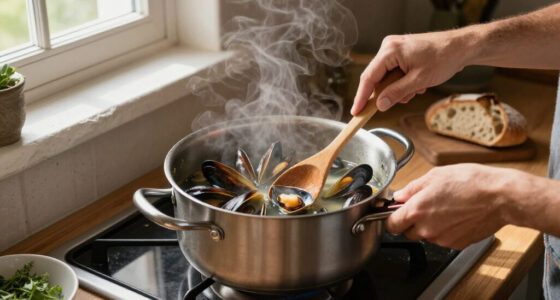
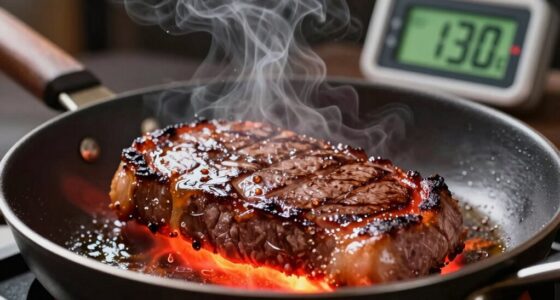
Better temperature control helps you manage heat precisely during cooking and storage, which directly affects food texture. By maintaining the correct temperatures, you prevent overcooking or undercooking, preserving the natural crispness, tenderness, or juiciness of ingredients. It also stops spoilage and texture changes caused by improper storage. When you control temperatures well, you guarantee your food stays appealing and consistent. Keep exploring to discover more ways proper temperature management can elevate your culinary results.

Get kitchen gear delivered free with Prime
- Fast, free delivery on millions of items
- Prime Video, Amazon Music and more included
- Member-only deals all year
Key Takeaways
- Precise temperature control prevents overcooking, maintaining desired food firmness and preventing mushiness or toughness.
- Proper heating preserves natural textures, such as crispness in vegetables and tenderness in meats.
- Consistent temperatures in sous vide cooking ensure uniform texture throughout the food.
- Correct storage temperatures prevent texture deterioration like sogginess or freezer burn.
- Avoiding temperature fluctuations maintains the integrity of food’s original texture and structural qualities.

Have you ever wondered how temperature influences the texture of your favorite foods? It’s more than just heating or cooling; temperature control plays an essential role in how food feels and tastes when you eat it. When you manage temperature precisely, you can enhance flavor infusion and preserve the desired texture, making your meals more enjoyable and consistent. For example, gentle heating allows spices and herbs to release their flavors fully, giving dishes a richer taste. This controlled process guarantees that flavors meld seamlessly without overwhelming the food’s natural qualities, resulting in a more balanced and satisfying experience.
Temperature also directly impacts texture preservation. When you cook or store foods at the right temperatures, you prevent undesirable changes that can ruin the intended texture. Think about how cooling preserves the crispness of vegetables or maintains the tenderness of meats. If you cook too fast or at too high a temperature, you risk overcooking, which can turn a crisp vegetable into mush or make a delicate fish fall apart. Conversely, too low a temperature might lead to undercooked, rubbery, or tough textures. By carefully controlling heat, you maintain the integrity of the food’s structure, guaranteeing each bite matches your expectations. Proper temperature regulation in cooking methods ensures this consistency and quality. Additionally, understanding the science behind heat transfer can help you better control cooking outcomes and achieve ideal textures.
Proper temperature control preserves food texture, preventing overcooking or undercooking and ensuring each bite meets expectations.
In addition, precise temperature control during processes like sous vide cooking exemplifies how maintaining consistent heat can transform food texture. Sous vide involves cooking food in vacuum-sealed bags at exact temperatures for extended periods, resulting in evenly cooked, tender, and moist dishes. Here, temperature regulation ensures the food’s internal texture remains perfect, avoiding the uneven results that come with traditional methods. This technique also allows flavors to infuse deeply into the food, offering a richer taste and more complex profile. The slow, consistent heat allows flavors to penetrate without overcooking or drying out the food, creating a satisfying balance between flavor and texture. Additionally, the importance of temperature management in this method helps prevent over- or under-cooking, ensuring optimal results every time. Maintaining proper temperature control is crucial for achieving consistent, high-quality outcomes in sous vide cooking.
Furthermore, temperature control extends to storage, where proper refrigeration or freezing prevents texture deterioration. For instance, freezing at the right temperature helps preserve the firm, juicy qualities of fruits and vegetables, while improper storage can cause freezer burn and sogginess. When you understand and apply the principles of temperature control, you maintain the quality of your ingredients from start to finish. This careful management guarantees that, whether you’re cooking, marinating, or storing, your food retains its intended texture and flavor, elevating your culinary experience and making every meal a delight. Recognizing the importance of temperature regulation can also help prevent foodborne illnesses by ensuring foods are kept at safe temperatures throughout the cooking and storage process.
Products Worth Considering

Instant Pot Pro Plus 6-Quart 10-in-1 Electric Pressure Cooker

Cuisinart TOA-112 15-in-1 Extra-Large Digital Toaster Oven Air Fryer

Ninja HyperHeat 9-in-1 Electric Pressure Cooker, 6.5 Qt, Dark Gray, PC201GY
As an affiliate, we earn on qualifying purchases.
Frequently Asked Questions
How Does Temperature Variation Affect Microbial Growth in Food?
Temperature variation impacts microbial growth by either encouraging or hindering microbial proliferation. When temperatures fluctuate, microbes can thrive during warm periods, increasing spoilage risk. Conversely, maintaining consistent, low temperatures slows down or stops microbial proliferation, preserving food safety and quality. You should monitor and control storage temperatures carefully to prevent harmful microbial growth caused by temperature fluctuations, ensuring your food stays safe and fresh longer.
Can Temperature Control Prevent Food Spoilage During Storage?
You can prevent food spoilage during storage with effective temperature control. While spoilage often results from microbial growth, maintaining temperature stability inhibits bacteria and mold, extending freshness. Think of it as a shield, guarding your food from decay. Proper food preservation hinges on consistent temperatures, preventing the rapid deterioration that fluctuating conditions cause. With steady temperature control, your stored foods stay safe, fresh, and flavorful longer.
How Does Temperature Influence the Nutritional Value of Food?
You can preserve food flavor and nutrient retention by controlling temperature effectively. When you keep food at the right temperatures, you prevent nutrient loss caused by heat, light, or air exposure. Cooler temperatures slow down enzyme activity and microbial growth, helping nutrients stay intact. Proper temperature management guarantees your food retains its flavor and nutritional value longer, making meals more nutritious and delicious whenever you prepare them.
What Are the Best Practices for Maintaining Consistent Cooking Temperatures?
To maintain consistent cooking temperatures, you should prioritize cooking precision by using a reliable thermometer and adjusting your heat sources carefully. Guarantee thermal stability by preheating your oven or stovetop and avoiding sudden temperature changes. Regularly monitor the temperature during cooking, and use tools like simmer plates or heat diffusers to distribute heat evenly. These practices help achieve steady temperatures, resulting in perfectly cooked food with ideal texture and flavor.
How Does Rapid Temperature Change Impact Food Safety?
Rapid temperature changes are like a rollercoaster ride for your food, risking safety and quality. You might preserve food, but sudden shifts can cause bacteria to thrive or die unpredictably, jeopardizing safety. Such fluctuations also harm sensory quality, making textures rubbery or slimy. To protect food preservation and keep flavors intact, you need steady, controlled temperatures—avoid the thrill of abrupt changes that threaten your food’s safety and taste.
Conclusion
By mastering temperature control, you hold the brush to paint perfect textures in your food. Just as a maestro tunes their instrument, adjusting heat transforms your dishes from dull to dazzling. When you pay close attention to temperature, you turn simple ingredients into culinary masterpieces that delight the senses. So, embrace the power of precise heat, and watch your food’s texture blossom like a garden in full bloom—beautiful, vibrant, and full of life.