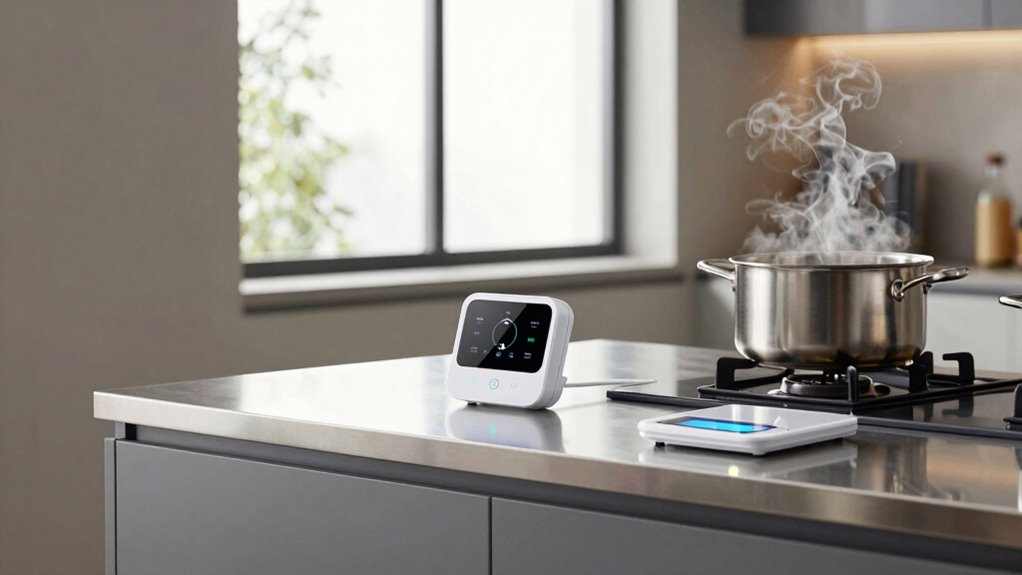
Kitchen sensors help remove guesswork by providing you with real-time data on temperature, humidity, and doneness, so you can cook with confidence. They monitor your food closely, adjusting to prevent overcooking or undercooking. With smart home integration, you can control appliances remotely and receive alerts when your meal is ready. This seamless automation makes cooking more precise and stress-free. Keep exploring to discover how these high-tech tools can transform your kitchen experience.

Get kitchen gear delivered free with Prime
- Fast, free delivery on millions of items
- Prime Video, Amazon Music and more included
- Member-only deals all year
Key Takeaways
- Provide real-time temperature and doneness data for precise cooking control.
- Automate adjustments based on sensor readings to ensure consistent results.
- Monitor humidity and environmental factors to prevent overcooking or undercooking.
- Sync with recipe guides for automatic process adjustments, reducing manual guesswork.
- Send alerts when desired cooking conditions are achieved, ensuring perfect results every time.

In recent years, kitchen sensors have revolutionized the way we cook by providing real-time data and automation that make meal preparation more precise and efficient. These devices can monitor temperature, humidity, and even the doneness of your food, eliminating the guesswork that often comes with traditional cooking methods. As you embrace this technology, you’ll find that seamless smart home integration plays an essential role in creating a streamlined cooking experience. Connecting sensors to your smart home system allows you to receive alerts, adjust appliances remotely, and automate cooking processes, making your kitchen smarter and more responsive.
One of the most vital aspects of using kitchen sensors effectively is sensor calibration. Proper calibration ensures that the data you receive is accurate, which directly impacts the quality of your cooking. Many sensors come with calibration settings that need to be fine-tuned to your specific environment. For example, temperature sensors might need adjustment to account for ambient room temperature or the particular cookware you’re using. By regularly calibrating your sensors, you guarantee they deliver reliable readings, helping you avoid overcooking or undercooking your meals.
Regular calibration of kitchen sensors ensures accurate data and perfect cooking results every time.
The beauty of smart home integration is that it allows you to set preferences and automate actions based on sensor data. Imagine walking into your kitchen with your phone notifying you that the oven has reached the ideal temperature or your smart stove automatically lowering heat once your food hits the perfect doneness. This coordination minimizes the chances of mistakes, giving you more confidence in your cooking. Plus, some sensors can even sync with recipe guides, adjusting cooking times or temperatures automatically to match the dish you’re preparing.
Sensor calibration isn’t a one-time task; it requires ongoing attention to maintain accuracy. Many devices come with user-friendly calibration procedures, often involving simple steps like adjusting a dial or following on-screen instructions. Doing this regularly ensures your sensor data remains trustworthy, and your meals turn out just right every time. When combined with smart home integration, calibration creates a cohesive system where your kitchen operates like a finely tuned machine, reducing stress and freeing you to focus on enjoying your cooking.
Additionally, understanding the importance of sensor calibration and its role in maintaining data accuracy can help you troubleshoot issues and optimize your device performance. Regular calibration also helps prevent sensor drift, which can occur over time and cause inaccurate readings. This ongoing maintenance is crucial to ensure your sensors continue to provide reliable data, especially as they age or when environmental conditions change. In the end, kitchen sensors remove guesswork by providing precise, real-time data that guides your cooking decisions. Proper sensor calibration and smart home integration make this technology even more effective, transforming your kitchen into a high-tech space where quality and consistency are the norm. With these tools at your fingertips, you’ll cook with confidence, knowing that every meal is crafted with accuracy and care.
As an affiliate, we earn on qualifying purchases.
Frequently Asked Questions
How Accurate Are Kitchen Sensors Compared to Traditional Thermometers?
Kitchen sensors are generally quite accurate, often surpassing traditional thermometers, especially when properly calibrated. You can trust them because sensor calibration guarantees precise readings, and data integration allows seamless updates and adjustments. Unlike manual thermometers, sensors provide real-time feedback and reduce errors, giving you confidence in your cooking. With consistent calibration and integration, these sensors deliver reliable, precise temperature data, making your culinary efforts more successful and enjoyable.
Can Sensors Detect Multiple Ingredients Cooking Simultaneously?
Imagine a sensor quietly monitoring multiple ingredients, detecting each one’s unique signals right at your stove. Yes, many kitchen sensors can handle ingredient detection for several items simultaneously, thanks to advanced calibration techniques. Proper sensor calibration guarantees accuracy across different ingredients, preventing cross-interference. This means you can cook complex dishes with confidence, as the sensors keep an eye on everything, revealing when each ingredient reaches perfection without guesswork.
Are Kitchen Sensors Compatible With All Types of Cookware?
Kitchen sensors are not compatible with all types of cookware, but many smart cookware options feature sensor integration designed for specific materials. You should check if your cookware is compatible with the sensor system, often made for non-stick, stainless steel, or ceramic surfaces. This guarantees accurate readings and ideal performance. Always verify compatibility before purchasing or using sensors with your cookware to get the best cooking results.
How Do Sensors Alert Users About Overcooking or Burning?
Think of sensors as vigilant guardians in your kitchen, constantly monitoring your food. When overcooking or burning begins to threaten, they send alerts like a lighthouse warning ships away from rocks. Proper sensor calibration guarantees these alerts are precise, fueling cooking automation. You stay relaxed, knowing your sensor’s watchful eye will ring the alarm at just the right moment, turning your cooking experience into a smooth, worry-free journey from stove to plate.
What Is the Typical Cost of Installing Kitchen Sensor Systems?
The typical cost of installing kitchen sensor systems ranges from $200 to $700, depending on the features and brand. If you want smart home integration and improved energy efficiency, investing in higher-end models can be worthwhile. These systems often include sensors for temperature, humidity, and motion, helping you monitor and optimize your kitchen environment seamlessly. Remember, professional installation might add to the overall cost but guarantees proper setup.
As an affiliate, we earn on qualifying purchases.
Conclusion
As you embrace kitchen sensors, you’re not just upgrading your gadgets—you’re revealing secrets that could revolutionize your cooking. Imagine the perfect dish every time, with sensors warning you just before overcooking or undercooking. But what’s next? Could these sensors someday anticipate your cravings or even adjust recipes on their own? The future of cooking is quietly approaching, promising a culinary experience where guesswork becomes a thing of the past—if you’re ready to take the leap.
wireless kitchen humidity sensor
As an affiliate, we earn on qualifying purchases.
As an affiliate, we earn on qualifying purchases.
smart oven temperature controller
As an affiliate, we earn on qualifying purchases.
As an affiliate, we earn on qualifying purchases.
Fall Picks
fall essentials
As an affiliate, we earn on qualifying purchases.