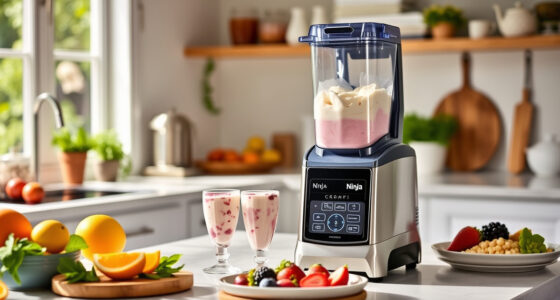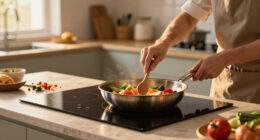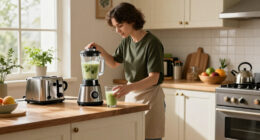
Using precision tools like thermometers and scales helps you cook more confidently by giving you exact measurements and clear feedback. These tools remove guesswork, making it easier to avoid overcooking or undercooking, especially with meat. As you rely on accurate data, you’ll notice consistent results that build your trust and skills faster. Over time, understanding how measurements affect your dishes will become second nature—keep going to discover even more ways these tools boost your cooking mastery.

Get kitchen gear delivered free — and shop member deals
- Fast, free delivery on millions of items
- Access to Prime Big Deal Days deals on October 6–7
- Prime Video, Amazon Music and more included
Key Takeaways
- Precise tools provide accurate measurements, reducing guesswork and ensuring consistent, successful results for beginners.
- They offer immediate feedback, helping new cooks learn from their mistakes quickly.
- Accurate data builds confidence, encouraging experimentation and skill development.
- Using precision tools creates reliable benchmarks, making it easier to refine techniques over time.
- They facilitate a scientific approach, deepening understanding of how ingredients and temperatures affect outcomes.
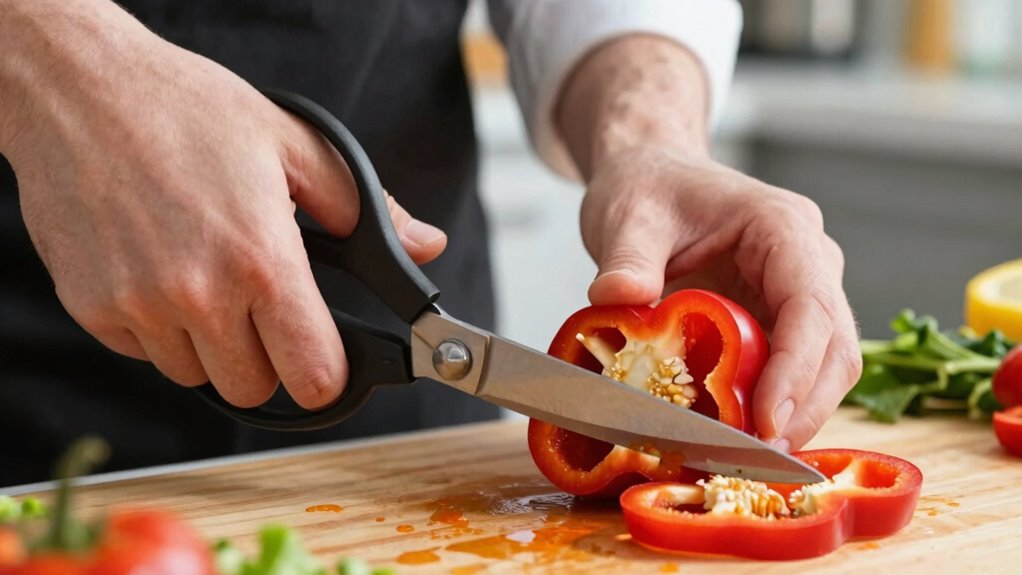
When you’re just starting out in the kitchen, it can be frustrating to see your dishes not turn out quite right. It’s natural to feel overwhelmed, but the key to improving quickly is finding ways to build your cooking confidence and accelerate your skill development. That’s where precision tools come into play. They help you learn what works and what doesn’t, giving you a clearer sense of control and accuracy in your cooking process.
Precision tools, like digital thermometers, calibrated scales, and sharp knives, remove guesswork from your tasks. Instead of relying on intuition alone, these tools provide exact measurements and readings. For example, a digital thermometer tells you precisely when your meat reaches the ideal temperature, preventing overcooking or undercooking. This immediate feedback boosts your confidence because you understand exactly where you stand, rather than guessing or relying on timing alone. As you see consistent results, your trust in your skills grows, and you become more comfortable experimenting with new recipes.
Precision tools like thermometers and scales provide exact readings, boosting confidence and improving cooking consistency.
Using precision tools also speeds up your skill development. When you measure ingredients accurately, your dishes turn out more reliably, which encourages you to try more complex recipes. Over time, this consistency helps you recognize patterns—like how a certain amount of salt or a specific oven temperature affects your dish. As you learn these nuances, you start to cook more intuitively, making decisions based on data rather than guesswork. This process sharpens your skills faster because you’re actively learning from each experience, rather than repeating mistakes. Additionally, understanding kitchen measurements and their impact enhances your overall cooking knowledge. Recognizing how precise measurements influence the outcome helps you develop a more scientific approach to cooking, which can be incredibly empowering for new cooks. Furthermore, using these tools consistently allows you to build a mental reference point for future cooking endeavors, solidifying your skills even more effectively. Developing a good understanding of cooking fundamentals further deepens your confidence and competence in the kitchen.
Incorporating accurate measurements into your routine also helps you develop a more consistent cooking rhythm, making your overall process more efficient. Furthermore, precision tools help you understand the science behind cooking. Knowing why a certain temperature or measurement produces a specific result deepens your knowledge, making each cooking session more educational. This understanding boosts your confidence, as you see your efforts translate into better dishes. It’s less about luck and more about mastery, which motivates you to keep honing your skills.
In essence, precision tools act as your guides, helping you develop a strong foundation in cooking. They eliminate ambiguity and give you clear, actionable information. As a result, your confidence increases because you’re equipped with reliable data, and your skill development accelerates because you’re learning faster and more accurately. With consistent use, these tools turn cooking from a frustrating trial-and-error process into a rewarding journey of mastery, making you a more competent and confident cook sooner than you might have imagined.
As an affiliate, we earn on qualifying purchases.
Frequently Asked Questions
How Do Precision Tools Differ From Regular Kitchen Utensils?
Precision tools differ from regular utensils by focusing on ingredient accuracy and optimized utensil design. You’ll find that these tools are crafted for specific tasks, helping you measure ingredients precisely and execute techniques with greater consistency. Regular utensils might be more general, but precision tools give you better control, reducing mistakes and speeding up your cooking process. This tailored design ultimately makes it easier for you to improve your skills faster.
Are Precision Tools Suitable for All Types of Cooking?
Precision tools are like a chef’s secret weapon, but they’re not suited for every dish. While they help you handle ingredient quality and master cooking terminology with finesse, some recipes call for traditional utensils to bring out authentic flavors. For delicate sauces or rustic stews, simple tools work best. Use precision tools when precision matters most, but trust your instincts and the dish’s needs to guide your choice.
What Safety Precautions Should I Take When Using Precision Tools?
When using precision tools, always wear appropriate safety gear like cut-resistant gloves and eye protection to prevent injuries. Practice proper handling by keeping your fingers clear of blades and sharp edges, and handle tools with steady, controlled movements. Keep your workspace clean and well-lit to avoid accidents. Never rush, and always follow manufacturer instructions. These precautions help guarantee your safety and allow you to use your precision tools effectively.
How Much Do Precision Tools Typically Cost?
Like stepping into a bustling market, the cost of precision tools varies widely. You can find basic sets around $20, but high-end brands with stellar reputations might range from $50 to over $200. When doing a price comparison, consider brand reputation and durability. Investing in reputable brands often means better quality and longevity, helping you improve faster and safer as you hone your skills with reliable tools.
Can Precision Tools Help Improve Cooking Skills for Experienced Chefs?
Yes, precision tools can help even experienced chefs improve their skills. By refining cooking terminology and enhancing kitchen ergonomics, these tools allow you to execute techniques more accurately and comfortably. They help you maintain consistency, speed, and efficiency, reducing fatigue and mistakes. As a result, you can focus on perfecting flavors and presentation, elevating your culinary artistry and boosting confidence in your skills.
As an affiliate, we earn on qualifying purchases.
Conclusion
Embracing precision tools isn’t just about perfecting a dish; it’s about gently guiding your skills along a smoother path. With each carefully measured step, you’re quietly building confidence without the noise of uncertainty. Over time, these tools become your trusted companions, whispering lessons of patience and practice. Remember, every master was once a beginner, and with the right tools, your culinary journey will unfold more gracefully than you might have imagined.
As an affiliate, we earn on qualifying purchases.
As an affiliate, we earn on qualifying purchases.
Halloween Picks
halloween
As an affiliate, we earn on qualifying purchases.