
TL;DR

Get kitchen gear delivered free — and shop member deals
- Fast, free delivery on millions of items
- Access to Prime Big Deal Days deals on October 6–7
- Prime Video, Amazon Music and more included
A Good Housekeeping report lists cranberries, apples, pears, grapes, kale, cabbage, Brussels sprouts and pumpkin as fall produce picks, with dietitians describing their nutrients and serving ideas. The cited benefits vary by food, and some claims—such as possible cancer-related effects of Brussels sprouts—need more research in people.
Good Housekeeping has published a fall produce guide featuring eight fruits and vegetables recommended by dietitians, including cranberries, apples, pears, grapes, kale, cabbage, Brussels sprouts and pumpkin. The report pairs nutrition information with meal ideas, while some potential health effects it describes remain preliminary or are not established as outcomes for individuals.
The report draws on comments from registered dietitians and nutrition professionals. It describes apples as a source of soluble fiber, which Anne Danahy says can help lower LDL, or “bad,” cholesterol and support fullness. Janelle Leatherwood notes that apples also contain vitamin C and recommends varieties such as Pink Lady, Honeycrisp, Granny Smith and Sweet Tango. Pears provide fiber, vitamin C and potassium; the report says a medium pear contains nearly 6 grams of fiber.
For other fruit, dietitian Lauren Manaker singles out Autumn Crisp grapes for their crisp texture and points to research examining grapes in relation to heart, brain, eye, gut and skin health. Danahy says cranberries contain antioxidants and compounds that may reduce urinary tract infection risk. Her suggested preparation is a cranberry-orange relish; the berries can also be added to rice dishes and stews.
Among vegetables, kale is described as a source of vitamins, minerals and fiber, including calcium and vitamin K. Amy Brownstein says one cup of shredded cabbage provides close to 30 milligrams of vitamin C—about 33% of the daily value cited in the report—and vitamin K. Brussels sprouts also provide vitamins C and K. Pumpkin supplies vitamin A and fiber, according to Leatherwood. Suggested uses include pumpkin in oatmeal or smoothies, roasted Brussels sprouts, kale chips and cabbage in slaws or soups.
Practical Ways to Eat Fall Produce
The guide offers readers a seasonal shopping and meal-planning list, but its value is practical rather than a claim that one food prevents or treats disease. Its recommendations point to ways to add fiber-rich produce and a range of vitamins to everyday meals, from apples with peanut butter to cabbage in sandwiches and pumpkin in soup.
The report also distinguishes nutrient information from stronger health claims. For example, it notes that compounds in Brussels sprouts slowed cancer-cell growth in laboratory studies, while Danahy says more research is needed to confirm effects in humans. That qualification matters: laboratory findings do not establish that eating Brussels sprouts prevents cancer.
As an affiliate, we earn on qualifying purchases.
What the Dietitian Guide Covers
The supplied source is a Good Housekeeping article titled “The Healthiest Fall Fruits and Vegetables to Add to Your Plate, According to Dietitians.” It presents advice and comments from several nutrition professionals, including registered dietitians, rather than reporting new clinical research. The source material does not provide a publication date.
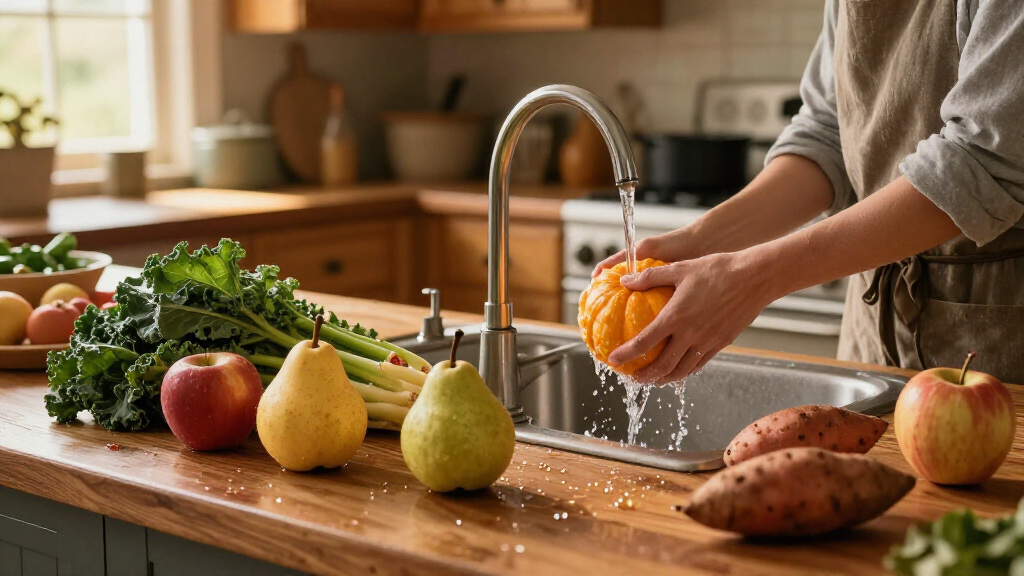
Its eight featured foods span fruit and vegetables commonly associated with fall: cranberries, apples, pears and grapes, followed by kale, cabbage, Brussels sprouts and pumpkin. Some, such as apples, are available year-round; the article says their flavor is especially appealing in fall. The recommendations emphasize variety and preparation, not a single required diet.
“Pears are simply quite perfect, especially when eaten at the optimal stage of ripeness—not too squishy and not too crunchy.”
— Janelle Leatherwood, MS, RDN, CD
As an affiliate, we earn on qualifying purchases.
Limits of the Health Claims
The supplied article excerpt does not include links to the underlying studies or explain the evidence strength behind every health claim. It also does not state the date of publication. Claims should be read in that setting: the report summarizes dietitian guidance, not a clinical trial testing whether these foods prevent disease.
The article explicitly says that more research in humans is needed to confirm the possible cancer-related effects of Brussels sprouts compounds. Its wording on cranberries says compounds may reduce UTI risk; the excerpt does not quantify the effect or specify who might benefit. No individualized medical advice or serving targets are provided.
As an affiliate, we earn on qualifying purchases.
How to Use the Seasonal List
The report’s immediate takeaway is to choose produce that fits familiar meals and personal preferences. Readers can try cranberry relish, sliced apples or pears as snacks, grapes in a savory dish, kale in soups, cabbage in slaw, roasted Brussels sprouts or pumpkin puree in oatmeal. These are serving ideas from the source, not prescribed amounts.
The supplied material identifies no upcoming research, official guidance or follow-up announcement. Any firmer conclusion about disease prevention would require evidence beyond the dietitian comments and study summaries included in the report.
As an affiliate, we earn on qualifying purchases.
Key Questions
Which fall fruits and vegetables does the report recommend?
It features cranberries, apples, pears, grapes, kale, cabbage, Brussels sprouts and pumpkin.
Which of the listed foods are sources of fiber?
The report identifies apples, pears, kale and pumpkin as fiber sources. It says a medium pear contains nearly 6 grams of fiber.
Does the report say Brussels sprouts prevent cancer?
No. It says some compounds in Brussels sprouts slowed cancer-cell growth in laboratory studies, and notes that more research is needed to confirm effects in humans.
What are some ways to prepare the produce?
The report suggests cranberry-orange relish, apple slices with peanut butter, pears in salads, roasted Brussels sprouts, kale chips, cabbage slaw and pumpkin in oatmeal, smoothies or soup.
Source: rss
Fall Picks
fall essentials
As an affiliate, we earn on qualifying purchases.

![Bread 🍞 [Bonnymama7]](https://thesmartsous.com/wp-content/uploads/2026/09/bread-bonnymama7-featured-560x300.jpg)