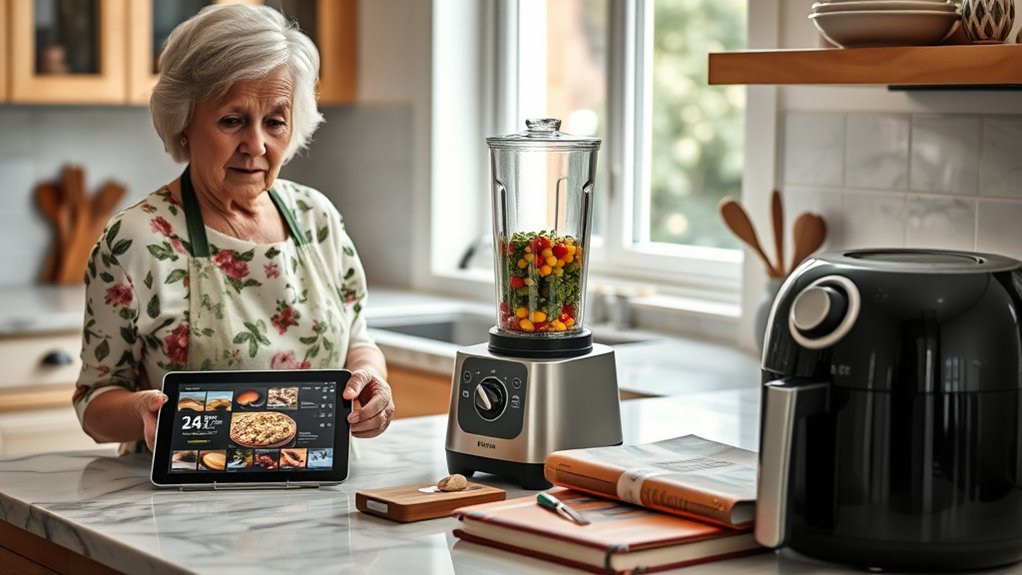

To adapt grandma’s recipes for modern gadgets, focus on understanding traditional techniques like slow simmering and balancing flavors, then choose appliances that match these methods, such as slow cookers or air fryers. Adjust cooking times, ingredient quantities, and seasonings for each device’s unique features. Guarantee proper texture and safety by monitoring progress and using the right tools. Want to keep grandma’s flavors alive while embracing new tech? Keep exploring for helpful tips!
Key Takeaways
- Assess traditional recipe techniques and flavor profiles to identify essential elements for preservation during adaptation.
- Match modern gadgets’ capabilities with recipe steps, adjusting cooking times and methods accordingly.
- Scale ingredients proportionally to fit appliance capacities, maintaining flavor balance and texture.
- Adjust seasonings and liquids based on appliance moisture retention and cooking environment.
- Follow safety guidelines, monitor cooking progress, and fine-tune parameters to ensure quality and safety.
Understanding Traditional Cooking Techniques
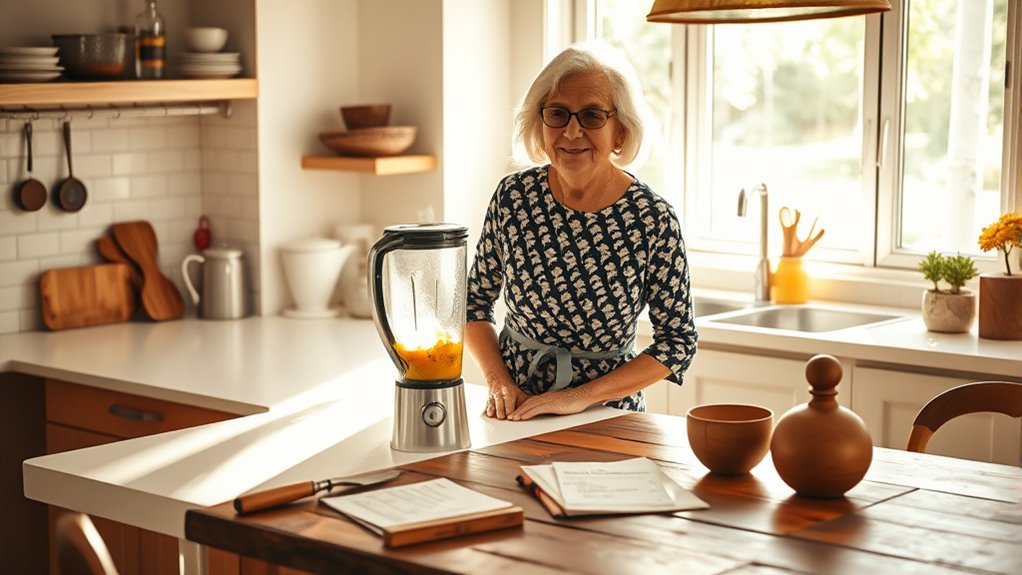
Understanding traditional cooking techniques is essential before adapting grandma’s recipes to modern gadgets. When you grasp these methods, you learn how flavors develop and how to preserve their authentic taste. Traditional techniques often rely on slow simmering, proper heat control, and specific timing, all vital for flavor preservation. For example, sautéing vegetables at just the right temperature liberates their sweetness, while slow braising tenderizes meat and enriches sauces. Additionally, incorporating visual and auditory cues can enhance your understanding of these techniques, making it easier to replicate grandma’s flavors. Paying attention to smell and sound during cooking is a helpful way to judge when a dish is perfectly done. Recognizing cooking signals can guide you in adjusting heat and timing for consistent results. Developing sensory awareness is key to mastering traditional cooking methods and ensuring authenticity. By understanding these core principles, you can better replicate the depth of flavor that grandma achieved, even when using modern devices. This knowledge guarantees you don’t lose the essence of her recipes and that each dish maintains its original character, regardless of the kitchen tools you choose. Additionally, embracing authenticity in cooking techniques helps maintain a connection to cultural heritage and culinary history.
Selecting the Right Modern Gadget for Your Recipe

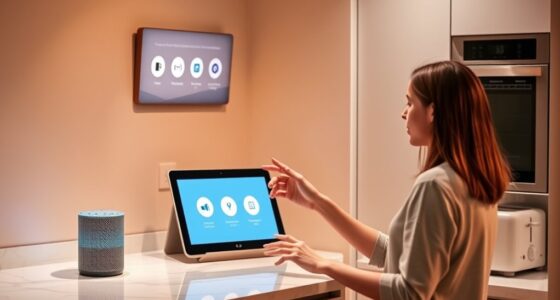
Choosing the right modern gadget depends on selecting appliances that suit your recipe’s needs. You should match the gadget’s capabilities with the techniques you want to use, ensuring it handles your ingredients well. Incorporating smart appliance integration can also enhance your kitchen’s efficiency and precision. Additionally, considering connected equipment that offers real-time feedback can help you monitor your cooking progress more accurately, leading to better results. Exploring user-friendly design can make a significant difference in your comfort and confidence while cooking. Recognizing crypto market volatility and how it may affect your investment strategies can also inform your choice of gadgets, especially if you plan to incorporate digital tools or platforms into your culinary setup. Don’t forget to think about how easy and comfortable it is to use, so your cooking experience stays enjoyable.
Choosing Appropriate Appliances
When adapting grandma’s recipes to modern gadgets, selecting the right appliance can make all the difference in achieving authentic flavors and textures. If your recipe calls for traditional utensils or vintage cookware, look for modern gadgets that mimic those functions closely. For example, a slow cooker can replace a Dutch oven, while a high-quality blender can replicate traditional mortar and pestle. Consider the recipe’s core process—whether it involves simmering, blending, or steaming—and choose an appliance that handles it efficiently. Picking the appropriate device guarantees your dish maintains its original character without sacrificing convenience. Additionally, understanding kitchen science & materials can help you select appliances like projectors that ensure optimal visual quality when displaying your culinary creations or instructional videos. Incorporating smart home automation can also streamline your cooking process, allowing you to set timers and adjust temperatures remotely for better precision. Being aware of modern appliance features can further assist in selecting tools that enhance efficiency and ease of use during your cooking adventures.
Matching Gadget Capabilities
Matching the right gadget to your recipe requires evaluating the specific capabilities each modern appliance offers. A tech gadget like a smart appliance can provide precise temperature control, timing, and automation that traditional methods lack. Consider whether your recipe needs slow, steady heat or quick adjustments; if so, choose a smart appliance with these features. Some gadgets excel at multitasking, such as multi-cookers that combine pressure cooking and slow-cooking functions, making them ideal for adapting complex grandma recipes. Pay attention to features like pre-programmed settings, Wi-Fi connectivity, and sensor accuracy. By matching your recipe’s requirements with a tech gadget’s capabilities, you ensure better results and a smoother cooking experience. Selecting the right gadget is key to successfully modernizing grandma’s classic dishes.
Considering User Experience
Since user experience can make or break your cooking process, it’s vital to select a gadget that feels intuitive and easy to use. When choosing, consider how well it handles ingredient substitutions—some appliances adapt easily, while others require more manual input. Familiarity with cooking terminology helps you understand the gadget’s functions and settings, making your workflow smoother. Look for features like clear controls, simple interfaces, and helpful presets that match your comfort level. A device that aligns with your cooking style minimizes frustration and saves time. Understanding appliance features and how they relate to your needs can further streamline your cooking experience. Additionally, being aware of music therapy integration concepts can inspire you to incorporate calming sounds into your kitchen routine for a more relaxing cooking environment. Incorporating tools that support user privacy and cookies can also help manage your data preferences during online shopping for gadgets. Ultimately, choosing a gadget that you find straightforward ensures a more enjoyable experience, allowing you to focus on recreating grandma’s recipes rather than battling unfamiliar technology.
Adjusting Cooking Times for Slow Cookers and Multi-Cookers
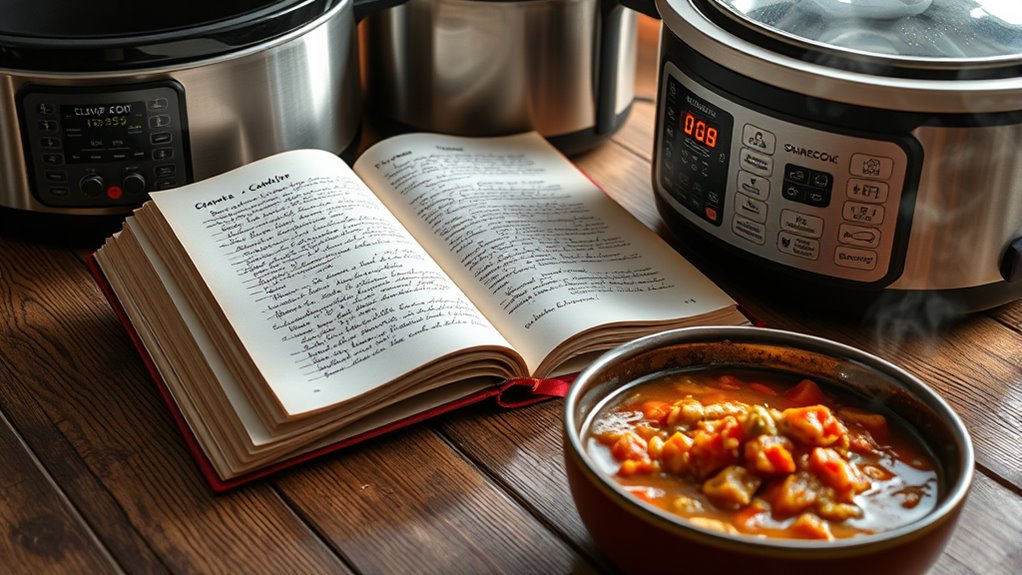
Adjusting cooking times for slow cookers and multi-cookers can substantially affect your recipe’s outcome, so it’s important to comprehend how these appliances differ from traditional methods. Unlike baking techniques that rely on dry heat, slow cookers and multi-cookers use moist heat and longer cooking periods. You may need to extend or reduce cooking times based on your appliance’s specific settings. Keep in mind that ingredient substitutions, such as swapping fresh herbs for dried or using different cuts of meat, can also influence cooking duration. Always check for doneness, as these gadgets often cook more evenly and gently than traditional ovens. Understanding appliance differences is key to achieving optimal results. Additionally, proper appliance calibration can help you better tailor cooking times to your specific device. Adjusting times ensures your dish remains tender, flavorful, and properly cooked, even when adapting grandma’s recipes for modern gadgets.
Modifying Ingredient Quantities for Air Fryers and Food Processors

When using air fryers and food processors, you often need to adjust ingredient quantities to match their smaller or more efficient capacities. Scaling ingredient ratios guarantees your recipes turn out just right without overloading the gadgets. Pay attention to portion sizes so your dishes stay flavorful and properly cooked. Incorporating nutritional balance is essential to preserve the health benefits of traditional recipes while adapting to modern appliances. Additionally, understanding specialized equipment can help optimize ingredient proportions for better results. Being aware of ethnic and cultural influences can also guide you in maintaining authentic flavors while making modifications.
Adjusting Portion Sizes
Modifying ingredient quantities is essential when adapting grandma’s recipes for modern gadgets like air fryers and food processors. This involves portion scaling to match the new equipment’s capacity and ensuring even cooking or processing. When making recipe adjustments, consider the size of your air fryer or food processor to avoid overcrowding or underutilization. If a recipe originally serves six, but your gadget only holds four, reduce ingredient amounts accordingly. Accurate portion sizing helps maintain flavor balance and prevents waste. Keep in mind that some ingredients may need slight tweaks to accommodate smaller or larger quantities. Additionally, understanding free floating concepts in backyard design can inspire creative ways to set up your cooking and dining areas, ensuring they complement your adapted recipes. Adjusting portion sizes ensures your dish cooks properly and tastes just right, making grandma’s classic recipes both modern and reliably delicious.
Scaling Ingredient Ratios
Scaling ingredient ratios guarantees that grandma’s recipes work perfectly with modern gadgets like air fryers and food processors. To maintain cooking precision, you need to adjust ingredient quantities carefully. First, determine your desired batch size and then recalculate each ingredient proportionally. Second, consider ingredient substitutions that improve compatibility with your gadget, such as replacing heavy oils with lighter options. Third, use precise measurements rather than eyeballing to guarantee consistent results. Fourth, test small batches first to fine-tune ratios before scaling up. This approach helps you adapt recipes accurately, preserving flavors and textures. Proper scaling ensures your modern gadgets function effectively, making your cooking process seamless and your dishes just as delightful as grandma’s original recipes.
Tweaking Seasonings and Flavor Profiles for Different Appliances
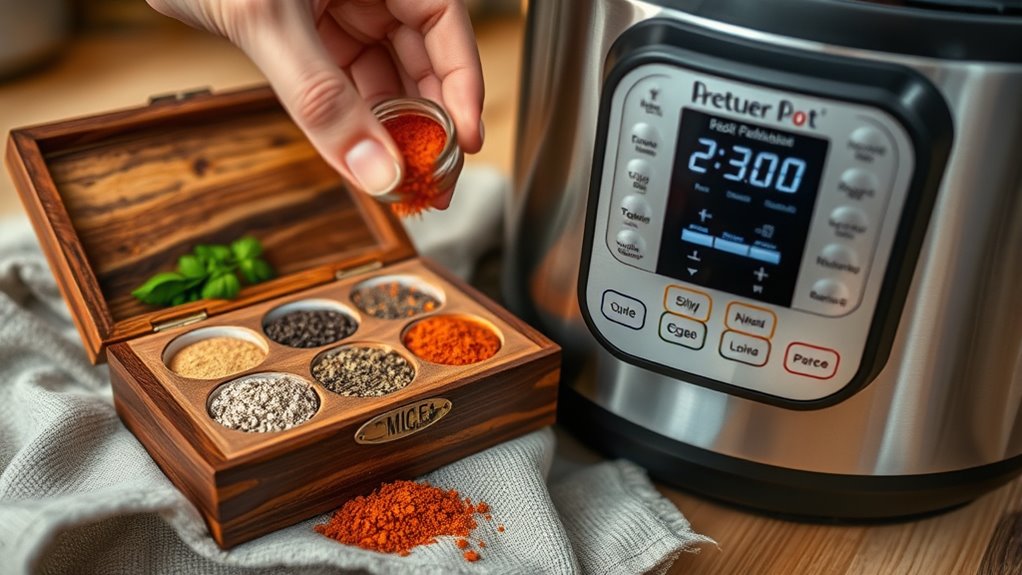
Adapting grandma’s recipes to modern appliances often means adjusting seasonings and flavor profiles to suit different cooking methods. You’ll need to focus on seasoning adjustments, as flavors can intensify or diminish depending on the device. For example, slow cookers may mellow spices over time, so you might add a touch more at the end. Conversely, pressure cookers can concentrate flavors quickly, requiring you to dial back seasoning amounts initially. Flavor balancing is key—you want the dish to taste just right, not overly salty or bland. Tasting as you go helps you fine-tune the seasoning levels. Remember, modern appliances sometimes alter how flavors develop, so be prepared to make small tweaks for the perfect taste in every bite.
Ensuring Proper Texture and Consistency in Modern Devices

When adjusting seasoning levels for different appliances, it’s also important to take into account how these devices affect the dish’s texture and consistency. To guarantee proper texture consistency, focus on ingredient adaptation and appliance behavior.
- Monitor cooking times, as some devices cook faster, risking over-softening or breakdown of ingredients.
- Adjust liquid amounts, since certain gadgets may retain moisture differently, impacting texture.
- Use appropriate tools, like a whisk or masher, to maintain ingredient integrity.
- Be attentive to process changes, such as blending or steaming, which can alter the dish’s final consistency.
Safety Tips When Using New Kitchen Technology

As you begin exploring new kitchen technology, prioritizing safety helps prevent accidents and guarantees smooth cooking experiences. Always read the user manual thoroughly before operating new appliances to understand their proper use and safety features. Keep your workspace clean and dry to avoid slips and electrical hazards. Regular appliance maintenance is essential; check cords, plugs, and seals for wear and tear, and clean devices according to manufacturer instructions. Use safety locks and shields when available to prevent accidental activation. Avoid overloading outlets and ensure proper ventilation to prevent overheating. Never leave appliances unattended while in use, especially those with heating elements. By practicing good kitchen safety habits and maintaining your equipment, you reduce risks and enjoy the benefits of your modern gadgets confidently.
Troubleshooting Common Challenges During Conversion
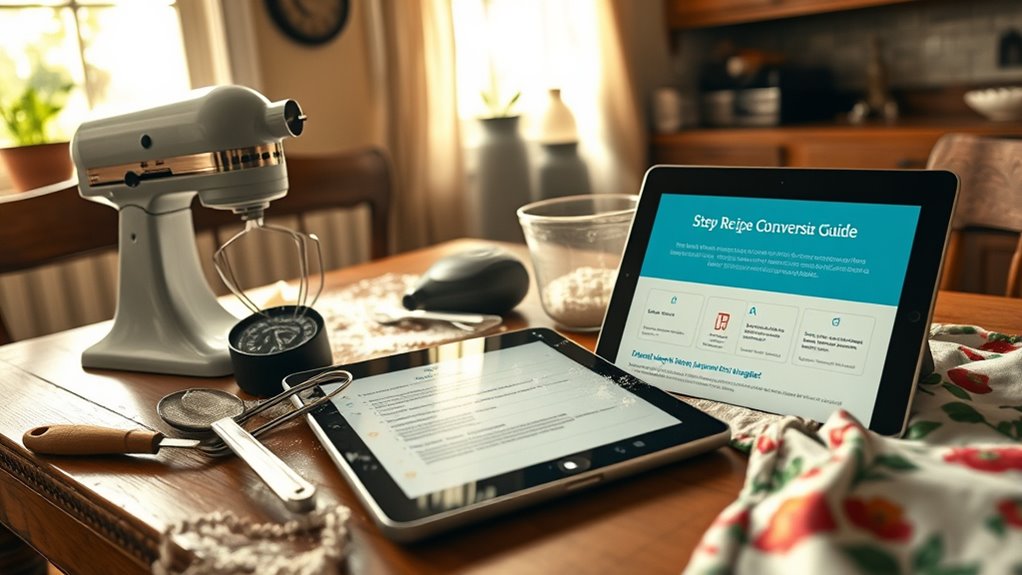
Converting Grandma’s recipes to modern gadgets can present unexpected challenges, but troubleshooting effectively maintains your kitchen running smoothly. One common issue is ingredient substitutions; for example, adapting old recipes may require adjusting measurements or finding suitable alternatives. To avoid confusion, document each change clearly in your recipe documentation. Here are some tips:
Troubleshoot ingredient substitutions carefully and document every change for successful recipe conversions.
- Double-check ingredient quantities to ensure proper conversion.
- Note any substitutions you make for future reference.
- Test the recipe with these adjustments before serving.
- Keep detailed records to replicate successful conversions and troubleshoot failures.
Preserving the Authenticity of Grandma’s Flavors With Modern Tools

Maintaining the authentic flavors of Grandma’s recipes while using modern tools involves more than just swapping ingredients; it requires careful attention to techniques and seasonal nuances. To guarantee flavor preservation, stick to traditional techniques whenever possible, even if you’re using gadgets. For example, slow cooking or gentle simmering can replicate Grandma’s methods and develop depth of flavor. Pay attention to seasonal ingredients, as they offer authentic taste profiles that can’t be mimicked with substitutes. Use modern tools to enhance these techniques without compromising the essence of the original dish. By respecting traditional methods and focusing on flavor preservation, you’ll keep Grandma’s recipes true to their roots while benefiting from the convenience of modern technology.
Frequently Asked Questions
Can I Convert All Traditional Recipes to Modern Gadgets Easily?
You can often convert traditional recipes to modern gadgets, but it’s not always easy. You need to think about ingredient substitution and appliance compatibility. Some ingredients may need adjustments for modern appliances, like reducing cook times or temperature settings. Check your appliance’s features and adapt accordingly. With a bit of experimenting, you’ll find that most recipes can be successfully adapted, making cooking both easier and faster.
How Do I Maintain Grandma’s Flavor Authenticity With New Appliances?
You can preserve grandma’s flavor by balancing ingredient adjustments with modern appliances. Start by understanding how new gadgets alter cooking times and temperatures, then tweak your ingredients accordingly to keep that authentic taste. Embrace the nostalgia of her flavors, even as the process shifts. With careful attention to flavor preservation and ingredient adjustments, you’ll honor her recipes while enjoying the convenience of today’s technology.
Are There Recipes That Shouldn’T Be Adapted to Modern Kitchen Devices?
You should avoid adapting recipes that are deeply rooted in heritage preservation and culinary authenticity, such as traditional fermentation or slow-cooked dishes. These methods often rely on specific equipment or techniques that modern gadgets can’t replicate authentically. By preserving the original process, you maintain the story and cultural significance behind grandma’s recipes, ensuring that the true essence of her culinary heritage stays intact, even if it means sticking to traditional methods.
What Are the Best Safety Practices for Using Unfamiliar Appliances?
You should always treat unfamiliar appliances like ticking time bombs, not cute gadgets. To guarantee appliance safety, read the manual thoroughly, keep the area dry, and never leave devices unattended. Recognize kitchen hazards such as hot surfaces or sharp blades, and wear appropriate safety gear. Remember, even modern gadgets can surprise you—so stay alert, follow safety tips, and keep your kitchen a hazard-free zone, no matter how shiny or new the appliance appears.
How Can I Troubleshoot if My Modern Gadget Doesn’T Cook Evenly?
If your modern gadget doesn’t cook evenly, start by checking the temperature calibration to guarantee it’s accurate. Uneven heat distribution often causes inconsistent cooking, so inspect the heating elements or coils for damage or dirt buildup. You might also try repositioning your food or adjusting the cooking time. If problems persist, consult the user manual or contact customer support for further troubleshooting, as these steps can help restore even cooking.
Conclusion
As you embrace these modern gadgets, imagine your grandma’s recipes coming to life in new ways—steam rising from your air fryer, flavors blending perfectly in your multi-cooker. It’s a delightful coincidence how technology can preserve tradition while adding your personal touch. With each adjustment, you’re not just cooking; you’re creating new memories. So, keep experimenting, trust your instincts, and enjoy the beautiful harmony of old-world flavors and modern innovation.