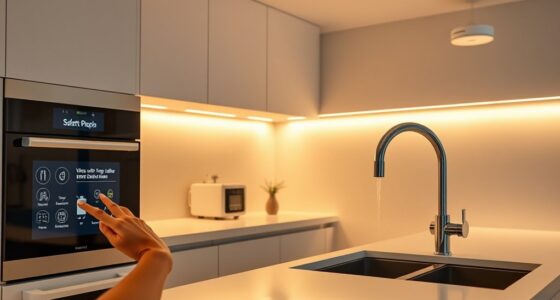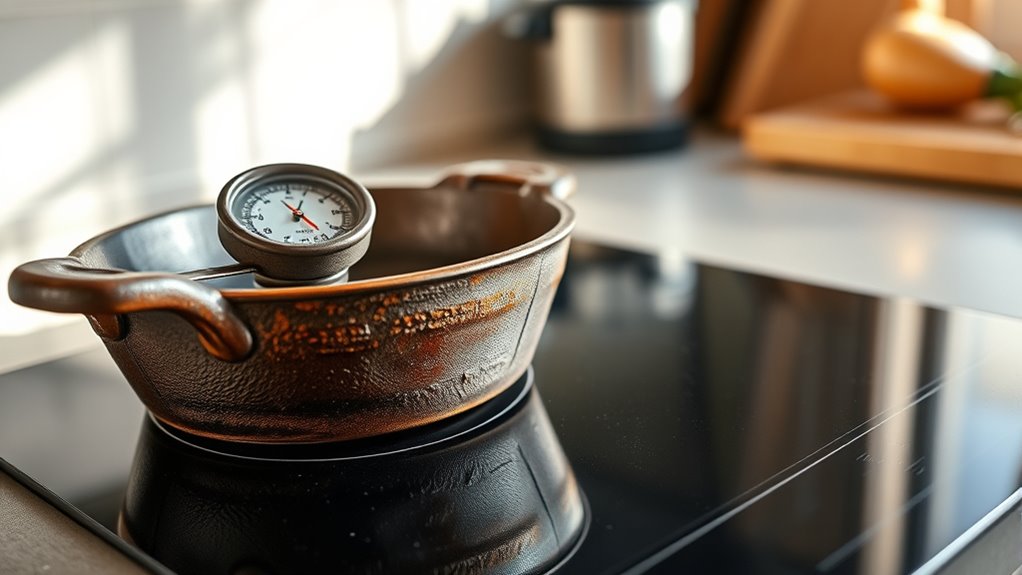

To integrate traditional cookware with modern gadgets, start by understanding their care needs and compatibility. Season your cast iron properly to guarantee it works well with induction stoves, and handle ceramic pieces gently to prevent damage when using electric or ceramic cooktops. Avoid sudden temperature changes to prolong lifespan. Combining old techniques with new appliances can boost your kitchen’s efficiency and flavor, and exploring these tips will help you make the most of both worlds.
Key Takeaways
- Ensure traditional cookware is properly seasoned and cleaned to maintain compatibility with modern induction and electric stoves.
- Avoid sudden temperature changes to prevent damage when transitioning between traditional and modern appliances.
- Use appropriate cookware materials (cast iron, ceramic) that are compatible with specific modern gadgets for optimal performance.
- Follow manufacturer guidelines for cleaning and care to preserve cookware lifespan and functionality in modern settings.
- Combine traditional techniques with modern technology for enhanced flavor, efficiency, and safe usage across various kitchen appliances.

Traditional cookware has stood the test of time for a reason, offering unique flavors and cooking techniques that modern tools often can’t replicate. If you’re blending old and new, understanding how to care for these pieces is crucial. For cast iron, proper seasoning is key. When you regularly season your cast iron skillet, you build a natural non-stick surface that enhances flavors and improves performance over time. To do this, you scrub the skillet clean, dry it thoroughly, and apply a thin layer of oil—preferably vegetable or flaxseed oil—before baking it in the oven. Repeating this process periodically ensures your cast iron develops a resilient, non-stick coating that’s essential for achieving that perfect sear or crisp crust. Remember, avoiding soap and harsh scrubbing maintains the seasoning’s integrity, helping your skillet last for generations. Proper storage can also prevent rust and damage, extending the lifespan of your cookware.
Meanwhile, ceramic cookware demands different care. While ceramic pieces are known for their non-stick surfaces and resistance to scratching, they require gentle handling to preserve their longevity. When cleaning ceramic, avoid abrasive scrubbers that can chip or scratch the coating. Instead, use soft sponges and mild detergents, and rinse thoroughly. If food sticks stubbornly, soaking the ceramic in warm water before gentle scrubbing can make cleanup easier. It’s also important to stay away from sudden temperature changes—don’t transfer a hot ceramic pan directly to cold water, as this can cause cracking or warping. Proper ceramic care not only keeps your cookware looking good but also maintains its non-stick properties, which is crucial when integrating traditional pieces with modern gadgets like electric stoves or induction cookers. Additionally, choosing appliances with energy efficiency features can help reduce electricity use while cooking.
As you combine these traditional tools with modern appliances, remember that each material has specific needs. Cast iron, for example, can be used on induction cooktops if properly seasoned, but it’s best to avoid sudden temperature shifts. Ceramic cookware often works well with modern ovens and stovetops, but only if you handle it gently and clean it correctly. By respecting the unique care requirements—like maintaining cast iron seasoning and practicing gentle ceramic cleaning—you ensure these trusty pieces continue to perform beautifully alongside your modern gadgets. This blend of old and new allows you to enjoy the depth of flavors and techniques that traditional cookware offer, while benefiting from the convenience and precision of contemporary technology. With a little attention and care, you’ll keep your cookware in top shape, creating delicious meals that honor both history and innovation.
Frequently Asked Questions
Can Traditional Cookware Be Used on Induction Stoves?
Yes, traditional cookware can be used on induction stoves if it’s induction compatible. Check the cookware material—magnetic metals like cast iron or certain stainless steels work best. Non-magnetic materials like aluminum or copper won’t work unless they have a magnetic base. To verify compatibility, test with a magnet; if it sticks, your cookware is suitable for induction cooking.
How Do I Clean Vintage Cast Iron With Modern Cleaning Products?
To clean vintage cast iron, you should avoid harsh modern cleaning products. Instead, use traditional cleaning techniques like scrubbing with coarse salt and a brush to remove rust and residue. Rinse with warm water, then dry thoroughly to prevent rusting. For restoring vintage cast iron, apply a thin layer of vegetable oil and heat it gently. This preserves its seasoning and keeps your cookware in excellent condition.
Are There Safety Concerns When Combining Old and New Cookware?
Did you know that combining old and new cookware can pose safety risks? You should be cautious about fire hazards and chemical leaching, especially if vintage pieces aren’t properly maintained. Old cookware may have lead-based paints or rust, which can leach into food. Always inspect your cookware thoroughly, avoid using damaged items, and follow safety guidelines to prevent fire risks or harmful chemical exposure when mixing traditional and modern pieces.
What Adaptations Are Needed for Traditional Cookware to Fit Modern Appliances?
To adapt traditional cookware for modern appliances, you’ll need simple adaptation techniques and cookware modifications. Start by inspecting your cookware for compatibility issues, such as uneven bottoms or incompatible materials. Use heat diffusers or custom-fit bases to guarantee stability and even heat distribution. You might also consider adding non-slip grips or handles for safety. These small modifications help your traditional pieces work efficiently and safely on modern stoves and cooktops.
How Can I Prevent Damage When Using Modern Gadgets With Delicate Cookware?
Think of your delicate cookware as a fragile butterfly, and your modern gadgets as a clumsy bull in a china shop. To prevent damage, handle everything carefully—avoid sudden movements or temperature shocks. Use protective coatings or pads, like silicone or felt, to cushion impacts and avoid scratching surfaces. With gentle handling and protective layers, you’ll keep your vintage treasures pristine while enjoying the convenience of modern tech.
Conclusion
By blending traditional cookware with modern gadgets, you create a versatile kitchen that honors history while embracing innovation. It’s about enhancing your cooking experience without losing the charm of the old ways. Imagine the possibilities when old and new work together—could you be the chef who transforms everyday meals into extraordinary creations? So, why not experiment and discover how these timeless tools can elevate your culinary game today?