Choosing the right food slicer depends on your needs, budget, and skill level. Manual mandolines are simple, affordable, and great for occasional use, allowing you to control slice thickness easily. Electric slicers offer precision and consistency, ideal for large quantities or professional kitchen tasks, but they are bulkier and more expensive. Safety and maintenance are key, so always follow proper procedures. Keep exploring to discover how to get perfect slices every time.

Get kitchen gear delivered free with Prime
- Fast, free delivery on millions of items
- Prime Video, Amazon Music and more included
- Member-only deals all year
Key Takeaways
- Choosing between manual mandolines and electric slicers depends on slicing volume, precision needs, and safety considerations.
- Manual mandolines offer adjustable thickness control but require more skill and caution during use.
- Electric slicers provide consistent, uniform slices efficiently, ideal for large quantities and professional settings.
- Safety measures, such as using hand guards and unplugging during cleaning, are essential regardless of the slicer type.
- Regular maintenance, including blade sharpening and proper cleaning, ensures optimal performance and safety for both tools.
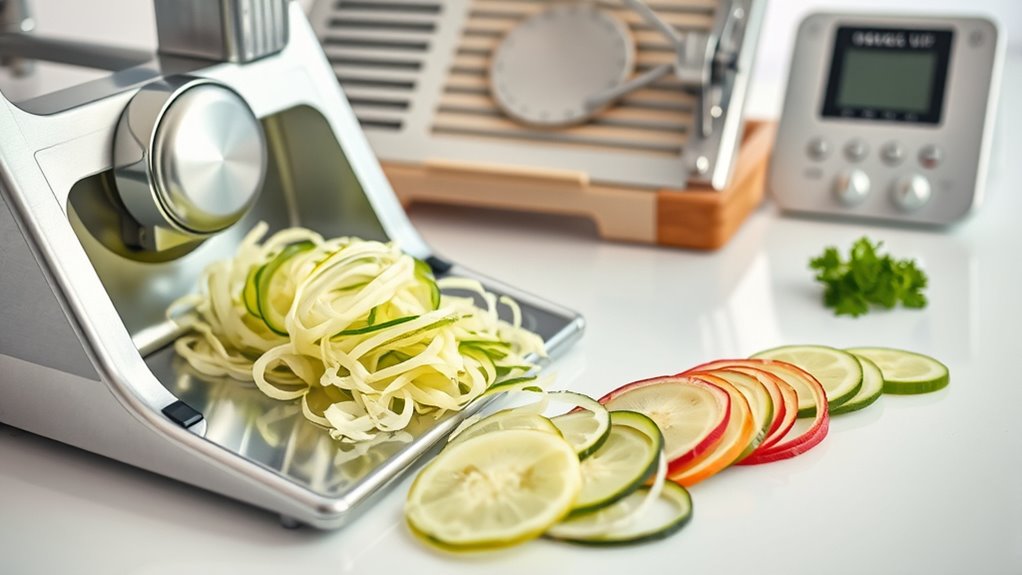
Achieving perfectly sliced food can be challenging, but thanks to recent technological advancements, it’s now easier than ever. Whether you’re slicing vegetables for a salad or preparing ingredients for a recipe, the right tool makes all the difference. When choosing between manual and electric slicers, you should consider your needs, skill level, and safety. Manual slicers, like traditional mandolines, require you to control the thickness and movement yourself. They’re simple, often compact, and don’t need electricity, making them budget-friendly. However, they can be tricky to handle, especially when applying consistent pressure or working with tough produce. You might find yourself sacrificing uniformity or risking cuts if you’re not careful.
Electric slicers, on the other hand, bring a level of precision and ease that manual tools can’t match. With the push of a button, they glide through ingredients smoothly, producing even slices with minimal effort. This makes them ideal for large quantities or when you need uniform thickness. Plus, many models come with adjustable settings, so you can customize the thickness without guessing. Still, they’re generally bulkier and more expensive, and they require electricity, which can limit portability. When using any slicer, safety precautions are imperative. With manual tools, always use the hand guard or food holder to protect your fingers from the blade. Keep your fingers away from the sharp edge, and work slowly to avoid slips. For electric slicers, make certain the machine is on a stable surface, and never insert your fingers near the blade while it’s running. Use the provided pushers or guides, and unplug the device before cleaning or making adjustments.
Additionally, proper maintenance of your slicer, including regular sharpening or replacing blades, is essential for optimal performance and safety. Regardless of your choice, safety should always come first. Read the manufacturer’s instructions carefully, and don’t rush the process. Both manual and electric slicers can produce perfect slices when used correctly, but they also pose risks if mishandled. Regularly inspect your equipment for damage, especially blades, and replace or sharpen them when needed. Proper cleaning and maintenance extend the life of your slicer and keep it safe to use. Ultimately, selecting between manual and electric depends on your slicing needs, comfort level, and safety awareness. With the right precautions, you can enjoy perfectly sliced foods every time, whether by hand or with the aid of modern electric technology.
Frequently Asked Questions
How Do I Maintain and Clean My Slicer Properly?
To keep your slicer in top shape, regularly clean the blade with appropriate cleaning solutions to prevent residue buildup. Always unplug the device before maintenance, then carefully disassemble parts for thorough cleaning. Use a soft brush to remove debris and avoid harsh abrasives. For blade maintenance, check for dullness and sharpen if necessary. Proper cleaning and regular checks will guarantee your slicer stays sharp, safe, and efficient for perfect slices every time.
Which Slicer Is Safest for Beginner Cooks?
You should choose a slicer with safety features and a beginner-friendly design. Look for models with safety guards, non-slip bases, and easy-to-use controls to prevent accidents. Electric slicers with simple on/off switches and safety locks are ideal, offering extra security. These features help you operate confidently, reducing risk while slicing. Prioritize user-friendly options to make your experience safer and more comfortable as you learn.
Can Electric Slicers Handle All Types of Produce?
Electric slicers handle a good range of produce, offering impressive produce versatility for your kitchen. However, they do have slicing limitations; delicate or irregular items like berries or leafy greens may not work well. You’ll find they excel with firm produce like carrots, cheese, or meats. To get the best results, understand each slicer’s strengths and limitations, and adjust your expectations accordingly for different types of produce.
What Safety Precautions Should I Take During Use?
Think of your electric slicer like a trusted shield. Always keep the blade guard in place to prevent accidental cuts and guarantee proper handling. Before plugging in, check for electrical safety—avoid wet hands and damaged cords. I once nearly slipped because I ignored these precautions, and it reminded me how essential safety measures are. Stay attentive, keep the guard on, and unplug when not in use to slice safely every time.
Are There Any Storage Tips for Long-Term Use?
To store your slicer long-term, prioritize proper storage organization by keeping it in a clean, dry place away from moisture. Use preservation techniques like wrapping blades in protective covers or storing them in airtight containers to prevent dulling and corrosion. Regularly inspect and clean your slicer before storage, ensuring all parts are dry. This helps maintain its functionality and safety, ensuring it’s ready for use whenever you need it.
Conclusion
Whether you choose a mandoline or an electric slicer, you now have the power to achieve flawless slices every time. With these tools, your cooking game will skyrocket, turning simple ingredients into culinary masterpieces. Don’t settle for uneven cuts or uneven cooking—these gadgets are your secret weapon. Embrace the technology, and soon you’ll be slicing with the precision of a master chef, making every meal look and taste like a work of art.
Halloween Picks
halloween
As an affiliate, we earn on qualifying purchases.