UV sanitizers for kitchen tools can effectively reduce germs when used properly, as they emit UV light that damages microbial DNA and RNA. However, their success depends on choosing a quality device and ensuring correct application—like exposing all surfaces without shadows. They don’t replace washing or cleaning, but they can add an extra layer of hygiene. Curious about how to maximize their benefits and avoid common pitfalls? Keep exploring to find out more.

Get kitchen gear delivered free — and shop member deals
- Fast, free delivery on millions of items
- Access to Prime Big Deal Days deals on October 6–7
- Prime Video, Amazon Music and more included
Key Takeaways
- UV sanitizers emit UV-C light that damages microbial DNA, scientifically proven to kill bacteria and viruses on surfaces.
- Proper use requires direct exposure; shadows or obstructions can reduce effectiveness, so correct technique is essential.
- UV sanitizers are effective on clean, exposed surfaces but do not remove dirt, grease, or residues.
- Device quality and UV intensity vary; reputable products with adequate power deliver better microbial eradication.
- When used correctly, UV sanitizers can safely enhance kitchen hygiene but should complement regular cleaning routines.
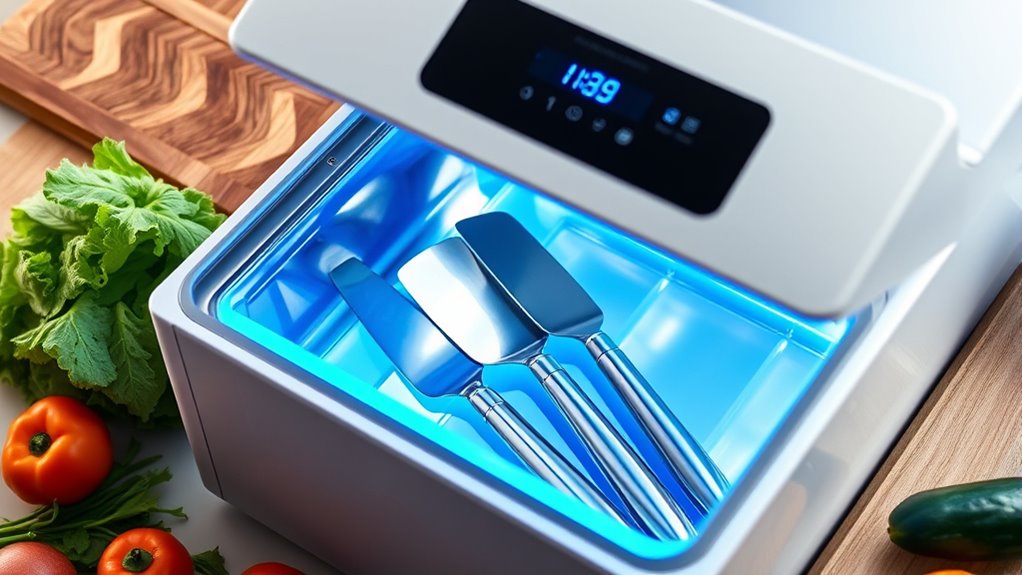
UV sanitizers have become a popular solution for keeping your kitchen tools clean and germ-free. These devices use UV light, specifically ultraviolet radiation, to target and eliminate bacteria, viruses, and other microbes that can linger on surfaces. The idea is straightforward: exposing your utensils, cutting boards, or even sponges to UV light can achieve microbial eradication without the need for harsh chemicals or excessive scrubbing. Many people see UV sanitizers as a quick, convenient way to boost kitchen hygiene, especially in a busy household where germs can spread easily.
UV sanitizers effectively kill bacteria and viruses on kitchen tools without chemicals, promoting quick and convenient hygiene.
When you turn on a UV sanitizer, it emits a specific wavelength of UV light—usually around 254 nanometers—that penetrates microbial cells. This UV light damages their DNA or RNA, rendering the microorganisms unable to reproduce or cause infection. This process, known as microbial eradication, is scientifically proven to be effective against a broad spectrum of pathogens, including common bacteria like E. coli and Salmonella, as well as viruses. Because UV light doesn’t rely on chemical disinfectants, it reduces the risk of chemical residues on your kitchen tools, which can sometimes be a concern with traditional cleaning products.
However, it’s important to understand that UV sanitizers are not a magic bullet. Their effectiveness hinges on correct usage—such as ensuring the light reaches all surfaces of your items and that the device is used for the recommended duration. Shadows or obstructions can prevent UV light from touching all contaminated areas, leaving some microbes behind. Additionally, UV light only works on clear, exposed surfaces and doesn’t remove dirt, grease, or food residues. You still need to wash your tools thoroughly before UV sterilization to maximize microbial eradication. Proper UV light exposure is essential to achieve the desired disinfecting effect.
You might also question whether UV sanitizers are worth the investment. While they are convenient, they aren’t foolproof, and their efficacy can vary based on design quality and proper use. For instance, a poorly designed device with weak UV intensity may not deliver the microbial eradication you expect. It’s essential to choose a reputable product with sufficient UV power and to follow the manufacturer’s instructions carefully. When used appropriately, UV sanitizers can be a valuable addition to your kitchen hygiene routine, giving you peace of mind that your tools are safer to use.
As an affiliate, we earn on qualifying purchases.
Frequently Asked Questions
Are UV Sanitizers Effective Against All Types of Kitchen Bacteria?
UV sanitizers can effectively reduce many kitchen bacteria, but they aren’t foolproof against all types. They work best on surfaces directly exposed to UV light, so bacteria in crevices or shadowed areas may survive. Material safety is important, as some plastics or materials can degrade with UV exposure. Additionally, bacterial resistance to UV is unlikely, but proper usage guarantees the best outcomes, preventing the spread of harmful bacteria in your kitchen.
How Long Does It Take for a UV Sanitizer to Clean Tools?
The UV sanitizer typically takes about 30 seconds to 3 minutes of UV exposure time to effectively clean your kitchen tools. The exact duration depends on the sanitizer’s design and the cleaning efficacy it claims. You should follow the manufacturer’s instructions closely, as proper exposure time guarantees that bacteria and viruses are adequately neutralized. Longer exposure generally improves cleaning results, but always adhere to recommended guidelines for safe and effective sanitization.
Can UV Sanitizers Damage or Degrade Plastic Kitchen Utensils?
You might think UV sanitizers are harmless, but prolonged UV exposure can cause plastic degradation, subtly weakening your utensils over time. While brief treatments usually don’t damage plastic kitchen tools, excessive or repeated UV exposure effects could lead to cracking, fading, or brittleness. So, if you’re concerned about preserving your utensils, it’s best to limit UV sanitizing time and avoid overexposing plastics, ensuring they stay durable and safe for use.
Are Portable UV Sanitizers Suitable for Travel Use?
Yes, portable UV sanitizers are suitable for travel use because they offer portable convenience and help maintain travel safety. You can easily pack them in your bag or carry-on, making it simple to disinfect your tools on the go. Just make certain you follow manufacturer instructions for effective use, and keep the device away from direct sunlight or moisture. They’re a handy addition to your travel essentials for cleaner, safer utensils wherever you go.
Do UV Sanitizers Eliminate Viruses Like Norovirus?
Think of UV sanitizers as warriors in a battle against viruses; they do help with viral inactivation on surfaces. However, they aren’t foolproof for eliminating stubborn viruses like norovirus, which can hide in cracks or crevices. Surface sterilization is their strength, but you should still wash hands and clean surfaces thoroughly. Relying solely on UV sanitizers isn’t enough—use them as a part of a all-encompassing cleaning routine.
As an affiliate, we earn on qualifying purchases.
Conclusion
Ultimately, whether UV sanitizers are truly trustworthy or just tempting tricks depends on your diligence and discernment. While they may seem like a simple solution, don’t forget diligent cleaning and proper hygiene still hold the highest honor. Don’t be deceived by dazzling devices; prioritize proven practices. Stay smart, sceptical, and savvy—safety starts with your own scrubbing, not just shiny, sci-fi gadgets. Your kitchen’s cleanliness depends on your commitment, not just on clever, costly contraptions.
UV light kitchen sanitizer device
As an affiliate, we earn on qualifying purchases.
As an affiliate, we earn on qualifying purchases.
Fall Picks
fall essentials
As an affiliate, we earn on qualifying purchases.