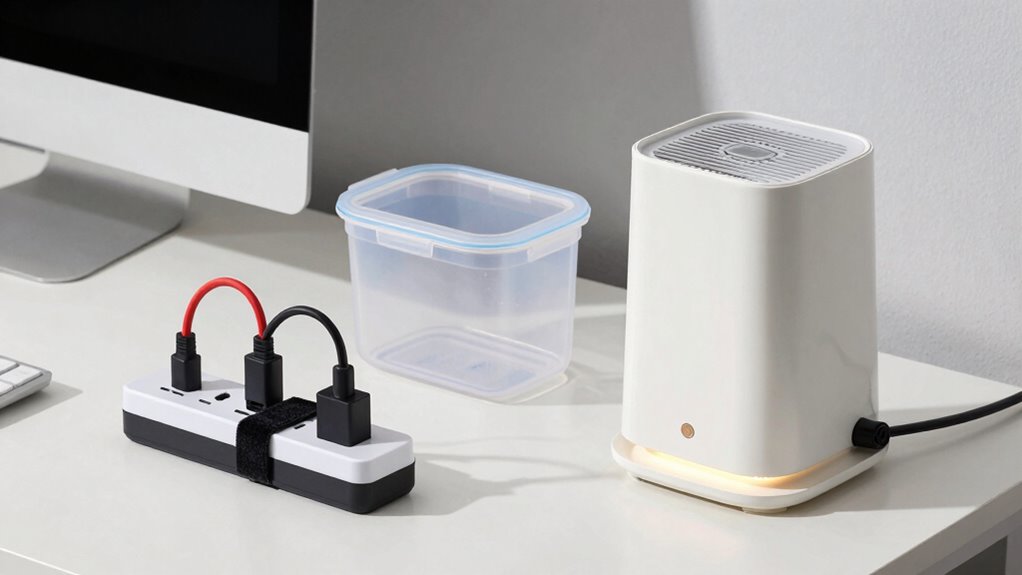

To keep power cords safe from water and heat, make sure to keep cords away from water sources like sinks and outdoor elements. Use waterproof or water-resistant cords when needed and avoid running them through damp areas. Keep cords away from heat sources such as radiators or direct sunlight. Proper cable management like clips and conduits helps prevent damage and overheating. Regular inspections and immediate replacements of damaged cords are key. If you want to learn more, you’ll find useful tips to maintain a secure environment.

Get kitchen gear delivered free with Prime
- Fast, free delivery on millions of items
- Prime Video, Amazon Music and more included
- Member-only deals all year
Key Takeaways
- Keep cords away from water sources and use waterproof or water-resistant cords when necessary.
- Regularly inspect cords for damage and replace any frayed or cracked wires immediately.
- Avoid overloading outlets and prevent daisy-chaining extension cords to reduce fire risk.
- Keep cords away from heat sources and avoid running them through warm or hot areas.
- Use cable organizers, clips, or conduits to manage cords neatly and prevent damage.
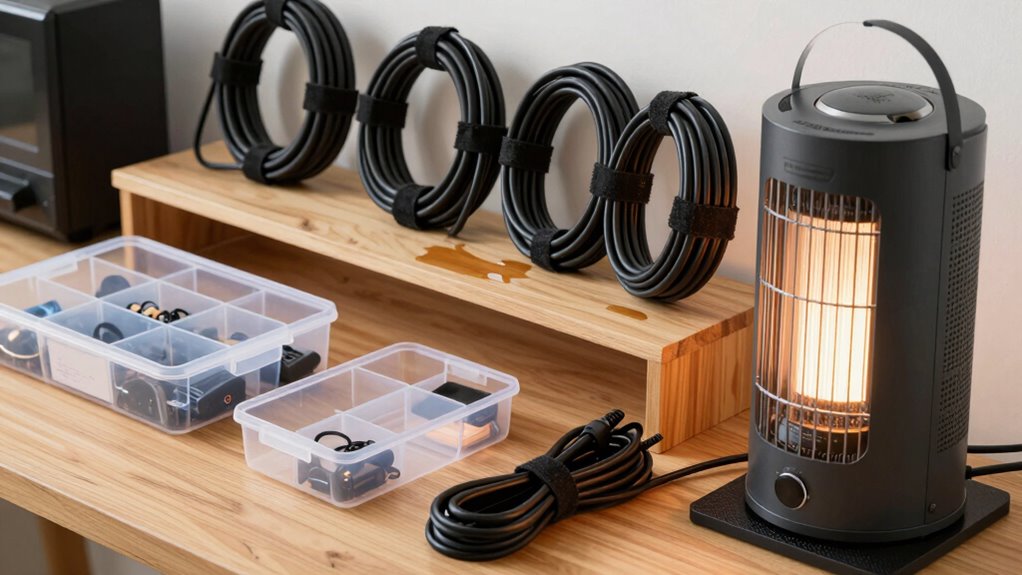
Water and heat can pose serious risks to power cords if not properly managed, leading to electrical shorts, fires, or equipment damage. To guarantee yourself and your equipment, understanding how to prevent these hazards is crucial. Electrical safety should always be your top priority when dealing with power cords, especially in environments where water and heat are present. First, always verify that cords are kept away from water sources like sinks, leaks, or outdoor elements. Use waterproof or water-resistant cords when necessary, and avoid running cords through damp areas or across wet floors. This simple step substantially reduces the chance of electrical shorts caused by moisture infiltration. Additionally, being aware of the proper placement of cords can further reduce hazards related to water and heat. Fire prevention is equally critical. Overloading outlets and using damaged cords can quickly turn a minor issue into a dangerous fire hazard. Regularly inspect your power cords for cracks, frays, or exposed wires. If you find any damage, replace the cord immediately. Never attempt to repair damaged cords with tape or makeshift fixes; this can worsen the risk. When plugging in devices, avoid daisy-chaining multiple cords or using extension cords as permanent solutions, as these can lead to overheating. Instead, use appropriately rated cords that match the power needs of your equipment, and confirm outlets are not overloaded. Heat management plays a crucial role in maintaining a safe environment for power cords. Cords that run through warm areas, such as near heaters, radiators, or direct sunlight, can degrade faster and become a fire risk. Keep cords away from heat sources and ensure they are not crimped or pinched under furniture or heavy objects. Proper cable management helps prevent overheating and makes it easier to spot potential issues early. Use cable organizers, clips, or conduits to keep cords tidy and protected from damage. Additionally, avoid running cords beneath rugs or carpets, as this can trap heat and cause insulation to deteriorate. Regular inspection and maintenance are essential to ensure ongoing safety and to catch potential problems before they become serious hazards. Moreover, educating yourself about the appropriate use of electrical equipment can further enhance safety in environments prone to heat and water exposure.
A thorough understanding of electrical safety principles is vital for maintaining a secure environment and preventing accidents.
waterproof power extension cords
As an affiliate, we earn on qualifying purchases.
As an affiliate, we earn on qualifying purchases.
Frequently Asked Questions
How Do I Identify Damaged Power Cords Safely?
To identify damaged power cords safely, start by inspecting the cord visually for fraying, cracks, or exposed wires—these are clear signs of damage detection. Confirm the cord isn’t overheating or feeling unusually warm during use. Unplug the cord if you notice any issues, and never attempt repairs yourself. Use cord safety practices by handling cords carefully and replacing damaged ones promptly to prevent electrical hazards.
What Are the Best Materials to Insulate Heat Sources?
You need the right thermal barriers to prevent heat hazards. Insulating materials like ceramic fiber, mineral wool, or silicone tapes are your best options—they resist high temperatures and keep heat contained. These insulating materials act as a shield between heat sources and your surroundings, reducing risk. Don’t underestimate the power of quality insulation; it’s your first line of defense against potential fires or damage caused by excessive heat.
How Often Should I Inspect Water-Related Electrical Hazards?
You should inspect water-related electrical hazards regularly, ideally monthly, to catch issues early. During inspections, check for proper electrical grounding and guarantee circuit breaker testing is up to date. Look for water leaks near outlets, damaged cords, or corrosion. Maintaining these safety measures helps prevent electrical shocks or fires, keeping your environment safe. Stay vigilant, and don’t forget to address any problems immediately to avoid bigger hazards.
Are There Specific Waterproofing Methods for Outdoor Cords?
Sure, outdoor cord protection isn’t just about hoping the rain misses your backyard party. You should use waterproofing techniques like heavy-duty outdoor-rated extension cords, waterproof connectors, and weatherproof covers. Seal every connection tight, and consider using specialized outdoor cable sleeves. These waterproofing techniques keep water out and your electronics safe, preventing unexpected splashes from turning your outdoor setup into a shocking surprise. Stay dry, stay safe, and enjoy your outdoor adventures!
How Can I Prevent Overheating in Crowded Electrical Setups?
To prevent overheating in crowded electrical setups, you should practice good cord management by avoiding tangles and overloading outlets. Make sure cords are properly spaced, not pinched or bent sharply, and use extension cords rated for your devices. Regularly check for signs of heat or wear. Prioritize electrical safety by keeping cords off the ground and away from water, and consider using power strips with built-in overload protection to reduce risks.
cable management clips and conduits
As an affiliate, we earn on qualifying purchases.
As an affiliate, we earn on qualifying purchases.
Conclusion
By staying vigilant and proactive, you can avoid the chaos that power cords, water, and heat can bring—much like the careful planning of a seasoned sailor steering through treacherous waters. Remember, safety isn’t just about avoiding mishaps; it’s about creating a space where everything flows smoothly, just like the calm after a storm. Keep these tips in mind, and you’ll steer clear of trouble, ensuring your environment remains safe and secure.
surge protector with overload protection
As an affiliate, we earn on qualifying purchases.
As an affiliate, we earn on qualifying purchases.
As an affiliate, we earn on qualifying purchases.
Fall Picks
fall essentials
As an affiliate, we earn on qualifying purchases.