Electric pressure cookers are generally safe thanks to their built-in safety features like pressure release valves, locking lids, and automatic pressure controls. These mechanisms prevent overpressurization, burns, and accidental opening. Proper maintenance, using recommended settings, and following manufacturer instructions further enhance safety. While no appliance is completely risk-free, understanding how these features work helps you cook confidently. To discover the full range of safety tips and how your cooker keeps you safe, keep exploring the details below.
Key Takeaways
- Modern electric pressure cookers are equipped with automatic pressure release systems to prevent over-pressurization.
- Locking lids and safety indicators ensure the lid stays secure during cooking and only opens when pressure is safely released.
- Built-in safety features like pressure sensors and overpressure shutoff protect against excessive pressure buildup.
- Regular maintenance, inspection, and adherence to user instructions enhance safety and appliance longevity.
- Proper electrical safety practices, including using grounded outlets and unplugging when not in use, reduce electrical hazards.
How Do Electric Pressure Cookers Work?

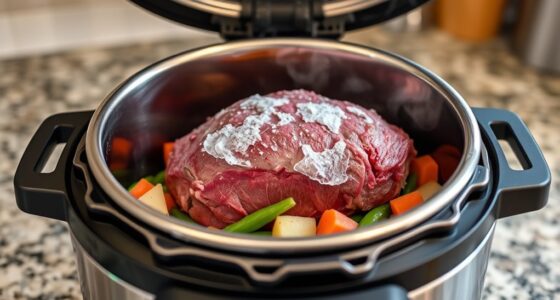
Have you ever wondered how electric pressure cookers manage to cook food so quickly? It all comes down to their ability to increase cooking temperature under pressure, which markedly reduces cooking time. When you seal the lid, steam builds up inside, raising the pressure and temperature beyond boiling point. This rapid cooking process is ideal for ingredients that are compatible with high-pressure environments, like tough meats and beans. Additionally, understanding the safety features of these devices is crucial to prevent accidents and ensure proper operation. However, not all ingredients are suitable; delicate foods like certain vegetables may overcook or turn mushy. The appliance’s control panel automatically adjusts pressure levels based on your settings, ensuring efficient cooking while maintaining ingredient integrity. Knowing how these mechanisms work helps you maximize safety and effectiveness while avoiding unwanted results.
Key Safety Features in Modern Models

Modern electric pressure cookers include essential safety features like pressure release mechanisms, locking lids, and automatic pressure control. These elements work together to prevent accidents and guarantee safe operation. Understanding how each feature functions helps you use your cooker confidently and safely. Additionally, materials and design play a crucial role in ensuring durability and safety over the appliance’s lifespan. Proper maintenance and inspection are also vital for ongoing safety and performance. Regularly reviewing ventilation considerations ensures the appliance operates within safe parameters and reduces potential hazards. Furthermore, understanding user instructions and following recommended guidelines enhances overall safety and prevents misuse.
Pressure Release Mechanisms
How do pressure release mechanisms guarantee your safety when using an electric pressure cooker? They prevent excessive pressure buildup, reducing the risk of accidents. Modern models feature automatic or manual release options, ensuring safe venting after cooking. These mechanisms are essential for cooking safety and enhance appliance durability by minimizing stress on components. Additionally, safety standards ensure these features meet strict safety requirements for consumer protection. Properly functioning pressure release systems are vital in preventing dangerous malfunctions, especially in pressure regulation. Incorporating advanced safety features further minimizes risks and promotes user confidence. Well-designed pressure release systems also incorporate reliable venting, which is crucial for consistent and safe operation under various cooking conditions. Furthermore, understanding the risk management strategies associated with pressure cookers helps users operate their appliances more safely.
Locking Lid Safety
Locking lid safety is a vital feature that prevents accidental opening during pressure cooking, ensuring your safety at all times. This safety mechanism keeps the lid securely sealed until the pressure has fully released, preventing spills or burns. It also promotes proper cooking techniques by maintaining the correct pressure levels, which is essential for both safety and recipe success. Additionally, incorporating essential safety features like locking lids in modern electric pressure cookers helps to mitigate risks associated with high-pressure environments. Regarding kitchen safety, a locking lid reduces the risk of sudden releases of hot steam or liquids, protecting you and others nearby. Modern electric pressure cookers often include indicators that show when the lid is properly locked, giving you peace of mind. By understanding and trusting this safety feature, you can confidently focus on your cooking techniques without worry. Additionally, many models incorporate smart safety sensors that monitor pressure and temperature, further enhancing safety during operation. These advanced safety mechanisms are designed to provide real-time feedback and automatic safety shut-offs, making pressure cooking even safer. Implementing these safety mechanisms ensures a safer cooking environment and reduces potential accidents.
Automatic Pressure Control
Automatic pressure control is a crucial safety feature that helps prevent over-pressurization during cooking. It continuously monitors the pressure inside the cooker, adjusting heat and releasing excess pressure as needed. This guarantees your cooking liquids stay at a safe level, reducing the risk of accidents. Imagine a system that:
- Detects rising pressure early, signaling you to lower heat.
- Automatically releases steam to maintain ideal pressure.
- Prevents pressure buildup beyond safe limits.
- Enhances kitchen ergonomics by simplifying operation and reducing manual intervention.
- Incorporates Vetted safety standards to ensure reliable performance and safety compliance. Additionally, modern models often include pressure sensors that provide precise readings for optimal safety management. These sensors help maintain consistent pressure levels and avoid dangerous fluctuations, improving overall safety.
- The integration of reliable safety mechanisms ensures the cooker responds correctly to different cooking conditions, which is essential for safety, further safeguarding users.
With automatic pressure control, you can focus on your cooking without constantly monitoring the cooker. This feature makes modern electric pressure cookers safer and more user-friendly, giving you peace of mind while preserving the integrity of your recipes.
The Role of Pressure Release Valves

The pressure release valve is essential for maintaining safe cooking conditions by releasing excess pressure. You should understand how the automatic system works alongside manual valve operation to prevent accidents. Regularly inspecting the valve ensures it functions properly and keeps you safe during every use. Additionally, understanding the safety features of your pressure cooker helps you respond appropriately in case of a malfunction. Being aware of potential issues like pressure buildup can further enhance safety and prevent dangerous situations. For example, some models incorporate advanced safety technology to automatically shut off if irregularities are detected, adding an extra layer of protection. Familiarizing yourself with vetted safety practices can further reduce risks associated with pressure cooker use.
Automatic Pressure Release System
Pressure release valves are essential components that help guarantee your electric pressure cooker operates safely by automatically releasing excess steam. When the pressure sensor detects that internal pressure’s too high, the valve opens to vent steam, preventing dangerous buildup. This automatic system works seamlessly with the safety lock, ensuring the lid stays secure until pressure drops. Visualize these key features in action:
- The pressure sensor detects rising pressure.
- The safety lock disengages once pressure is safe.
- Excess steam escapes through the valve.
- The cooker resumes normal operation after pressure release.
This process minimizes the risk of over-pressurization, making your cooking experience safer and more reliable. The automatic pressure release system is a critical safety feature designed to keep you protected without requiring manual intervention.
Manual Valve Operation
Manual pressure release valves give you direct control over venting steam from your electric pressure cooker. This manual valve operation allows you to safely release pressure when needed, especially during cooking or at the end of the process. Proper use requires user safety training to guarantee you open the valve correctly, avoiding sudden steam bursts that could cause burns. Always follow manufacturer instructions for manual venting, and never force the valve open under pressure. Regularly check that the valve moves freely and isn’t blocked by food debris. Understanding how to operate the manual valve safely helps prevent accidents and ensures your cooker functions properly. Remember, being familiar with this safety feature is key to safe pressure cooker use.
Valve Inspection Importance
Regularly inspecting the valve guarantees it functions correctly and keeps your pressure cooker safe to use. Neglecting pressure valve maintenance can lead to dangerous pressure buildup or leaks. During safety inspection routines, focus on these key areas:
- Check for any visible damage or corrosion on the valve.
- Ensure the valve moves freely without sticking.
- Confirm the valve releases pressure at the appropriate level.
- Clean around the valve to remove food residue or debris.
Safety Mechanisms for Overpressure Protection

To prevent dangerous overpressure situations, electric pressure cookers are equipped with multiple safety mechanisms that activate when internal pressure exceeds safe limits. These features ensure your cooking recipes stay safe and reliable. For example, automatic pressure release valves open if pressure gets too high, preventing explosions. Safety locks prevent lid removal during operation, and pressure sensors monitor internal conditions constantly. Here’s a quick overview:
| Safety Feature | Function | Benefit |
|---|---|---|
| Automatic Pressure Release | Opens vent if pressure exceeds safe limits | Prevents overpressure buildup |
| Safety Lock Lid | Locks lid during cooking, prevents accidental removal | Ensures safe operation |
| Pressure Sensors | Continuously monitor internal pressure | Maintains safe cooking environment |
| Overpressure Shutoff | Turns off heat if pressure is too high | Protects against overpressure risks |
| Relief Valves | Release excess steam safely | Avoids dangerous pressure buildup |
These mechanisms keep your kitchen safe while you focus on cooking and kitchen appliance reviews.
Electrical Safety Considerations

Electrical safety is essential when using electric pressure cookers to prevent shocks, fires, and other hazards. You should regularly check the power cord for durability; a frayed or damaged cord increases risk. Make certain the cord is securely plugged into a grounded outlet. Look for color coded indicators on the control panel—these help you quickly understand the cooker’s status and avoid accidental mishandling. When handling the appliance, avoid pulling on the cord; instead, grip the plug firmly. Keep the cord away from water and heat sources. Always unplug the cooker when not in use or during cleaning to prevent electrical faults. By paying attention to these aspects, you reduce the risk of electrical issues and ensure safe operation.
Proper Use and Maintenance Tips

Using your electric pressure cooker correctly and maintaining it properly are key to guaranteeing safe and efficient operation. Always follow the manufacturer’s instructions for cooking recipes and ingredient preparation. Before cooking, check that the sealing ring and pressure release valves are clean and in good condition. Proper ingredient preparation, such as chopping vegetables evenly and removing excess fat, helps prevent blockages and ensures even cooking. Never overfill the cooker beyond the maximum fill line, as this can cause safety issues. After each use, clean the lid, gasket, and inner pot thoroughly to prevent residue buildup. Regular maintenance includes inspecting the safety features and replacing worn parts promptly. By adhering to these tips, you’ll keep your pressure cooker safe, functional, and ready for your next meal.
Recognizing and Preventing Potential Hazards

Understanding potential hazards is essential for safe pressure cooker use; recognizing warning signs and common risks helps prevent accidents. Be alert to issues like:
- Overfilled cooker, which can block pressure release and cause leaks.
- Inconsistent cooking times, risking undercooked or overcooked food, affecting recipe customization.
- Damaged or worn sealing rings, leading to pressure loss or dangerous steam escape.
- Faulty safety valves, which may not release pressure properly, creating a burst risk.
Always monitor the cooking process, especially when adjusting cooking times or trying new recipes. Proper maintenance and awareness of these hazards guarantee safe operation, letting you enjoy the benefits of your electric pressure cooker without worry.
Frequently Asked Questions
Can Electric Pressure Cookers Explode if Misused?
Electric pressure cookers can explode if misused, especially if safety precautions aren’t followed. Pressure cooker explosions happen when pressure builds up beyond safe limits due to blocked vents or overfilled pots. To prevent this, always follow manufacturer instructions, check vents regularly, and avoid overfilling. Staying vigilant and practicing proper safety precautions minimizes the risk of dangerous pressure cooker explosions, keeping your cooking safe and worry-free.
Are Plastic Parts in Pressure Cookers Food-Safe?
Imagine a tiny guardian, protecting your meal with every detail—plastic components in your pressure cooker are designed to be food-safe. These parts are made from high-quality, heat-resistant plastics that won’t leach harmful chemicals into your food. Rest assured, manufacturers rigorously test these plastic parts to guarantee your safety. So, when you cook, you’re trusting a secure system that keeps your meals delicious and safe from start to finish.
What Should I Do if the Pressure Release Valve Leaks?
If your pressure release valve leaks, first turn off the cooker and unplug it. Carefully inspect the valve for any damage or debris that could be causing the leak. Clean the valve and surrounding area gently. If the leak persists, avoid using the cooker until you perform a proper leak repair or contact the manufacturer for guidance. Ensuring the pressure release valve functions correctly is essential for safe pressure cooker operation.
Are Electric Pressure Cookers Safe for Children’s Kitchens?
You can use electric pressure cookers in children’s kitchens if you prioritize child safety and always supervise your kids. Coincidentally, many models now feature safety locks, automatic shut-offs, and pressure release valves to prevent accidents. Make certain you keep children away during operation and teach them about kitchen safety. With vigilant supervision and choosing the right cooker, you can enjoy quick meals while keeping your little ones safe.
How Long Do Electric Pressure Cookers Typically Last?
Electric pressure cookers typically last about 5 to 10 years, depending on their durability and how well you maintain them. To extend their lifespan, follow maintenance tips like regular cleaning, inspecting seals, and avoiding overfilling. Proper care guarantees your cooker stays safe and reliable for years. Keep an eye on signs of wear, and replace parts when needed to maximize your appliance’s durability and enjoy consistent performance.
Conclusion
With the right knowledge and gentle care, your electric pressure cooker becomes a trustworthy kitchen companion. By understanding its safety features and practicing proper use, you create a cozy space where delicious meals flourish without worry. Think of it as a dance—your attentiveness keeps the rhythm smooth and the experience enjoyable. Embrace these tips, and you’ll enjoy safe, satisfying cooking adventures that bring joy to every meal.