With sous vide, overcooking is nearly impossible because of its precise temperature control, which prevents the food from exceeding the set point. However, extending cooking times beyond recommended durations can affect texture—making meats overly soft or vegetables mushy. Proper timing ensures food stays tender and flavorful without losing quality. If you want to understand how to avoid common pitfalls and perfect your dishes, keep exploring these essential tips.
Key Takeaways
- Precise temperature control in sous vide makes overcooking nearly impossible if used correctly.
- Extended cooking times do not lead to overcooking but can cause texture degradation in delicate foods.
- Staying within recommended timeframes ensures optimal texture, flavor, and food safety.
- Overcooking can result in mushy vegetables or rubbery seafood, affecting dish quality.
- Proper monitoring and understanding of food-specific cooking times prevent overprocessing and maintain desired results.
How Sous Vide Cooking Works and Its Precision
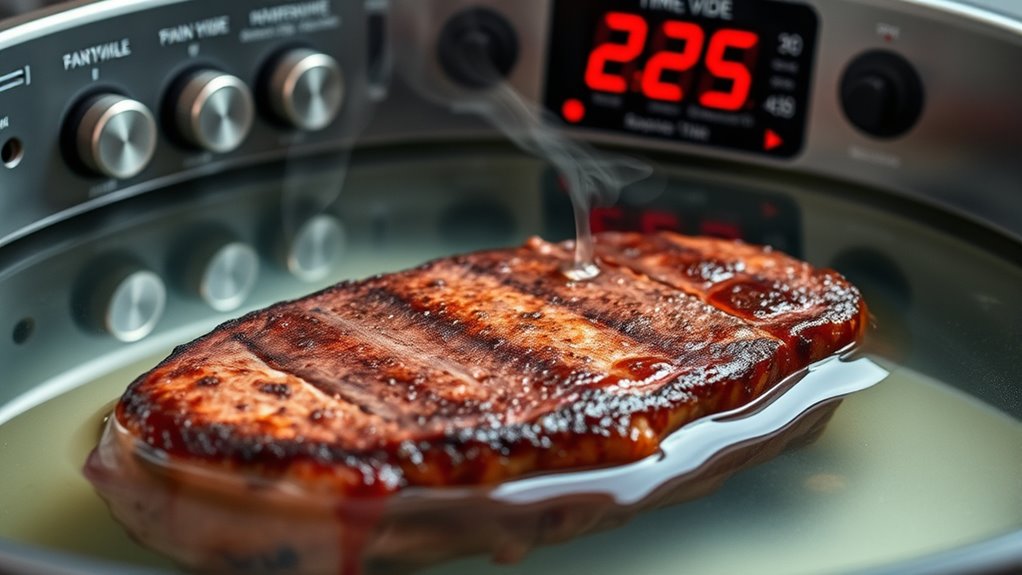
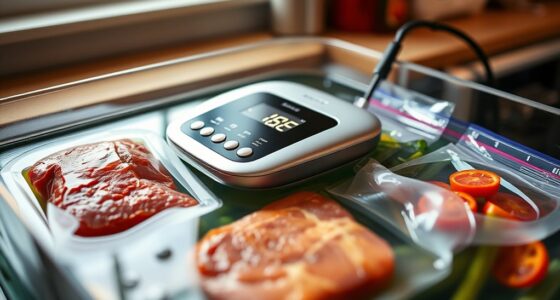
Sous vide cooking works by immersing food in a temperature-controlled water bath, allowing you to cook it evenly and precisely. This method guarantees that your ingredients are cooked to the exact doneness you desire, reducing the risk of overcooking. To maintain sous vide safety, proper ingredient preparation is essential; always seal your food in a vacuum bag or airtight pouch to prevent contamination. The precise temperature control means you don’t have to worry about fluctuating heat or uneven cooking, giving you consistent results every time. By setting your device to the right temperature, you can cook meats, fish, or vegetables perfectly without guesswork. This controlled process highlights the importance of understanding cooking times and ensures your meals are safe, flavorful, and cooked to perfection. Safety precautions are crucial for optimal results. Additionally, knowing the appropriate cooking times for different foods helps prevent over- or undercooking, ensuring optimal texture and safety. Proper understanding of food safety guidelines is essential to avoid potential health risks. Mastering timing precision is key to fully harnessing the benefits of sous vide cooking and achieving consistently excellent dishes.
The Myth of Overcooking With Sous Vide

Many people worry about overcooking with sous vide, but its precise temperature control makes it nearly impossible. Even if you leave food in the water bath longer than planned, it won’t overcook or become tough. This extended cooking tolerance offers you more flexibility without sacrificing quality. Additionally, understanding the cooking times associated with different foods can help you achieve optimal results and avoid unnecessary risks. Since sous vide cooking relies on maintaining consistent temperatures, knowing proper timing can help prevent overprocessing and ensure your dishes turn out perfect every time. Moreover, being aware of the science behind temperature control can further reassure you of the safety and effectiveness of sous vide techniques, especially considering the flexibility in cooking durations that this method provides. Recognizing the benefits of precise temperature management can also help you make informed decisions about your cooking process and enjoy consistent, delicious results.
Precise Temperature Control
Despite common beliefs, overcooking with sous vide is virtually impossible because of its precise temperature control. You set the exact temperature, so your food stays within the ideal range, preventing overcooking. This accuracy allows you to achieve perfect flavor infusion, as the controlled environment helps flavors meld without breaking down delicate ingredients. Additionally, it ensures texture preservation, keeping meats tender and vegetables just right, without turning mushy. Because the water bath maintains a steady temperature, you don’t have to worry about fluctuating heat damaging your dish. This consistency gives you confidence that your food reaches the desired doneness without the risk of overcooking, making sous vide a reliable method for precise culinary results. Proper temperature regulation is essential for consistent cooking outcomes, and understanding the importance of precise temperature control can significantly enhance your cooking experience. Moreover, being aware of cooking times helps prevent undercooking, ensuring safety and quality. In fact, understanding these parameters can even lead to innovative techniques that optimize food quality through advanced thermal management.
Extended Cooking Tolerance
While it’s a common misconception that sous vide cooking allows for endless flexibility, the reality is that the technique does have some limits. Despite excellent temperature stability, prolonged cooking times don’t mean your food will keep improving indefinitely. Instead, they can lead to texture degradation or over-softening, especially with delicate proteins. Understanding cooking limits is essential for optimal results. While sous vide offers significant cooking flexibility, it’s important to recognize that extended cooking tolerance has boundaries. Overcooking isn’t always about safety but about quality. Staying within recommended timeframes ensures your food maintains the desired consistency and flavor. Cooking time boundaries help you avoid unintended results, so you can enjoy the benefits of sous vide without risking overcooking, even if your cooking times stretch a bit longer. Additionally, knowing how food textures respond to extended cooking can help you fine-tune your process for perfect dishes every time. Recognizing temperature control as a key element in sous vide cooking further ensures your results remain consistent and high-quality.
Optimal Cooking Times for Different Foods

When cooking with sous vide, getting the timing right is key to perfect results. For steak and vegetables, precise timing helps you avoid overcooking, ensuring they stay tender and flavorful. Seafood, on the other hand, requires gentle heat and specific times to prevent it from becoming tough or mushy. Additionally, understanding navigation and mapping techniques can help optimize your cooking setups and ensure consistent results. Mastering temperature control can further refine your cooking process and elevate your culinary outcomes. Incorporating precise timing strategies can also help you adapt recipes for different types and cut sizes, improving your overall dish quality. Furthermore, practicing creative storytelling for branding can inspire innovative culinary presentations and memorable dining experiences. Paying attention to quality assurance in your ingredients can further enhance the success of your sous vide dishes.
Precise Timing for Steak
Getting the perfect steak with sous vide depends heavily on timing, as precise temperature control alone isn’t enough. To achieve ideal doneness, you need to set the right cooking temperature and stick to an *appropriate* cooking time. For instance, cooking a steak at 130°F (54°C) for 1 to 2 hours produces a tender, medium-rare result, while longer times won’t overcook it but can improve texture. Precise timing ensures consistent results and allows flavor development through gentle heat. If you cook too briefly, your steak might be underdone; too long, and it can become mushy. By following recommended times for your preferred doneness, you guarantee a perfectly cooked steak with enhanced flavor and texture, without risking overcooking or losing quality.
Vegetables: Avoid Overcooking
To prevent vegetables from becoming mushy and losing their vibrant flavor, it’s essential to stick to ideal cooking times in sous vide. Overcooking can ruin their vegetable texture, making them limp and unappetizing. For crisp-tender results, cook root vegetables like carrots or potatoes for 1-2 hours at 183°F (84°C), preserving their firmness and flavor retention. Leafy greens such as spinach only need 30 minutes at 185°F (85°C) to retain their nutrients and bright taste. Vegetables like asparagus or green beans benefit from 30-45 minutes at 185°F (85°C) for a tender yet crisp texture. Keeping to these times ensures your vegetables stay vibrant, flavorful, and perfectly cooked without turning to mush.
Seafood: Gentle Heat Needed
Cooking seafood sous vide requires gentle heat to maintain its delicate texture and flavor. Seafood delicacy, like salmon, scallops, or shrimp, benefits from precise temperature control to prevent overcooking. Typically, you’ll set the water bath between 122°F and 140°F, depending on the desired doneness. For tender, flaky fish, 130°F for about 45 minutes works well. Shrimp only needs 30 minutes at 135°F to retain its moisture and texture. Remember, seafood can quickly turn rubbery or mushy if exposed to too high heat or extended cooking times. Using gentle heat ensures you achieve the perfect consistency, preserving the fresh, delicate qualities that make seafood a prized delicacy. Keep a close eye on timing to avoid overcooking and to enjoy ideal results.
What Happens When You Overcook in Sous Vide
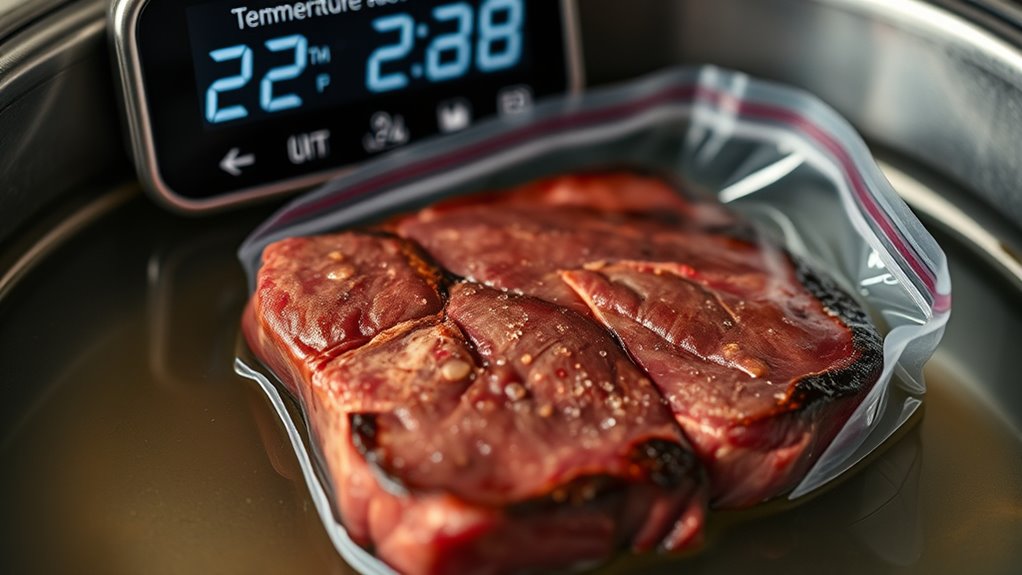
While sous vide offers precise control over cooking times, overdoing it can still cause issues. When you overcook, the delicate balance of flavor infusion can be compromised, leading to a less vibrant taste. Additionally, extended cooking can cause texture alteration, making meats and vegetables mushy or overly soft. This results in a less appealing mouthfeel and diminishes the quality of the dish. Overcooking can also cause proteins to break down excessively, affecting juiciness, and may lead to the loss of desirable firmness. Although sous vide reduces the risk of overcooking, staying within recommended times is vital to preserve ideal flavor and texture. Pushing beyond these limits doesn’t improve results and can lead to a less satisfying meal.
Tips for Monitoring and Adjusting Cooking Durations
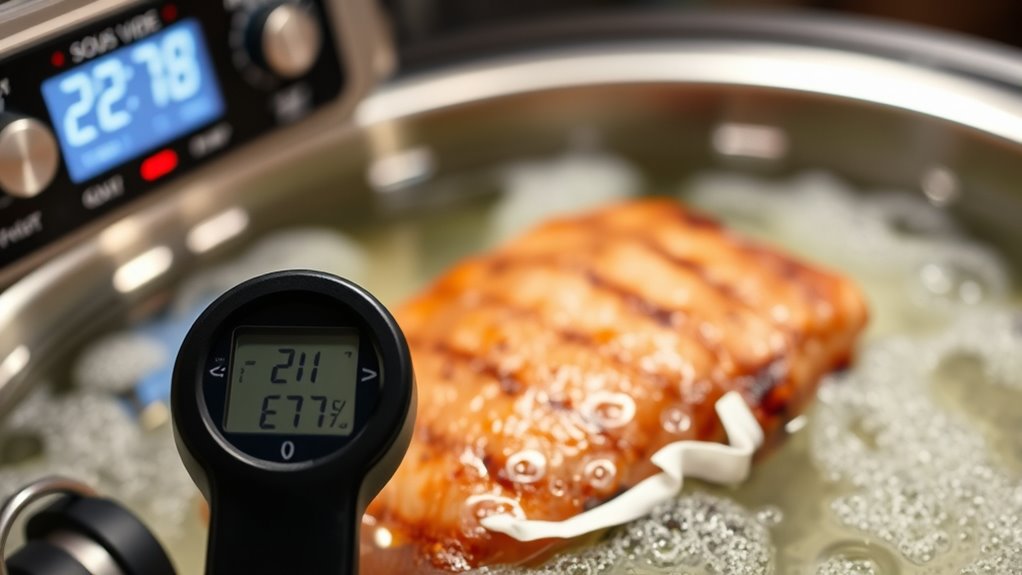
Monitoring and regulating your sous vide cooking times ensures you achieve the perfect results every time. To do this effectively, keep an eye on temperature fluctuation, which can affect doneness. Guarantee consistent water circulation by stirring the water occasionally or using a circulator with good flow. Use a reliable timer to avoid overcooking or undercooking your food. Here are some tips:
- Check water temperature regularly to prevent fluctuation
- Use a high-quality immersion circulator for even water movement
- Adjust cooking times based on food thickness and desired doneness
- Keep the water level steady to maintain consistent temperature
Understanding Temperature Versus Time in Sous Vide

Understanding how temperature and time interact in sous vide is essential for achieving perfect results. When you set the temperature, you’re controlling the food’s final safety and texture, but duration determines the tenderness and doneness. Temperature variance plays a pivotal role; even slight changes can impact the outcome, so precise control is key. Longer cooking times at a lower temperature can yield the same tenderness as shorter times at higher temperatures, but it requires recipe adaptation. For example, tougher cuts benefit from extended cooking, while delicate proteins need less time. By understanding this relationship, you can fine-tune your cooking process, avoid overcooking, and customize recipes to match your desired results, ensuring consistent and delicious meals every time.
Common Mistakes That Lead to Overcooking
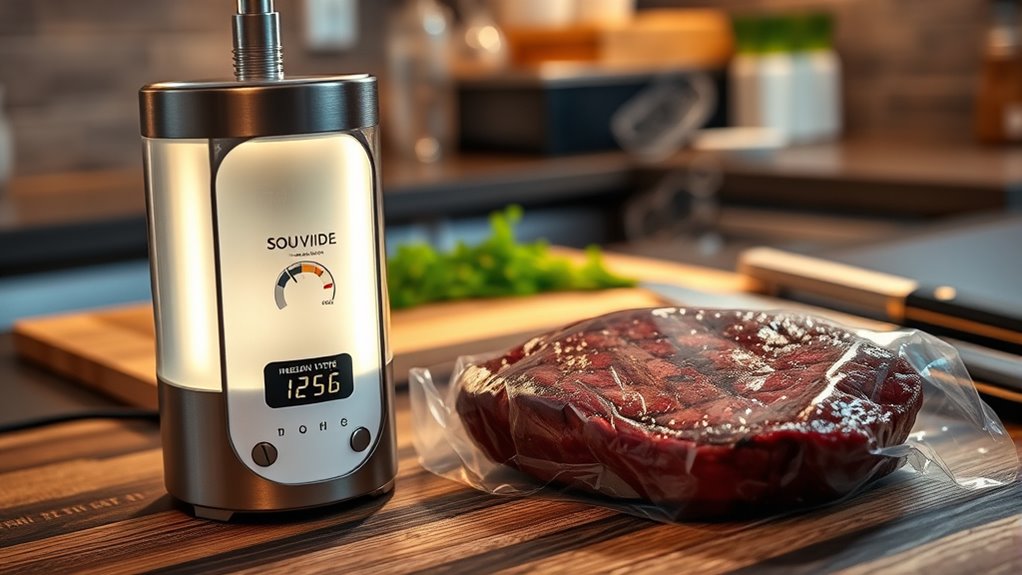
One common mistake that leads to overcooking in sous vide is setting the temperature too high or leaving the food in the water bath for longer than recommended. This can result in a mushy texture, diminishing both flavor infusion and plate presentation. To avoid this, pay close attention to timing and temperature guidelines. Also, neglecting to remove excess air from the bag can cause uneven cooking. Overcrowding the bath hampers heat transfer, risking overcooked edges. Additionally, failing to monitor the water level can lead to temperature fluctuations. These missteps not only compromise the dish’s texture but also affect how visually appealing it is when plated, as overcooked food loses its vibrancy and structure. Staying precise guarantees a perfectly cooked meal that looks as good as it tastes.
Best Practices for Perfectly Cooked Dishes
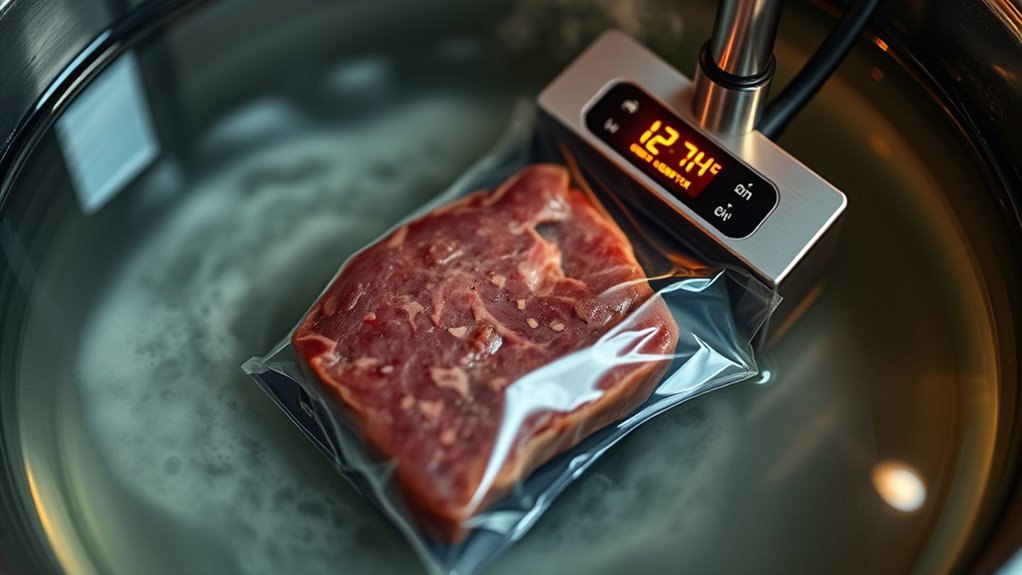
Achieving perfectly cooked dishes with sous vide requires careful attention to detail and adherence to best practices. To avoid falling for sous vide myths, always follow recommended temperature and time guidelines rather than relying on misconceptions. Temperature myths often lead cooks to set incorrect temperatures, risking undercooked or overcooked results. Use a precise immersion circulator and a reliable thermometer to maintain consistent temperatures. Proper vacuum sealing ensures even heat transfer and prevents water from entering the bag. Keep water levels steady, and don’t rush the process—patience guarantees tenderness and safety. By sticking to trusted recipes and understanding actual temperature ranges, you’ll consistently produce restaurant-quality dishes. These best practices help you bypass myths, ensuring your sous vide creations are perfectly cooked every time.
Frequently Asked Questions
Can Sous Vide Cooking Destroy Nutrients in Food?
Sous vide cooking doesn’t typically destroy nutrients in food, as it uses lower, precise temperatures that preserve vitamins and minerals. However, prolonged cooking can cause some nutrient loss and food degradation, especially with delicate nutrients like vitamin C. You can avoid this by sticking to recommended cooking times. In general, sous vide helps retain nutrients better than traditional high-heat methods, making your meals both healthy and flavorful.
Does Longer Sous Vide Cooking Always Improve Flavor?
Longer sous vide sessions can enhance flavor, but only if you optimize your timing. You don’t want to overdo it, or you risk breaking down delicate textures. Proper time optimization allows the flavors to fully develop without overcooking, ensuring maximum flavor enhancement. Remember, patience pays off—so find the sweet spot where longer cooking improves taste, not ruins it. Balance is key to perfect, flavorful results.
Are There Safety Concerns With Extended Sous Vide Times?
Extended sous vide times can raise food safety concerns if temperatures aren’t high enough to eliminate harmful bacteria. Always follow recommended cooking durations and temperatures for your specific foods. Properly maintained sous vide preserves nutrients effectively, but leaving food in the water bath too long can sometimes lead to texture changes. To guarantee safety and nutrient preservation, stick to trusted recipes and guidelines, and use a reliable thermometer to monitor temperatures.
How Does Sous Vide Affect Food Texture Over Time?
Ever wonder how your food’s texture shifts during sous vide? As you cook, the internal temperature rises steadily, but if you leave it too long, texture degradation begins. The meat can become mushy or overly tender, losing its firm bite. To avoid this, monitor your cooking times carefully—shorter periods preserve that perfect texture, while extended ones risk turning your dish into a less desirable consistency.
Can Sous Vide Cause Food to Become Mushy?
Yes, sous vide can cause food to become mushy if you overcook it or set the temperature too high. Overdone textures lead to mushy outcomes, especially with delicate proteins like fish or tender vegetables. To avoid this, follow recommended cooking times and temperatures. Keep an eye on your food, and don’t leave it in the water bath longer than necessary, so you maintain the ideal texture.
Conclusion
Remember that with sous vide, precision matters, but overcooking is rare. Monitor your times, adjust your temperatures, and trust the process. Avoid rushing, ignore guesswork, and resist the temptation to extend cooking. Focus on timing, control your heat, and embrace the method’s flexibility. By staying attentive, understanding the balance between time and temperature, and practicing patience, you’ll achieve perfectly cooked dishes every time—without overcooking, without worry, and with confidence.