If your air fryer is smoking, it’s often caused by leftover oil or food debris burning inside or improper food placement that blocks airflow. Overfilled baskets, using low smoke point oils, or applying too much spray can also cause smoke. Mechanical issues or dirt on heating elements may be to blame too. To fix this, clean your fryer thoroughly and check for damage. Keep exploring to find detailed tips for preventing smoke and keeping your air fryer safe.
Key Takeaways
- Excess oil, food debris, or marinade leaks can burn and cause smoking inside the air fryer.
- Overcrowding or improper placement of food blocks airflow, leading to smoke and uneven cooking.
- Residual grease or food particles inside the unit may burn during operation, producing smoke.
- Damaged or malfunctioning heating elements and faulty wiring can cause overheating and smoke.
- Using inappropriate oils, sprays, or setting temperatures too high increases the risk of smoking.

Blenders Eyewear Mesa – Polarized Sunglasses – Modern Wraparound Frames – 100% UV Protection – For Men – Victory Lane
Winning Pair: These black aesthetic Victory Lane shades are built for play and make the perfect companion for...
As an affiliate, we earn on qualifying purchases.
Common Causes of Smoke in Your Air Fryer

If your air fryer starts producing smoke, it’s usually due to specific common causes. One of the main reasons is oil splatters, which happen when excess oil reaches the heating element or hot surfaces. This creates smoke and can also lead to food splatters inside the appliance. Food splatters occur when juices or marinades leak out during cooking, burning on the heating element and producing smoke. Overcrowding the basket can exacerbate this issue by trapping more oil and juices, increasing splattering. Additionally, using too much oil or applying it unevenly can cause oil to pool and splatter. Keeping the air fryer clean and avoiding excess oil helps reduce smoke caused by oil and food splatters. Regular cleaning routines prevent grease buildup and mindful oil application are key to reducing smoking. Ensuring proper air circulation inside the device improves heat distribution and minimizes smoke. Monitoring the air fryer’s temperature settings also helps prevent overheating, which can lead to smoke and potential damage. Proper maintenance and careful cooking practices are essential for safe and effective operation.

Caraway Square Cookware Set - Square Pans Set - Perfect for Griddling, Toasting, Searing, Roasting, and More - Non-Stick Ceramic Coated Pans - Non Toxic, PTFE & PFOA Free - Perracotta
NON-TOXIC COATING: Clean cooking gets squared away with Caraway’s ceramic-coated Squareware Set. These spacious pans are perfect for...
As an affiliate, we earn on qualifying purchases.
Residual Oil or Food Particles

If leftover oil or food particles build up, they can cause smoke when heated. Make sure to clean your cooking basket regularly to prevent this issue. Also, remove any excess oil before cooking to keep your air fryer smoke-free. Regular maintenance of your appliance and understanding smart kitchen tools can help you troubleshoot and avoid smoking problems effectively. Additionally, paying attention to residual oil buildup can significantly reduce smoke production during operation.
Clean Cooking Basket Regularly
Residual oil and food particles can quickly build up in your air fryer’s cooking basket, leading to smoke and unpleasant odors. Regularly cleaning it ensures your air fryer runs smoothly and keeps your favorite air fryer recipes tasting great. To maintain peak performance, clean the basket after each use with warm soapy water, and check for stubborn residue. Proper maintenance is essential for preventing smoking issues and prolonging your appliance’s lifespan. Following manufacturer guidelines for cleaning can also help avoid damage to sensitive components. Additionally, understanding cooking appliance maintenance can further extend the life of your air fryer and ensure it operates safely. Regularly inspecting and maintaining kitchen appliances is vital for optimal function and safety. Keep in mind that filter maintenance and regular cleaning are crucial in preventing smoke and ensuring your air fryer operates efficiently. Follow these simple cooking tips for effective cleaning:
| Step | Action |
|---|---|
| 1 | Remove the basket from the air fryer |
| 2 | Soak in warm, soapy water |
| 3 | Use a soft brush or sponge to scrub |
| 4 | Rinse thoroughly and dry |
| 5 | Reassemble for your next air fryer recipe |
Keeping your basket clean helps prevent smoking and extends your air fryer’s lifespan. Regular maintenance and understanding aviation regulations can help ensure safe and efficient operation of your appliance.
Remove Excess Oil
Have you noticed smoke lingering during or after cooking? Excess oil can cause this, as oil buildup on the basket or heating element can ignite and produce smoke. To prevent this, wipe away any residual oil or food particles after each use. Use a soft cloth or paper towel to clean the interior, paying special attention to areas where oil tends to accumulate. Removing excess oil not only reduces smoke but also promotes ideal smoke prevention in future cooking sessions. Avoid pouring large amounts of oil directly into the basket, and consider using minimal oil when preparing food. Keeping your air fryer free of excess oil and food debris ensures excellent performance and helps you avoid unwanted smoke during your cooking process. Additionally, regular maintenance and cleaning procedures can help identify and prevent potential sources of smoke. Incorporating proper oil management can further enhance your air fryer’s efficiency and longevity. Remember that oil buildup can also occur on heating elements over time, so periodic inspection and cleaning are recommended. Regularly checking for and removing food debris can prevent accidental flare-ups that lead to smoke.
Technivorm Moccamaster 79212 KBTS Coffee Brewer, 32 oz, Polished Silver
Material Type: Aluminum Stainless Steel.Filter type:Reusable
As an affiliate, we earn on qualifying purchases.
Overfilled or Improperly Placed Food Items

When you overcrowd the basket or place food improperly, it can cause smoke during cooking. Filling the basket too much or stacking items unevenly blocks airflow and leads to excess smoke. Make sure to leave space between items to guarantee proper ventilation and prevent smoking. Proper airflow is essential for safe and efficient cooking, especially when using a compact cooking environment like an air fryer. Ensuring proper placement of food items promotes even cooking and reduces the risk of smoke buildup. Additionally, some models may have specific guidelines for stacking or layering food to maintain optimal circulation. Proper food arrangement can also help minimize grease buildup that contributes to smoking. Maintaining correct air circulation within the air fryer helps prevent smoke caused by trapped grease or moisture.
Overcrowding Causes Smoke
Overcrowding your air fryer by filling it too full or stacking food improperly can lead to smoking issues. When you pack the basket tightly, hot air can’t circulate evenly, causing some food to burn or release excess grease that creates smoke. Avoid overloading with too many food items or using bulky air fryer accessories that block airflow. Instead, arrange your food in a single layer for even cooking. Adjust the cooking temperature if needed—higher temperatures can exacerbate smoke if food is crowded. Proper placement ensures heat reaches all parts of your food without burning or smoking, making for better results. Keep the basket relatively empty to allow airflow to flow freely, reducing the chances of smoke caused by overcrowding. Additionally, understanding how air circulation impacts cooking can help prevent smoke and improve your air fryer performance. Ensuring good airflow management is essential for safe and efficient operation.
Incorrect Food Placement
Placing food improperly or overfilling the basket can quickly lead to smoking issues in your air fryer. When food is packed too tightly, hot air can’t circulate properly, causing uneven cooking and excess smoke. Make sure you’re using the right air fryer accessories, like racks or skewers, to spread out items evenly. Improper placement can also cause food to touch the heating element, resulting in smoke or burning. Adjust the cooking temperature if necessary, especially for crowded or dense foods, to prevent overheating and smoking. Always leave space between items for proper airflow. Proper food placement ensures even cooking, reduces smoke, and helps your air fryer perform efficiently. Remember, a well-placed load is key to avoiding smoking issues.
Excess Food Fills Basket
Overfilling the basket with too much food can block airflow and cause your air fryer to smoke. When you pack in too many ingredients, heat can’t circulate properly, leading to uneven cooking and excess smoke. Proper ingredient preparation and adjusting cooking times help prevent this. If you overcrowd the basket, food may release more grease and moisture, which can burn and produce smoke. To avoid this, fill the basket loosely, leaving space for air to circulate.
| Overfilled Basket | Properly Filled Basket | Ideal Airflow |
|---|---|---|
| Excess smoke from grease | Even cooking, less smoke | Crisp, delicious results |
| Longer cooking times | Faster, efficient cooking | Perfectly cooked food |
| Food stuck together | Separate ingredients for better results | Clear, smoke-free cooking |
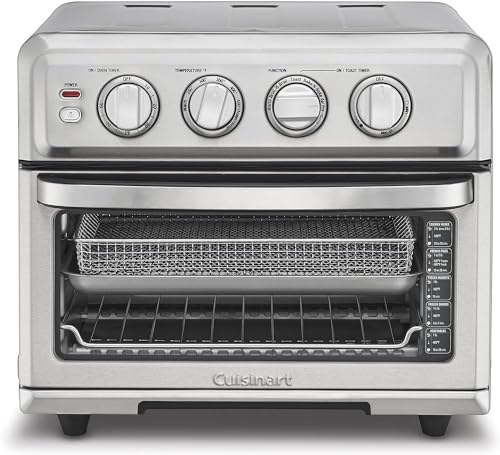
Cuisinart Air Fryer Toaster Oven, 1800W, 8-in-1 with Air Fry, Convection, Broil & Warm, 0.6 Cubic Feet, 60-Minute Timer, TOA-70NAS, Stainless Steel
VERSATILE COOKING FUNCTIONS: This premium 1800-watt Cuisinart Air Fryer Toaster Oven is equipped with an air fry setting...
As an affiliate, we earn on qualifying purchases.
Use of Inappropriate Cooking Sprays or Oils

Using inappropriate cooking sprays or oils can cause smoking and damage your air fryer. Cooking spray misuse is common when people choose sprays that contain additives or propellants that burn at high temperatures, leading to smoke. Similarly, oil selection matters; many oils with low smoke points, like olive oil or butter, can quickly start to burn inside the hot basket. To prevent this, opt for oils with higher smoke points such as avocado, canola, or refined coconut oil. Avoid excessive spraying, as too much oil can pool and burn. Always read labels and use sprays designed for high-heat cooking. Proper oil selection and mindful application help keep your air fryer smoke-free and functioning well.
Heating up With Residue or Debris Inside

Residual food particles, grease, or debris left inside your air fryer can cause smoking when it heats up. This residue buildup burns and produces smoke, especially if you haven’t cleaned your appliance recently. To prevent this, regularly check and clean the interior debris after each use. Use a damp cloth or brush to remove stubborn residue, paying attention to corners and heating elements.
| Step | Action | Tips |
|---|---|---|
| 1 | Remove the basket | Wash with warm soapy water |
| 2 | Clean the interior | Use a soft brush or cloth |
| 3 | Check for debris | Look around heating elements |
| 4 | Wipe dry | Prevent future residue buildup |
| 5 | Reassemble and test | Ensure no debris remains |
Regular cleaning prevents interior debris from causing smoke during heating.
Malfunctioning Heating Element or Thermostat
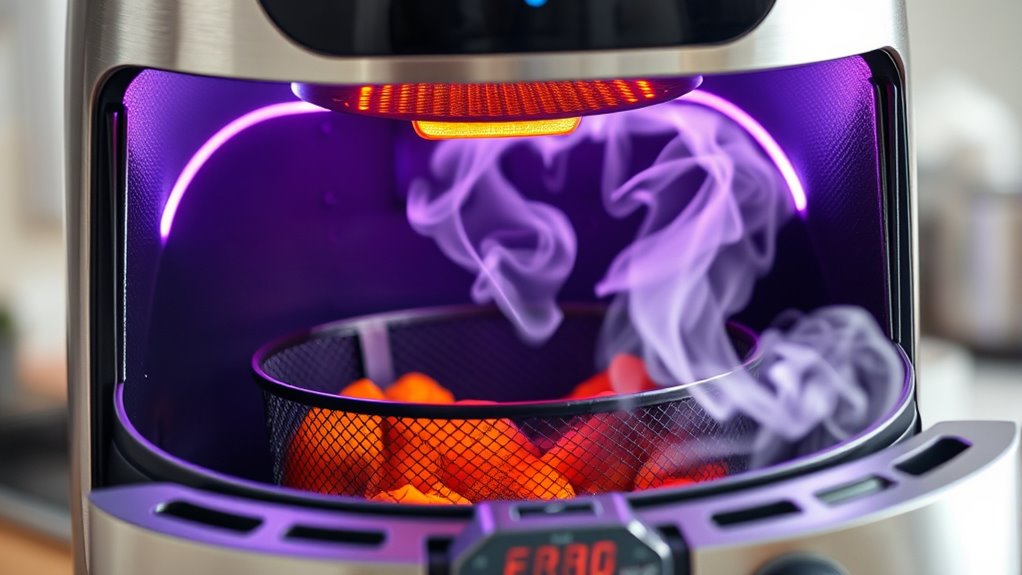
If your air fryer is smoking unexpectedly, the heating element or thermostat might be malfunctioning. Damage to the heating element or a faulty thermostat can cause uneven heating or overheating, increasing the risk of fires. It’s important to identify these issues early to guarantee safe and efficient operation.
Heating Element Damage
A malfunctioning heating element or thermostat is a common culprit when your air fryer isn’t heating properly. Over time, the heating element can suffer damage, causing uneven heat or no heat at all. This is often due to overheating, wear, or electrical issues leading to heating element damage. A faulty heating element can also cause the thermostat to malfunction, making it unable to regulate temperature correctly.
| Issue | Symptoms | Solution |
|---|---|---|
| Heating element damage | No heat or inconsistent cooking | Replace the heating element |
| Thermostat malfunction | Overheating or no response | Repair or replace thermostat |
| Both issues | Smoking or burning smell | Professional diagnosis needed |
| Regular maintenance | Longer appliance life | Clean and inspect regularly |
If you suspect heating element damage, addressing it promptly prevents further damage and smoking.
Faulty Thermostat Function
A faulty thermostat can cause your air fryer to malfunction by failing to regulate temperature properly or triggering the heating element unexpectedly. If the thermostat isn’t calibrated correctly, it may lead to inconsistent heating, causing your device to run too hot or too cold. This improper temperature regulation can result in smoking or even overheating. To fix this, you might need to check the thermostat calibration, ensuring it accurately reflects the desired temperature settings. If the thermostat is damaged or malfunctioning, replacing it could be necessary. Remember, a properly functioning thermostat is essential for safe and efficient operation, preventing smoking caused by overheating. Regular maintenance and calibration can help keep your air fryer running smoothly and avoid issues related to a faulty thermostat.
Overheating Risks
Overheating in your air fryer often results from a malfunctioning heating element or thermostat, which can cause the device to run uncontrollably hot. When these components fail, they can lead to excessive heat buildup, increasing the risk of smoke and potential damage. To guarantee air fryer safety and prevent smoke, regularly check for signs of overheating, such as unusual heat or burning smells. If you notice your air fryer overheating, stop using it immediately and inspect the heating element and thermostat for defects or debris. Proper maintenance and timely repairs can help prevent overheating risks, reducing the chance of smoke and ensuring your appliance operates safely and efficiently. Always follow manufacturer guidelines for troubleshooting and repairs to maintain safe air fryer operation.
Electrical or Mechanical Issues to Watch For
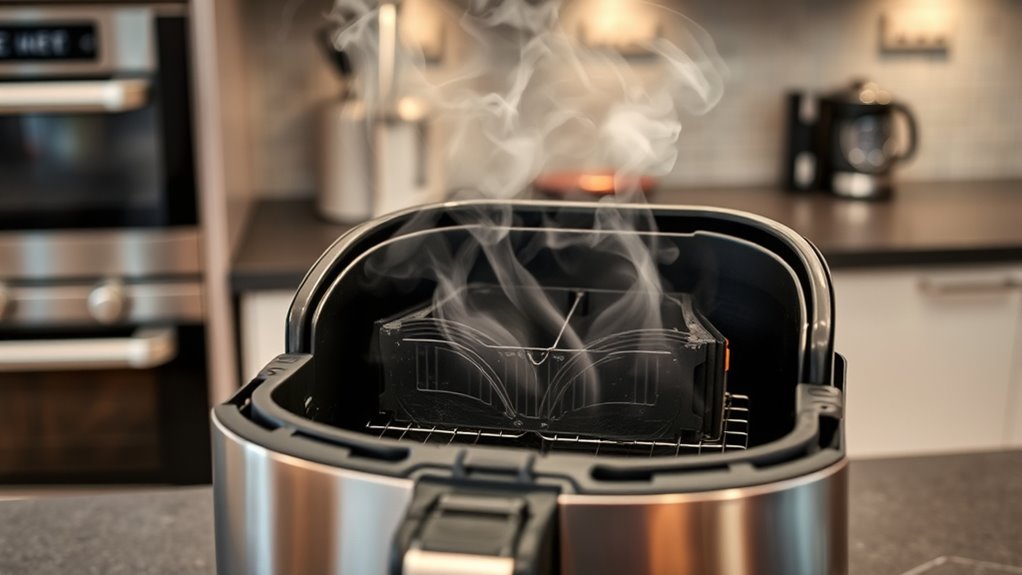
Electrical and mechanical issues are common culprits when your air fryer starts smoking unexpectedly. Electrical faults, such as damaged wiring or a loose connection, can cause sparks or overheating, leading to smoke. Mechanical wear, including worn-out fan motors or heating elements, can also result in abnormal operation and smoke production. Check for signs of frayed cords, scorch marks, or unusual noises, which may indicate a fault. If you notice any electrical or mechanical damage, it’s best to unplug the appliance immediately and avoid using it until repairs are made. Regular inspections can help catch these issues early, preventing further damage or safety hazards. Addressing electrical faults and mechanical wear promptly ensures your air fryer operates safely and efficiently.
Cleaning and Maintenance Tips to Prevent Smoking

Regular cleaning and proper maintenance are essential to prevent your air fryer from smoking during use. Regularly remove grease and food debris, which can cause smoke if left buildup. Use natural cleaning products like vinegar and baking soda to avoid chemical fumes, guaranteeing safe and effective cleaning. Proper ventilation during cooking helps disperse smoke and reduces odors.
| Maintenance Tip | Benefit |
|---|---|
| Clean with natural products | Prevents residue buildup and fumes |
| Regularly check vents | Ensures proper airflow and reduces smoke |
| Wipe down heating elements | Keeps heating elements clean and functioning well |
When to Seek Professional Repair Services

Sometimes, despite your best cleaning efforts, your air fryer continues to produce smoke or shows signs of malfunction. If you notice persistent air fryer odors or smoke discoloration on the appliance or nearby surfaces, it’s time to contemplate professional repair services. Ongoing smoke or strange smells might indicate internal wiring issues, worn-out parts, or accumulated grease that you can’t safely resolve yourself. Attempting to fix these problems without expertise can be dangerous or cause further damage. When smoke persists after thorough cleaning or if the unit heats unevenly, don’t delay seeking professional help. A trained technician can diagnose hidden problems, ensure safe operation, and restore your air fryer to proper working condition. Prioritizing expert repair protects your safety and prolongs your appliance’s lifespan.
Preventative Measures for Safe Air Fryer Use
To keep your air fryer operating safely and prevent issues like smoke or malfunction, adopting simple preventative measures is essential. First, always follow the manufacturer’s guidelines for air fryer safety, especially regarding cooking temperature. Avoid setting the temperature too high, as excessive heat can cause food to burn or produce smoke. Before cooking, clean the basket and tray thoroughly to remove grease or food residue that could ignite. Use the correct amount of oil; too much can cause smoking. Keep an eye on the appliance during use and never leave it unattended. Regular maintenance and proper temperature control help prevent smoke and ensure your air fryer functions efficiently. These small steps substantially reduce risks and prolong your appliance’s lifespan.
Frequently Asked Questions
Can Using Low-Quality Oils Cause My Air Fryer to Smoke?
Yes, using low-quality oils can cause your air fryer to smoke. These oils often have lower smoke points, meaning they start to burn and produce smoke at lower cooking temperatures. To prevent this, choose high-quality oils with higher smoke points, and avoid setting the temperature too high. Proper oil quality and cooking temperature help keep your air fryer functioning smoothly without unwanted smoke.
How Often Should I Clean My Air Fryer to Prevent Smoking?
You should clean your air fryer at least once a month to prevent smoking. Follow a regular cleaning schedule, especially after cooking greasy foods. Use maintenance tips like removing and washing the basket and tray with warm, soapy water, and wiping down the interior with a damp cloth. Regular cleaning keeps grease and residue from building up, reducing the risk of smoke and ensuring your air fryer operates smoothly.
Is Smoking Dangerous, and What Risks Does It Pose?
Think of smoking as your air fryer’s cry for help. Yes, it can be dangerous because oil splatters and grease buildup can cause fires or emit harmful fumes. These risks threaten your safety and health, turning a simple meal into a hazardous situation. Regular cleaning and using the right oil help prevent smoking, so keep your air fryer in top shape to avoid these dangers and enjoy safe, delicious meals.
Can Certain Foods Increase the Likelihood of Smoking During Cooking?
Yes, certain foods can increase the likelihood of oil smoke and food residue, causing your air fryer to smoke. Foods with high fat content, like bacon or greasy snacks, release more oil smoke during cooking. Additionally, leftover food residue from previous uses can burn and produce smoke. To minimize smoking, always clean your air fryer thoroughly, especially the basket and tray, and avoid overcrowding with greasy foods.
How Do I Know if My Air Fryer Needs Professional Repair?
If your air fryer overheats or produces persistent smoke, it’s time for professional repair. For example, a user noticed the unit’s heating element was malfunctioning after frequent use. You should consider air fryer diagnostics and contact repair options if you experience electrical issues, unusual noises, or the unit fails to turn on. Don’t attempt repairs yourself; professional service guarantees safety and proper functioning.
Conclusion
By keeping your air fryer clean and mindful of how you load and season your food, you’ll prevent that unwanted smoke from filling your kitchen. Think of it as giving your appliance a gentle pat on the back, ensuring it runs smoothly like a well-oiled machine. When you pay attention to maintenance and use it properly, your air fryer will serve up crispy, delicious meals without the smoky surprise, making every cooking experience a joy instead of a smoky ordeal.