In a smart kitchen era, microwaves are far from obsolete—they’re evolving with advanced features that boost convenience and efficiency. With voice control, remote operation, and sensor technology, you can manage cooking hands-free and save energy effortlessly. Integration with smart home devices makes them more useful than ever, seamlessly fitting into your routine. If you want to discover how these upgrades can transform your kitchen experience, keep exploring the innovative role of modern microwaves.

Get kitchen gear delivered free with Prime
- Fast, free delivery on millions of items
- Prime Video, Amazon Music and more included
- Member-only deals all year
Key Takeaways
- Smart microwaves enhance convenience with voice control and remote monitoring, making them more relevant than ever.
- Integration with smart home systems expands their functionality, complementing other connected devices.
- Advanced sensors and automation improve energy efficiency, aligning with eco-friendly kitchen trends.
- Microwave technology evolves to meet modern lifestyle demands, offering added features rather than becoming obsolete.
- They remain essential for quick, hands-free cooking, even amid the rise of other smart kitchen appliances.
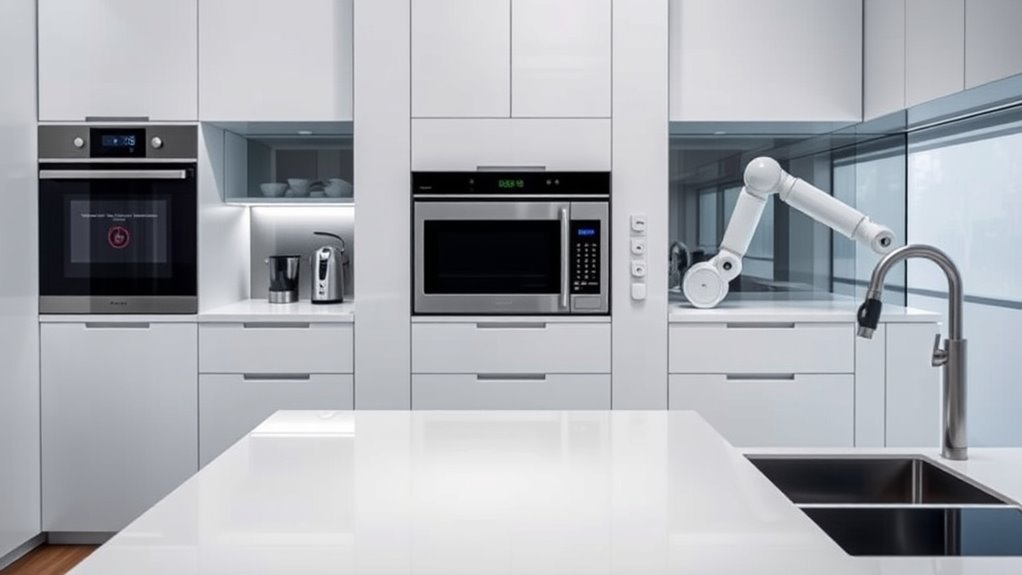
In a smart kitchen, the microwave has become more than just a simple appliance; it’s a central hub that enhances convenience and efficiency. Today’s models are equipped with voice commands, allowing you to operate them hands-free. Instead of fiddling with buttons or touchscreens, you can simply say, “Start the microwave for two minutes,” and it responds instantly. This hands-free control is especially useful when your hands are dirty or you’re multitasking. Voice commands make cooking smoother, more intuitive, and help you stay focused on your prep work or other tasks without interruption. Additionally, these smart microwaves are designed with energy efficiency in mind. They use advanced sensors to detect when food is hot or cooked, adjusting power levels accordingly. This prevents unnecessary energy consumption, saving you money on electricity bills and reducing your carbon footprint. With energy-efficient features, you don’t have to worry about leaving the microwave on longer than needed or wasting power during idle times. The integration of voice commands and energy-saving technology signifies how smart microwaves are evolving beyond traditional appliances, becoming essential components of a connected kitchen.
You might wonder if these features make the microwave obsolete, but that’s far from the truth. Instead, they elevate its role within your smart home ecosystem. Voice-activated controls enable seamless integration with other devices, like smart refrigerators or voice assistants such as Alexa or Google Assistant. You can set timers, adjust power levels, or check cooking status without interrupting your routine. This interoperability enhances overall efficiency. Additionally, modern smart microwaves often come with Wi-Fi connectivity, allowing you to monitor and control them remotely through smartphone apps. Imagine preparing dinner and being able to start or stop your microwave from anywhere in the house or even while away. This level of control, combined with energy-efficient operation, makes your kitchen more eco-friendly and convenient.
Furthermore, smart home integration can help you create routines that optimize energy use and streamline your daily cooking habits. While some might think that traditional microwaves still suffice, these smart features greatly improve how you cook and manage energy. They reduce waste, streamline your workflow, and offer greater convenience. In a smart kitchen, the microwave isn’t obsolete; it’s upgraded to meet modern demands. It adapts to your lifestyle, helping you save time, energy, and effort. The future of microwave technology isn’t about replacing it but enhancing it with smart capabilities that make everyday cooking smarter, more efficient, and more aligned with the principles of energy conservation. So, rather than being phased out, the microwave remains a key player—just smarter than ever.
smart microwave with voice control
As an affiliate, we earn on qualifying purchases.
As an affiliate, we earn on qualifying purchases.
Frequently Asked Questions
Can Smart Ovens Replace Microwaves Entirely?
Smart ovens can replace microwaves in your kitchen, thanks to voice control and seamless kitchen integration. They heat food quickly and precisely, offering more cooking options. With voice commands, you don’t need to lift a finger, making your cooking experience more convenient. While they might not match the microwave’s speed for simple tasks, smart ovens definitely provide a versatile, high-tech alternative that fits well into a modern, connected kitchen.
Are There Energy Efficiency Benefits to Replacing Microwaves?
Yes, replacing your microwave can lead to massive energy savings and lower power consumption. Modern appliances are engineered for peak efficiency, consuming a fraction of the energy older models use—like turning a tiny flashlight into a spotlight! By upgrading, you cut down on wasted energy, save money on electricity bills, and do your part for the environment. It’s a small change with a huge impact on your energy footprint.
How Secure Are Smart Microwave Devices From Hacking?
Smart microwave devices face cybersecurity risks and privacy concerns, so they’re not entirely secure from hacking. You should be cautious, regularly update firmware, and use strong, unique passwords to protect your device. Be aware that hackers could access personal data or control the microwave remotely. Staying vigilant and following best cybersecurity practices helps minimize these risks, ensuring your smart kitchen remains safe and private.
Do Smart Kitchens Require Specific Microwave Brands or Models?
In a smart kitchen, you don’t need specific microwave brands or models, but look for ones with voice control and app connectivity. These features make your microwave more versatile and convenient, allowing you to set timers or check cooking progress remotely. Many brands now offer compatibility with popular smart home systems, so you can choose a model that fits your budget and preferences while enhancing your overall smart kitchen experience.
What Is the Lifespan Comparison Between Traditional and Smart Microwaves?
While traditional microwaves often enjoy a longer-standing reputation for appliance durability, smart microwaves tend to face quicker technological obsolescence. You might find that the lifespan of a standard microwave easily exceeds that of its smarter counterpart, which integrates advanced features that can become outdated. Nonetheless, smart models offer ongoing updates, but ultimately, both types can serve you well for several years if well-maintained.
As an affiliate, we earn on qualifying purchases.
Conclusion
In a smart kitchen era, your microwave might seem outdated, but it still holds value. Imagine integrating it with a voice assistant that alerts you when your food is ready, combining tradition with technology. For example, a family used a smart hub to monitor microwave activity remotely, ensuring dinner was perfect every time. While new gadgets emerge, your microwave remains a reliable, simple tool—adapted and enhanced rather than obsolete. Embrace its role alongside smarter devices for a truly efficient kitchen.
As an affiliate, we earn on qualifying purchases.
As an affiliate, we earn on qualifying purchases.
Fall Picks
fall essentials
As an affiliate, we earn on qualifying purchases.