
When tech fails, you need to rely on simple, manual cooking methods to stay nourished. Use tools like cast iron skillets, Dutch ovens, or makeshift grills over open flames. Keep essential supplies like canned foods, dried grains, and preserved fruits handy. Practice using portable camping stoves or solar cookers if you have them. Safety is key—control fires carefully and have water nearby. To master these techniques and become more self-sufficient, stay tuned for essential tips and tricks.
Open a free Amazon Business account
Business pricing, bulk buying and tax-exempt orders.
As an affiliate, we earn on qualifying purchases.
Key Takeaways
- Prepare by learning manual cooking techniques using cast iron, open flames, or makeshift grills before emergencies occur.
- Keep portable, fuel-based devices like camping stoves or solar cookers accessible for reliable cooking options.
- Stockpile non-perishable foods such as canned goods and dried grains to simplify meal preparation without electricity.
- Follow safety protocols when building fires or using alternative devices to prevent accidents and ensure effective cooking.
- Practice resourceful methods regularly to stay confident and self-sufficient during power outages or gadget failures.
When emergency situations cut off your access to electricity or modern appliances, cooking without gadgets becomes vital. In such moments, relying on manual techniques and resourceful solutions can mean the difference between a nourishing meal and going hungry. Instead of reaching for your electric stove or microwave, you’ll need to adapt, utilizing simple tools and classic methods to prepare food safely and efficiently.
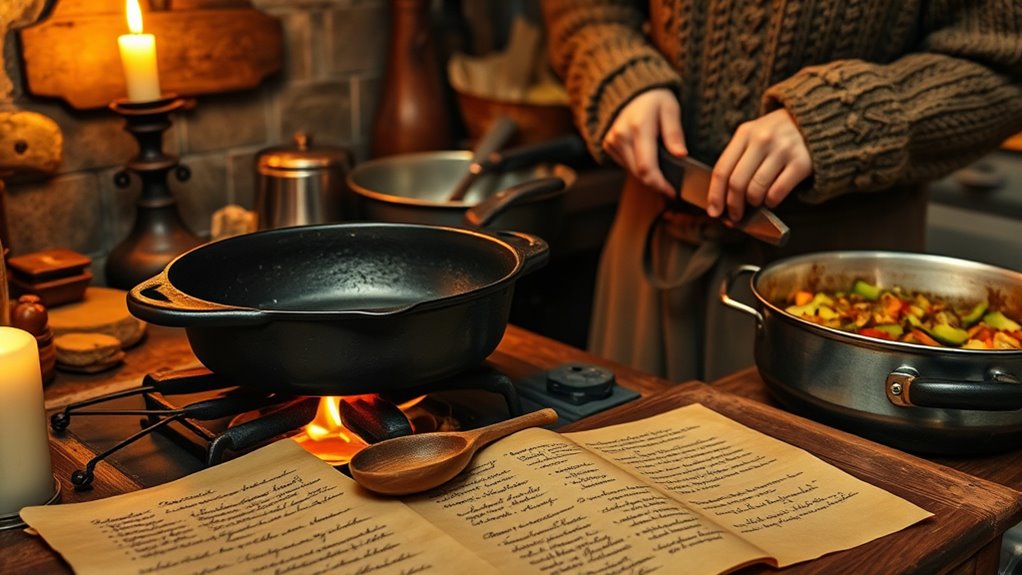
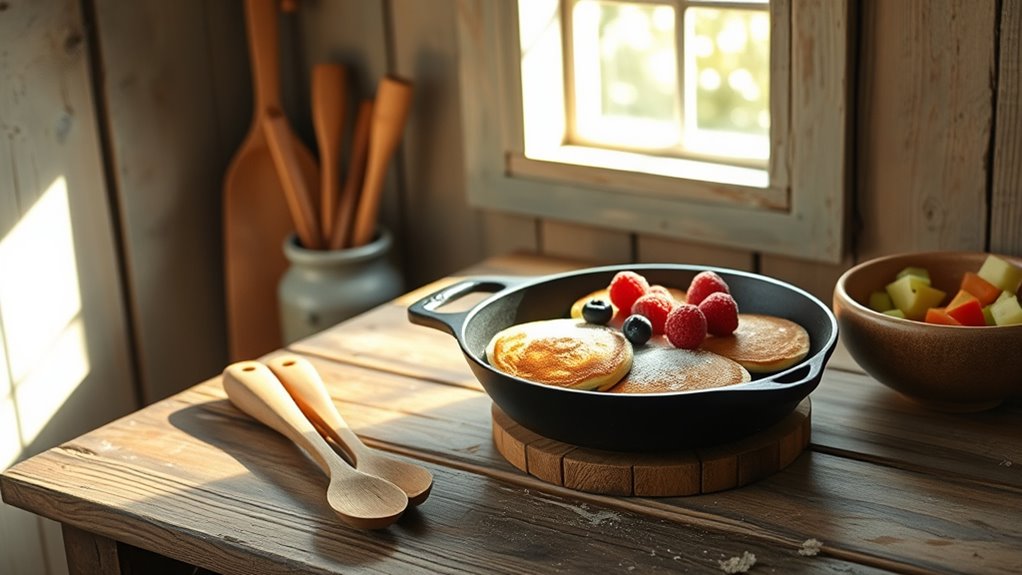
First, familiarize yourself with manual techniques that don’t depend on power. For example, using a cast iron skillet or a Dutch oven over an open flame or charcoal can help you cook a variety of dishes. These tools are durable, versatile, and indispensable for resourceful solutions in emergencies. You can simmer stews, fry foods, or bake bread just like you would with modern appliances. If you don’t have a traditional grill, consider building a makeshift one with bricks or stones to hold a grill grate over a fire. This way, you maximize your options without electricity.
Use cast iron skillets or Dutch ovens over open flames for versatile emergency cooking.
Another vital manual technique involves using a portable camping stove that operates on propane or butane. These stoves are compact, easy to use, and do not rely on electricity, making them ideal for emergency cooking. Keep plenty of fuel on hand, and practice using the stove beforehand, so you’re comfortable with it when needed. Additionally, a simple solar cooker can be a resourceful solution during the day, harnessing sunlight to cook meals without any energy cost. While slower than traditional methods, solar cookers are silent, eco-friendly, and effective when the weather permits.
For boiling water or cooking grains, a basic metal pot or kettle over an open flame works wonders. If you’re in a colder climate, a portable wood stove may be a good investment. When building a fire, ensure you’re following safety protocols—clear the area, keep water nearby to extinguish flames, and never leave the fire unattended. The key is to maintain control and safety while cooking manually.
Lastly, don’t forget to gather and prepare ingredients in advance. Canned foods, dried grains, and preserved fruits and vegetables store well and are easy to cook using manual methods. Having a well-stocked emergency kit with these supplies, along with your manual tools, will make cooking without gadgets more manageable. By practicing these techniques and solutions now, you’ll be better prepared to feed yourself and your loved ones when modern conveniences are unavailable. Embracing manual techniques and resourceful solutions ensures you stay resilient and self-sufficient, no matter what emergency comes your way. Additionally, understanding the importance of energy-efficient tools can help you make better choices for sustainable survival.
cast iron skillet for outdoor cooking
As an affiliate, we earn on qualifying purchases.
As an affiliate, we earn on qualifying purchases.
Frequently Asked Questions
Can I Cook Safely Without Electricity or Gas?
Yes, you can cook safely without electricity or gas by using solar ovens or fire pits. Solar ovens harness sunlight to cook food, making them eco-friendly and safe for outdoor use. Fire pits allow you to cook over open flames, but always follow safety guidelines. Keep a fire extinguisher nearby, never leave the fire unattended, and ensure proper ventilation. These methods are reliable and effective during power outages or emergencies.
What Are the Best No-Tech Cooking Methods?
Think of yourself as a pioneer, forging a path with manual techniques like open fire cooking. The best no-tech methods include using a portable grill, a solar oven, or a simple campfire. You can boil, roast, or stew without electricity or gas, relying on your skill and resourcefulness. These methods connect you to ancient traditions, turning an emergency into an adventure where you control the heat with your own hands.
How Do I Store Ingredients Without Refrigeration?
You can store ingredients without refrigeration by using pantry preservation techniques like storing dried, canned, or pickled foods. Solar dehydration helps you preserve fruits and vegetables, extending their shelf life naturally. Keep perishable items in a cool, dark place to prevent spoilage. Properly sealing jars and containers prevents moisture and pests, ensuring your ingredients stay fresh longer, even without electricity. Utilize these methods to maintain a well-stocked, emergency-ready pantry.
Are There Quick Emergency Recipes for Large Groups?
Yes, you can prepare quick emergency recipes for large groups using simple group meal planning and bulk cooking techniques. Opt for easy-to-make dishes like chili, pasta salads, or stews that can be cooked in large pots. Prepare ingredients in advance, cook in large batches, and serve. These methods save time, guarantee everyone gets fed, and make managing large groups much easier during emergencies.
How Can I Clean Cookware Without Running Water?
To clean cookware without running water, you should focus on manual cleaning and alternative cleaning methods. First, wipe off any food residue with a paper towel or cloth. Then, use a damp cloth or sponge with a bit of soap or baking soda for scrubbing. Rinse with a small amount of clean water if available, or wipe down with a clean, damp cloth to remove soap. Dry thoroughly to prevent rust.
As an affiliate, we earn on qualifying purchases.
Conclusion
When your gadgets suddenly die, you might think you’re stranded in the Stone Age, but don’t panic! With a little ingenuity, you can cook like a master chef using nothing but your bare hands and everyday items. Remember, this is your moment to unleash your inner pioneer—crafting gourmet meals without a single click or beep. So, embrace the chaos, get creative, and turn this disaster into your greatest culinary adventure yet!
solar cooker for emergency cooking
As an affiliate, we earn on qualifying purchases.
As an affiliate, we earn on qualifying purchases.
Dutch oven for open flame cooking
As an affiliate, we earn on qualifying purchases.
As an affiliate, we earn on qualifying purchases.
Fall Picks
fall essentials
As an affiliate, we earn on qualifying purchases.