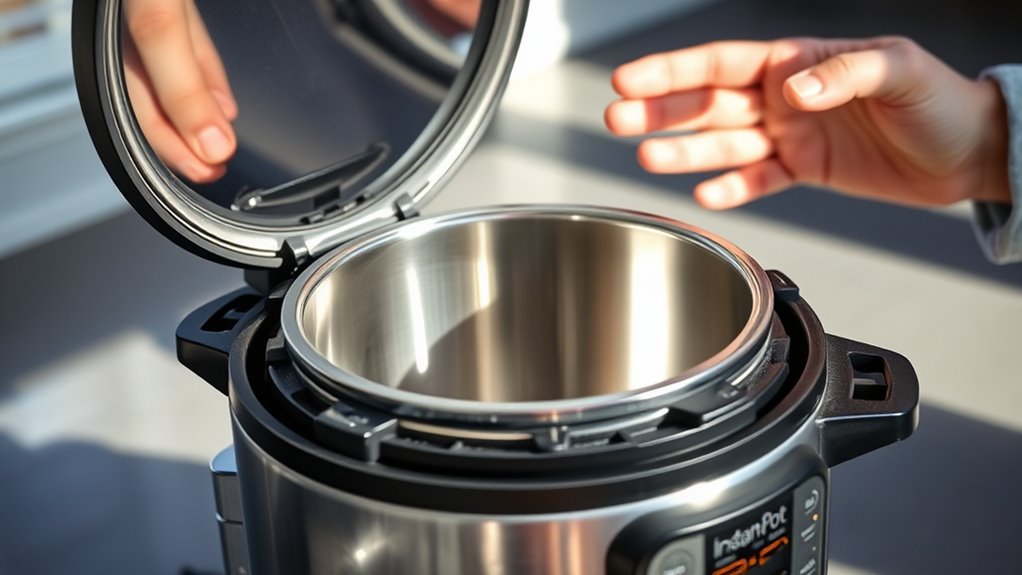

If your Instant Pot won’t pressurize, check that the lid is securely locked and the sealing ring is correctly installed and clean. Make certain the steam release handle is in the sealing position, and the float valve isn’t blocked by debris or food particles. Confirm you added enough liquid, and that safety features are engaged. Address these common issues first—if problems persist, you’ll find more detailed solutions below.
Key Takeaways
- Ensure the lid is securely locked and properly sealed to build pressure.
- Check that the steam release handle is in the correct position for pressure buildup.
- Inspect and clean the sealing ring and float valve for debris or blockages.
- Verify sufficient liquid is added and safety features are engaged before cooking.
- Reinitialize the process after correcting any user errors or sealing issues.
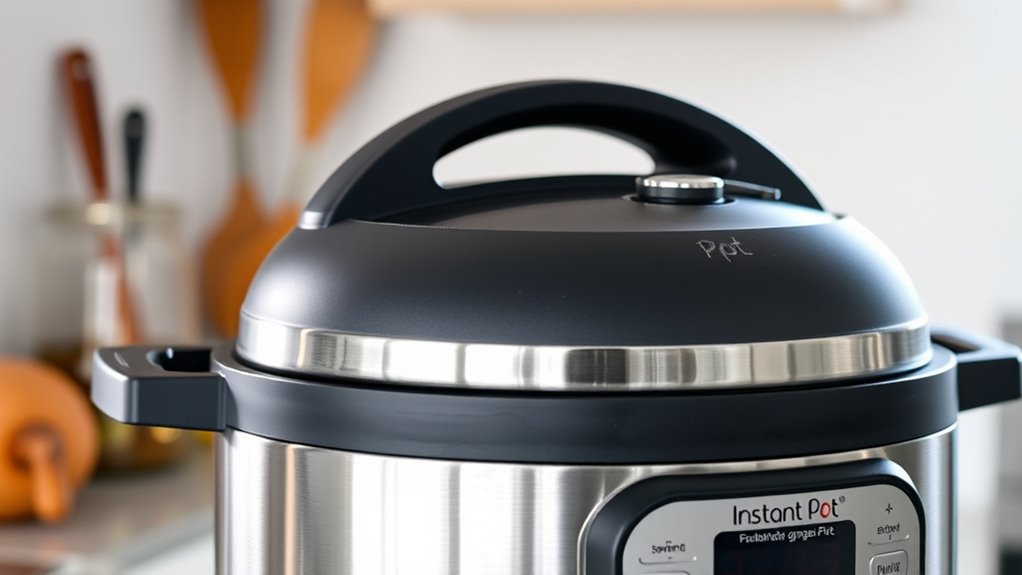
If your Instant Pot isn’t working as expected, troubleshooting can quickly get you back on track. One of the most frustrating issues is when it won’t pressurize. Before jumping to conclusions, it’s essential to identify common user errors that might be causing the problem. Often, these errors are simple mistakes that can be corrected with a little attention. For example, many users forget to properly seal the lid or don’t ensure the steam release handle is in the correct position. These are common user errors that prevent the appliance from reaching pressure. Always double-check that the sealing ring is correctly installed and free of debris, as a loose or damaged ring can cause pressure issues. Additionally, confirm that the lid is securely locked in place; if it isn’t, the Instant Pot won’t pressurize safely.
Safety precautions are critical when troubleshooting your Instant Pot. Never attempt to force the lid open or bypass safety mechanisms, as this can be dangerous. If you notice the lid isn’t locking properly, refrain from using the appliance until you’ve identified and fixed the issue. Also, ensure the float valve isn’t stuck or blocked by food particles, which can prevent the lid from sealing correctly. Cleaning the float valve regularly helps maintain proper pressure buildup and reduces the chances of malfunction. Remember, safety always comes first—ignoring safety precautions can lead to accidents or damage to your appliance. Additionally, understanding the importance of pressure regulation can help prevent issues with pressurization in the future.
Sometimes, the issue might be related to insufficient liquid in the pot. The Instant Pot needs enough liquid to generate steam and build pressure. If you’re cooking a recipe that’s low in liquid, add more water, broth, or other suitable liquids, as specified in your recipe or user manual. Also, verify that the pressure release valve is clean and functioning properly, because a blocked or faulty valve can prevent pressure from building. If the valve is clogged or stuck, gently clean it with warm, soapy water, ensuring all debris is removed. After addressing these common user errors and safety precautions, try starting the process again. It’s often a matter of resetting the lid, ensuring correct placement, and confirming all safety features are engaged.

Walfos Silicone Trivet Mats - 4 Heat Resistant Pot Holders, Multipurpose Non-Slip Hot Pads for Kitchen Potholders, Hot Dishers, Jar Opener, Spoon Holder, Food Grade Silicone & BPA Free (Black)
- Heat Resistant Range: -104℉ to 446℉
- Non-Slip Design: Prevents slipping and sliding
- Food Grade Silicone: BPA free and durable
As an affiliate, we earn on qualifying purchases.
Frequently Asked Questions
Can I Fix My Instant Pot Myself?
Yes, you can do DIY repairs on your Instant Pot, but always follow safety precautions. Start by unplugging it and inspecting the sealing ring, float valve, and vent for blockages or damage. Clean or replace parts if needed. If you’re unsure or uncomfortable, it’s best to consult a professional. Remember, safety comes first—never attempt repairs that could jeopardize electrical safety or cause injury.
How Long Should It Take to Pressurize?
It usually takes just 5 to 15 minutes for your Instant Pot to pressurize, which might feel like an eternity when you’re starving! The pressurization time depends on the amount of food, liquid, and the model you’re using. Keep in mind, the longer it takes, the more your cooking duration is delayed. So, patience is key—don’t rush the process or you risk undercooked meals or error messages.
Does Food Type Affect Pressurization?
Yes, food type influences pressurization. Foods with a high moisture content, like soups or stews, pressurize quickly because their ingredients release steam easily. In contrast, foods with dry textures or low moisture, such as certain grains or dried beans, may slow down pressurization. The ingredient moisture level impacts how quickly the Instant Pot builds pressure, so adjusting cooking times or adding liquids can help guarantee proper pressurization.
Is There a Way to Reset the Device?
Yes, you can reset your Instant Pot. To do this, press and hold the reset button or unplug the device and wait for about 10 minutes. Some models may have a factory reset option in the settings menu. If your device has a dedicated reset button, press it firmly. Unplugging and plugging it back in also restores factory settings, helping fix issues like pressurization problems.
Why Does My Instant Pot Beep but Not Pressurize?
Your Instant Pot’s beep is like a lighthouse warning you, but it’s not steering into pressure. If it won’t pressurize, check the sealing ring—sometimes it’s like a missing puzzle piece, preventing the magic of pressure build-up. You might need to perform a pressure release, ensuring no steam escapes, then reseat the ring firmly. When everything’s aligned, your cooker should sound victorious and start pressurizing, ready to cook your meal.
Conclusion
If your Instant Pot won’t pressurize, don’t worry—most issues are simple fixes. Check the sealing ring, ensure the lid is properly closed, and verify enough liquid inside. Many users find that a quick inspection of these components solves the problem quickly. Rest assured, with a little troubleshooting, you’ll be back to enjoying delicious meals in no time. Trust these tips, and you’ll master your Instant Pot’s pressure magic every time!