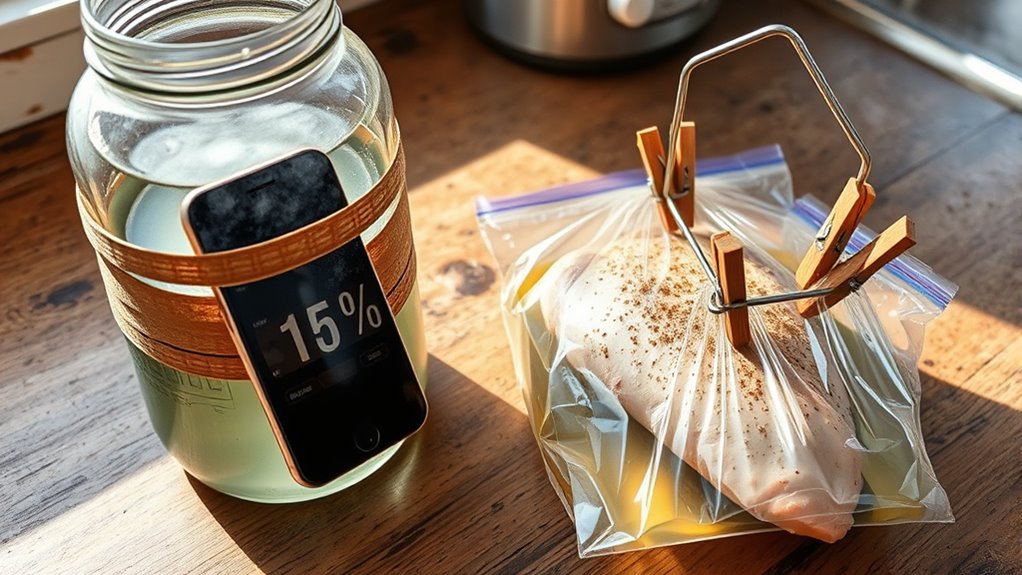
Yes, you can definitely improvise a DIY sous vide setup without a commercial machine. All you need is a large container for water, a reliable heat source like a slow cooker or aquarium heater, and an accurate thermometer to monitor temperature. Sealed bags with your food can be submerged using clips or weights, and occasional manual stirring helps ensure even heat distribution. Keep in mind that maintaining precise temperature control is key, and if you want to learn more, you’ll find simple ways to improve your setup.
Key Takeaways
- Yes, you can DIY sous vide using a large container, heat source, and accurate thermometer without specialized equipment.
- Maintaining a steady water temperature within 1-2°F is essential for effective improvisation.
- Using a submersible pump or manual stirring helps ensure water circulation and even cooking.
- Properly sealing food in vacuum or zip-top bags and keeping them submerged is crucial for safety and results.
- Regular monitoring and adjusting of water temperature and circulation enable consistent, high-quality sous vide results at home.
Ever wondered how to achieve restaurant-quality results at home without breaking the bank? You’re not alone. Many home cooks are eager to explore precision cooking techniques, especially sous vide, but the idea of investing in expensive equipment can hold you back. Luckily, you can improvise a homemade immersion setup that rivals commercial sous vide machines, giving you control over temperature and cooking time without the hefty price tag. The key is understanding how to create a reliable water bath that maintains a steady temperature, guaranteeing your food cooks evenly and stays tender.
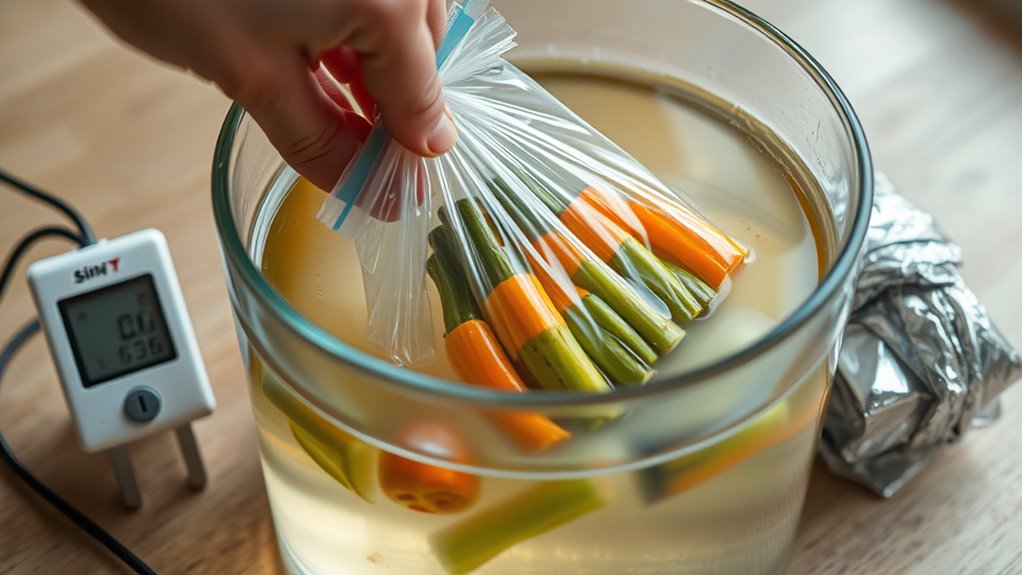
To start, you’ll need a sturdy container that can hold water, like a large cooler or stockpot. The challenge is maintaining a consistent temperature, which is vital for precision cooking. One effective method is to use a simple heat source, such as a submersible aquarium heater or a slow cooker, combined with a reliable thermometer. You want to keep the water within a narrow temperature range, usually within a degree or two of your target. This is where homemade immersion comes into play—you’re essentially replicating the function of a sous vide machine by immersing the heat source directly into the water and monitoring it constantly.
Use a sturdy container and a reliable heat source with a thermometer for precise homemade sous vide cooking.
Next, you’ll need a way to keep the water circulating. Without a commercial circulator, you can use a small submersible pump or even gently stir the water manually at regular intervals. This ensures that heat distributes evenly, avoiding hot spots or cold pockets that could spoil your dish. Once your water bath is stable, place your sealed, vacuum-packed or zip-top bag with your food into the water. Use clips or weights to keep the bag submerged and avoid floating. Now, set your timer and temperature carefully; precision is everything here.
With this setup, you’ll be surprised how well it performs. You can cook everything from perfectly tender steaks to delicate fish fillets, all with the control you’d expect from professional techniques. The secret lies in the consistency of your homemade immersion system—regular monitoring and adjustments are key. While it might not be as sleek or automated as a dedicated machine, your DIY sous vide provides a cost-effective way to master precision cooking. Plus, it’s satisfying to know you’ve improvised a solution that delivers restaurant-quality results, proving that you don’t need fancy equipment to elevate your culinary game.
Frequently Asked Questions
Can I Use a Regular Oven for DIY Sous Vide?
You can try using a regular oven for a DIY water bath, but it’s not ideal. Ovens don’t offer precise temperature control like a dedicated sous vide machine, and maintaining a steady water bath temperature is tricky. If you decide to proceed, use a thermometer and monitor closely. Keep the oven at a low temperature, around 140-150°F, and check regularly to avoid overheating or uneven cooking.
What Alternative Containers Work Best for Homemade Sous Vide?
Think of your container as a vessel of culinary magic. Reusable bags are your flexible, eco-friendly allies, sealing in flavors like a treasure chest. Mason jars, sturdy and clear, let you watch your creations develop, like tiny glass aquariums. Both work well for homemade sous vide, providing a secure environment for water immersion. Pick one based on your specific needs, and you’ll be on your way to perfect, tender dishes.
How Do I Maintain Precise Temperature Without Specialized Equipment?
You can maintain precise temperature without specialized equipment by using a reliable thermometer to monitor water temperature closely. Adjust the heat manually, such as by using a stove or hot plate, and remove or add small amounts of hot water to keep the temperature stable. Make sure your thermometer has accurate readings, and constantly check it to ensure consistent temperature control, which is vital for perfect sous vide results.
Is It Safe to Cook Sous Vide Without a Vacuum Sealer?
Yes, it’s safe to cook sous vide without a vacuum sealer if you guarantee proper food safety. Instead of vacuum sealing, you can use a heavy-duty zip-top bag and remove as much air as possible by slowly submerging it in water, forcing out excess air. This method minimizes bacteria growth, but always double-check the seal and cook at the correct temperature to ensure safety and quality.
How Long Can I Store Sous Vide-Cooked Foods Safely?
You can generally store sous vide-cooked foods safely for up to 1-2 weeks in the refrigerator, depending on the type of food and proper storage conditions. To guarantee food safety, keep your cooked items at or below 40°F (4°C) and consume them within this timeframe. For longer storage, consider freezing, which can extend shelf life but may affect texture and quality. Always check for signs of spoilage before eating.
Conclusion
So, with a little creativity and some basic tools, you can turn your ordinary kitchen into a top-tier sous vide lab. While it might not replace a professional machine, your DIY setup can deliver perfectly cooked meals that rival restaurant quality. Think of it as releasing a culinary superhero within your home—proof that you don’t need fancy gadgets to achieve gourmet results. Get inventive, stay patient, and watch your cooking skills soar to legendary heights!