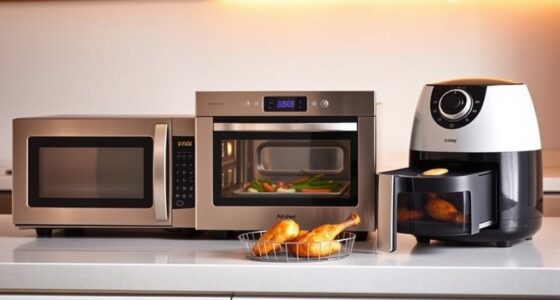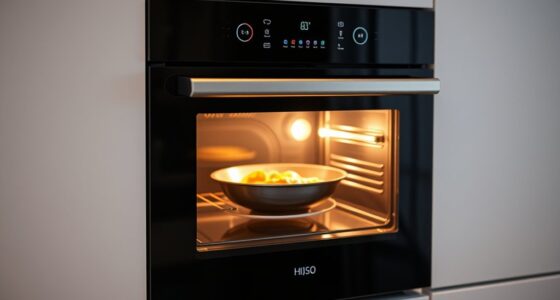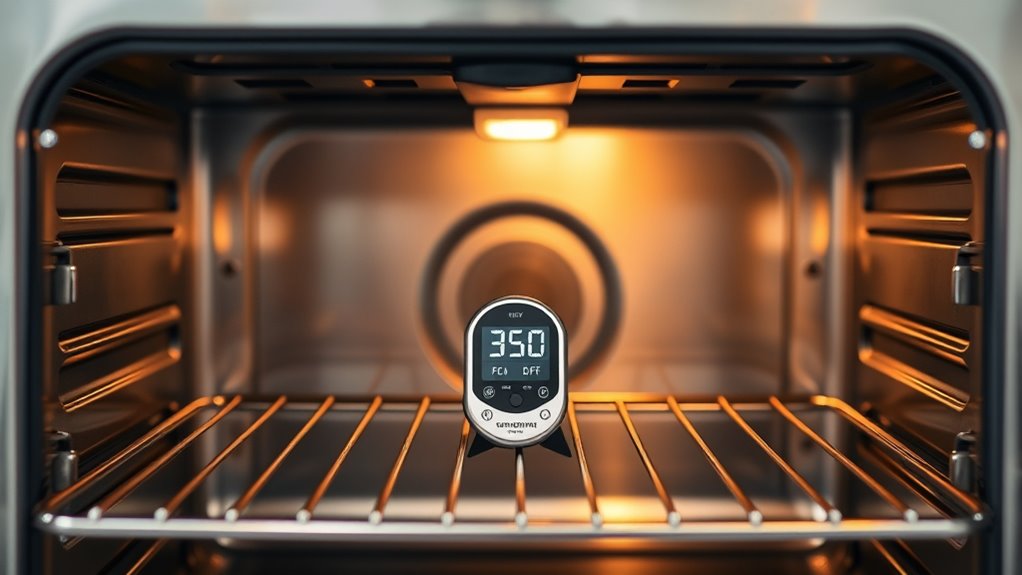

To calibrate your oven for accurate temperatures, first place an oven thermometer or digital probe in the center of the oven and heat it to your desired setting, like 350°F. After 15-20 minutes, compare the thermometer reading with your oven’s display. If there’s a difference, locate your oven’s calibration control—usually behind the knob or in settings—and adjust in small increments. To master the process, continue exploring these essential steps.
Key Takeaways
- Use an oven thermometer or digital probe to measure true internal temperature.
- Preheat the oven to your target temperature and wait 15-20 minutes for stabilization.
- Compare the thermometer reading with your oven’s display to identify any discrepancies.
- Adjust the oven’s calibration setting according to the user manual, in small increments.
- Regularly verify and recalibrate your oven to maintain accurate, consistent cooking temperatures.
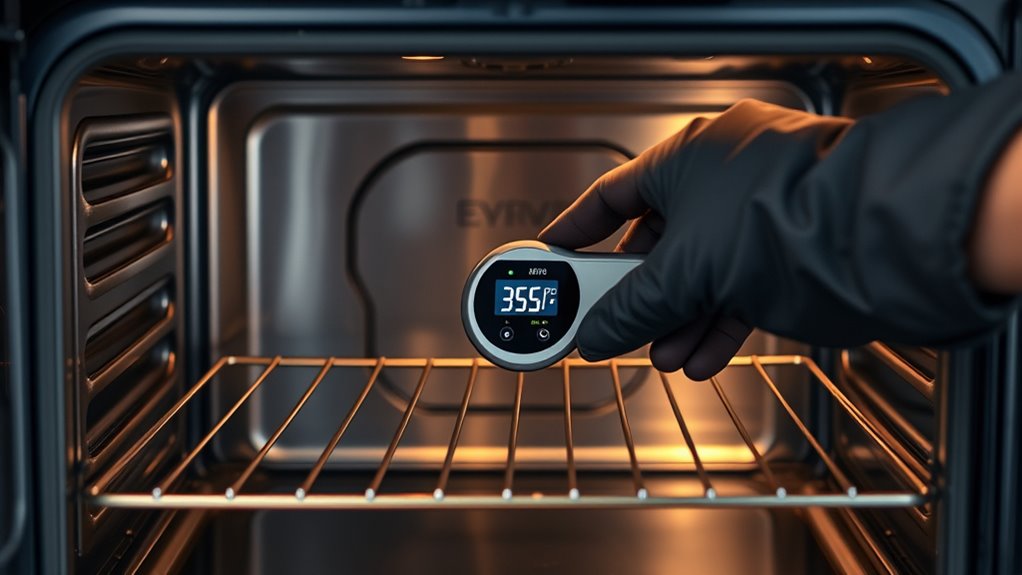
Have you ever noticed that your baked goods turn out uneven or burn too quickly? If so, it might be because your oven isn’t maintaining accurate temperatures. Oven temperature accuracy is vital for consistent results, and even small discrepancies can ruin your favorite recipes. Luckily, you can calibrate your oven to guarantee it heats to the correct temperature. The first step is to use proper oven calibration tools, which help you measure and adjust your oven’s true temperature. These tools typically include an oven thermometer or a digital temperature probe. You shouldn’t rely solely on your oven’s built-in display, because it may be inaccurate over time due to wear or calibration drift.
To start, place an oven thermometer in the center of your oven and turn it on to a specific temperature, such as 350°F (177°C). Wait at least 15-20 minutes for the oven to fully heat up, then check the thermometer reading. If the thermometer shows a different temperature than what your oven’s display indicates, it’s a sign that calibration is needed. For example, if your oven reads 350°F but the thermometer reads 340°F, your oven is running cool, and you might need to adjust its calibration settings. Conversely, if it reads higher, your oven runs hot. Many modern ovens have calibration controls, often found behind the oven’s temperature knob or in the settings menu, allowing you to fine-tune the temperature. If your oven doesn’t have built-in calibration options, you’ll need to adjust your baking times accordingly or consider professional calibration.
Using oven calibration tools is straightforward. After confirming the discrepancy with your thermometer, consult your oven’s user manual to locate the calibration setting. Adjust the temperature in small increments—usually 5 or 10 degrees—until the thermometer and oven display align closely. Regularly checking your oven’s temperature with accurate calibration, especially if your oven is several years old or used frequently, helps maintain consistent results. Keep in mind that calibration isn’t a one-time fix. It’s a good idea to verify the accuracy periodically, especially if you notice inconsistent baking results or if your oven is several years old. Proper oven calibration guarantees your baked goods are cooked evenly and prevents burning or undercooking. It’s a simple but vital step to improve your cooking precision and get better results every time you bake. By maintaining oven temperature accuracy, you’ll save time, ingredients, and frustration while enjoying perfectly cooked dishes.
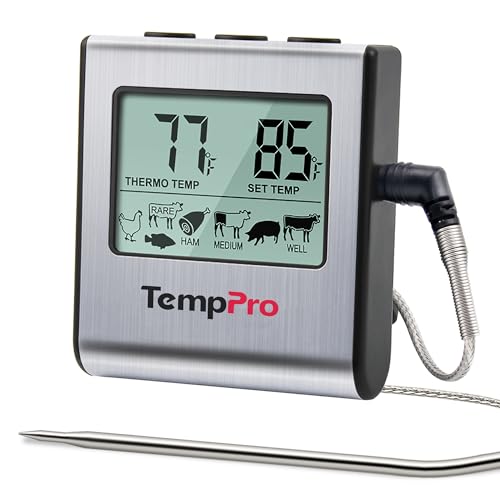
TempPro TempTrack Large LCD Digital Meat Thermometer for Cooking
- Cook Mode with USDA Settings: Preset and customizable temperature settings
- Timer and Alarm Function: Up to 99h 59m with beep notification
- High Temperature Resistance: Probe withstands up to 716°F, range 32-572°F
As an affiliate, we earn on qualifying purchases.
As an affiliate, we earn on qualifying purchases.
Frequently Asked Questions
How Often Should I Recalibrate My Oven?
You should recalibrate your oven during regular oven maintenance, ideally every 1-2 years, or if you notice temperature inaccuracies. Frequent recalibration helps maintain temperature accuracy, ensuring your baked goods turn out perfect. Keep an eye on signs like uneven cooking or inconsistent results, and don’t wait too long. Regular calibration keeps your oven performing well, saving you time and effort while guaranteeing delicious, reliably cooked meals every time.
Can I Calibrate a Digital Oven the Same Way?
Can you calibrate a digital oven the same way? Absolutely. Digital ovens often have built-in calibration settings, making the calibration method straightforward. You simply access the oven’s menu, follow the instructions, and adjust the temperature as needed. Unlike manual ovens, digital models let you calibrate accurately without extra tools. So, yes, you can follow a similar process, but check your model’s manual for specific steps.
What Tools Do I Need for Oven Calibration?
You’ll need a few calibration tools for an accurate temperature test, like an oven thermometer, which is essential for checking your oven’s actual temperature. Additionally, use a baking sheet or a heat-resistant dish to hold the thermometer during the test. Some ovens may require a calibration nut or screw, so check your model’s manual. These tools help guarantee your oven’s temperature matches the settings precisely, ensuring perfect baking results.
How Do I Know if My Oven Is off by a Few Degrees?
You can tell if your oven is off by a few degrees by using an oven thermometer to verify its temperature accuracy. Place the thermometer inside, set your oven to a specific temperature, and wait for it to heat up. Compare the thermometer reading with your oven’s display. If there’s a difference of a few degrees, your oven isn’t accurate, and calibration might be needed to ensure precise cooking.
Will Calibration Affect My Oven’s Warranty?
Calibration typically doesn’t affect your oven warranty if you do it yourself or have a professional handle it. However, some manufacturers might see it as modifying the appliance, which could impact the warranty. To avoid issues, check your oven warranty terms before calibration. If you’re unsure, contact the manufacturer or a certified technician to ensure your calibration impact doesn’t void your warranty.

Rubbermaid Commercial Products Stainless Steel Monitoring Thermometer, Safe for Inside Oven/Grill/Smoker, 60-580°F Range, Easy to Read Food Thermometer For Food Resturant/Home Cooking
- Food Safety Monitoring: Displays true oven temperature instantly
- Wide Temperature Range: 60°F to 580°F / 20°C to 300°C
- Versatile Kitchen Use: Suitable for home and professional kitchens
As an affiliate, we earn on qualifying purchases.
As an affiliate, we earn on qualifying purchases.
Conclusion
Now that you’ve calibrated your oven, you’ll never have to suffer through another burnt cookie or undercooked cake again. Your baked goods will turn out so perfect, they’ll look like they were made by a professional chef—every single time. Say goodbye to kitchen chaos and hello to culinary greatness! With this simple step, you’re officially the boss of your oven, ensuring every meal is a masterpiece. Happy baking!

WPY0314907 AP6024106 Range/Stove/Oven Temperature Sensor Kit
- Package Includes: 1 temperature sensor with model check
- Compatibility: Fits most major oven brands
- Model Compatibility: Supports numerous specific models
As an affiliate, we earn on qualifying purchases.
As an affiliate, we earn on qualifying purchases.

Hotloop Digital Oven Thermometer Heat Resistant up to 572°F/300°C, LCD
- Easy-to-Read LCD Display: Clear temperature readings for precise cooking
- High Temperature Accuracy: Measures 32~572°F with ±1.8°F precision
- Simple Setup and Use: Probe fits through oven door or grill lid
As an affiliate, we earn on qualifying purchases.
As an affiliate, we earn on qualifying purchases.