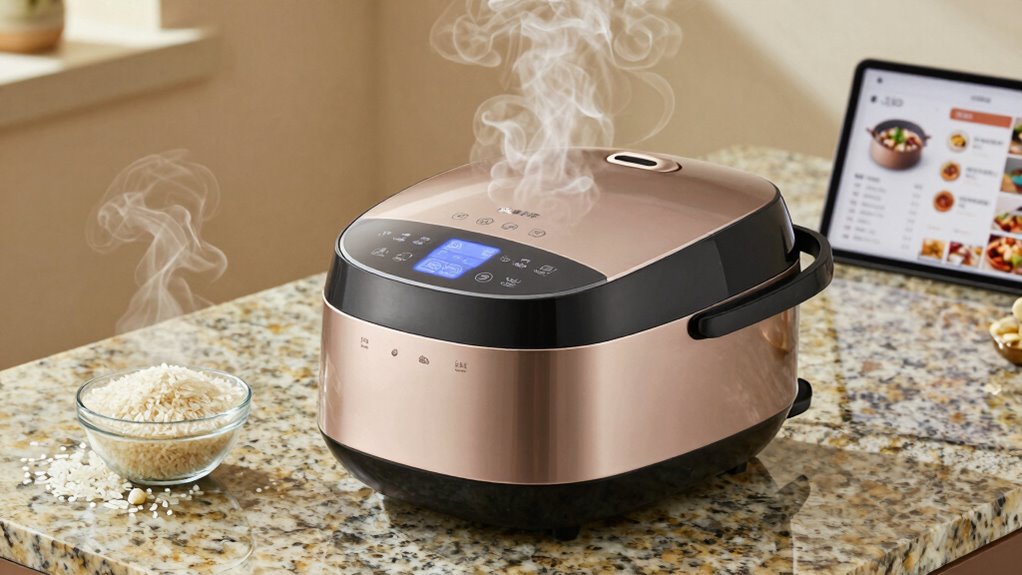
Smart rice cookers let you control and monitor cooking remotely, so you can start meals from anywhere and check progress without being in the kitchen. They include safety features like auto shut-off and sensors that prevent overcooking and waste. With voice compatibility and intuitive interfaces, these cookers adapt to your preferences and support various recipes. Plus, they offer easy cleanup and seamless integration with your smart home. Keep going to discover how these features make cooking smarter and simpler.

Get kitchen gear delivered free — and shop member deals
- Fast, free delivery on millions of items
- Access to Prime Big Deal Days deals on October 6–7
- Prime Video, Amazon Music and more included
Key Takeaways
- Remote control and monitoring enable cooking from anywhere, saving time and increasing convenience.
- Advanced safety features like auto shut-off prevent accidents and energy waste.
- Voice command compatibility and intuitive interfaces simplify operation and enhance user experience.
- Sensor technology adapts cooking to various ingredients, ensuring perfect results every time.
- Integration with smart home devices and recipe customization expand culinary possibilities.
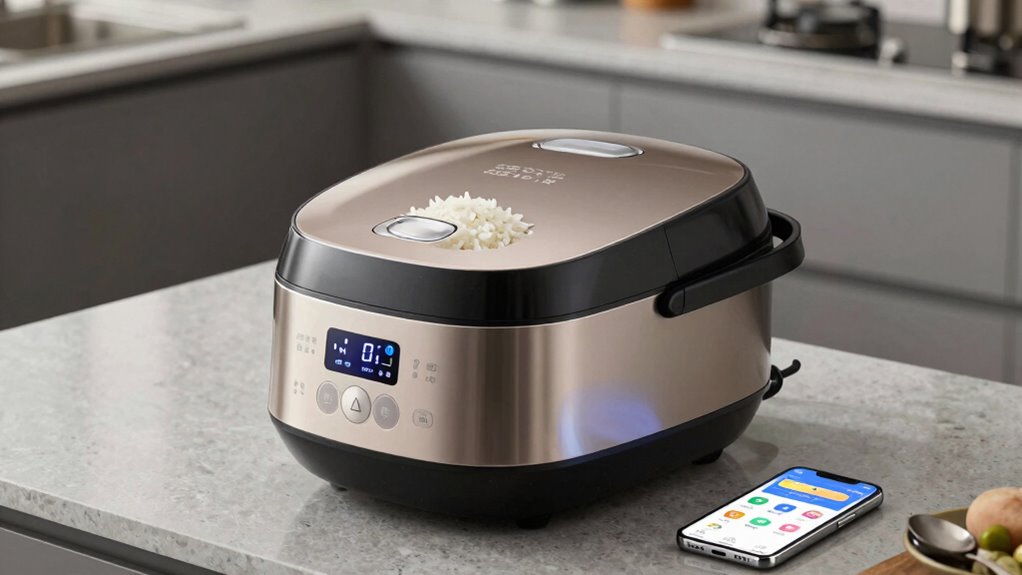
Another feature that sets smart rice cookers apart is smartphone connectivity. Once connected to your device via an app, you can control and monitor the cooking process remotely. Imagine starting your rice cooker from your bed or while you’re on your way home. You can select presets, adjust cooking settings, or check on the progress without physically being in the kitchen. This connectivity also means you receive notifications when your rice is ready, so you never have to worry about forgetting it or overcooking. It’s all about convenience and giving you more control over your cooking experience. Additionally, many smart rice cookers include auto shut-off features, enhancing safety and energy efficiency during use. The versatility is impressive, especially if you like to experiment with different recipes. Plus, many smart models feature intuitive interfaces or voice command compatibility, making it even easier to navigate through various functions. The smart technology used in these devices often includes sensors that help optimize cooking times and temperatures, ensuring consistent results every time. This sensor technology contributes to more precise cooking and reduces waste caused by overcooking or undercooking. Modern smart rice cookers also often incorporate adaptive cooking algorithms, which learn from your preferences and adjust settings accordingly for optimal results. Some models also incorporate Wi-Fi connectivity, allowing seamless integration with other smart home devices for a more connected kitchen environment. Clean-up tends to be simpler as well. Because these cookers often have non-stick surfaces and dishwasher-safe parts, maintaining them doesn’t become a chore. The precision of cooking automation combined with the ease of remote control means you can spend less time managing the process and more time enjoying your meal. Overall, smart rice cookers provide a level of convenience, consistency, and versatility that basic models simply can’t match. They transform what used to be a straightforward task into an intuitive, connected experience that fits seamlessly into your busy lifestyle.
smart rice cooker with app control
As an affiliate, we earn on qualifying purchases.
As an affiliate, we earn on qualifying purchases.
Frequently Asked Questions
How Do Smart Rice Cookers Connect to Other Smart Home Devices?
Smart rice cookers connect to other smart home devices via Wi-Fi or Bluetooth, allowing you to control them through apps or voice commands. You can customize cooking settings using user preferences and leverage cooking algorithms that optimize rice texture. These integrations enable seamless automation, so your cooker interacts with other devices—like smart speakers or thermostats—making your cooking experience more convenient and personalized.
Can Smart Rice Cookers Be Controlled Remotely via Mobile Apps?
Yes, you can control smart rice cookers remotely via mobile apps. In fact, over 60% of users enjoy customizing recipes on their phones for perfect rice every time. These apps often feature recipe customization, allowing you to tweak settings easily. Plus, voice command integration makes it even more convenient—you can start cooking with just a few words, giving you hands-free control and a smarter kitchen experience.
Are There Safety Concerns With Smart Rice Cookers’ Connectivity Features?
Yes, there are safety concerns with smart rice cookers’ connectivity features. You should follow safety protocols, like keeping your device’s firmware updated and avoiding insecure networks. Also, be mindful of user privacy, ensuring the app and device store your data securely. By taking these precautions, you can enjoy the convenience of remote control without compromising safety or your personal information.
Do Smart Rice Cookers Require Internet Access to Function Properly?
Imagine you’re about to cook rice, and your smart rice cooker adjusts cooking precision based on humidity and altitude, ensuring perfect results. Typically, smart rice cookers do require internet access for user customization and remote control features, but many can still operate offline for basic cooking. However, for advanced functions like recipe updates or remote monitoring, internet access enhances the experience. So, while not always essential, connectivity often improves your cooking versatility.
How Do Smart Rice Cookers Learn and Adapt to Different Rice Types?
You’ll find that smart rice cookers learn and adapt to different rice types through automated cooking algorithms that analyze cooking patterns and moisture levels. They can customize flavors by adjusting settings based on your preferences, ensuring consistent results. As you use them more, they refine their process, offering personalized flavor customization and ideal texture. This automation allows your rice to turn out perfectly, no matter the rice variety you choose.
As an affiliate, we earn on qualifying purchases.
Conclusion
Smart rice cookers offer you precise control and customization, making perfect rice effortlessly. They can adapt to different types of grains and cooking conditions, saving you time and guesswork. Did you know that 65% of users report better rice quality with smart cookers compared to basic models? If you’re serious about your rice game, investing in a smart cooker can elevate your meals and simplify your kitchen routine. It’s a small upgrade with big benefits.
As an affiliate, we earn on qualifying purchases.
As an affiliate, we earn on qualifying purchases.
Halloween Picks
halloween
As an affiliate, we earn on qualifying purchases.