

Understanding your oven’s options helps you cook better. Bake uses traditional heat for even cooking, great for bread and cakes. Convection adds a fan, speeding up cooking and browning food evenly, but may need you to lower the temperature. Broil uses high, direct top heat perfect for finishing dishes or browning. Air fry circulates hot air at high speeds for crispy, healthier results. Exploring these differences guarantees you get the best results—keep going to learn more.

Get kitchen gear delivered free with Prime
- Fast, free delivery on millions of items
- Prime Video, Amazon Music and more included
- Member-only deals all year
Key Takeaways
- Bake uses traditional heat for even cooking, suitable for cakes and bread; convection adds a fan for faster, crispier results.
- Convection mode circulates air, reducing cooking time and promoting browning; lower the temperature by about 25°F when using it.
- Broil provides intense, direct top heat perfect for finishing dishes, melting cheese, or browning surfaces quickly.
- Air fry circulates hot air rapidly to produce crispy textures with less oil, ideal for healthier frying alternatives.
- Choose the setting based on desired food texture, cooking speed, and recipe requirements for optimal results.
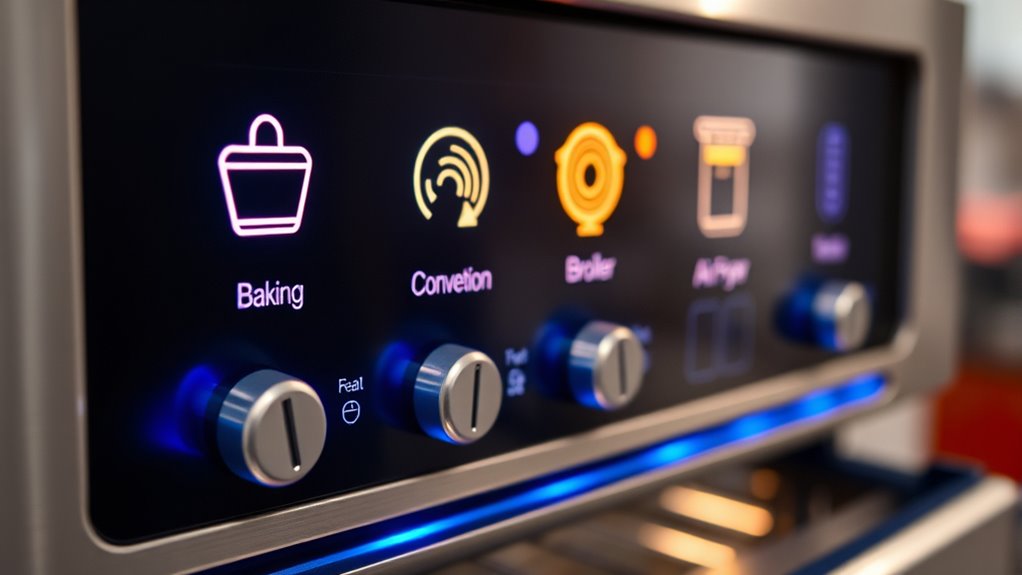
Have you ever wondered what all those oven settings really mean? It can be confusing to navigate through bake, convection, broil, and air fry options, especially when you’re trying to perfect your recipes. Understanding these settings helps you choose the right baking techniques for different dishes, ensuring your food turns out just the way you want. When you select the bake setting, you’re using the traditional method where heat surrounds your food from the bottom and top elements. This is ideal for cakes, casseroles, and bread, where even heat distribution is key. Using the bake function allows you to focus on consistent heat, giving your baked goods a steady rise and even texture.
Switching to convection mode, however, adds a fan and exhaust system that circulates hot air around your food. This circulation enhances the baking process by promoting more uniform heat transfer, which results in faster cooking times and often crisper edges. The convection benefits are especially noticeable when baking multiple trays of cookies or roasting vegetables. The circulating air helps eliminate hot spots and ensures each item cooks evenly, saving you time and energy. If you’re aiming for a golden crust or crispy exterior, convection is usually your best choice. Keep in mind that recipes designed for traditional baking may need adjustments when using convection, like lowering the temperature by about 25°F to prevent over-browning.
The broil setting is different from baking or convection. It directs high heat from the top element, making it perfect for finishing dishes or adding a caramelized crust. Broiling is best when you want to quickly melt cheese, brown the tops of casseroles, or sear meats. Because it involves intense direct heat, you’ll need to keep a close eye to avoid burning your food. Air fry settings, which are sometimes available on modern ovens, mimic deep-frying by circulating hot air at high speeds. This method produces crispy results with less oil, making it a healthier alternative. If you’re craving crispy chicken wings or fries, the air fry function is an excellent baking technique to try, especially considering the convection benefits it offers in creating that perfect crunch.
Frequently Asked Questions
Which Oven Setting Is Best for Roasting Vegetables?
For roasting vegetables, you should use the convection setting if your oven has it, because it circulates hot air evenly, giving you crisp, flavorful results. Set your oven to an ideal temperature of around 400°F (200°C). This vegetable roasting technique helps develop caramelization and enhances flavor. If you don’t have convection, the bake setting at the same temperature also works well, just keep an eye on your veggies to prevent burning.
Can I Use Convection Mode for Baking Cakes?
Sure, you can use convection mode for baking cakes, even if it seems ironic. While traditional baking is perfect for cakes, convection benefits include even heat distribution and faster cooking. Just remember, the fan can dry out your batter if you don’t adjust the temperature or baking time. So, go ahead, embrace convection for your cake baking—just keep an eye on it to prevent any surprises!
How Do Broil Settings Affect Cooking Time?
Broil settings speed up cooking by using high heat from the top, so you might need to adjust the temperature and keep a close eye to prevent burning. Typically, broiling shortens cooking time, so you should check your food frequently. If you’re broiling, reduce the cooking time and possibly lower the temperature slightly to avoid overcooking or charring, ensuring your dish turns out perfectly.
Is Air Frying Healthier Than Traditional Frying?
Yes, air frying is generally healthier than traditional frying because it uses less oil, reducing oil absorption and lower calorie content. You get crispy textures without the excess fat, making it a better choice for health-conscious cooking. Plus, air fryers cook faster and evenly, helping you enjoy tasty, lower-calorie meals without sacrificing flavor or crunch.
Do Oven Settings Vary Between Different Brands?
Yes, oven settings can vary between different brands due to brand consistency and feature variations. You might find that temperature controls, cooking modes, or fan speeds differ, even if the labels seem similar. It’s essential to read your oven’s manual carefully and experiment to understand how each brand’s settings work. This way, you can achieve the best results regardless of the brand you’re using.
Conclusion
Now that you know the differences between bake, convection, broil, and air fry, you’re ready to choose the right setting for your next meal. Each method offers unique benefits, so don’t be afraid to experiment and find what works best. After all, isn’t cooking about exploring and discovering new flavors? With these insights, you’ll master your oven’s settings and elevate your culinary game effortlessly. Happy cooking!
Fall Picks
fall essentials
As an affiliate, we earn on qualifying purchases.


