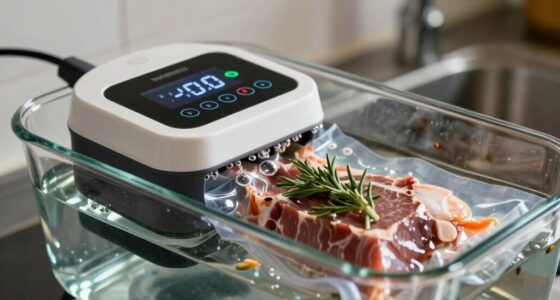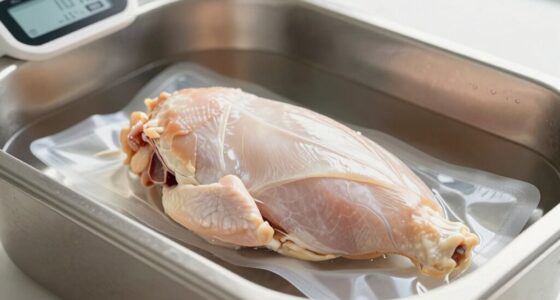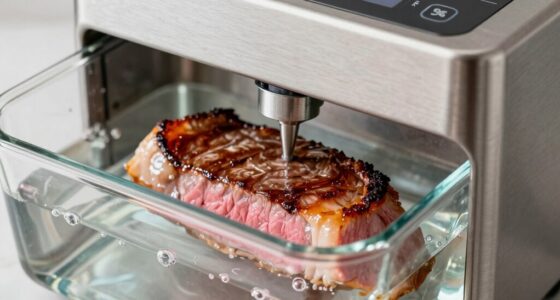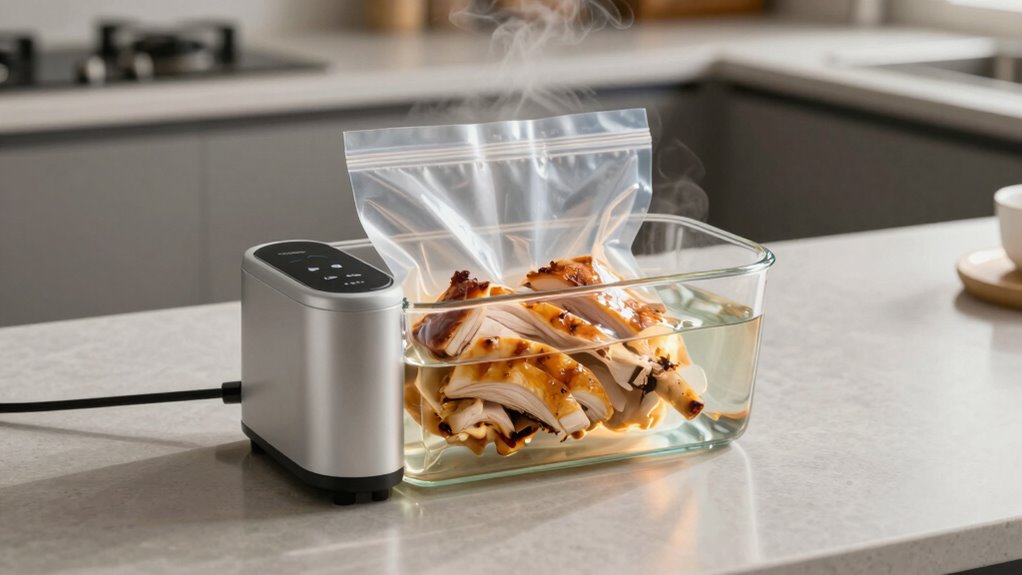

To reheat with sous vide without drying out your food, seal leftovers in a vacuum or resealable bag, removing excess air. Set your water bath to the ideal temperature for the dish—usually around 130-140°F for meats or 120-130°F for vegetables. Submerge the bag and reheat for 30-60 minutes, ensuring even warmth and moisture retention. With precise control, your leftovers will stay tender and flavorful—discover more tips to perfect your process.
Prime for Young Adults — start your free trial
Fast free delivery, streaming and member deals for eligible 18–24 year olds.
As an affiliate, we earn on qualifying purchases.
Key Takeaways
- Set the sous vide water bath to a temperature just below the original cooking temperature to gently reheat without overcooking.
- Seal leftovers in vacuum or airtight bags to lock in moisture and flavors during reheating.
- Reheat for 30-60 minutes, depending on food thickness, ensuring even heating without drying out.
- Maintain a steady, precise temperature to prevent overcooking and preserve texture and juiciness.
- Avoid opening the bag during reheating to retain moisture and prevent flavor and texture loss.
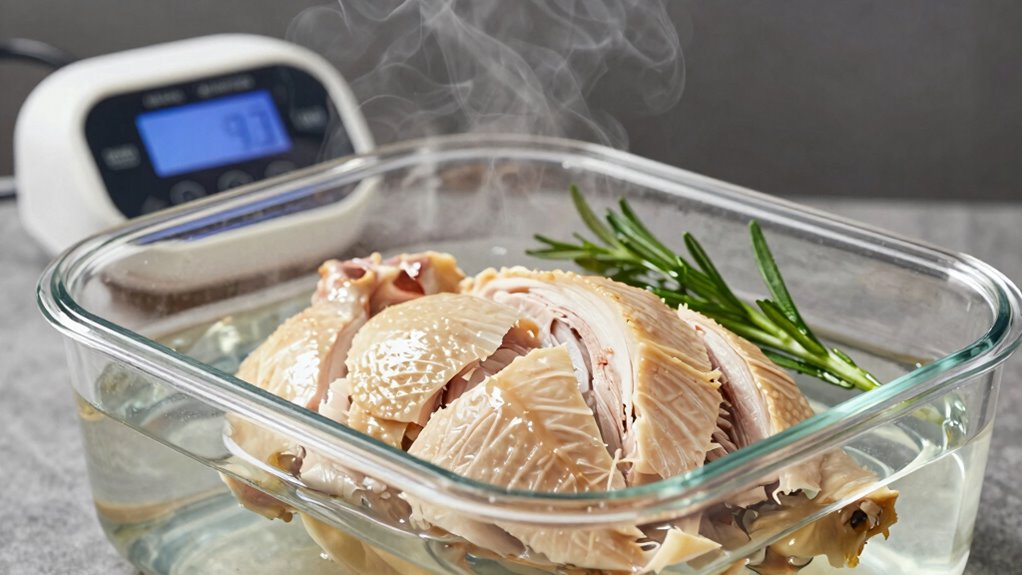
Have you ever struggled to reheat leftovers without losing moisture or texture? If so, using a sous vide cooker might become your new favorite method. Unlike traditional reheating techniques that can cause food to dry out or become rubbery, sous vide provides gentle, controlled heat that preserves both flavor and texture. When you reheat with sous vide, you’re fundamentally giving your food a warm bath, maintaining its original qualities without overcooking or drying out.
Reheat leftovers gently with sous vide to preserve moisture, flavor, and perfect texture every time.
One of the key benefits of using sous vide for reheating is flavor preservation. Since the food stays sealed in a vacuum bag or airtight container, it prevents flavor loss and keeps the ingredients tasting as fresh as when they were first cooked. This method ensures that herbs, spices, and natural juices stay locked in, so your leftovers don’t taste bland or dull. Instead, they retain their vibrant, original flavors, making each bite as satisfying as the first time.
Equally important is texture retention. Traditional reheating methods like microwaving or stovetop heating can sometimes turn meats rubbery or pasta mushy. But with sous vide, you set the precise temperature to gently bring your food up to the ideal serving heat. For example, reheating a steak at around 130°F (54°C) keeps it tender and juicy, without overcooking. Vegetables stay crisp yet warm, and delicate items like seafood come out perfectly moist. Because the food is heated evenly and slowly, you avoid the common pitfalls of uneven reheating, which can ruin the dish’s original texture. Additionally, consistent temperature control is key to achieving perfect reheating results with sous vide. Maintaining a steady temperature also helps in preventing overcooking, which can be a concern with other reheating methods. Plus, it allows you to customize reheating times based on the type and thickness of your leftovers. Moreover, understanding food safety guidelines when reheating with sous vide ensures that your leftovers are not only delicious but also safe to eat.
Using sous vide for reheating is also straightforward. You simply place your leftovers in a vacuum-sealed bag or a resealable bag with the air removed, then submerge it in a water bath set to the desired temperature. Depending on the food, reheating might take anywhere from 30 minutes to an hour. During this process, the food heats uniformly, ensuring that every part reaches the perfect temperature without any hot spots or cold centers.
This method is efficient because you can prepare your leftovers ahead of time and reheat them without fuss. Plus, since the food stays in a sealed environment, you minimize mess and prevent the absorption of odors from other foods in your fridge or freezer. It’s a reliable way to bring leftovers back to life while maintaining their original flavor and texture, giving you restaurant-quality results right at home. So next time you’re tempted to microwave your leftovers, try sous vide instead—you’ll be amazed at how much better your reheated meals taste and feel.
Additionally, precise temperature control allows you to reheat a variety of foods without damaging their delicate structures, making sous vide a versatile tool for leftovers.
As an affiliate, we earn on qualifying purchases.
Frequently Asked Questions
Can I Reheat Multiple Dishes at Once With Sous Vide?
Yes, you can reheat multiple dishes at once with sous vide. Just make certain each dish is vacuum-sealed separately to prevent flavor infusion from mixing and to preserve each dish’s unique taste. Keep the water temperature steady to maintain original texture, avoiding overcooking. Arrange the bags so water circulates evenly around each. This method guarantees flavor infusion and texture preservation, making your reheated dishes taste just as fresh as when first cooked.
How Do I Prevent Vacuum Bags From Floating During Reheating?
To prevent vacuum bags from floating during reheating, make certain you vacuum seal them tightly, removing all excess air. Use a weight, like a heavy spoon or sous vide weight, to keep floating bags submerged. You can also place the bags in a water bath with a rack or clip them to the container’s sides. This keeps the vacuum seal secure and guarantees even reheating without floating or losing contact.
Is It Safe to Reheat Leftovers Multiple Times Using Sous Vide?
Reheating leftovers multiple times with sous vide isn’t just risky; it’s like playing with food safety’s wildest roller coaster! Each reheating session can increase bacteria growth if not done correctly, risking food poisoning. Follow strict reheating guidelines—keep food at safe temperatures and avoid multiple reheats. To stay safe, reheat only once or twice, and always check temperatures carefully to prevent any health hazards.
What’s the Ideal Temperature for Reheating Different Types of Meat?
For reheating different meats, you should aim for precise temperatures to preserve meat texture and guarantee safety. Reheat beef and lamb at 130°F (54°C) for medium-rare, or 140°F (60°C) for medium. Poultry benefits from 140°F (60°C), while pork is ideal at 145°F (63°C). Maintaining temperature precision prevents drying out, keeps the meat tender, and guarantees even reheating, giving you perfect results every time.
How Long Can I Leave Food in the Sous Vide Bath During Reheating?
Think of your sous vide bath as a delicate dance floor, where temperature stability guarantees food stays perfectly in step. You can leave your food in the bath for up to an hour or two during reheating without risking food safety or quality. Beyond that, the risk of over-softening or bacteria growth increases. Keep it within this window, and your reheating remains safe, tender, and evenly heated.
As an affiliate, we earn on qualifying purchases.
Conclusion
By using sous vide for reheating, you preserve moisture, maintain texture, and guarantee even warmth. You prevent drying out, avoid overcooking, and enjoy your leftovers just as fresh as when first cooked. With this method, you enhance flavor, extend freshness, and simplify your process. In reheating, as in cooking, consistency counts—consistency that sous vide delivers, making every bite as satisfying as the first. Reheat confidently, and savor every meal to the fullest.
As an affiliate, we earn on qualifying purchases.
precision sous vide immersion circulator
As an affiliate, we earn on qualifying purchases.
As an affiliate, we earn on qualifying purchases.
Fall yard work Picks
leaf blowers
As an affiliate, we earn on qualifying purchases.