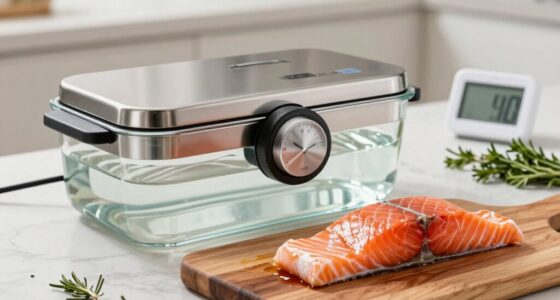
Good temperature control teaches you that precision, patience, and understanding of science are key to successful cooking. It helps you develop trust in your skills, ensuring food is safe, flavorful, and perfectly textured. By adjusting heat at the right moments, you learn how flavors meld and textures develop, turning simple ingredients into remarkable dishes. Mastering temperature also boosts your confidence and encourages experimentation. Keep exploring, and you’ll discover even more ways to elevate your culinary skills.

Get kitchen gear delivered free — and shop member deals
- Fast, free delivery on millions of items
- Access to Prime Big Deal Days deals on October 6–7
- Prime Video, Amazon Music and more included
Key Takeaways
- Precise temperature control enhances flavor development, texture, and overall dish quality.
- Monitoring internal temperatures ensures food safety and prevents foodborne illnesses.
- Consistent heat management fosters skill development, adaptability, and confidence in cooking.
- Proper temperature regulation supports compliance with safety standards and reduces food waste.
- Mastering temperature teaches patience, attention to detail, and encourages culinary experimentation.

Proper temperature control is essential for cooking food safely and achieving the desired results. When you pay attention to temperature, you’re not just following a recipe—you’re mastering a fundamental skill that influences flavor development and safety precautions. Temperature affects how ingredients interact, ensuring your dishes turn out flavorful, tender, and safe to eat. By understanding and controlling heat, you learn to bring out the best in your ingredients, whether that means caramelizing onions for sweetness or searing meat to reveal in juices.
One of the biggest lessons temperature control teaches you is the importance of precision. Cooking isn’t just about throwing ingredients into a pan; it’s about knowing the right moment to adjust heat to optimize flavor. For example, maintaining a consistent low temperature when simmering allows flavors to meld gradually, creating a richer taste. Conversely, high heat can quickly develop a crispy crust on meats or vegetables, which adds texture and depth to your dishes. As you experiment with different temperatures, you discover how subtle changes impact the overall flavor profile, giving you more control over your culinary creations.
Safety precautions also hinge on proper temperature management. Undercooking poultry, beef, or seafood can pose serious health risks, as harmful bacteria thrive at temperatures below the safe zone. Conversely, overcooking can lead to dry, tough textures that diminish your dish’s appeal. Learning to monitor and maintain proper internal temperatures helps you avoid these pitfalls, ensuring your food is both delicious and safe to consume. Using a digital thermometer or visual cues like color and texture becomes second nature as you develop a sense for what’s right. Recognizing the significance of temperature regulation in food safety emphasizes how critical precise control is in the kitchen. Developing an understanding of food safety standards further solidifies the importance of temperature in preventing foodborne illness. Additionally, understanding safe cooking temperatures is crucial for ensuring the safety of your meals. Gaining skills in temperature monitoring also enhances your ability to adapt recipes to different equipment and environments, making you a more versatile cook. Mastering temperature control can also help reduce food waste by preventing overcooking and spoilage, which is especially valuable in reducing kitchen inefficiencies.
Furthermore, good temperature control fosters confidence in your cooking skills. It teaches patience and attention to detail, qualities that elevate your overall approach to preparing food. You start to see cooking as a science, where timing and heat are just as important as ingredients. This understanding encourages experimentation—adjusting heat levels, trying different cooking methods, and learning from your successes and mistakes. Over time, you develop a deeper appreciation for how temperature influences every aspect of cooking, from flavor development to texture and safety.
Ultimately, mastering temperature control isn’t just about following steps; it’s about cultivating a mindset that values precision and safety. It teaches you to respect the ingredients and the process, resulting in more consistent, flavorful, and safe meals. As you become more comfortable managing heat, you discover a fundamental aspect of cooking that enhances your skills in countless ways, turning simple dishes into culinary triumphs.
As an affiliate, we earn on qualifying purchases.
Frequently Asked Questions
How Does Temperature Impact Food Safety?
Temperature directly impacts food safety by controlling bacterial growth. When you keep food at proper temperatures, you prevent bacteria from multiplying rapidly, reducing the risk of foodborne illnesses. Using preservation techniques like refrigeration or proper cooking heats food enough to kill harmful bacteria. You should always monitor temperatures carefully, as maintaining the right temperature is essential for safe, healthy meals and avoiding potential health hazards.
What Tools Are Best for Precise Temperature Control?
You should use a reliable sous vide cooker for precise temperature control, as it maintains consistent heat over time. A high-quality thermometer is essential; always calibrate it regularly to guarantee accuracy. Investing in a digital or instant-read thermometer allows you to monitor temperatures closely, preventing overcooking or undercooking. These tools help you master temperature control, leading to better results and safer, perfectly cooked dishes every time.
Can Temperature Control Improve Cooking Efficiency?
Think of temperature control as steering a ship through calm waters—you stay on course, and everything flows smoothly. When you master it, you boost cooking efficiency, leading to consistent results and flavor enhancement. Precise temperature management minimizes guesswork, saves time, and prevents overcooking or undercooking. This control helps you cook smarter, not harder, ensuring each dish turns out just right and elevates your overall culinary game.
How Do Different Ingredients React to Temperature Changes?
Different ingredients react uniquely to temperature changes, affecting your cooking results. For example, proteins like meat firm up and brown, while vegetables soften and develop sweetness. Dairy can curdle if overheated, and sugars caramelize, enhancing flavor development. By understanding these ingredient reactions, you can control temperature precisely, ensuring ideal flavor and texture. This knowledge helps you avoid overcooking or undercooking, leading to consistently delicious dishes.
What’s the Ideal Temperature for Various Cooking Methods?
Think of your stove as a symphony conductor, guiding heat transfer with precision. For searing, keep the temperature around 400-500°F in the high-temperature zone; for simmering, settle into 185-205°F in the low zone. Baking thrives at 325-375°F, while slow roasting prefers 250-300°F. Mastering these temperature zones guarantees your ingredients respond perfectly, turning simple cooking into an art of harmony and control.
As an affiliate, we earn on qualifying purchases.
Conclusion
Mastering temperature control isn’t just about precise heat—it’s about revealing flavors you never knew existed. As you fine-tune your skills, you’ll start noticing subtle changes, secrets hiding in every simmer and sizzle. The real magic happens when you realize how much power you hold over your dish’s destiny. So, keep experimenting, stay attentive, and remember: the perfect bite might just be one perfect temperature away. Are you ready to discover what’s next?
cooking temperature control device
As an affiliate, we earn on qualifying purchases.
As an affiliate, we earn on qualifying purchases.
As an affiliate, we earn on qualifying purchases.
Fall Picks
fall essentials
As an affiliate, we earn on qualifying purchases.