
TL;DR

Get kitchen gear delivered free with Prime
- Fast, free delivery on millions of items
- Prime Video, Amazon Music and more included
- Member-only deals all year
Apple’s HomeView commercial depicts a family’s hectic morning, prompting some viewers to call it stressful and confusing and parents of teenagers to say it feels realistic. The ad’s central pitch—that a shared screen might help a family stay present—has not been tested in real households, and it is unclear whether the product resolves the problems shown.
Apple’s HomeView smart-display ad is drawing mixed reactions: some viewers describe its fast-paced family morning as stressful and confusing, while parents of teenagers say the scenes feel familiar. The response highlights a question at the center of the commercial: whether a shared household screen can help families stay connected, or simply add another device to an already busy routine.
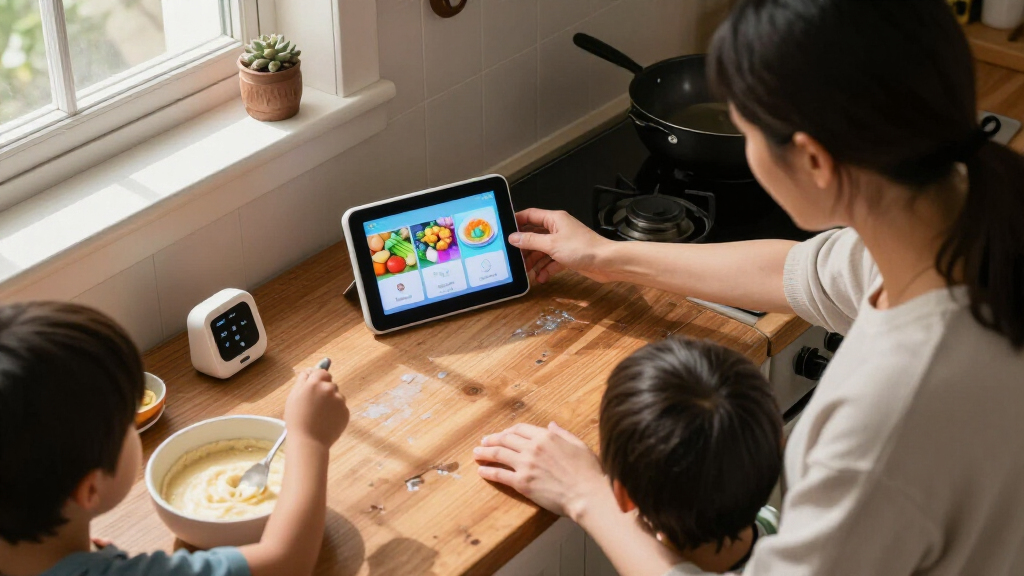
The commercial runs for just over three minutes and follows a family of five rushing through the morning. Its scenes include a father making French toast, a mother searching for keys, a dispute over the thermostat, a teenage boy taking whipped cream from a can and an unexpected video call. A subplot about the daughter’s ride to school ends with the family watching a security-camera feed of her and a boyfriend leaving the porch.
The Verge report describes the spot as a departure from Apple’s usually clean, orderly advertising style. Tech analyst Benedict Evans said the ad felt stressful and confusing. CNET editor at large Bridget Carey pushed back on Threads, saying, “It was exactly what my morning is like and it was the most real ad I’ve ever seen from Apple.” Other commenters described it as accurately capturing real life or said it “hit home,” according to the report.
One parent of teenagers, The Verge senior reviewer Jen Tuohy, joked that “the most unrealistic part of the video is that no one is holding an iPhone.” The report also questions some of the commercial’s staging: the HomeView appears to have a charging cable routed through a hole in the kitchen island, and a teenager checks a private message on a screen shared with family nearby. Those observations are criticism of the ad’s plausibility, not evidence about how HomeView works in actual homes.
The disagreement matters because the ad is selling more than a display: it presents a shared screen as an alternative to separate phones. In the commercial’s implied vision, family members can get information in one common place and spend less time absorbed in personal devices. Whether that promise appeals to viewers may depend on whether they see the hectic scenes as recognizable family life or as a contrived sales pitch.
The spot also leaves a practical question unanswered: does HomeView make the morning easier? As Evans observed, the device does not appear to solve the problems unfolding in the video. The unexpected call, for example, seems to add activity rather than reduce it. A shared display could still have value for families, but the ad alone cannot show whether it changes routines or encourages people to put down their phones.
As an affiliate, we earn on qualifying purchases.
The Ad’s Morning Routine
The Verge frames the commercial as a contrast with the quiet, polished atmosphere associated with Apple’s Vision Pro advertising. Rather than presenting an immaculate home, the HomeView spot leans into overlapping conversations, misplaced items and family members competing for attention. That visual choice appears to be part of why viewers have read the ad differently.
The report’s discussion is based on reactions shared by viewers and the writer’s account; it does not provide sales figures, audience research or a formal statement from Apple about the intended message. The available source describes HomeView as a new smart display, but does not give details such as its price, release date or full technical specifications.
“It was exactly what my morning is like and it was the most real ad I’ve ever seen from Apple.”
— Bridget Carey, CNET editor at large
As an affiliate, we earn on qualifying purchases.
HomeView’s Real-World Role
It is not yet clear whether the ad’s divided reception reflects a broader audience response. The report cites individual reactions on Threads but does not include polling or other data establishing how widely viewers share either view. It also does not confirm whether the scenes are meant to show specific HomeView functions or primarily to frame a family setting.
The product’s effect on household routines remains untested in the source material. Questions include whether families would use a common display instead of their phones, how they would handle private messages on a shared screen, and whether the device would make busy mornings simpler. The ad offers a vision, not evidence that those outcomes occur.
As an affiliate, we earn on qualifying purchases.
A Test in Family Homes
The next meaningful test will be how HomeView performs in real households, where families can decide whether the display is useful, distracting or simply ignored. The Verge report does not specify a launch date or announce a follow-up from Apple, so no timetable for that test is confirmed.
For now, the commercial has opened a debate about the product’s central promise rather than settled it. Whether a shared screen can help a family pay attention to one another will depend on how people use it alongside their existing devices—and whether it addresses needs that families actually have.
As an affiliate, we earn on qualifying purchases.
Key Questions
What is Apple’s HomeView ad about?
The commercial shows a family of five dealing with a crowded morning routine, with HomeView appearing as a shared screen in the home.
Why are reactions to the ad mixed?
Some viewers, including tech analyst Benedict Evans, found the ad stressful and confusing. CNET editor at large Bridget Carey and other parents said its hectic scenes felt like recognizable family life.
What is the ad’s apparent pitch for HomeView?
The commercial suggests a shared screen could give family members common household information and offer an alternative to everyone using a separate phone. The source does not establish whether that changes behavior in practice.
Does the ad show that HomeView makes mornings easier?
No. The report notes that the display does not visibly resolve several problems in the commercial. Its real-world effect on family routines remains unknown.
Source: rss
Halloween Picks
halloween
As an affiliate, we earn on qualifying purchases.