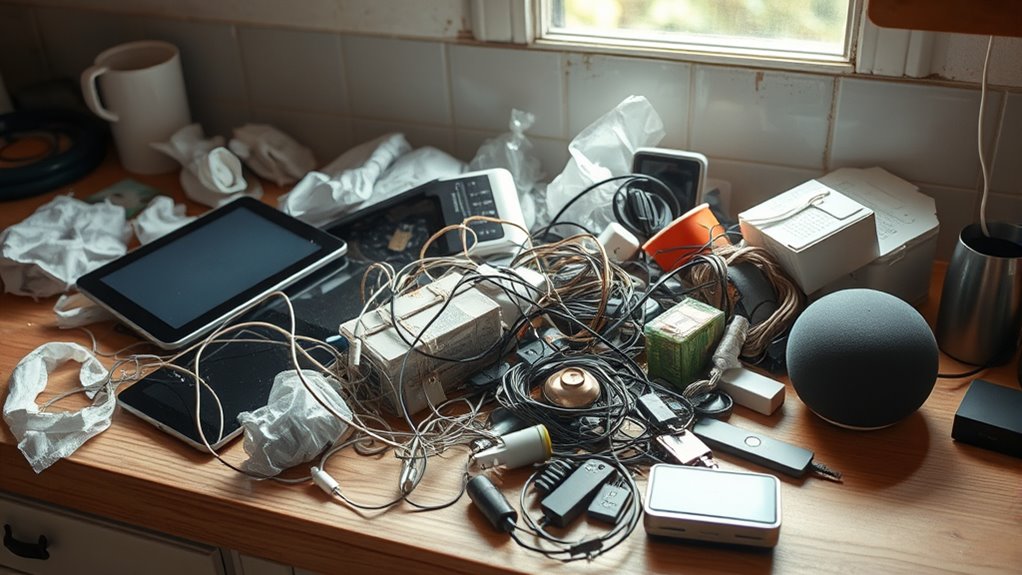

Smart kitchen gadgets are definitely contributing to more trash because they contain complex parts like plastics, metals, and chemicals that are hard to recycle. Their rapid obsolescence and frequent upgrades mean more electronic waste ends up in landfills, risking environmental harm. Many facilities aren’t equipped to process these devices properly, and consumer awareness remains low. To understand how these gadgets impact the e-waste problem and what can be done, keep exploring this issue further.
Key Takeaways
- Smart kitchen gadgets often contain complex, hazardous materials that are difficult to recycle properly, increasing e-waste.
- Rapid obsolescence and frequent upgrades lead to higher disposal rates and more electronic trash.
- Many recycling facilities lack the capacity to handle the sophisticated components of these devices.
- Consumer awareness of proper disposal methods is low, resulting in improper e-waste management.
- Systemic improvements in design, recycling infrastructure, and awareness are needed to reduce the environmental impact.

Recycling challenges are significant and multifaceted. Many smart kitchen gadgets contain complex mixtures of plastics, metals, and other materials that are difficult to disassemble and process properly. Not all recycling facilities are equipped to handle these sophisticated devices, which often contain hazardous substances like batteries, circuit boards, and chemicals. When these gadgets end up in landfills, they can leach harmful substances into the environment, posing risks to wildlife and human health. Even when they are recycled, the process is often inefficient, leading to a substantial loss of valuable materials like gold, copper, and rare earth elements. The lack of standardized procedures across regions complicates this further, making it harder to guarantee these devices are properly processed. Additionally, the rapid obsolescence of devices contributes to increasing electronic waste, further stressing recycling systems. You might think that recycling is the solution, but it’s not always straightforward. Many of us don’t know how or where to recycle our smart kitchen devices properly. Some manufacturers offer take-back programs, but participation is often low due to inconvenience or lack of awareness. Furthermore, the rapid pace of technological change means that many devices become outdated long before they reach the end of their functional life. This disconnect between device lifespan and environmental responsibility exacerbates e-waste issues. As consumers, we’re caught in a cycle where upgrading feels necessary, yet it contributes to a mountain of electronic waste that’s difficult to manage. Ultimately, tackling the problem requires more than just individual effort. It demands systemic solutions—improved recycling infrastructure, better design for disassembly, and greater consumer awareness. Until then, your smart kitchen gadgets, while making life easier, could be contributing to a growing environmental problem if not properly disposed of. Recognizing the implications of device obsolescence and the recycling challenges involved can help you make more informed choices about upgrading and disposal, making a small but meaningful difference in reducing e-waste.
smart kitchen gadget recycling bin
As an affiliate, we earn on qualifying purchases.
As an affiliate, we earn on qualifying purchases.
Frequently Asked Questions
How Long Do Smart Kitchen Gadgets Typically Last?
Smart kitchen gadgets typically last around 3 to 5 years, depending on their durability of kitchen tech and usage. You can extend their lifespan by following proper maintenance, avoiding overuse, and keeping software updated. While some gadgets may last longer, rapid technological advances can make them obsolete sooner. Being mindful of the smart gadget lifespan helps you reduce waste and get the most value from your investment.
What Are the Most Common E-Waste Recycling Methods?
You should know that the most common e-waste recycling methods include dismantling devices to recover valuable materials through material recovery processes. Battery recycling is essential for safely handling batteries from smart kitchen gadgets, preventing hazardous leaks. These methods involve sorting, shredding, and extracting metals like gold, copper, and lithium. By properly recycling, you help diminish environmental harm and ensure that usable materials are reused, keeping e-waste out of landfills.
Do Smart Kitchen Devices Contain Hazardous Materials?
Smart kitchen devices, like many electronics, can contain hazardous materials—think of them as ticking time bombs of toxic substances. These gadgets often include hazardous material concerns such as lead, mercury, or flame retardants. While manufacturers aim to limit these risks, improper disposal can expose you to toxic substance risks. Always recycle responsibly and stay informed about how to handle electronic waste safely.
Are There Eco-Friendly Alternatives to Smart Kitchen Gadgets?
Yes, you can find eco-friendly alternatives to smart kitchen gadgets. Look for devices made from biodegradable materials, which break down more easily and reduce waste. Additionally, choose products with repairability options so you can fix them instead of replacing when they break. These choices help minimize your environmental impact, making your kitchen smarter and greener without contributing to e-waste.
How Can Consumers Reduce E-Waste From Kitchen Electronics?
Think of your kitchen gadgets as a garden—you’re responsible for its health. You can reduce e-waste by boosting your consumer awareness, choosing repairable devices, and supporting brands that prioritize longevity. Keep gadgets longer by repairing rather than discarding, and stay informed about eco-friendly options. Your mindful choices help cut down waste and extend the life of your electronics, turning your kitchen into a sustainable space that benefits both you and the planet.
eco-friendly smart kitchen devices
As an affiliate, we earn on qualifying purchases.
As an affiliate, we earn on qualifying purchases.
Conclusion
As you embrace smart kitchen gadgets, remember they’re like shiny stars in your home’s night sky—beautiful but fleeting. Each new device might sparkle today, but tomorrow it’s destined for the landfill. To truly brighten your future, consider recycling or choosing eco-friendly options. Otherwise, you’ll find yourself swimming in a sea of electronic debris, lost in a digital storm. Make mindful choices now, so your kitchen stays innovative without becoming a landfill’s silent witness.
disassembly tools for electronic waste
As an affiliate, we earn on qualifying purchases.
As an affiliate, we earn on qualifying purchases.
recycling programs for smart appliances
As an affiliate, we earn on qualifying purchases.
As an affiliate, we earn on qualifying purchases.