
Building a smart kitchen ecosystem involves connecting devices that communicate through compatible protocols like Wi-Fi, Zigbee, or Z-Wave. You’ll use central hubs and voice assistants to control multiple appliances effortlessly. Sensors gather data to automate routines, while mobile apps let you manage everything remotely. Ensuring compatibility, regular updates, and secure networks keeps everything running smoothly. If you keep exploring, you’ll discover how to create an efficient, responsive smart kitchen tailored to your needs.

Get kitchen gear delivered free — and shop member deals
- Fast, free delivery on millions of items
- Access to Prime Big Deal Days deals on October 6–7
- Prime Video, Amazon Music and more included
Key Takeaways
- Devices communicate via standards like Wi-Fi, Zigbee, or Z-Wave to ensure compatibility and seamless integration.
- Central hubs and voice assistants coordinate device actions and simplify control across different appliance brands.
- Regular firmware updates and secure pairing maintain system stability, security, and interoperability.
- Sensors provide real-time environmental data, enabling automation and personalized routines in the smart kitchen.
- Choosing devices with cross-platform support and open APIs facilitates ecosystem expansion and customized automation.
As an affiliate, we earn on qualifying purchases.
Understanding the Core Components of a Smart Kitchen

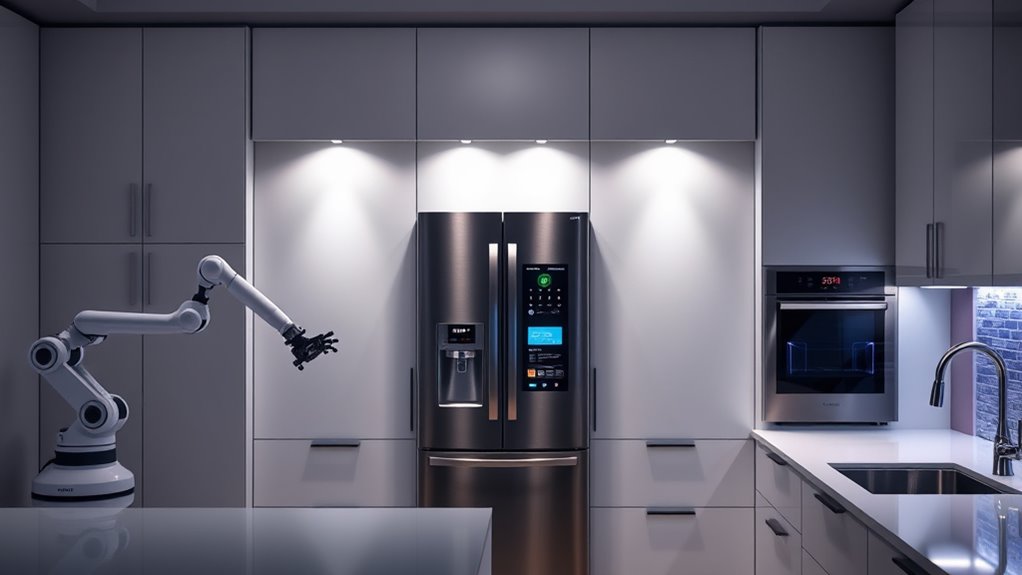
Have you ever wondered what makes a kitchen “smart”? It’s all about the core components working together seamlessly. Smart device sensors are essential—they detect temperature, motion, humidity, and other environmental factors, providing real-time data. These sensors feed information into the system, enabling automation. Kitchen automation protocols act as the language that allows devices to communicate effectively. They establish rules for how appliances respond to sensor inputs, ensuring everything functions smoothly without manual intervention. This integration creates an intelligent environment that adapts to your needs. Additionally, local automation allows your devices to operate independently of cloud services, enhancing privacy and responsiveness. Understanding these core elements helps you grasp how a smart kitchen operates, making your cooking space more efficient, safe, and convenient. Moreover, device interoperability ensures that different brands and types of appliances can work together seamlessly within your ecosystem. With these components, your kitchen becomes a connected hub of innovation, and understanding interoperability standards can further optimize device compatibility and performance. Recognizing the importance of sensor integration can also enhance the overall efficiency and responsiveness of your smart kitchen system.
Zigbee Z-Wave smart home devices
As an affiliate, we earn on qualifying purchases.
As an affiliate, we earn on qualifying purchases.
How Smart Appliances Communicate With Each Other

Smart appliances communicate through a variety of wireless protocols that enable seamless data exchange and coordination. To do this effectively, you’ll need to perform device pairing, which securely links your appliances to the network or each other. Wireless protocols like Wi-Fi, Zigbee, and Z-Wave are commonly used, each offering different benefits for range, power consumption, and reliability. When devices are paired, they can automatically share information, trigger actions, or adjust settings based on your preferences. For example, your smart oven might notify your fridge when it’s time to restock ingredients. By understanding these protocols and pairing processes, you guarantee your appliances communicate smoothly, creating a cohesive, intelligent kitchen environment that responds intuitively to your needs. Home Charging, Simplified Additionally, leveraging European cloud solutions can enhance data security and ensure reliable device connectivity across your smart kitchen ecosystem. To ensure stable connections, selecting the appropriate wireless protocols based on your devices’ needs can significantly improve communication reliability and vetted security.
As an affiliate, we earn on qualifying purchases.
The Role of Central Hubs and Voice Assistants
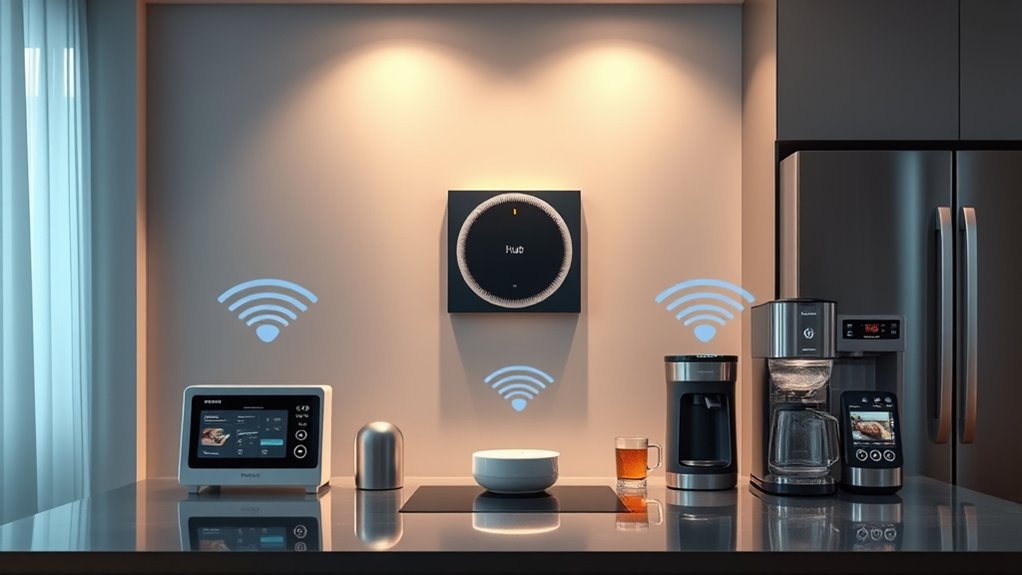
Central hubs and voice assistants serve as the command centers for your connected kitchen, coordinating communication among appliances and simplifying control. With central hub integration, all your devices connect seamlessly, allowing you to manage multiple appliances through a single platform. Voice assistant capabilities enable you to give hands-free commands, such as adjusting oven temperatures, checking fridge inventory, or setting timers. These hubs interpret your voice commands, translating them into actions that your appliances execute instantly. They also provide status updates and alerts, keeping you informed without disrupting your workflow. By consolidating control, central hubs and voice assistants reduce the need for multiple apps and remotes, creating a more streamlined, efficient kitchen environment. This setup makes managing your smart kitchen intuitive and responsive. Navigation and mapping also enhance appliance coordination, ensuring devices operate efficiently and avoid conflicts or obstructions.
voice assistant for smart kitchen
As an affiliate, we earn on qualifying purchases.
As an affiliate, we earn on qualifying purchases.
Integration of Mobile Apps for Remote Control

When integrating mobile apps for remote control, you need to contemplate device compatibility and how well your devices connect. The app’s features and accessibility also play a big role in making your smart kitchen easy to manage. Ensuring these elements work seamlessly helps you control your kitchen gadgets effortlessly from anywhere. Additionally, considering interoperability standards can improve the overall ecosystem by allowing different devices and platforms to communicate more effectively. Incorporating common communication protocols can further enhance device interoperability, leading to a more cohesive and reliable smart kitchen experience. Implementing these standards can also facilitate device pairing and streamline setup processes for users.
Device Compatibility and Connectivity
Ensuring device compatibility and seamless connectivity is essential for creating a truly integrated smart kitchen ecosystem. You need to verify that devices support common wireless standards like Wi-Fi, Bluetooth, or Zigbee, which facilitate smooth communication. Proper device pairing is critical to prevent connection issues and ensure reliable control. To deepen integration, consider these aspects:
- Confirm that your appliances support compatible wireless standards for easier connectivity.
- Use manufacturers’ apps that facilitate straightforward device pairing and setup.
- Check if devices support multi-device management to streamline your smart kitchen experience.
Mobile App Features and Accessibility
Mobile apps are the key to opening the full potential of your smart kitchen, allowing you to control appliances remotely with ease. A user-friendly interface makes navigation simple, so you can quickly adjust settings or monitor devices without hassle. Accessibility features ensure everyone can use the app comfortably, regardless of physical ability. Look for options like voice control, large buttons, and customizable displays that enhance usability. With these features, you can start dinner, check your refrigerator’s contents, or turn on your oven from anywhere. An intuitive app minimizes learning curves and maximizes convenience, helping you manage your kitchen appliances seamlessly. When choosing a smart kitchen system, prioritize apps that combine ease of use with robust accessibility options for a truly inclusive experience. Understanding device interoperability ensures that your smart systems work together smoothly for a cohesive experience.
Setting Up Automated Routines and Scenes

Setting up automated routines and scenes lets you customize your kitchen experience effortlessly. You can create routines that turn on lights, start appliances, or adjust temperatures with a single command. Ensuring devices synchronize seamlessly makes your smart kitchen more efficient and intuitive. Incorporating device integration is essential for achieving smooth automation across all your gadgets. Additionally, understanding home automation principles helps you design systems that adapt to your daily habits, making your kitchen truly smarter. When planning your setup, considering Free Floating design principles can help create a more flexible and adaptable environment that responds dynamically to your needs. Recognizing the importance of Vetted – wave and wind can also influence the quality and range of devices you choose for your ecosystem.
Creating Custom Automation
Creating custom automation is a powerful way to tailor your smart kitchen to fit your routines and preferences. It enables you to set specific triggers and responses that make your space more intuitive. To do this effectively, focus on these key steps:
- Voice command customization: Personalize voice commands so your devices respond naturally and accurately, improving ease of use. Incorporating reliable automation ensures these responses activate consistently when needed. Establishing consistent device responses can further enhance user experience by minimizing errors.
- Sensor calibration: Fine-tune sensors for precise detection of motion, temperature, or light, ensuring automations activate reliably. Proper calibration can prevent false triggers and enhance safety.
- Creating complex routines: Combine multiple triggers and actions to craft scenes that adapt to different times of day or activities.
- Utilize high-quality products to enhance the reliability and aesthetics of your smart kitchen ecosystem. Ensuring all components work together seamlessly is essential for a cohesive smart environment.
Synchronizing Devices Seamlessly
To guarantee your smart kitchen operates smoothly, you need to synchronize your devices so they work together seamlessly. Minimizing inter device latency is vital to ensure actions happen instantly and reliably. Regular firmware synchronization keeps all your devices updated, preventing compatibility issues that could disrupt automation. When setting up routines and scenes, verify that your devices communicate efficiently, avoiding delays caused by outdated firmware or network lag. Use a central hub or app to coordinate device interactions, and schedule firmware updates during off-peak hours. By maintaining ideal inter device latency and consistent firmware synchronization, you create a cohesive environment where your smart devices respond instantly and work harmoniously, making your kitchen smarter and more efficient.
Ensuring Compatibility and Interoperability of Devices

Ensuring compatibility and interoperability among kitchen devices is essential for a seamless smart ecosystem. You need to focus on device standards, which guarantee that different products communicate effectively. Cross-platform compatibility is also critical, allowing devices from various brands and ecosystems to work together smoothly. To enhance integration, consider these key points:
- Choose devices that adhere to common device standards like Zigbee, Z-Wave, or Wi-Fi.
- Prioritize products supporting cross-platform compatibility, so they can connect with your existing ecosystem.
- Regularly update device firmware to maintain compatibility and fix interoperability issues.
Securing Your Smart Kitchen Network

A secure smart kitchen network protects your devices and personal data from potential threats. Begin by configuring your firewall properly to control incoming and outgoing traffic, blocking unauthorized access. Regularly update your router’s firmware to patch security vulnerabilities. Use strong, unique passwords for all devices and Wi-Fi networks. Data encryption is essential; enable it on your Wi-Fi and smart devices to ensure that information sent across the network remains private. Avoid default passwords, and consider setting up a separate network for your smart devices to isolate them from your main internet connection. Additionally, understanding network security fundamentals can help you implement comprehensive protections for your smart kitchen ecosystem. Implementing device authentication mechanisms further enhances your security by verifying the identity of each connected device. By implementing these measures, you reduce the risk of hacking or unauthorized access, keeping your smart kitchen ecosystem safe and your personal data protected.
Tips for Expanding and Customizing Your Ecosystem
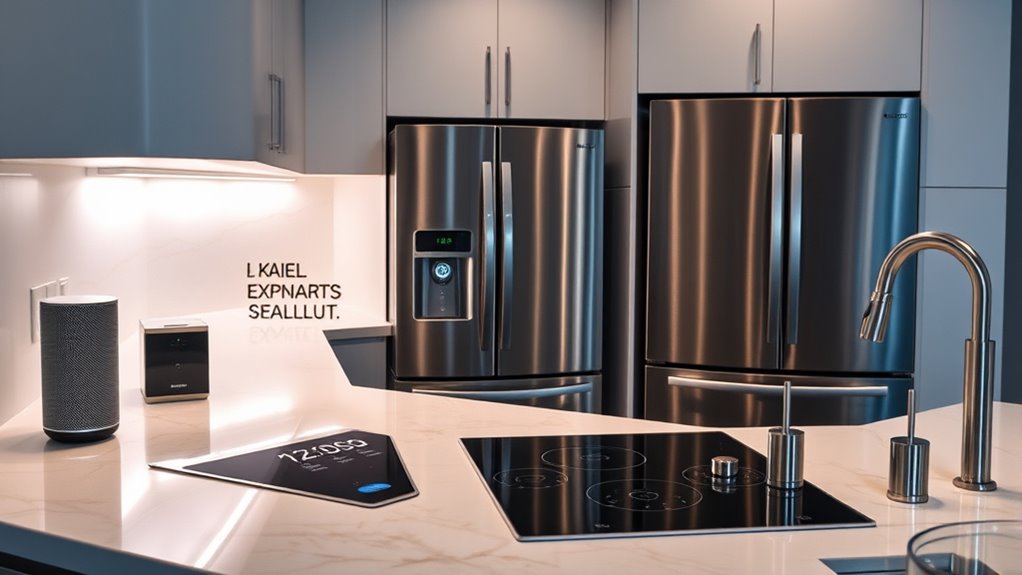
Expanding and customizing your smart kitchen ecosystem allows you to tailor the setup to your specific needs and preferences, making your culinary space more efficient and enjoyable. To do this effectively, focus on custom device integrations that seamlessly connect new gadgets with your existing system. Here are some tips:
- Research compatible devices that support your ecosystem’s hub or platform, ensuring smooth expanding device ecosystems.
- Use open APIs or universal standards like Zigbee or Z-Wave for easier integration of third-party devices.
- Regularly update firmware and software to maintain compatibility and security as you add new devices.
Frequently Asked Questions
Can I Mix Devices From Different Brands in My Smart Kitchen?
Yes, you can mix devices from different brands in your smart kitchen, but device compatibility and brand integration are key. Check if the devices support common platforms like Alexa, Google Assistant, or Apple HomeKit. Some brands offer better integration, so verify your chosen devices work well together. Research each device’s compatibility before purchasing to create a seamless, efficient smart kitchen experience that suits your needs.
How Do I Troubleshoot Connectivity Issues Between Devices?
Did you know over 30% of smart device issues stem from connectivity problems? To troubleshoot, start with network diagnostics to identify any weak spots or interference. If that doesn’t work, try resetting the device—turn it off, wait a few seconds, then turn it back on. Make certain your Wi-Fi is stable and close to the device. These steps often resolve most connectivity issues, keeping your smart kitchen running smoothly.
What Are the Energy-Saving Benefits of a Smart Kitchen Ecosystem?
A smart kitchen ecosystem boosts energy efficiency by optimizing device use, like adjusting lighting and appliances based on your habits. This leads to significant cost savings since you’re not wasting energy on unnecessary operations. By automating and controlling devices remotely, you guarantee appliances run only when needed. Overall, this setup reduces your energy consumption, helping you save money while making your kitchen more eco-friendly and efficient.
Are There Privacy Concerns With Smart Kitchen Devices?
Yes, there are privacy concerns with smart kitchen devices. You need to be mindful of data privacy and data security, as these devices collect personal information like usage habits and preferences. To protect yourself, verify your devices have strong passwords, regular software updates, and secure network connections. Stay informed about how your data is stored and shared, and choose devices from reputable brands that prioritize user privacy.
How Often Should I Update Device Firmware for Security?
You should update your device firmware as soon as security patches become available, ideally within a week. Regular firmware updates are vital because they fix vulnerabilities and improve security. Keep an eye on notifications from your device manufacturer and enable automatic updates if possible. By staying current with firmware updates, you guarantee your smart kitchen devices are protected against potential threats and function smoothly.
Conclusion
So, next time your smart kitchen surprises you with perfectly brewed coffee or synchronized lights, remember—your devices are quietly working together behind the scenes. It’s ironic how a handful of gadgets, once isolated, now form a seamless ecosystem that makes cooking almost too easy. Just don’t forget to secure your network—unless you fancy your fridge ordering groceries in the middle of the night. Embrace the chaos, and enjoy your brilliantly connected kitchen!
Fall Picks
fall essentials
As an affiliate, we earn on qualifying purchases.