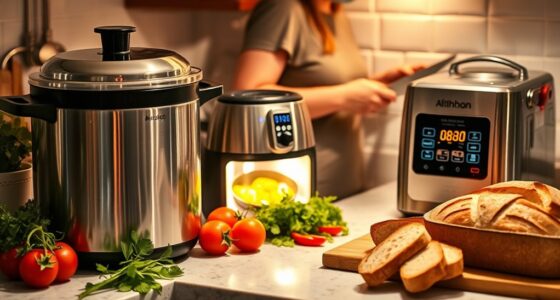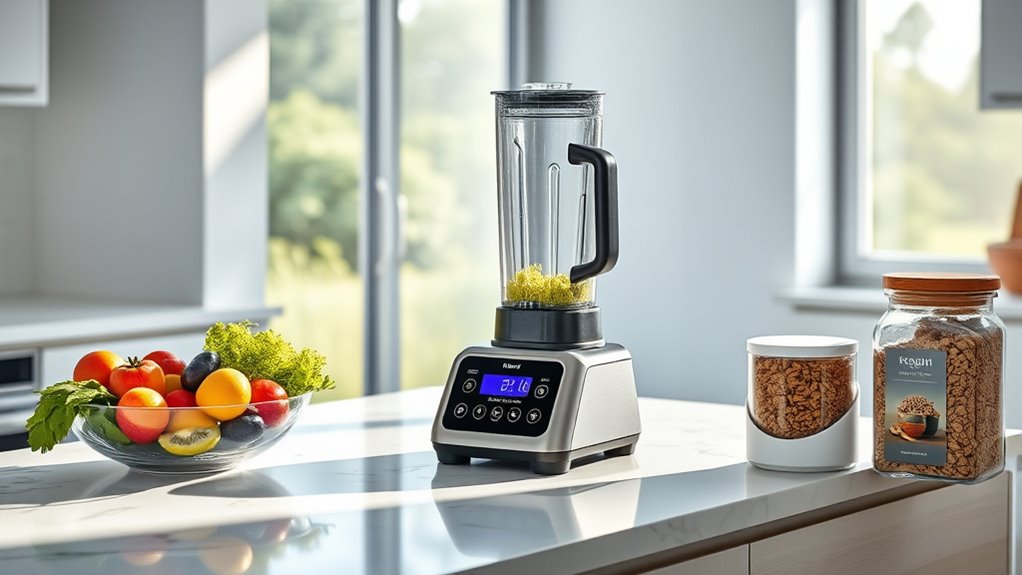

Smart kitchen gadgets can help you make healthier choices by raising awareness, supporting mindful eating, and simplifying meal planning. Connected appliances, nutrition trackers, and automated grocery systems encourage better habits and reduce waste. However, their impact depends on your consistent and intentional use, and limitations like cost and privacy concerns exist. If you’re interested in understanding how these tools truly support your health goals, keep exploring their potential.
Key Takeaways
- Smart kitchen gadgets support healthier eating by promoting portion control, real-time nutritional tracking, and personalized meal planning.
- They enhance awareness and mindfulness during meals, encouraging better food choices and consistent habits.
- Integration with grocery management reduces food waste and simplifies shopping, aiding sustainable, nutritious eating.
- Effectiveness depends on user commitment, proper use, and alignment with broader behavioral and lifestyle changes.
- Limitations like high costs, privacy concerns, and reliance on technology can impact their long-term impact on healthy eating.
The Rise of Connected Kitchen Appliances
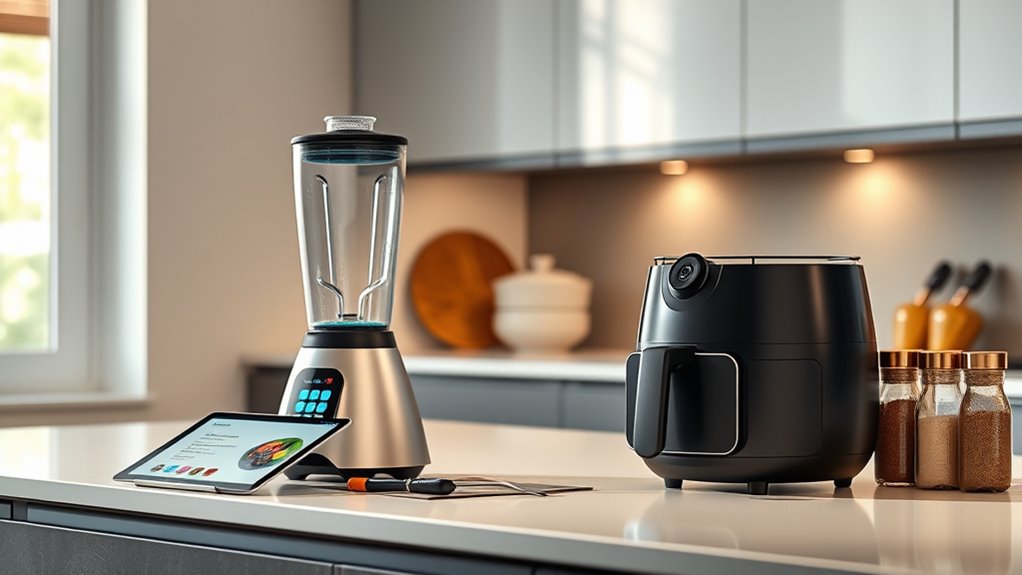
Connected kitchen appliances are transforming the way you cook and manage your meals. With voice control, you can effortlessly operate devices hands-free, making your cooking experience smoother and more convenient. Imagine asking your smart oven to preheat or your refrigerator to check for ingredients without lifting a finger. These appliances also prioritize energy efficiency, helping you save on utility bills while reducing your environmental impact. Modern connected gadgets automatically adjust settings to optimize power consumption, ensuring you’re not wasting energy. Additionally, smart energy management features help lower utility costs and promote environmental sustainability. These systems can also integrate with other home automation devices to create a seamless and responsive living space. As a result, your kitchen becomes smarter, more responsive, and eco-friendly. This technological shift empowers you to streamline meal prep and enjoy a more efficient, sustainable cooking environment. The rise of connected appliances truly revolutionizes your culinary space, making energy-efficient practices more accessible in everyday life. Moreover, these innovations facilitate remote monitoring, allowing you to oversee and control your kitchen devices from anywhere for added convenience.
How Smart Meal Planning Tools Support Healthy Choices
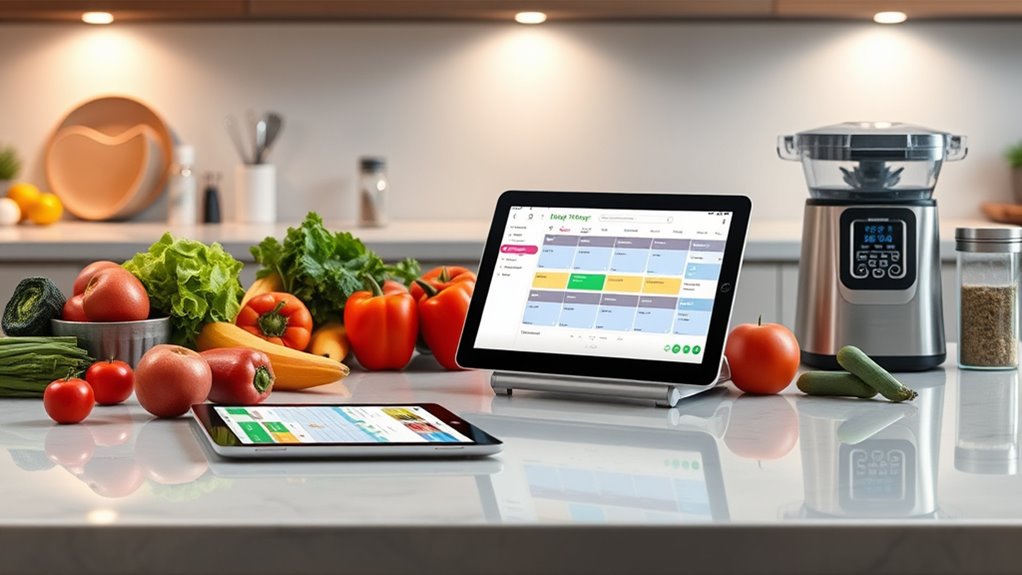
Smart meal planning tools help you make healthier choices by providing personalized recommendations based on your dietary goals and preferences. They simplify meal prepping by suggesting recipes and portion sizes tailored to your nutritional needs. With dietary customization features, you can select specific ingredients, track allergens, or focus on particular macros, ensuring every meal aligns with your health objectives. These tools often integrate with grocery lists, making shopping more efficient and reducing impulsive, less healthy choices. By automating meal planning, they save time and reduce stress, encouraging consistent healthy eating habits. Additionally, they support Free Floating concepts by adapting to your lifestyle and environment, making healthy eating more accessible and sustainable. Incorporating user-friendly interfaces enhances overall usability, helping you stay motivated and organized. Furthermore, many of these tools utilize healthy eating data to offer insights and track your progress over time, further supporting your dietary goals. These features contribute to a more holistic approach to nutrition, ensuring that you maintain a balanced diet and improve your overall well-being. When these tools are designed with evidence-based strategies, they can significantly improve adherence to healthy eating routines. As a result, you stay motivated and organized, making it easier to stick to a balanced diet and improve your overall well-being.
Nutritional Tracking Devices and Their Accuracy
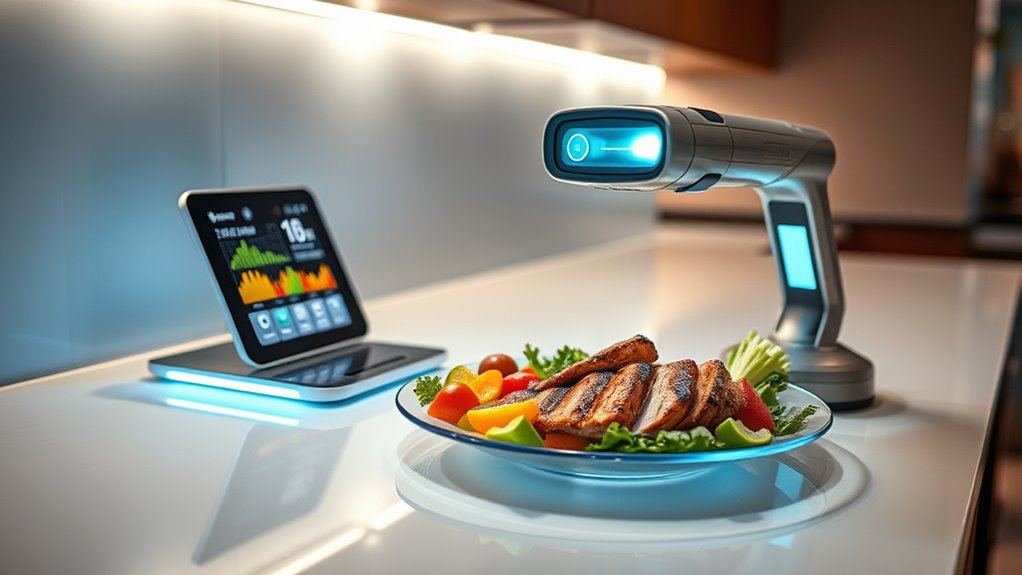
How reliable are nutritional tracking devices in providing accurate data about your intake? While these gadgets can be helpful, calibration issues and user error often impact their accuracy. Devices may misjudge portion sizes or misidentify foods, leading to inaccurate totals. User mistakes like inconsistent scanning or incorrect input also skew results. Here is a quick overview:
| Issue | Impact | Solution |
|---|---|---|
| Calibration issues | Inaccurate nutrient data | Regularly update firmware |
| User error | Incorrect food entries | Double-check inputs |
| Device limitations | Incomplete food database | Manually add missing items |
Furthermore, the accuracy of food recognition can vary significantly depending on the device’s technology and database updates. Recognizing the limitations of tracking technology helps you interpret data more critically and make better health choices. Understanding the accuracy of nutritional data and its potential variances is vital for effective dietary management. Proper understanding of nutritional data is essential for effective dietary management. Additionally, being aware of the potential for user errors can help you improve your tracking consistency and reliability.
Benefits of Automated Grocery Shopping and Inventory Management

Automated grocery shopping and inventory management streamline your kitchen routines by guaranteeing you always know what supplies you have and what needs replenishing. A smart pantry keeps track of your ingredients in real-time, reducing guesswork and preventing overbuying. With shopping automation, your grocery list updates automatically as items run low, saving you time and effort. This system helps you plan meals better, avoid last-minute trips to the store, and reduce food waste by managing expiration dates. Additionally, some devices incorporate smart technology integration, allowing for seamless control through apps or voice commands. Plus, it ensures you always have healthy ingredients on hand, supporting your nutritional goals. By integrating these smart kitchen gadgets, you gain more control over your pantry, making healthy eating more convenient and less stressful. It’s a smart way to keep your kitchen efficient and well-stocked. Understanding the importance of a reliable system(Feature Buddies) can further enhance your overall experience. Incorporating kitchen automation, such as connected devices and sensors, can optimize your food storage and meal prep processes even further, especially when combined with inventory management tools. Moreover, leveraging European cloud servers can enhance data security and ensure your smart kitchen data remains protected.
Limitations and Challenges of Smart Kitchen Technology
While smart kitchen technology offers many benefits, it also presents several limitations and challenges that can impact your experience. Privacy concerns are a major issue, as these devices often collect personal data about your eating habits, preferences, and routines, raising questions about data security and misuse. Additionally, technological complexity can be intimidating; many gadgets require setup, regular updates, and troubleshooting, which might overwhelm users unfamiliar with digital tools. Compatibility issues between different devices can also hinder seamless operation. Cost is another factor, as advanced smart kitchen gadgets can be expensive, limiting accessibility. Finally, overreliance on technology might diminish your cooking skills or lead to diminished trust in traditional methods, making it important to weigh these challenges against potential benefits. Moreover, digital literacy plays a crucial role in how effectively you can utilize these devices and navigate potential issues. Developing digital literacy skills can help you better assess the risks and opportunities associated with smart kitchen technology.
Evaluating the Real Impact on Eating Habits
Smart kitchen gadgets have the potential to influence your eating habits in both positive and negative ways. To evaluate their true impact, consider how they support mindful eating and behavioral change. These devices can help you become more aware of portion sizes, ingredients, and meal timing, encouraging healthier choices. However, their effectiveness depends on your commitment to using them intentionally. If you rely solely on gadgets without paying attention to your body’s signals, they might not lead to lasting change. Tracking progress and reflecting on your habits can reinforce mindful eating practices. Additionally, understanding safe electrical use is important when integrating new gadgets into your kitchen environment. Proper knowledge of electrical safety can prevent accidents and ensure your gadgets function correctly, maximizing their benefits. Ultimately, these tools can assist in shaping better habits, but your awareness and motivation are essential to translating gadget-assisted behaviors into meaningful, long-term improvements.
Frequently Asked Questions
How Do Smart Kitchen Gadgets Affect Long-Term Dietary Habits?
Smart kitchen gadgets can positively influence your long-term dietary habits by promoting behavior change through technology adoption. They make healthy choices easier and more convenient, encouraging consistency. As you integrate these tools into your routine, you’re more likely to develop lasting habits. Over time, the convenience and feedback from smart gadgets help reinforce healthier behaviors, making it simpler to maintain a balanced diet and improve your overall eating patterns.
Are Smart Appliances Cost-Effective for the Average Household?
Smart appliances can be cost-effective for your household when you compare costs carefully. While they often have a higher upfront price, they save money over time through energy efficiency and reduced food waste. Keep in mind, maintenance costs may be higher, but the long-term savings and convenience often outweigh these expenses. Do a thorough cost comparison to see if investing in smart gadgets aligns with your budget and needs.
Can These Devices Accommodate Specific Dietary Restrictions or Allergies?
Imagine your kitchen as a fortress against allergies—smart gadgets can truly be your allies. These devices often feature allergy management and dietary customization tools, allowing you to input specific restrictions and receive tailored meal plans or ingredient alerts. They help you avoid allergens effortlessly, making healthy eating safer and more personalized. With smart technology, you gain confidence knowing your dietary needs are managed precisely, turning your kitchen into a safe, customized haven.
Do Smart Tools Improve Nutritional Outcomes for Children and Seniors?
Yes, smart tools can improve nutritional outcomes for children and seniors by enhancing meal planning and food storage. These devices help you track dietary needs, ensure proper portion sizes, and keep food fresh longer. With real-time data, you can tailor meals to specific health requirements, reducing waste and promoting healthier eating habits. By simplifying these tasks, smart gadgets support better nutrition and overall wellness for your loved ones.
What Privacy Concerns Arise From Using Connected Kitchen Devices?
You should be aware that connected kitchen devices raise privacy concerns, especially around data security and user privacy. These gadgets collect and transmit personal information like eating habits and appliance usage, which hackers could target. To protect yourself, make sure devices have robust security measures, use strong passwords, and stay updated. Being vigilant helps you enjoy the benefits of smart kitchen tech without risking your privacy or sensitive data.
Conclusion
Ultimately, smart kitchen gadgets can simplify and support your endeavor for healthier habits. They bring benefits like better planning, precise tracking, and seamless shopping, making mindful eating more manageable. But, don’t forget the limitations—tech isn’t foolproof, and habits still matter. By embracing these innovations wisely, you can turn technology into a tool that transforms your tastes and tendencies, making your journey toward wellness more convenient, creative, and controlled.