
A smart kitchen becomes too smart for comfort when the devices overwhelm your space, causing constant notifications, privacy worries, and mental fatigue. If managing multiple apps, settings, or voice commands feels stressful rather than helpful, you’re likely experiencing burnout. Excessive features can turn your kitchen into a source of anxiety instead of a haven. To avoid this, consider balancing convenience with simplicity—there’s more to learn about maintaining comfort in your connected space.
Key Takeaways
- When device complexity causes frustration and mental overload, reducing enjoyment and increasing stress in the kitchen.
- If constant notifications and connectivity blur boundaries, leading to feelings of being overwhelmed or constantly “plugged in.”
- When privacy concerns grow due to excessive data sharing, making users feel exposed or insecure in their smart environment.
- If the number of devices and features becomes unmanageable, causing confusion, troubleshooting issues, or diminishing initial enthusiasm.
- When the smart kitchen shifts from a convenient space to a source of anxiety, prompting users to revert to traditional appliances.
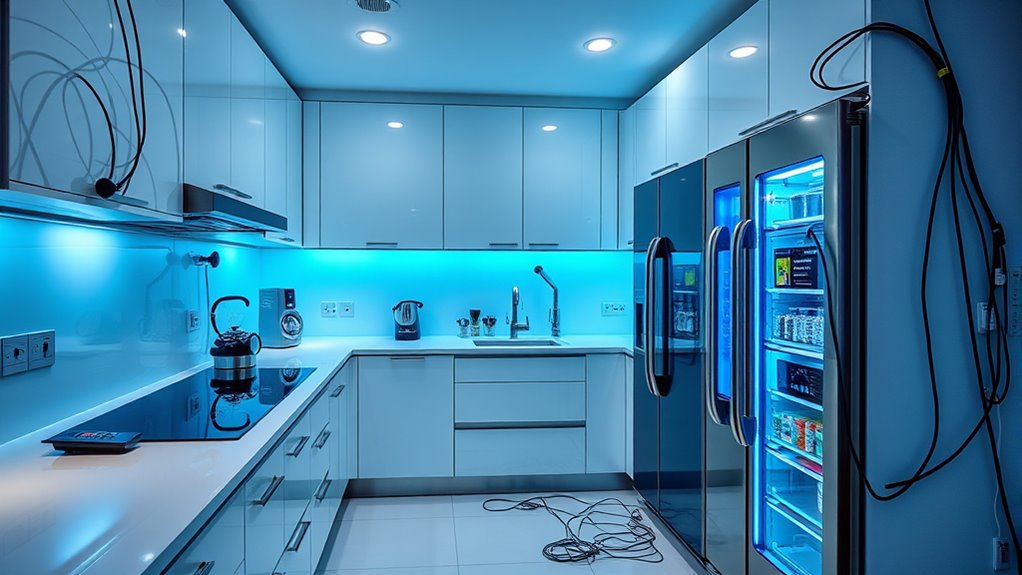
Many homeowners are embracing smart kitchen technology to simplify cooking and streamline their routines, but this rapid shift can also lead to burnout. As you add more devices—smart refrigerators, voice-activated appliances, automated coffee makers—you might start feeling overwhelmed rather than liberated. One key issue is privacy concerns. When your kitchen becomes a hub of interconnected gadgets, data collection increases. You may worry about who has access to your cooking habits, grocery preferences, or voice commands. This constant awareness can create a sense of vulnerability, making you hesitant to fully enjoy the convenience. Privacy worries are compounded by the fact that these devices often require ongoing updates and data sharing, which can feel intrusive over time.
User fatigue is another critical factor. As you navigate multiple apps, voice commands, and device settings, the experience can quickly become exhausting. Instead of feeling empowered, you might find yourself frustrated by the complexity of managing various smart features. The more devices you add, the more you’ll need to remember, troubleshoot, or update. This ongoing mental load can lead to a sense of being overwhelmed, diminishing the initial excitement that drew you to smart kitchen tech. It’s easy to assume that more features equal a better experience, but in reality, too many options can dilute your satisfaction and create a feeling of chaos in your culinary space.
Furthermore, the constant connectivity can foster a sense of being “always on,” which contributes to burnout. When your appliances are linked to your phone or voice assistant, it’s tempting to check notifications or make adjustments at all hours. Over time, this persistent connectivity can blur the lines between work, leisure, and home life, making your kitchen feel less like a refuge and more like a source of stress. You might start avoiding your smart gadgets altogether, wishing for simpler, more traditional appliances that don’t demand your constant attention. Incorporating connected devices designed with user-friendly interfaces can help reduce this mental load.
Ultimately, the key to avoiding smart kitchen burnout is striking a balance. Be selective about which devices truly enhance your cooking experience and which ones add unnecessary complexity. Regularly review your privacy settings and consider limiting data sharing to protect yourself from feeling exposed. Remember, the goal of a smart kitchen is to make life easier, not more stressful. When your gadgets start to feel more like burdens than aids, it’s time to reassess and scale back. After all, the smartest kitchen is one that serves your needs without overwhelming your senses or your peace of mind.
Frequently Asked Questions
How Can I Tell if My Smart Kitchen Is Causing Burnout?
If you notice increased digital fatigue or technology fatigue after using your smart kitchen, it might be causing burnout. You feel overwhelmed, stressed, or tired even after short interactions. To tell, pay attention to whether you’re avoiding it, feeling anxious, or losing enjoyment. Reducing automation, taking tech breaks, or simplifying your setup can help manage these feelings and prevent your smart kitchen from becoming too overwhelming.
Are There Signs of Dependency on Smart Kitchen Devices?
You might notice signs of dependency on smart kitchen devices when you can’t cook without automation or feel anxious without your smart gadgets. This dependency on smart device reliance can take away your confidence in traditional cooking. You rely heavily on kitchen automation, losing touch with manual skills. If your mood or routines revolve solely around your tech, it’s a clear sign you’re overly dependent on your smart kitchen.
Can Smart Kitchen Technology Lead to Privacy Concerns?
Yes, smart kitchen technology can lead to privacy concerns. You might face privacy invasion if your devices collect and share personal data without clear consent. To protect yourself, guarantee strong data security measures are in place, like encryption and regular updates. Be aware of what information your smart devices gather and control access settings. Staying informed helps you enjoy the benefits without risking your privacy.
What Are the Long-Term Health Effects of Smart Kitchen Overload?
Long-term, smart kitchen overload can lead to smart device fatigue and technology addiction. You might find yourself constantly checking updates or feeling overwhelmed by constant notifications. Overuse of smart devices can disrupt your sleep, increase stress, and reduce face-to-face interactions. To avoid this, set boundaries on device use, take regular breaks, and create tech-free zones, ensuring your health stays balanced despite the smart kitchen’s convenience.
How Do I Disconnect or Simplify My Smart Kitchen Setup?
To disconnect or simplify your smart kitchen, prioritize manual control over devices and perform a device reset on those you no longer need. Start by unplugging unnecessary gadgets, turning off automation features, and reverting appliances to manual mode. This restores your control, reduces overwhelm, and creates a more manageable space. Embrace simplicity by focusing on essential devices, and remember, resetting devices helps you regain your comfort and peace of mind.
Conclusion
As your smart kitchen becomes more of a constant companion, it’s easy to forget where convenience ends and comfort begins. While these devices promise ease, they can also gently whisper that enough is enough. Finding that sweet spot—where technology enriches rather than overwhelms—is key. So, take a moment to pause, tune into your true needs, and let your smart kitchen serve you, not rule you, ensuring your culinary haven remains a place of joy, not fatigue.