
The Juicero debacle shows that high-tech kitchen gadgets can fail when they don’t meet real needs or match consumer preferences. Despite the hype around innovation, people saw through the overpriced, unnecessary device once it was clear manual squeezing worked just as well. It teaches us that successful smart kitchen products should genuinely improve experiences and earn trust through honest value. Want to uncover more lessons behind this tech misstep? Keep exploring how hype can lead to costly mistakes.
Key Takeaways
- Overhyping tech features without validating real consumer needs can lead to product failure.
- Consumers value simplicity and practicality more than high-tech gimmicks or exclusivity.
- Genuine market validation and honest feedback are crucial to align innovation with customer preferences.
- The Juicero case shows that advanced technology must deliver real, perceived value to build trust.
- Misaligned promises and lack of user-centric design can turn innovative concepts into costly mistakes.

Have you ever bought into a high-tech gadget only to realize it was a complete failure? That’s exactly what happened with Juicero, a startup that promised to revolutionize your morning routine with a smart juicer. You might have been tempted by its sleek design, the promise of fresh juice at the push of a button, and the allure of cutting-edge technology. But as it turned out, the device wasn’t just a flop—it was a perfect example of how flawed market validation and misplaced consumer trust can lead even the most ambitious innovations astray.
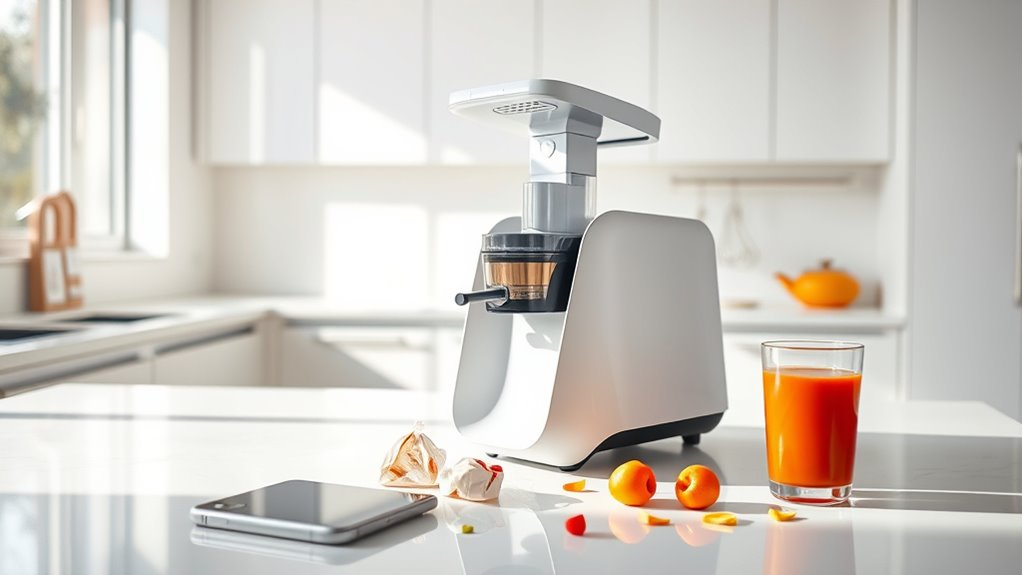
When Juicero launched, it created an expectation that it was offering a revolutionary experience, one backed by sophisticated data and exclusive juice packs. However, the hype didn’t align with reality. Consumers quickly discovered that they could manually squeeze the juice packs just as well, if not better, than using the expensive machine. The company’s assumption—that people would pay a premium for a high-tech gadget to do something they could easily do by hand—proved to be a critical flaw in its market validation process. Instead of thoroughly testing whether consumers valued the added convenience, Juicero focused on tech features and sleek design, neglecting what customers truly needed or wanted.
Juicero’s failure stemmed from prioritizing sleek design over genuine consumer needs and value validation.
This misstep eroded consumer trust. When the truth came out—that the machine was unnecessary and overpriced—customers felt duped. Trust, once broken, is hard to rebuild. Juicero’s failure showed that no matter how innovative a product appears, it has to meet a real demand and be validated by genuine consumer needs and behaviors. If customers don’t see clear value or feel misled, they’ll quickly turn away, regardless of how impressive the technology seems in theory.
The Juicero debacle also highlighted the importance of listening to your audience and conducting honest market validation. Companies often fall into the trap of assuming their vision aligns perfectly with consumer preferences, but ignoring actual feedback can be disastrous. Juicero’s creators believed their product would disrupt the market, but they overlooked the fact that many consumers valued simplicity and practicality over high-tech gimmicks. When the product didn’t deliver on its promises, the trust evaporated, and the company’s reputation suffered.
Additionally, understanding the role of technology in product development can help prevent similar failures by ensuring that innovations truly enhance user experience and meet genuine needs. Ultimately, the Juicero failure teaches a crucial lesson: no matter how innovative your idea is, you must ensure it resonates with your target market and build trust through transparency and real value. Without that foundation, even the most advanced technology can become just another failed gadget, leaving behind lessons in humility and the importance of authentic market validation.
As an affiliate, we earn on qualifying purchases.
Frequently Asked Questions
How Did Juicero Secure Initial Funding and Investor Confidence?
You see, Juicero secured initial funding and investor confidence through strategic venture capital investments and high-profile brand endorsements. They showcased their innovative tech and premium design, appealing to early-stage investors seeking cutting-edge smart kitchen solutions. The buzz around their product, fueled by endorsements from influential figures, convinced investors of its potential market impact. This combination of financial backing and brand credibility helped Juicero gain the initial trust needed to grow.
What Were the Specific Technical Flaws That Led to Product Failure?
Imagine a delicate orchestra where sensor inaccuracies cause the strings to falter, and mechanical jams halt the rhythm. That’s what led to Juicero’s failure: faulty sensors gave unreliable readings, and mechanical jams made the machine unpredictable. These technical flaws undermined user trust and efficiency, exposing the product’s fragility. Without precise sensors and reliable mechanics, the smart juicer couldn’t sustain its promise, ultimately crashing like a symphony gone awry.
How Did Customer Feedback Influence Juicero’s Decline?
You see, customer complaints and product reviews played a huge role in Juicero’s decline. When users shared frustrations about the high cost and unnecessary machine, it spread quickly. These negative reviews exposed flaws and made potential buyers skeptical. As more people voiced concerns, the hype faded, and sales plummeted. Your feedback, along with others’, ultimately revealed the product’s shortcomings and eroded trust, leading to the company’s downfall.
What Lessons Did Competitors Learn From Juicero’s Mistakes?
You learn that competitors see market skepticism clearly after Juicero’s failure. They realize that blindly chasing innovation pitfalls can backfire if products seem unnecessary or overpriced. To succeed, you must focus on genuine customer needs, keep tech simple, and avoid hype-driven marketing. This way, you build trust and show that innovation is valuable without falling into the trap of overpromising or overcomplicating your smart kitchen solutions.
Could Similar Smart Kitchen Devices Succeed Today Despite Past Failures?
Think of the smart kitchen market as a garden waiting to bloom. Yes, similar devices can succeed today if you build on lessons learned, like earning consumer trust and understanding market readiness. If you create user-friendly, genuinely useful products that don’t overpromise, people will embrace them. Past failures serve as a guide—avoiding hype and focusing on real value helps your smart kitchen innovations flourish in the right environment.
As an affiliate, we earn on qualifying purchases.
Conclusion
Ultimately, the Juicero debacle shows that not every shiny new gadget lives up to the hype. You learn that sometimes, big promises mask overhyped technology that’s more trouble than it’s worth. Don’t fall for every shiny object that comes your way. Remember, a wolf in sheep’s clothing often hides behind a sleek exterior. Stay discerning, and you’ll avoid throwing good money after bad in the world of smart kitchen gadgets.
As an affiliate, we earn on qualifying purchases.
As an affiliate, we earn on qualifying purchases.