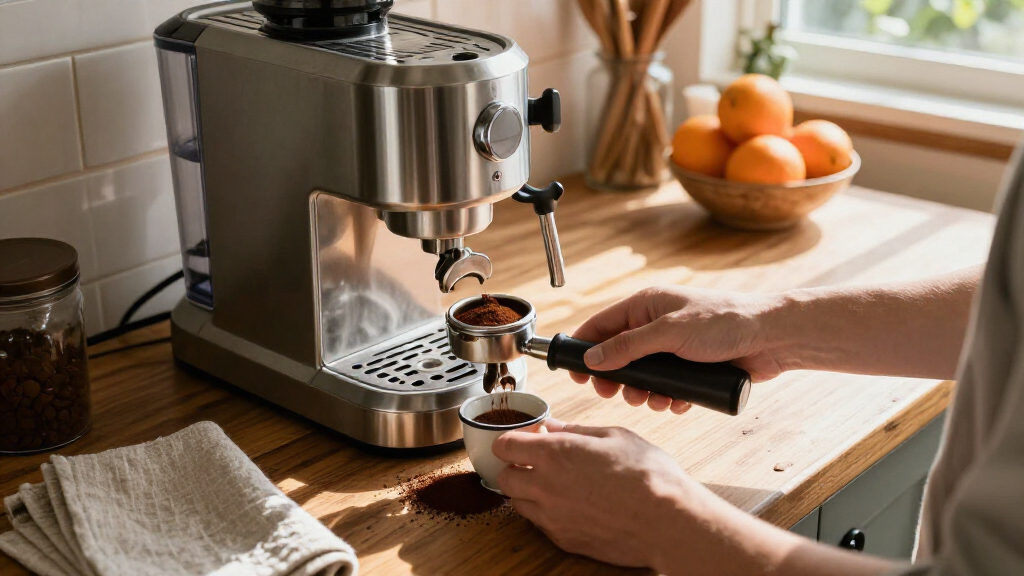
Compact espresso machines range from capsule brewers to manual portafilter models, and the Breville Bambino is my best overall pick for a small kitchen that still needs room to grow. The Nespresso Vertuo Pop+ Deluxe is a simpler capsule option, while the De’Longhi Stilosa suits buyers who want hands-on brewing without an integrated grinder. The main tradeoff is counter space versus control: smaller, simpler machines can limit drink choices or workflow, while more capable setups need room for accessories and cleanup. I compare all 15 options by brewing style, daily usability, milk preparation, and maintenance. Read on for the full breakdown and to see which machine fits your routine.

Get kitchen gear delivered free with Prime
- Fast, free delivery on millions of items
- Prime Video, Amazon Music and more included
- Member-only deals all year
Complete the kit


Key Takeaways
- The Bambino is the strongest small-kitchen balance: it offers a portafilter workflow and steam wand without the built-in grinder and larger footprint of the Barista Express models.
- The Barista Express models suit a different kind of compact kitchen: their grinder saves a separate appliance, but the all-in-one body takes more counter space than the Bambino.
- Capsule convenience comes with a different kind of limitation: the Vertuo Pop+ Deluxe simplifies preparation, while locking buyers into a capsule system rather than ground coffee and a portafilter.
- Several low-cost-looking compact designs use steam pressure rather than pump espresso brewing: the IMUSA, HBN, SHARDOR, and Mr. Coffee options are better judged as simple espresso-style drink makers than as direct substitutes for the pump machines.
- Milk capability separates machines that look similarly small: many models include a steam wand, but buyers should weigh wand control and cleanup against how often they actually make milk drinks.
| IMUSA 4-Cup Electric Espresso and Cappuccino Maker |  | Best for Shared Servings | Capacity: 4 cups | Pressure: 5 bar | Power: 800 watts | VIEW LATEST PRICE | See Our Full Breakdown |
| Nespresso Vertuo Pop+ Deluxe Coffee and Espresso Maker by De’Longhi, Black |  | Best for One-Touch Variety | Model: Vertuo Pop+ Deluxe (ENV95BMC) | Cup sizes: Five sizes, from Espresso to Alto | Water tank: 37.2 fl oz | VIEW LATEST PRICE | See Our Full Breakdown |
| CASABREWS 3700 Essential Stainless Steel Espresso Machine with Steam Wand |  | Best for Compact Manual Brewing | Machine type: Semi-automatic espresso machine | Pump pressure: 20 bar | Power: 1350 watts | VIEW LATEST PRICE | See Our Full Breakdown |
| CASABREWS CM5418 Compact Espresso Machine with Milk Frother |  | Best for Shot Adjustments | Model: CM5418 | Operation: Semi-automatic | Pump pressure: 20 bar | VIEW LATEST PRICE | See Our Full Breakdown |
| Breville BES870XL Barista Express Espresso Machine, Brushed Stainless Steel |  | Best Premium Bean-to-Cup Setup | Type: Manual espresso machine | Grinder: Integrated precision conical burr grinder | Bean hopper: 1/2 lb | VIEW LATEST PRICE | See Our Full Breakdown |
| AERCANA 20-Bar Semi-Automatic Espresso Machine with Milk Frother, 34 oz Removable Tank, Silver |  | Best for a Compact Pressure-Gauge Setup | Operation: Semi-automatic | Pump pressure: 20 bar | Power: 1450 watts | VIEW LATEST PRICE | See Our Full Breakdown |
| IMUSA Electric Espresso Maker, 3 or 6 Cups, Black |  | Best for Small-Batch Moka-Style Coffee | Capacity: 3 or 6 cups (1.5 oz each) | Material: Cast aluminum | Wattage: 230 watts | VIEW LATEST PRICE | See Our Full Breakdown |
| HBN 3.5-Bar Espresso Machine with Milk Frother, 800W, 2–4 Cups |  | Best for Simple Milk Drinks | Machine type: Semi-automatic espresso machine | Pressure: 3.5 bar | Power: 800 W | VIEW LATEST PRICE | See Our Full Breakdown |
| Breville Barista Express Espresso Machine, Black Truffle |  | Best All-in-One, If You Have the Counter Space | Model: BES870BTR | Type: Semi-automatic espresso machine | Grinder: Integrated conical burr grinder | VIEW LATEST PRICE | See Our Full Breakdown |
| Breville Bambino Espresso Machine, Brushed Stainless Steel |  | Best Compact Premium Pick | Type: Semi-automatic espresso machine | Power: 1560 watts | Water capacity: 47 fl oz | VIEW LATEST PRICE | See Our Full Breakdown |
| BYESHOP 20-Bar Compact Espresso Machine with Milk Frother |  | Best for Guided Customization | Operation: Semi-automatic | Output pressure: 20 bar | Coffee input: Ground coffee | VIEW LATEST PRICE | See Our Full Breakdown |
| SHARDOR Compact 3.5-Bar Espresso Machine with Milk Frother |  | Best for Simple Batch Brewing | Extraction pressure: 3.5 bar | Power: 800 W | Voltage: 120 V | VIEW LATEST PRICE | See Our Full Breakdown |
| XIXUBX Compact Espresso and Cappuccino Machine with Steam Wand |  | Best for Dorms and RVs | Model: CM510 | Operation: Semi-automatic | Pressure: 3.5 bar | VIEW LATEST PRICE | See Our Full Breakdown |
| Mr. Coffee 4-Shot Steam Espresso Maker with Frothing Pitcher |  | Best for Shared Cappuccino Rounds | Operation: Semi-automatic | Capacity: Up to 4 shots | Power: 1200 W | VIEW LATEST PRICE | See Our Full Breakdown |
| De’Longhi Stilosa Compact Manual Espresso Machine |  | Best for Traditional Manual Brewing | Model: EC260BK | Operation: Manual | Pump pressure: 15 bar | VIEW LATEST PRICE | See Our Full Breakdown |
| compact espresso machine | Power | Dimensions | Weight | Operation |
|---|---|---|---|---|
| IMUSA 4-Cup Electric Espresso | 800 watts | 7.48 × 9.05 × 11.02 in | 4.8 lb | Semi-automatic |
| Nespresso Vertuo Pop+ Deluxe C | 1500 watts | 8.6 × 14 × 10.4 in (D × W × H) | 7.9 lb | Semi-automatic, button-operated |
| CASABREWS 3700 Essential Stain | 1350 watts | — | — | — |
| CASABREWS CM5418 Compact Espre | 1350 W | — | — | Semi-automatic |
| Breville BES870XL Barista Expr | 1600 watts | 13.8 × 12.5 × 15.9 in | 22.1 lb | — |
| AERCANA 20-Bar Semi-Automatic | 1450 watts | 12.2 × 5.32 × 11.5 inches | — | Semi-automatic |
| IMUSA Electric Espresso Maker | — | 7.1 × 4.72 × 9.3 inches | 2.8 pounds | — |
| HBN 3.5-Bar Espresso Machine w | 800 W | 12.91 × 7.28 × 13.58 inches | 4.1 lb | — |
| Breville Barista Express Espre | 1600 watts | 13.8 × 12.5 × 15.9 inches | 22.1 lb | — |
| Breville Bambino Espresso Mach | 1560 watts | 13.7 × 6.3 × 12 inches | 10.9 lb | — |
| BYESHOP 20-Bar Compact Espress | — | — | — | Semi-automatic |
| SHARDOR Compact 3.5-Bar Espres | 800 W | 11.8 × 8.3 × 6 in (H × D × W) | 3.45 lbs (description); 3.5 lbs (measurements) | — |
| XIXUBX Compact Espresso and Ca | 800 W | 8.3 × 6 × 11.8 in | 3.3 lbs | Semi-automatic |
| Mr. Coffee 4-Shot Steam Espres | 1200 W | 11.2 × 11.2 × 15 in | — | Semi-automatic |
| De’Longhi Stilosa Compact Manu | 1100 W | 12.13 × 9.45 × 14.17 in | 8.6 lbs | Manual |
More Details on Our Top Picks
IMUSA 4-Cup Electric Espresso and Cappuccino Maker
I’d choose the IMUSA 4-Cup when several people want a small coffee drink at once and counter space is tight. Its 7.48-inch width and 4.8-pound weight make it easier to move or store than the heavier Breville Barista Express, while the glass carafe lets me pour multiple servings without preparing separate shots. The steam nozzle adds a cappuccino option, though its 5-bar pressure and batch-style brewing make it a different kind of choice from the CASABREWS machines, which use portafilters for single or double shots. The permanent filter and removable drip tray cut down on disposable parts and simplify cleanup. I’d accept the plastic exterior and four-serving limit for an uncomplicated shared brewer, but skip it if I want more control over espresso extraction or a metal-bodied machine.
Pros:- Brews up to four servings in one batch
- Steam nozzle can froth milk for cappuccinos and lattes
- Permanent filter and removable drip tray simplify cleanup
- Lightweight body and cool-touch carafe handle support easier handling
Cons:- Four-cup capacity limits larger batches
- Plastic exterior may feel less durable than the stainless steel CASABREWS models
- 5-bar pressure offers less extraction control than the 20-bar CASABREWS machines
Best for: Households or small offices that want to pour several espresso-style servings from one compact, lightweight machine.
Not ideal for: Espresso hobbyists who want portafilter-based shot control, or buyers seeking a metal exterior and a larger serving capacity.
- Capacity:4 cups
- Pressure:5 bar
- Power:800 watts
- Operation:Semi-automatic
- Filter:Permanent
- Materials:Plastic exterior, glass carafe
- Dimensions:7.48 × 9.05 × 11.02 in
- Weight:4.8 lb
Our verdict“Choose the IMUSA if you value a light, compact batch brewer for shared servings more than hands-on espresso control.”
Nespresso Vertuo Pop+ Deluxe Coffee and Espresso Maker by De’Longhi, Black
For a small kitchen where speed and drink variety matter more than choosing beans or dialing in a shot, I’d put the Vertuo Pop+ Deluxe ahead of the portafilter-based CASABREWS CM5418. It makes five capsule-based sizes, including iced coffee, and heats in about 30 seconds, so switching between a quick espresso and a larger cup takes little effort. The side-mounted 37.2 fl oz tank is useful when the machine sits beneath cabinets or beside other appliances, though its capacity means more refills than the Breville Barista Express’s 67-ounce reservoir. At 14 inches wide, it takes more counter width than the narrow IMUSA. Automatic capsule ejection keeps the routine tidy, but Vertuo capsule compatibility limits coffee choice and adds an ongoing reliance on a specific capsule format. I’d pick it for convenience, not manual brewing or milk steaming.
Pros:- Brews five sizes, from espresso to Alto, including iced coffee
- One-touch operation and automatic capsule ejection simplify brewing
- Heats in about 30 seconds
- Side-mounted tank can be easier to access in a crowded setup
Cons:- Brewing is limited to Nespresso Vertuo capsules
- 37.2 fl oz tank needs more frequent refilling than the Breville Barista Express reservoir
- At 14 inches wide, it takes more counter width than the IMUSA
Best for: Busy coffee drinkers in compact kitchens who want several drink sizes, iced coffee, and button-operated brewing.
Not ideal for: Buyers who want to use ground coffee, manually adjust extraction, or froth milk with an included steam wand.
- Model:Vertuo Pop+ Deluxe (ENV95BMC)
- Cup sizes:Five sizes, from Espresso to Alto
- Water tank:37.2 fl oz
- Power:1500 watts
- Coffee input:Nespresso Vertuo capsules
- Operation:Semi-automatic, button-operated
- Dimensions:8.6 × 14 × 10.4 in (D × W × H)
- Weight:7.9 lb
Our verdict“Pick the Vertuo Pop+ Deluxe for quick capsule drinks in varied sizes if you can live with its capsule system and lack of a steam wand.”
CASABREWS 3700 Essential Stainless Steel Espresso Machine with Steam Wand
The CASABREWS 3700 Essential suits buyers who want to work with ground coffee and froth milk without giving a large appliance permanent counter space. Its stainless steel body, removable 43.9-ounce tank, and removable drip tray give it a more hands-on setup than the capsule-based Nespresso Vertuo Pop+ Deluxe, but also more room to shape a drink around the coffee on hand. Compared with the CASABREWS CM5418, the 3700’s larger tank means fewer refill trips during a busy morning; the CM5418, by contrast, includes a pressure gauge for adjusting extraction. This model comes with one- and two-cup filters, a portafilter, and a tamper with spoon, though semi-automatic brewing still asks me to prep grounds and manage the process. I’d allow for its required first-use cycle before making the first drink.
Pros:- Uses ground coffee with one-cup and two-cup filters
- Steam wand supports milk frothing and latte art
- Removable 43.9-ounce tank reduces refill frequency
- Stainless steel design and removable drip tray suit regular use and cleanup
Cons:- Semi-automatic brewing requires hands-on preparation
- A first-use cycle is required before brewing
- Lacks the pressure gauge included with the CASABREWS CM5418
Best for: Home or office coffee drinkers who want ground-coffee shots and milk frothing in a compact stainless steel machine.
Not ideal for: People who want capsule-level convenience or an extraction gauge to guide shot adjustments.
- Machine type:Semi-automatic espresso machine
- Pump pressure:20 bar
- Power:1350 watts
- Water tank:43.9 oz, removable
- Milk frothing:Steam wand
- Coffee input:Ground coffee
- Included filters:One-cup and two-cup
- Included accessories:Portafilter, tamper with spoon, instruction manual
Our verdict“Choose the 3700 Essential if you want compact ground-coffee brewing, a generous tank, and a steam wand, and are comfortable preparing each shot.”
CASABREWS CM5418 Compact Espresso Machine with Milk Frother
If I want a compact machine that gives me a visible cue while dialing in espresso, the CASABREWS CM5418 has a clearer role than the 3700 Essential: its pressure gauge makes extraction adjustments part of the process. Both CASABREWS models use ground coffee, a portafilter, and a steam wand, but the CM5418’s 34-ounce removable tank is smaller than the 3700’s 43.9-ounce tank. That tradeoff can suit a tighter daily routine while requiring more frequent refills. The brushed stainless steel finish and compact design fit a home or office counter, and the included one- and two-cup filters support different serving sizes. Milk drinks take extra planning: after frothing, the machine must cool before brewing. The supplied data also notes that brewing may call for finer grounds, more coffee, or firmer tamping, so I’d skip it if I want a low-effort routine.
Pros:- Pressure gauge gives a visible reference for extraction adjustments
- Makes single or double shots with included filters
- Steam wand supports milk frothing and foam art
- Removable tank and brushed stainless steel body suit a compact setup
Cons:- Must cool down after frothing before brewing
- 34-ounce tank is smaller than the CASABREWS 3700 Essential tank
- May require finer grounds, more coffee, or firmer tamping
Best for: Hands-on espresso drinkers with limited counter space who want a pressure gauge and a steam wand for milk drinks.
Not ideal for: People who want fast back-to-back milk and espresso preparation, or who prefer a simple capsule routine.
- Model:CM5418
- Operation:Semi-automatic
- Pump pressure:20 bar
- Power:1350 W
- Water tank:34 oz, removable
- Milk frothing:Steam wand
- Material and finish:Brushed stainless steel
- Included filters:One-cup and two-cup
Our verdict“Pick the CM5418 if you want a compact, adjustable portafilter machine and can work around its cooling pause and smaller tank.”
Breville BES870XL Barista Express Espresso Machine, Brushed Stainless Steel
The Breville Barista Express earns its premium role by combining grinding, espresso preparation, and milk texturing in one machine. Its integrated burr grinder feeds whole beans directly into the portafilter, while PID temperature control and low-pressure pre-infusion support a more guided extraction process than either compact CASABREWS model. That broader setup has a footprint cost: at 13.8 × 12.5 × 15.9 inches and 22.1 pounds, it is far less convenient to shift than the 4.8-pound IMUSA. The 67-ounce tank and half-pound hopper also make it better suited to a dedicated counter than an occasional-use appliance. I’d choose it when freshly ground coffee and control matter more than small dimensions or quick cleanup. Its manual workflow rewards practice, and buyers wanting one-touch drinks will find the Vertuo Pop+ Deluxe simpler.
Pros:- Integrated conical burr grinder doses whole beans into the portafilter
- PID temperature control and low-pressure pre-infusion support extraction control
- Steam wand textures milk for microfoam and latte art
- 67-ounce tank supports more brewing between refills than the CASABREWS models
Cons:- 22.1-pound weight makes it difficult to move or store frequently
- Larger footprint is a poor fit for the smallest counters
- Manual brewing and milk texturing require hands-on preparation
Best for: Espresso drinkers with a dedicated counter who want an integrated grinder, adjustable extraction, and a steam wand.
Not ideal for: People with very limited counter space, a need for a lightweight machine, or a preference for button-operated capsule brewing.
- Type:Manual espresso machine
- Grinder:Integrated precision conical burr grinder
- Bean hopper:1/2 lb
- Water tank:67 oz
- Power:1600 watts
- Dimensions:13.8 × 12.5 × 15.9 in
- Weight:22.1 lb
- Finish:Brushed stainless steel
- Warranty:1-year limited
Our verdict“Choose the Barista Express if you have room for a substantial machine and want an integrated grinder with hands-on control.”
AERCANA 20-Bar Semi-Automatic Espresso Machine with Milk Frother, 34 oz Removable Tank, Silver
The AERCANA pairs a 5.32-inch width with a pressure gauge and steam wand, giving a small counter a more hands-on espresso setup than the simpler HBN 3.5-Bar machine. Its 20-bar pump and visible gauge let curious beginners watch pressure during brewing, while the wand adds milk drinks to the routine. The 34-ounce removable tank and drip tray make refilling and cleanup easier in a home or office. The tradeoff is workflow: after frothing milk, the machine needs time to cool before brewing, so making drinks back to back takes patience. It also uses ground coffee, so it does not grind beans for you. This is a space-saving pick for buyers who want a gauge and manual milk frothing without the wider footprint of the Breville Barista Express.
Pros:- Narrow 5.32-inch width fits tight counter spaces.
- Visible pressure gauge makes brewing pressure easy to monitor.
- Steam wand supports milk frothing and latte art.
- Removable 34-ounce tank and drip tray simplify refilling and cleanup.
Cons:- Needs to cool after steaming milk before brewing again.
- Ground coffee input means buyers need a separate grinder for fresh beans.
Best for: Small-kitchen espresso drinkers who want a visible pressure gauge and a steam wand, and are comfortable using pre-ground coffee.
Not ideal for: People who make several milk drinks in quick succession or want an integrated grinder and minimal waiting between steps.
- Operation:Semi-automatic
- Pump pressure:20 bar
- Power:1450 watts
- Water tank:34 oz (1 liter)
- Dimensions:12.2 × 5.32 × 11.5 inches
- Coffee input:Ground coffee
- Features:Auto shut-off, cup warmer, hot water dispenser, milk frother, removable tank
Our verdict“Choose the AERCANA if you want a narrow machine with a pressure gauge and steam wand and can work around its pause between steaming and brewing.”
IMUSA Electric Espresso Maker, 3 or 6 Cups, Black
The IMUSA takes a different route from the pump machines in this roundup: its electric moka-style design brews three or six small espresso cups with one-touch operation. At 7.1 × 4.72 inches at the base, it uses little counter space and its detachable base makes serving easier. That makes it more suited to Cuban, Italian, or moka coffee than to buyers seeking the milk-frothing workflow of the HBN or AERCANA. Its listed cups are only 1.5 ounces each, so the six-cup setting is still a modest batch by mug standards. The cool-touch handle and visual brewing indicator add practical cues, though the manual operation mode and reusable filter mean it is a simple, distinct format rather than a full-featured espresso station. Pick it for compact, small-batch brewing without a steam wand.
Pros:- Brews either three or six small cups.
- Supports moka, Cuban, and Italian coffee styles.
- Detachable base makes serving convenient.
- Cool-touch handle and visual brewing indicator aid everyday use.
Cons:- Six-cup capacity totals only 9 ounces.
- Does not include a steam wand for cappuccinos or lattes.
Best for: Drinkers who make small servings of moka, Cuban, or Italian-style coffee and want an electric brewer with a compact base.
Not ideal for: Buyers who want a steam wand, milk drinks, or larger servings than six 1.5-ounce cups.
- Capacity:3 or 6 cups (1.5 oz each)
- Material:Cast aluminum
- Wattage:230 watts
- Voltage:230 volts
- Coffee input:Ground coffee
- Filter:Reusable
- Dimensions:7.1 × 4.72 × 9.3 inches
- Weight:2.8 pounds
Our verdict“Choose the IMUSA for compact electric moka-style coffee in small servings, but look to the AERCANA or HBN for milk-frothing capability.”
HBN 3.5-Bar Espresso Machine with Milk Frother, 800W, 2–4 Cups
The HBN keeps the controls plain: a one-knob interface, 240 ml carafe, and steam wand cover the basics for a couple of cappuccinos or lattes. It is easier to approach than the AERCANA, whose pressure gauge and higher-pressure pump invite more attention to the brewing process. The HBN’s 3.5-bar pressure and included carafe mark it as a modest, small-batch option; its 2–4 cup claim suits short servings rather than a full household round. The removable drip tray is useful when spills happen, and the stainless-steel exterior gives it a more finished look than many entry-level machines. Buyers do need medium-coarse grounds for the stated brewing preference, and the 12.91 × 7.28-inch footprint is not as narrow as the AERCANA’s. Choose it for straightforward operation, not fine control.
Pros:- One-knob operation keeps the brewing routine simple.
- Steam wand can froth milk for cappuccinos and lattes.
- Includes a 240 ml carafe and filter.
- Removable drip tray is washable.
Cons:- 240 ml carafe limits batch size.
- Brewing guidance calls for medium-coarse ground coffee.
- Wider than the AERCANA, despite its compact category.
Best for: New espresso-style drink makers who want a simple control and steam wand for one or two milk drinks at a time.
Not ideal for: Households that need larger batches, a narrow counter fit, or more control over brewing pressure.
- Machine type:Semi-automatic espresso machine
- Pressure:3.5 bar
- Power:800 W
- Voltage:120 V
- Capacity:240 ml; 2–4 cups
- Weight:4.1 lb
- Dimensions:12.91 × 7.28 × 13.58 inches
- Included components:Carafe, filter, milk frother
Our verdict“Choose the HBN for uncomplicated small-batch milk drinks; choose the AERCANA if you want a narrower body and a pressure gauge.”
Breville Barista Express Espresso Machine, Black Truffle
The Barista Express combines a conical burr grinder and espresso machine, reducing the number of separate appliances and sending freshly ground beans straight to the portafilter. PID temperature control and low-pressure pre-infusion provide more extraction tools than the compact AERCANA, while its steam wand gives milk drink makers room to practice microfoam. That capability comes with a substantial footprint: at 13.8 × 12.5 × 15.9 inches and 22.1 pounds, it is considerably less suited to a tight counter than the six-inch-wide Bambino. The larger 67-ounce tank and half-pound hopper support repeated brewing, but the hands-on grinding, tamping, and milk texturing still take time. This pick makes sense for someone who values an integrated bean-to-cup workflow and has a stable place to leave it set up.
Pros:- Integrated conical burr grinder feeds the portafilter directly.
- PID control and low-pressure pre-infusion support more controlled extraction.
- 67-ounce tank suits repeated brewing between refills.
- Includes portafilter, baskets, tamper, milk jug, and cleaning accessories.
Cons:- Its 13.8 × 12.5-inch footprint is much larger than the Bambino’s.
- At 22.1 pounds, it is heavy to move or store.
- Manual milk texturing requires practice and hands-on attention.
Best for: Home espresso hobbyists with room for a full-size countertop station who want an integrated grinder and manual milk texturing.
Not ideal for: Small-kitchen buyers prioritizing a narrow footprint or anyone seeking a lightweight machine that is easy to stow.
- Model:BES870BTR
- Type:Semi-automatic espresso machine
- Grinder:Integrated conical burr grinder
- Bean hopper:1/2 lb
- Water tank:67 fl oz
- Power:1600 watts
- Dimensions:13.8 × 12.5 × 15.9 inches
- Weight:22.1 lb
Our verdict“Choose the Barista Express if you want grinder and espresso machine in one unit and can give up more counter space than the Bambino requires.”
Breville Bambino Espresso Machine, Brushed Stainless Steel
The Bambino is the strongest fit here for buyers who want a narrow, quick-start espresso machine without giving up temperature control or a manual steam wand. Its 6.3-inch width is far easier to accommodate than the Barista Express, which adds an integrated grinder but takes up nearly twice the width. ThermoJet reaches extraction temperature in three seconds, so short morning routines do not begin with a long warm-up. PID control and low-pressure pre-infusion add brewing control, while the 54 mm portafilter and 19 g dose support a hands-on workflow. The tradeoff is that it needs ground coffee and still asks the user to manage brewing and milk texturing. Its 47-ounce capacity is ample for a compact model, though smaller than the Barista Express tank. It suits skill-building in limited space.
Pros:- 6.3-inch width fits counters where the Barista Express may not.
- ThermoJet reaches extraction temperature in three seconds.
- PID temperature control and low-pressure pre-infusion support consistent brewing.
- Manual steam wand lets users texture milk for microfoam.
Cons:- Requires a separate grinder or pre-ground coffee.
- Brewing and milk texturing remain manual tasks.
Best for: Small-kitchen espresso drinkers who want fast warm-up, temperature control, and a manual steam wand, and already have ground coffee or a grinder.
Not ideal for: People who want beans ground inside the machine or prefer a largely automatic milk-drink routine.
- Type:Semi-automatic espresso machine
- Power:1560 watts
- Water capacity:47 fl oz
- Dimensions:13.7 × 6.3 × 12 inches
- Weight:10.9 lb
- Portafilter:54 mm
- Coffee dose:19 grams
- Heating system:ThermoJet
Our verdict“Choose the Bambino for fast, hands-on espresso in a tight kitchen; pick the Barista Express if an integrated grinder matters more than counter space.”
BYESHOP 20-Bar Compact Espresso Machine with Milk Frother
The BYESHOP makes the most sense for a small-counter buyer who wants adjustable shots and visible brewing feedback. Its dual pressure and temperature gauges make the process easier to monitor, while the touchscreen saves one- and two-cup preferences. That gives it more control than the one-knob SHARDOR 3.5-Bar, which favors simplicity and a four-cup carafe. The BYESHOP also has a steam wand for milk drinks and a removable tank that should make refilling less awkward.
Its compact claim needs a caveat: the supplied dimensions of 8 × 2.5 × 2.9 inches seem unusually small for this style of machine, so I would verify the actual footprint before choosing a spot. It also takes ground coffee, and the extra controls may feel like more setup than a beginner wants. Pick it for adjustable single or double shots; skip it if you want the most straightforward small machine.
Pros:- Dual gauges display brewing pressure and temperature.
- Saved one- and two-cup settings reduce repeated adjustment.
- Steam wand supports milk drinks.
- Removable water tank and detachable drip tray ease refilling and cleaning.
Cons:- Requires ground coffee rather than grinding beans in the machine.
- Listed dimensions appear unusually small and should be checked against the actual unit.
- Touchscreen and saved settings add complexity compared with a one-knob machine.
Best for: Small-kitchen espresso drinkers who want saved shot settings, gauges, and a steam wand.
Not ideal for: Buyers who want bean-to-cup convenience or need verified dimensions before allocating a tight counter space.
- Operation:Semi-automatic
- Output pressure:20 bar
- Coffee input:Ground coffee
- Water tank:37 oz (1.1 liters)
- Controls:LED touchscreen with saved one- and two-cup settings
- Milk frothing:Steam wand
- Listed dimensions:8 × 2.5 × 2.9 in (D × W × H)
Our verdict“Choose the BYESHOP if you want compact-counter brewing with saved shot controls and can confirm its footprint first.”
SHARDOR Compact 3.5-Bar Espresso Machine with Milk Frother
For a buyer who values a light machine and uncomplicated operation, the SHARDOR is an accessible alternative to the more involved De’Longhi Stilosa. Its single knob controls brewing, frothing, and power, and the glass carafe is designed to serve up to four cups. At 3.5 bar, though, it is a steam-style option rather than the higher-pressure pump approach of the Stilosa; that difference matters if you want a more traditional espresso routine and stronger control over extraction.
The SHARDOR’s 3.45-pound weight makes it easier to move between a home counter, office, or travel setup, and built-in overheat and overpressure protection adds reassurance during straightforward use. The tradeoff is coarse grounds and a simpler result than a pump machine. I’d choose it for quick shared servings and minimal controls, but skip it if espresso texture and extraction control matter more than portability.
Pros:- Light 3.45-pound build is easy to move or store.
- Single-knob operation keeps brewing and frothing straightforward.
- Carafe brews up to four cups.
- Overheat and overpressure protection are built in.
Cons:- 3.5-bar extraction differs from higher-pressure pump espresso machines.
- Requires coarse coffee grounds.
- Glass carafe and lightweight construction may be less suited to heavy daily use.
Best for: Students, office users, and occasional coffee drinkers who want a light machine for several small servings.
Not ideal for: Espresso enthusiasts seeking pump-driven extraction, fine grind flexibility, or more control over individual shots.
- Extraction pressure:3.5 bar
- Power:800 W
- Voltage:120 V
- Capacity:Up to 4 cups
- Dimensions:11.8 × 8.3 × 6 in (H × D × W)
- Weight:3.45 lbs (description); 3.5 lbs (measurements)
- Controls:One-knob dial
- Safety:Overheat and overpressure protection
Our verdict“Pick the SHARDOR for lightweight, simple multi-cup brewing if traditional pump espresso is not your priority.”
XIXUBX Compact Espresso and Cappuccino Machine with Steam Wand
The XIXUBX is aimed at buyers who need a small, light setup that can travel between a dorm, office, or RV. At 3.3 pounds and 8.3 × 6 × 11.8 inches, it is easy to stow compared with the larger Mr. Coffee 4-Shot Steam Espresso Maker. The one-knob control keeps brewing and steaming simple, and the included BPA-free Tritan cup means there is a drinking vessel in the box.
Its 3.5-bar pressure puts it in the same steam-style category as the SHARDOR, rather than alongside pump machines such as the De’Longhi Stilosa. That keeps the setup light, but limits appeal for buyers focused on more traditional espresso extraction. Plastic construction is another concession to portability, and the one-year warranty is shorter than SHARDOR’s listed two-year coverage. This is a practical space-saving pick for occasional use, not a durable centerpiece for intensive daily brewing.
Pros:- Lightweight 3.3-pound design suits limited storage and travel.
- One-knob operation simplifies brewing and steaming.
- Includes a BPA-free Tritan cup and basic brewing accessories.
- Safety lock is included.
Cons:- 3.5-bar pressure is unlike higher-pressure pump espresso machines.
- Plastic machine construction may not suit buyers seeking a more substantial build.
- One-year warranty is shorter than the SHARDOR’s listed coverage.
Best for: Dorm residents, RV travelers, and occasional coffee drinkers who need a light machine with a cup included.
Not ideal for: Daily espresso drinkers who want a metal-bodied machine or higher-pressure pump extraction.
- Model:CM510
- Operation:Semi-automatic
- Pressure:3.5 bar
- Power:800 W
- Capacity:240 ml
- Dimensions:8.3 × 6 × 11.8 in
- Weight:3.3 lbs
- Cup:BPA-free Tritan
- Warranty:1 year
Our verdict“Choose the XIXUBX when low weight, a small footprint, and an included cup matter more than pump pressure or metal construction.”
Mr. Coffee 4-Shot Steam Espresso Maker with Frothing Pitcher
The Mr. Coffee suits households that want to make several small servings in one cycle and have room for a taller machine. It brews up to four shots and includes both a marked water pitcher and a stainless steel frothing pitcher, so the basic measuring and milk prep tools come together. That makes it a more group-oriented choice than the single- or double-shot De’Longhi Stilosa, which gives an individual brewer more manual control.
This is a steam espresso maker, so its routine differs from pump machines such as the Stilosa and the gauge-equipped BYESHOP. The larger 11.2 × 11.2 × 15-inch body also takes more counter and cabinet clearance than the compact SHARDOR or XIXUBX. Its listed 240-volt specification may not match every kitchen outlet, so check compatibility before buying. Choose it for batch serving and included frothing gear; skip it if space or outlet fit is uncertain.
Pros:- Brews up to four shots in one cycle.
- Integrated wand supports milk frothing.
- Stainless steel frothing pitcher is included.
- Marked water pitcher helps measure water consistently.
Cons:- Steam-brewed method offers a different extraction approach from pump machines.
- 15-inch height and roughly 11-inch sides require more space than the smaller SHARDOR and XIXUBX.
- Listed 240-volt specification may limit outlet compatibility.
Best for: Households that prepare several small espresso servings and milk drinks together and have room for a taller appliance.
Not ideal for: Small-counter buyers or anyone whose available outlet is not compatible with the listed 240-volt specification.
- Operation:Semi-automatic
- Capacity:Up to 4 shots
- Power:1200 W
- Voltage:240 V
- Coffee input:Ground coffee
- Dimensions:11.2 × 11.2 × 15 in
- Filter:Reusable
- Included accessories:Water pitcher, measuring scoop, stainless steel frothing pitcher
Our verdict“Pick the Mr. Coffee for shared small servings and included milk tools if its height and voltage fit your kitchen.”
De’Longhi Stilosa Compact Manual Espresso Machine
The Stilosa is the strongest fit here for buyers who want a pump machine and are willing to handle each step themselves. Its 15-bar pump and stainless steel boiler set it apart from the SHARDOR and XIXUBX, both of which use 3.5-bar steam-style brewing. It can make single or double espresso, and the manual steam wand gives the brewer direct control over milk for cappuccinos and lattes. The portafilter, two filters, and scoop with tamper provide the core accessories to get started.
That hands-on approach takes time: grinding or dosing ground coffee, tamping, brewing, and steaming all remain the buyer’s job. At 12.13 × 9.45 × 14.17 inches, it is compact relative to larger integrated espresso stations, though it is less travel-friendly than the 3.3-pound XIXUBX. Choose it for control and pump brewing; skip it if you want one-knob convenience or a truly tiny footprint.
Pros:- 15-bar pump supports a pump-based brewing routine.
- Makes single or double espresso.
- Manual steam wand handles milk frothing.
- Includes two filters, portafilter, and measuring scoop with tamper.
Cons:- Manual brewing and milk steaming require hands-on effort.
- Uses ground coffee and does not include an integrated grinder.
- Larger and heavier than lightweight compact options such as the XIXUBX.
Best for: Home brewers who want pump-driven single or double shots and are comfortable dosing, tamping, and steaming manually.
Not ideal for: Travelers or beginners seeking minimal setup, automatic milk frothing, or a very small machine.
- Model:EC260BK
- Operation:Manual
- Pump pressure:15 bar
- Power:1100 W
- Water tank:1000 ml
- Dimensions:12.13 × 9.45 × 14.17 in
- Weight:8.6 lbs
- Milk frother:Manual steam wand
- Warranty:1 year
Our verdict“Choose the Stilosa if you want a compact pump machine and accept the hands-on work of espresso and milk preparation.”

How We Picked
I compared the 15 machines by the problems that matter in a small kitchen: the counter space the machine claims, how much effort a drink takes, whether it accepts capsules or ground coffee, and how its milk tools fit a real routine. I also considered reservoir and serving capacity, the need for separate gear such as a grinder, and the likely burden of cleaning and maintenance. A compact body only earns a strong position when its workflow and drink options make sense for the space it occupies.
The ranking favors useful capability per countertop footprint, clear operation, and flexibility for the intended buyer. That puts the Bambino ahead of the more imposing Barista Express models for most space-conscious buyers; the Barista Express still earns a premium role for those who value an integrated grinder. The Vertuo Pop+ Deluxe ranks for convenience, while steam-driven and small-brand machines serve simpler or narrower needs. Similar products are distinguished by their brewing approach and intended routine, rather than by treating every included feature as an equal advantage.
| compact espresso machine | Operation |
|---|---|
| IMUSA 4-Cup Electric Espresso | Semi-automatic |
| Nespresso Vertuo Pop+ Deluxe C | Semi-automatic, button-operated |
| CASABREWS 3700 Essential Stain | — |
| CASABREWS CM5418 Compact Espre | Semi-automatic |
| Breville BES870XL Barista Expr | — |
| AERCANA 20-Bar Semi-Automatic | Semi-automatic |
| IMUSA Electric Espresso Maker | — |
| HBN 3.5-Bar Espresso Machine w | — |
| Breville Barista Express Espre | — |
| Breville Bambino Espresso Mach | — |
| BYESHOP 20-Bar Compact Espress | Semi-automatic |
| SHARDOR Compact 3.5-Bar Espres | — |
| XIXUBX Compact Espresso and Ca | Semi-automatic |
| Mr. Coffee 4-Shot Steam Espres | Semi-automatic |
| De’Longhi Stilosa Compact Manu | Manual |
Factors to Consider When Choosing Compact Espresso Machines
Before choosing a compact espresso machine, decide what “compact” needs to mean in your kitchen. Measure the counter and overhead clearance, then think through the full drink routine: where coffee is stored, whether milk is steamed, and where accessories and cleanup items go. These broader tradeoffs can matter more than a machine’s advertised width.
Measure the working footprint, not just the body
A machine can fit on a narrow counter and still be awkward if its water tank, portafilter, or drip tray is hard to reach. Measure the space with room to open lids, remove parts, and place a cup beneath the outlet. Check overhead clearance if the tank lifts out from the top. Also allow a spot for the tools the machine needs, such as a grinder, tamper, or milk pitcher. A self-contained machine may save appliance space while using more counter depth, so compare the whole setup rather than a single width figure.
Choose a brewing style that matches your weekday routine
Capsules reduce steps and make serving sizes predictable, but they limit coffee choice to the system’s compatible pods. Ground-coffee machines give you more control over beans and dose, while asking you to handle grounds and clean a portafilter. Steam-driven models have a distinct operating style and should not be assumed to perform like pump machines just because both make espresso-style drinks. Consider how many decisions and steps you want before your first cup. If several people will use the machine, an uncomplicated routine may matter more than fine adjustment.
Decide whether an integrated grinder earns its space
A built-in grinder combines two appliances and can keep the workflow together, but it also makes the machine larger and adds another area to clean. A separate grinder takes its own counter space and may be easier to replace independently. Buyers who already own a grinder should avoid paying for duplicate equipment unless the all-in-one workflow has a clear benefit. Those starting from scratch can compare total setup footprint, not just the espresso machine. The right choice depends on whether fewer appliances or more flexible placement matters more.
Treat milk preparation as a separate decision
A steam wand adds capability, but it also adds a pitcher, a learning curve, and a cleaning step after each use. If you mostly drink straight espresso or long coffee, a wand may take up space without serving your routine. For frequent milk drinks, check whether the wand’s position and reach will work with the cups and pitchers you own. Think about where you will purge and wipe it, since a crowded counter makes cleanup harder. A separate frother is another route, though it adds an item to store.
Match capacity to who will use it
A small reservoir can help keep a machine’s body compact, but frequent refilling interrupts a busy morning. Consider how many drinks you make back to back and whether several people share the machine. Serving capacity claims may describe a particular brew size, so compare them with the cups your household actually uses. A compact model that needs constant refills can be less convenient than a slightly larger one. If the machine is mainly for one person, a smaller tank may be an acceptable space-saving tradeoff.
Plan for cleaning before comparing extras
Daily cleanup is part of the machine’s footprint: wet grounds, drip trays, milk residue, and removable parts all need somewhere to go. Before buying, check which parts need regular washing and whether they are easy to access in your kitchen. Descaling and other periodic care also affect long-term convenience, especially for machines used every day. A long feature list can distract from a design that is tedious to maintain. For a small home, the easiest machine to keep clean may be the one that gets used consistently.
Frequently Asked Questions
Is a compact espresso machine suitable for two people who make drinks every morning?
It can be, but the machine’s reservoir and workflow matter as much as its footprint. Two back-to-back drinks can mean refilling the tank, clearing grounds, or waiting to steam milk, depending on the design. Think through whether both people want the same drink style and whether one person will prepare both cups. A capsule brewer may simplify repeated servings, while a portafilter model gives more coffee flexibility with more hands-on steps. Compare capacity and cleanup against your actual morning routine.
Should I choose a capsule model or one that uses ground coffee?
Choose capsules if predictable portions and fewer preparation steps matter most, and you are comfortable buying within a compatible pod system. Ground-coffee machines suit buyers who want broader coffee choice and control over the dose, but they require more handling and cleanup. Capsule machines also make switching coffee types dependent on available capsules. With ground coffee, you may need a separate grinder if you want to grind beans fresh. The better fit depends on whether convenience or flexibility is more valuable in your daily routine.
Do I need a built-in grinder to make compact espresso practical?
No. A built-in grinder can reduce the number of separate appliances, but it also increases the machine’s size and can make the grinder harder to change independently. If you already own a suitable grinder, a machine without one may be a better use of counter space. If you are building a setup from scratch, compare the combined footprint of a machine and separate grinder with an all-in-one model. Also factor in where you will store coffee and accessories. Convenience comes from the whole layout, not simply from having fewer boxes.
Are steam-driven espresso-style machines comparable to pump machines?
They use a different brewing approach, so buyers should not assume the results or operation will match a pump machine. Steam-driven options may suit someone who wants a simple appliance for occasional espresso-style drinks and milk preparation. A pump machine is a more natural choice for buyers seeking a portafilter workflow and greater control over preparation. Check each machine’s instructions and capabilities before expecting café-style results. The distinction matters more than a similar-looking body or the word “espresso” in a product name.
How much room should I leave around a compact espresso machine?
Leave enough space to access the water tank, remove the drip tray, handle the portafilter, and set down a cup or milk pitcher. The needed clearance depends on whether parts lift upward or pull out from the front or side. Include any separate grinder, tamper, and cleaning tools in your layout. If you make milk drinks, account for the wand’s reach and the room needed to wipe it after use. Measure the actual counter and cabinet clearance before deciding that a machine will fit.
Conclusion
For most small kitchens, I would choose the Breville Bambino as best overall because it pairs a compact body with a hands-on espresso and milk workflow. The best value for a straightforward routine is the Nespresso Vertuo Pop+ Deluxe, provided its capsule system suits your coffee habits. For a premium all-in-one setup, the Breville Barista Express models make sense if you want an integrated grinder and can give the larger machine room. Beginners who want a manual portafilter route can start with the De’Longhi Stilosa; those who want minimal preparation may prefer the capsule option. For occasional espresso-style servings or a small batch, compare the IMUSA and other steam-driven machines with your capacity needs, and choose the Mr. Coffee if its four-shot serving format fits your routine. Match the machine to your counter, brewing style, and willingness to clean it, and the right pick becomes much clearer.
Halloween Picks
halloween
As an affiliate, we earn on qualifying purchases.