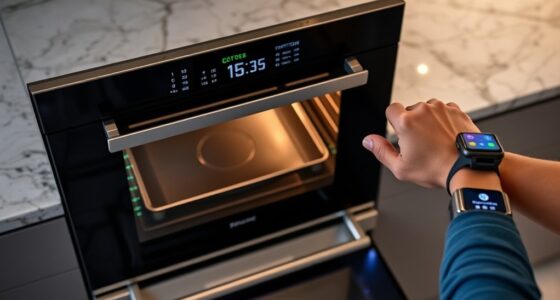

High-tech kitchen appliances tend to use more power because of their digital displays, Wi-Fi modules, and electronic features. However, if you manage them properly, they can actually boost your overall energy efficiency by optimizing usage, conserving water, and reducing waste. Using eco modes and scheduling operations during off-peak hours helps maximize benefits while minimizing extra power draw. To discover how to balance these devices effectively, keep exploring the smart ways to save energy.
Key Takeaways
- Smart appliances can reduce overall energy consumption when used with eco modes and scheduled operation.
- Digital features like Wi-Fi modules increase power demands and may offset some energy savings.
- Proper management of digital features, such as turning off unused functions, enhances efficiency.
- Real-time tracking and remote control help optimize usage during off-peak hours, saving energy.
- When used correctly, the energy savings from smart appliances often outweigh the additional power they consume.
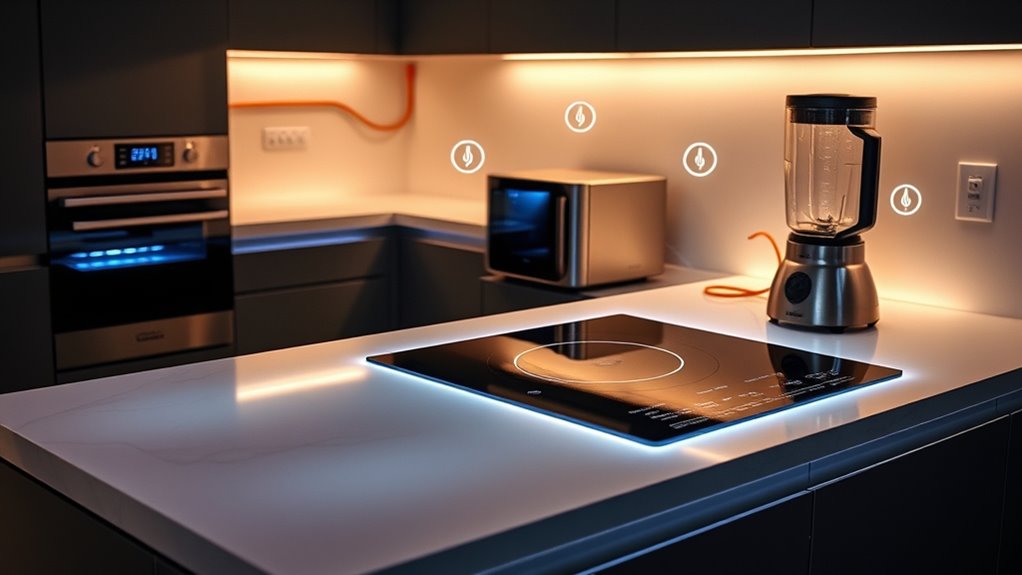
Modern kitchen technology is revolutionizing how you save energy while cooking. Gone are the days when high-tech gadgets were solely about convenience or flashy features. Now, many smart appliances are designed with energy efficiency in mind, aiming to reduce your overall energy consumption. These devices adapt to your habits, optimize power use, and can even alert you when something isn’t operating efficiently. By integrating smart appliances into your kitchen, you can actively lower your electricity bills and shrink your carbon footprint.
Many of these appliances come equipped with sensors and intelligent programming that monitor usage patterns and adjust their operation accordingly. For example, smart ovens can preheat only when needed and maintain precise temperatures, eliminating unnecessary energy waste. Refrigerators with advanced insulation and adaptive cooling systems detect when to run more or less, conserving power during off-peak hours. Dishwashers and washing machines with eco-friendly cycles use less water and energy, while still delivering excellent results. When you choose these smart appliances, you’re taking advantage of technology that prioritizes energy efficiency without sacrificing performance.
Smart appliances monitor usage and adjust operation, reducing waste and enhancing energy efficiency without sacrificing performance.
However, it’s important to recognize that these high-tech devices often require more power to operate than traditional appliances. They have digital displays, Wi-Fi modules, and other electronic features that draw additional energy. While these features enhance convenience and help you manage energy use more effectively, they can also contribute to increased overall power consumption if not used wisely. For instance, leaving smart appliances connected and active constantly may negate some of their energy-saving benefits. It’s up to you to use these appliances thoughtfully—setting them on eco modes, scheduling operations during off-peak hours, and turning off features when they’re not needed.
Additionally, understanding the energy consumption patterns of these devices can help you make better decisions about their use. The key question is whether the energy savings from smart appliances outweigh their extra power draw. In many cases, they do, especially when you leverage their capabilities to optimize operation. For example, energy-efficient settings, remote control features, and real-time consumption tracking allow you to make smarter choices about your energy use. This means you can identify which appliances are consuming the most power and adjust your habits accordingly. Over time, the cumulative savings often surpass the additional energy used by their digital features.
Frequently Asked Questions
Do Smart Kitchen Appliances Have a Longer Lifespan Than Traditional Ones?
Smart kitchen appliances generally have a shorter lifespan than traditional ones due to rapid tech upgrade cycles. You might find yourself replacing them sooner as manufacturers release new features and updates. While they offer advanced functions, their longevity depends on build quality and software support. If you prioritize durability, traditional appliances often last longer, but if you want the latest tech, you may accept more frequent upgrades.
How Does Energy Efficiency Vary Between Different Brands of High-Tech Kitchen Gadgets?
Like a modern-day alchemist, you’ll find energy efficiency varies widely among brands of high-tech kitchen gadgets. You should compare brand ratings and check energy ratings carefully, as some brands prioritize power over efficiency. Look for appliances with high energy star ratings, and read reviews to see if they deliver on efficiency promises. This way, you’ll get tech that saves energy and your wallet, rather than just more power.
Are There Hidden Energy Costs Associated With Maintaining High-Tech Kitchen Equipment?
Yes, there are hidden energy costs with maintaining high-tech kitchen equipment. You might notice increased energy consumption during routine upkeep, like replacing filters or calibrating sensors. Additionally, some gadgets require constant powering or standby modes that consume energy even when not in use. Keep an eye on your maintenance costs and energy bills to make sure you’re not overlooking hidden expenses that can add up over time.
Can High-Tech Kitchen Gear Reduce Overall Household Energy Consumption?
High-tech kitchen gear can be like a double-edged sword, but if you choose wisely, it can reduce your household energy consumption. These appliances often come with energy-saving features, helping you cut costs and save power. Plus, their advanced design promotes appliance longevity, meaning fewer replacements and less waste. When used correctly, high-tech gear isn’t just more power-hungry—it’s a smart way to boost efficiency and lower overall energy bills.
What Are the Environmental Impacts of Manufacturing High-Tech Kitchen Appliances?
You should consider that manufacturing high-tech kitchen appliances impacts the environment by increasing their environmental footprint and contributing to resource depletion. These devices often require rare materials and energy-intensive processes, which can lead to higher emissions and waste. While they may save energy during use, their production phase can offset these benefits. Being aware of this helps you make more sustainable choices and reduces your overall environmental impact.
Conclusion
Imagine upgrading to a smart oven that syncs with your phone, only to find your energy bills skyrocket. While high-tech kitchen gear promises efficiency, sometimes it just drains more power. For instance, a family switched to a state-of-the-art fridge, expecting savings, but ended up with higher energy costs. Before investing, weigh the benefits against the power demands. Sometimes, simpler appliances might serve you better, saving both energy and money in the long run.