Using the sauté function on multi-cookers lets you brown, sear, and build flavors directly in one appliance, saving time and cleanup. It’s perfect for developing depth in stews, sauces, and vegetables without transferring ingredients. Use a skillet or stovetop when you need very high heat, precise control, or a crispy sear, especially for dishes like steaks. Keep exploring to discover more tips on choosing the best method for your cooking needs.
Key Takeaways
- Use the sauté function for browning, searing, and flavor building directly in the multi-cooker, saving time and cleanup.
- Adjust temperature settings and stir frequently to prevent sticking and achieve optimal searing results.
- Choose a skillet or stovetop when precise heat control, high-temperature searing, or quick stirring are essential.
- For dishes needing quick adjustments or a crispy crust, a skillet provides better control than the multi-cooker’s sauté mode.
- Match the cooking method to your dish’s texture, flavor, and timing needs, selecting sauté for convenience or skillet for precision.

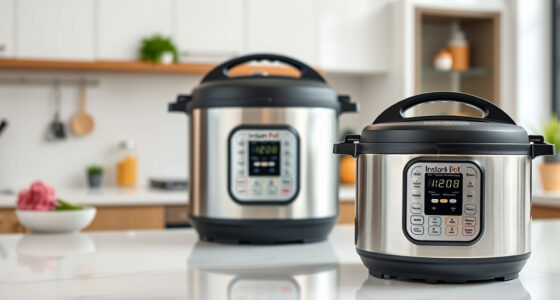
The sauté function on multi-cookers is a versatile feature that allows you to brown, sear, and develop flavors directly in the appliance before switching to other cooking modes. This function is especially handy when you want to build depth in your dishes without dirtying multiple pots or pans. When using the sauté setting, you can mimic stovetop alternatives by controlling the temperature precisely, which helps you achieve perfect browning and caramelization. You’ll want to start by selecting the sauté function and letting the appliance heat up. Once hot, add a small amount of oil or fat, and then introduce your ingredients, such as onions, garlic, or spices, to develop rich flavors.
The sauté function lets you brown, sear, and build flavors directly in your multi-cooker.
A key advantage of the sauté feature is the ability to incorporate seasoning techniques seamlessly. As you cook, you can add herbs, spices, or salt directly to the ingredients in the multi-cooker, allowing flavors to meld right from the start. This integrated approach not only saves time but also enhances the overall taste of your dish. Remember to stir frequently to prevent sticking or burning, especially if you’re working with delicate ingredients or high heat. Adjust the temperature settings as needed to maintain ideal searing without scorching. Additionally, understanding the cooking modes and their functions helps you choose the right setting for your dish.
However, there are times when a skillet or traditional stovetop might be a better choice. If your recipe calls for precise control over heat or requires a more intense sear, a stovetop alternative like a cast-iron skillet provides superior heat retention and responsiveness. For example, when searing steaks or achieving a crispy crust, a skillet’s high heat capacity and direct contact with the flame or burner give you more control. Additionally, if you’re making a recipe that demands frequent stirring or flipping, a skillet offers easier handling and maneuverability compared to a multi-cooker.
While the sauté function is convenient, it’s not always ideal for every cooking scenario. For dishes that need a quick, high-temperature sear or when you want to avoid the risk of burning ingredients, switching to a stovetop skillet is smarter. It’s also useful when you want to apply specific seasoning techniques that require quick adjustments or direct application, such as adding finishing salts or pepper at the end of cooking. Ultimately, knowing when to rely on your multi-cooker’s sauté feature versus a dedicated skillet helps you make better decisions for flavor, texture, and timing, ensuring your dishes come out just right every time.
As an affiliate, we earn on qualifying purchases.
Frequently Asked Questions
Can I Sauté Frozen Ingredients in a Multi-Cooker?
You can sauté frozen ingredients in a multi-cooker, but it’s not always ideal. Frozen ingredients tend to release moisture, which can hinder browning and even cause steaming instead of sautéing. Use sautéing techniques like stirring frequently and adding a bit of oil to help with browning. For best results, thaw ingredients first, especially for delicate items, to guarantee even cooking and better flavor development.
How Do I Prevent Sticking When Using the Sauté Function?
To prevent sticking when using the sauté function, start by preheating your multi-cooker with a thin layer of oil, enough to coat the bottom evenly. Make sure to use a non-stick coating if available, and avoid overcrowding ingredients, which can cause sticking. Stir frequently, and monitor heat levels to prevent burning. This way, your ingredients stay loose, and cleanup becomes quick and easy.
Is It Safe to Use Metal Utensils With the Sauté Function?
You can use metal utensils with the sauté function, but it depends on your multi-cooker’s utensil compatibility. Check your device’s manual for metal utensil safety guidelines, as some cookers have non-stick or sensitive surfaces that may scratch. If your multi-cooker is compatible with metal utensils, use them carefully to avoid damaging the surface. When in doubt, opt for silicone or wooden tools to protect your appliance.
Can I Sauté With Liquids in the Multi-Cooker?
Yes, you can sauté with liquids in your multi-cooker, but you should do so carefully to guarantee safety. Use the sauté function to develop flavors, but avoid overfilling the appliance, which can cause spills or safety hazards. Keep an eye on the liquids to prevent boiling over. This technique is great for cooking techniques that require browning and simmering, but always follow your multi-cooker’s safety guidelines to prevent accidents.
How Do I Adjust Temperature Settings for Different Sautéing Needs?
Think of adjusting temperature settings like tuning a guitar—small tweaks make a big difference. To customize heat on your multi-cooker, simply turn the sauté control to low, medium, or high, depending on your needs. For delicate tasks like caramelizing onions, start with low or medium. For searing meats, crank it up to high. Adjust temperature settings gradually for perfect control and desired results every time.
best cast iron skillet for searing
As an affiliate, we earn on qualifying purchases.
As an affiliate, we earn on qualifying purchases.
Conclusion
Now that you know when to use the sauté function on your multi-cooker versus a skillet, you’ll cook smarter and more efficiently. Remember, the sauté setting is great for browning and flavor-building, but sometimes a skillet offers better control or higher heat. Don’t you want to make sure you’re always choosing the best tool for the job? With these tips, you’ll elevate your cooking and enjoy perfectly prepared dishes every time.
non-stick frying pan for high heat
As an affiliate, we earn on qualifying purchases.
As an affiliate, we earn on qualifying purchases.
electric multi-cooker with adjustable temperature
As an affiliate, we earn on qualifying purchases.
As an affiliate, we earn on qualifying purchases.