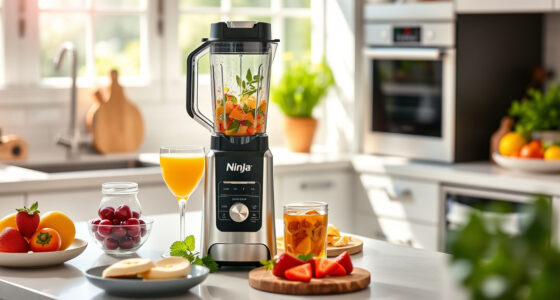
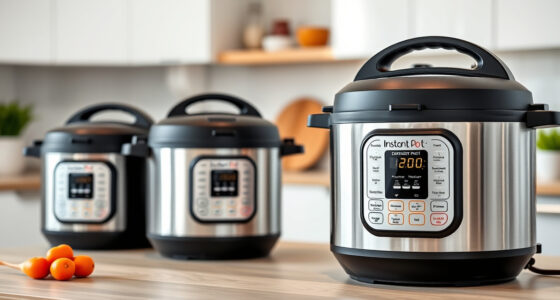
When choosing between splurging on smart kitchen gadgets or sticking with manual tools, consider your cooking style and budget. Smart devices offer convenience and time-saving features, ideal for complex recipes or tech enthusiasts. Manual tools are cheaper, durable, and fit straightforward routines. If you value automation and modern tech, a splurge might be worth it. Otherwise, reliable manual tools can do the job well. Keep exploring to discover which option suits your needs best.
Key Takeaways
- Smart kitchen gadgets offer convenience and time-saving features but come at a higher cost compared to manual tools.
- Manual tools are budget-friendly, durable, and reliable for everyday cooking without needing electricity or Wi-Fi.
- Consider your cooking habits: complex recipes may benefit from smart devices, while quick meals suit manual tools.
- Evaluate whether the automation features align with your lifestyle and justify the splurge or saving.
- Both options have benefits; choosing depends on your budget, need for convenience, and appreciation for traditional craftsmanship.
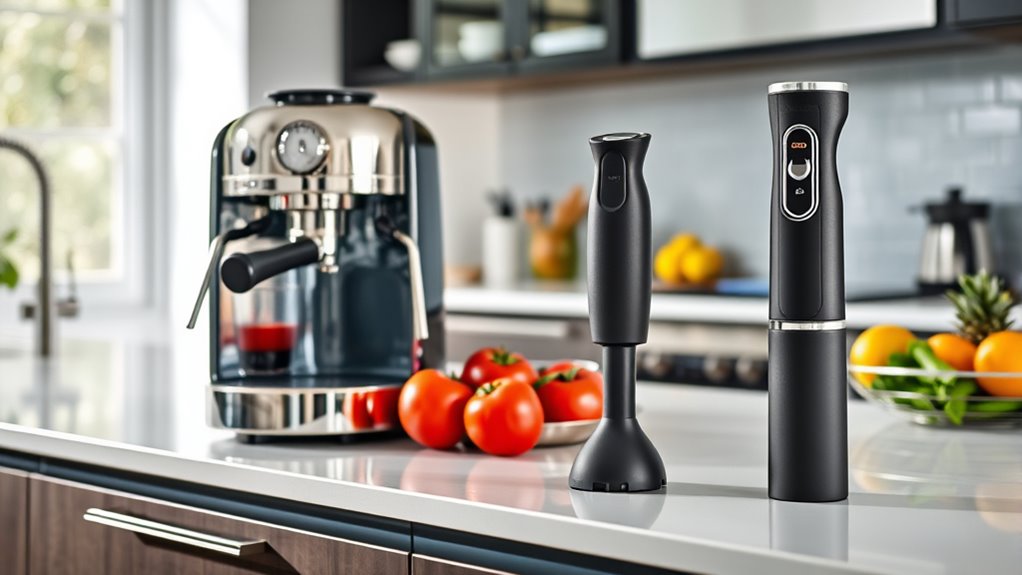
When it comes to outfitting your kitchen, deciding whether to splurge on high-end gadgets or save with more affordable options can be tricky. You might feel tempted to invest in the latest smart appliance that promises to streamline your cooking process or stick with tried-and-true manual tools that have served you well over the years. The key is understanding which investments are worth the extra cost and which ones won’t really improve your kitchen experience. Smart appliances, like connected refrigerators, sous vide machines, or app-controlled coffee makers, offer convenience and modern functionality. They can help you manage groceries, set precise cooking temperatures, or even control your devices remotely. If you’re someone who loves tech and enjoys experimenting with new gadgets, splurging on these smart appliances could elevate your cooking routine and make meal prep more efficient. However, if you’re on a tighter budget or prefer simplicity, manual tools—like good-quality knives, wooden spoons, or hand-held graters—still deliver excellent results and are often more durable and easier to repair.
The decision comes down to your lifestyle and how much value you place on convenience versus practicality. Smart appliances often come with features that save time, reduce effort, and sometimes even add a bit of fun to cooking. For example, a smart oven that you can preheat from your phone or a Wi-Fi-enabled slow cooker can free up your hands and reduce the clutter of multiple gadgets. But these devices are typically more expensive, and some might find them unnecessary if they enjoy the tactile experience of manual tools. Manual tools have the advantage of simplicity—they rarely break down, require less maintenance, and don’t rely on electricity or Wi-Fi. Plus, they tend to cost considerably less, making them a sensible choice for everyday use. Free floating can also be integrated into smart kitchens to enhance the overall experience, such as automated lighting or climate control that adapts to your cooking needs.
If you’re considering whether to splurge on a smart appliance, ask yourself if the features align with your cooking habits. Do you often cook complex recipes that could benefit from precise temperature control? Or do you prefer quick, straightforward meals that don’t need high-tech assistance? For many home chefs, manual tools are reliable, durable, and simply get the job done without fuss. But if you’re excited by new technology and want to experiment with automation, investing in a smart appliance might be worth it. Ultimately, the decision hinges on your personal preferences, budget, and how much you value convenience versus traditional craftsmanship. Both options have their benefits—knowing what you need will help you make smarter, more satisfying choices in your kitchen.

Electric Salt and Pepper Grinder Set Automatic Battery Pepper Mill Shakers Adjustable Coarseness Upgraded Larger Capacity with Led Home and Kitchen Appliances Birthday Gifts for Women Men
- Adjustable seasoning levels: 5 levels for precise flavor control
- One-hand operation: Press to grind, release to stop
- Powered by 4 AAA batteries: Battery-operated for effortless use
As an affiliate, we earn on qualifying purchases.
As an affiliate, we earn on qualifying purchases.
Frequently Asked Questions
How Do I Determine if a Kitchen Gadget Is a Worthwhile Investment?
To determine if a kitchen gadget is worth the money, check its brand reputation and read user reviews. If the brand is reliable and reviews praise its durability, efficiency, and ease of use, it’s likely a good investment. Consider your cooking needs too; if the gadget saves time or improves results, it’s probably worth splurging. Trust insights from others to make a confident, informed decision.
What Are the Long-Term Cost Benefits of High-End Kitchen Tech?
Investing in high-end kitchen tech offers long-term cost benefits through energy efficiency, reducing your utility bills over time. Quality brands with strong reputations tend to produce durable, reliable gadgets that last longer, saving you money on replacements. Plus, advanced features can make cooking more efficient and enjoyable, potentially lowering food waste. Overall, these investments pay off by cutting costs and enhancing your kitchen experience in the long run.
Are There Affordable Alternatives to Expensive Kitchen Gadgets?
Sure, you don’t need to sell a kidney for that fancy blender. Instead, explore budget-friendly options or DIY hacks to upgrade your kitchen without breaking the bank. From repurposing everyday items to clever homemade solutions, you’ll be surprised how much you can achieve. Save your cash for that extra guac at dinner, and enjoy a functional kitchen that’s both affordable and fun. Who says you need to splurge to be a chef?
How Often Should I Upgrade My Kitchen Appliances for Maximum Value?
You should consider upgrading your kitchen appliances every 5 to 10 years, depending on their maintenance and performance. Regular appliance maintenance can extend their lifespan, but tech upgrade cycles often bring better efficiency and features. Keep an eye on signs of wear, energy costs, and new innovations, and plan upgrades accordingly to maximize value without unnecessary spending. Staying informed helps you balance savings and tech improvements effectively.
What Features Should I Prioritize When Splurging on Kitchen Gadgets?
When splurging on kitchen gadgets, prioritize features like durability, ease of use, and versatility. Check brand reputation to guarantee quality and reliability, and read user reviews to see real-world performance. Look for advanced functions that save time, such as smart controls or multi-purpose tools. Investing in well-reviewed, reputable brands ensures you get value for your money and gadgets that last, making your kitchen more efficient and enjoyable.
As an affiliate, we earn on qualifying purchases.
Conclusion
Ultimately, whether you splurge or save on kitchen gadgets depends on your needs and priorities. Think of it like choosing between a vintage Swiss Army knife and a high-tech smart blender—you’ll get value either way. Just remember, a good deal today can be like finding a hidden gem in your grandmother’s attic, proving that sometimes, the old ways really are the best. Trust your instincts, and your kitchen will thank you.
As an affiliate, we earn on qualifying purchases.
As an affiliate, we earn on qualifying purchases.