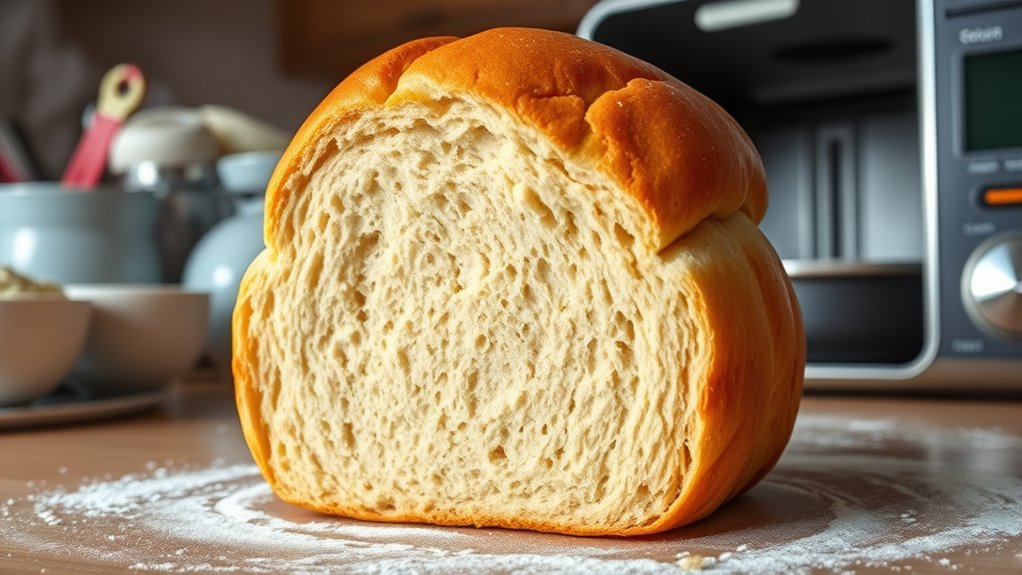

If your bread loaf collapses, it’s likely due to overproofing, underproofing, or improper mixing. Too much proofing weakens the gluten, causing collapse, while not enough proofing leaves the dough dense. Make sure you’re using fresh ingredients, measuring accurately, and controlling proofing time and temperature. Temperature and humidity also impact rise. If you keep experiencing issues, understanding proper techniques can help you bake stronger, more stable loaves—keep exploring to learn more.
Key Takeaways
- Overproofing the dough can weaken gluten, causing the loaf to collapse during baking.
- Insufficient kneading or improper mixing prevents proper gluten development, leading to weak structure.
- Excess liquid or stale ingredients can compromise dough support and cause collapse.
- Incorrect yeast activation or expired yeast results in inadequate gas production for proper rise.
- Fluctuating room temperature and oven miscalibration affect proofing and baking, risking loaf collapse.
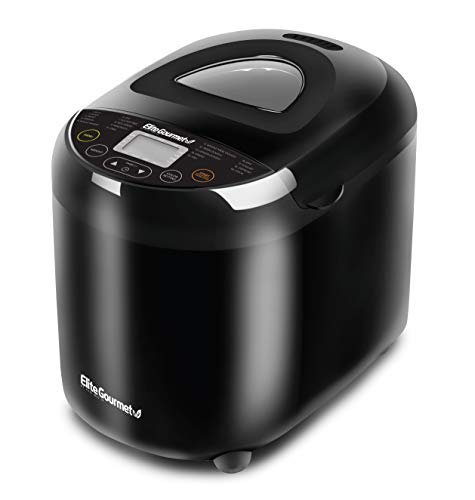
Elite Gourmet Programmable Bread Maker, 2 lb Loaf, 3 Sizes, 19 Presets incl. Gluten-Free, Dough & Jam, Delay Timer, Black
FOOLPROOF FRESH BREAD AT HOME: Automatic kneading, rising, and baking delivers bakery-quality bread with just one touch —…
As an affiliate, we earn on qualifying purchases.
As an affiliate, we earn on qualifying purchases.
Common Causes of Bread Loaf Collapse
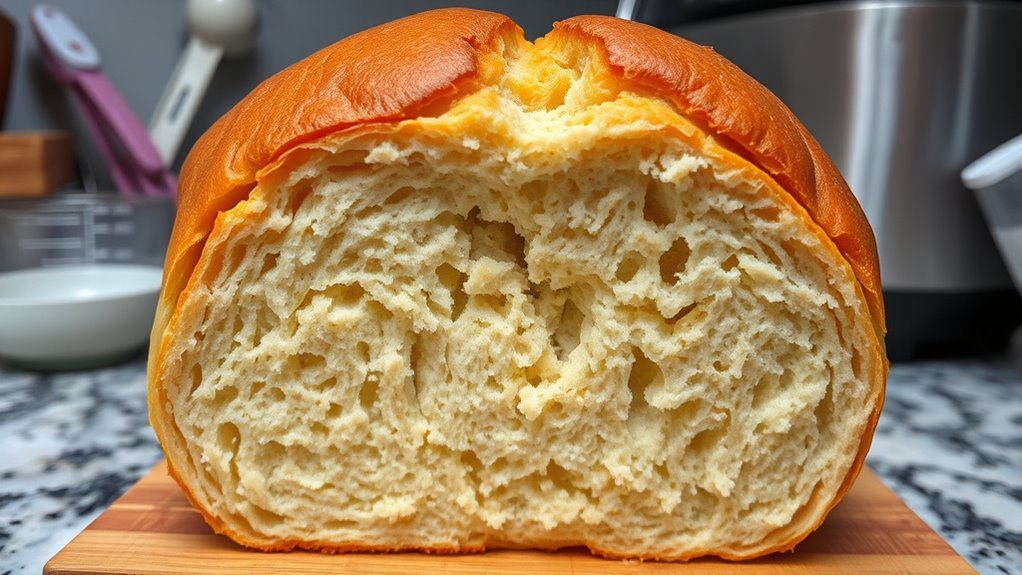
One common reason bread loaves collapse is that the dough has too much liquid or not enough structure to support the rise. Proper yeast activation is essential here; if the yeast isn’t activated correctly, it won’t produce enough gas to give the loaf its shape. Ensuring your ingredients are fresh is equally important—stale flour or old yeast can compromise gluten development and gas retention. When ingredients aren’t fresh, the dough may not develop the necessary strength, leading to a weak structure that collapses during baking. Always check the expiration dates on yeast and flour, and activate your yeast in warm water before mixing. This process guarantees the yeast is alive and ready to help create a sturdy, well-supported rise.

2LB Bread Maker Machine, OSIPOTO 17 in 1 Automatic Stainless Steel Bread Machine, Non-stick, Beginner-Friendly Controls, 15 Hour Timer, Easy to Clean Low Noise, High Success Rate for Homemade Bread
PERFECT FOR BEGINNER: Whether you're just starting your baking journey or looking for an easy way to enjoy…
As an affiliate, we earn on qualifying purchases.
As an affiliate, we earn on qualifying purchases.
Overproofing and Underproofing Solutions

Overproofing and underproofing are common issues that can cause your bread to turn out less than perfect. When dough is overproofed, the yeast has activated too long, leading to excessive gas production and weak gluten development. This results in a loaf that collapses or has a dense texture. Conversely, underproofed dough hasn’t had enough time for yeast activation and gluten development, producing a dense, heavy loaf. To avoid these problems, monitor the proofing time carefully, especially in your bread maker’s environment. If the dough rises too much or not enough, adjust the proofing duration or temperature. Proper proofing ensures ideal yeast activation and gluten development, giving your loaf the structure and rise it needs to turn out light and fluffy.

TempPro TP49 Digital Hygrometer Indoor Thermometer Humidity Meter Room Thermometer with Temperature and Humidity Monitor Mini Hygrometer Outdoor Thermometer (Previously ThermoPro)
Face Icon Comfort Indicator: Humidity temperature gauge features face icons to indicate DRY/COMFORT/WET air conditions, quickly informs you…
As an affiliate, we earn on qualifying purchases.
As an affiliate, we earn on qualifying purchases.
Correcting Improper Dough Mixing and Kneading
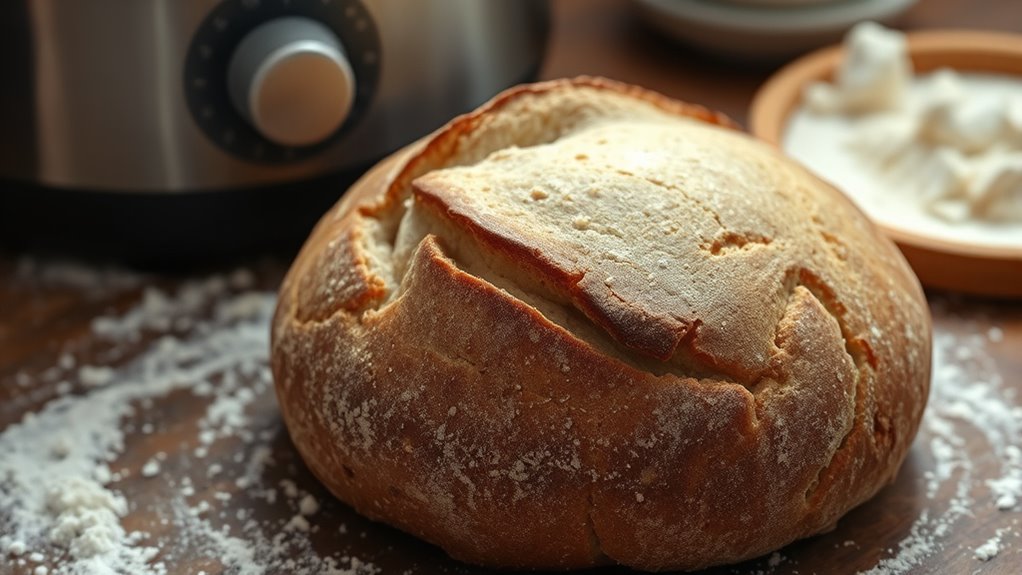
If your bread isn’t turning out as expected, improper dough mixing and kneading could be the culprit. Poorly mixed starter consistency or stale ingredients can lead to uneven gluten development, causing a dense or collapsed loaf. To fix this, verify you’re using fresh ingredients and that the starter is active and well-mixed before adding it. Proper kneading helps develop gluten structure, which is essential for a good rise. Additionally, understanding the importance of gluten development can help you optimize your dough consistency and improve your bread’s final texture. Consider these tips:
- Check the freshness of your ingredients regularly
- Ensure the starter is bubbly and active before mixing
- Mix ingredients thoroughly to achieve even distribution
- Avoid overmixing or undermixing the dough
- Use the correct kneading cycle on your bread machine
- Paying attention to dough hydration levels can also significantly impact the bread’s texture and rise. Proper hydration influences gluten formation, leading to better dough elasticity and loaf volume.
These steps help improve dough consistency and kneading, preventing loaf collapse.

Zulay Kitchen 13-Inch Danish Dough Whisk – Stainless Steel Wooden Whisk with Dough Hook – Sourdough Whisk for Bread, Pizza, Pastry, Cake Batter & More – Wood
QUICK & EFFICIENT WHISKING: Mix dough and batter effortlessly with this Danish dough whisk, designed to cut through…
As an affiliate, we earn on qualifying purchases.
As an affiliate, we earn on qualifying purchases.
Temperature and Environment Factors Affecting Baking
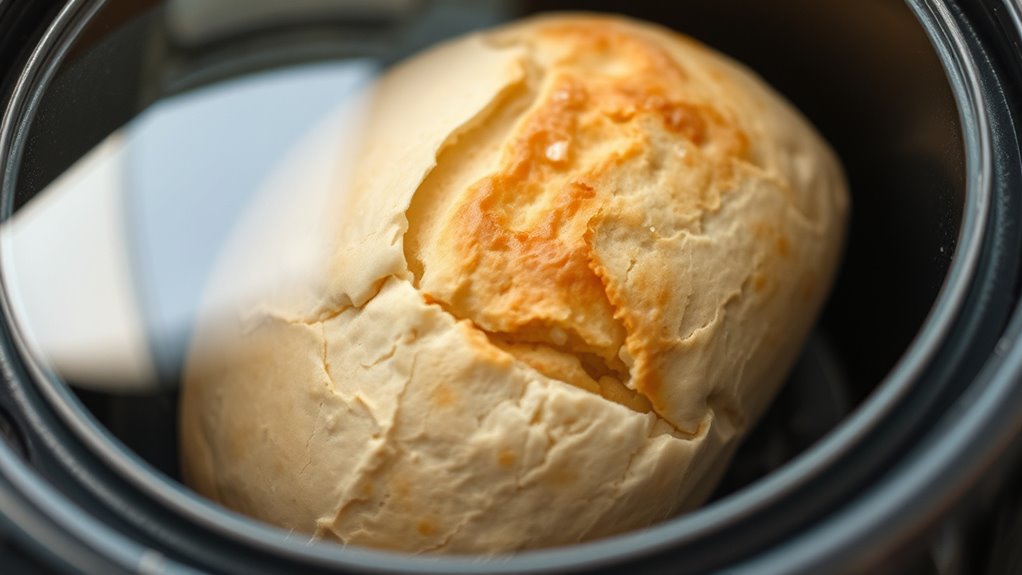
Temperature and environmental conditions play a crucial role in ensuring your bread bakes properly. Fluctuations in room temperature can impact how your dough rises, leading to potential collapse if the environment is too warm or too cold. Proper humidity control helps maintain the ideal moisture level, preventing the crust from becoming too tough or too soft. Additionally, oven calibration is essential; an oven that runs hot or cold can cause uneven baking or overproofing, which weakens the bread’s structure. Before baking, double-check your oven’s temperature accuracy and adjust if necessary. Keep the baking area free from drafts or sudden temperature changes. Using environmental sensors can help you monitor and maintain consistent conditions in your baking space. By managing these environmental factors, you increase the likelihood of a perfectly baked loaf with a stable, well-risen crumb. Implementing load‑planning tools can help you better understand how environmental factors influence your baking environment, leading to more consistent results.
Tips for Proper Ingredient Measurements and Handling
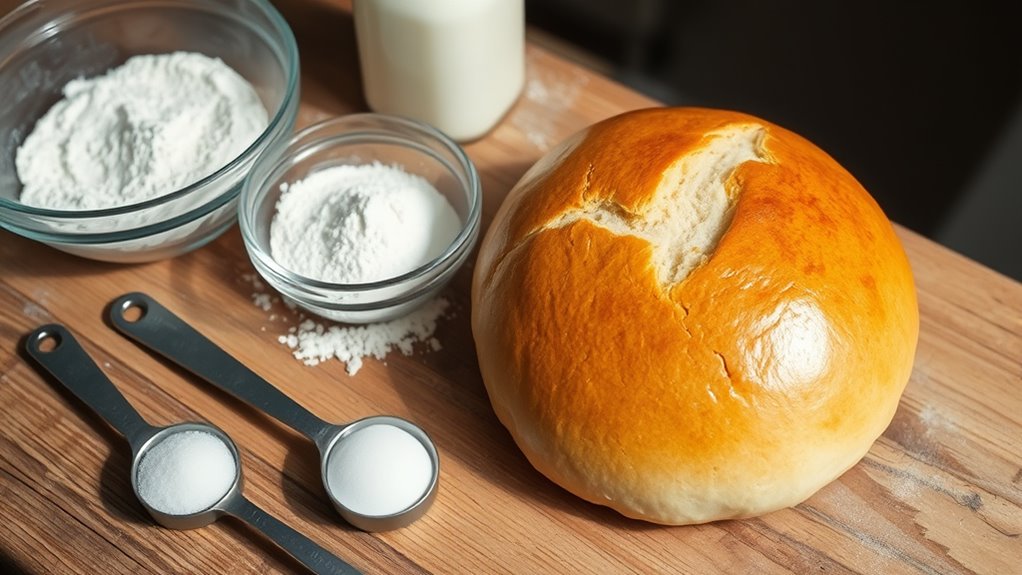
Accurate ingredient measurements are essential for consistent bread results, so always use the right tools and techniques. Achieving ingredient precision guarantees your bread turns out correctly and avoids issues like collapse. Use a digital scale for dry ingredients and proper measuring cups for liquids. Be cautious with ingredient substitutions, as they can affect the dough’s consistency—replace only when necessary and adjust quantities accordingly. Keep ingredients at room temperature when possible to ensure even mixing. Store ingredients properly to prevent moisture or contamination, which can throw off measurements. Here are some tips to improve your measurements:
Accurate measurements and proper tools ensure perfect bread every time.
- Use a digital scale for precise dry ingredient weighing
- Level off flour with a knife for accuracy
- Measure liquids at eye level for consistency
- Avoid measuring by scooping directly from containers
- Double-check ingredient substitutions for proper ratios
- Proper measurement techniques help ensure your bread rises evenly and maintains the correct texture.
Frequently Asked Questions
Can Changing Bread Recipes Prevent Loaf Collapse?
Yes, changing bread recipes can prevent loaf collapse. You should focus on achieving the right bread texture by using proper ingredient ratios and avoid excessive ingredient substitutions that can weaken the dough’s structure. For example, too much sugar or fat can cause issues, so stick to the recommended amounts. Adjusting recipes carefully helps guarantee your bread rises properly and stays firm, reducing the chances of collapse.
How Does Altitude Impact Bread Rising and Collapsing?
Altitude can turn your bread into a rollercoaster ride, causing issues with rising and collapsing. You need to make altitude adjustments by reducing yeast and adjusting liquids, as yeast behavior changes with elevation. Higher altitudes mean less air pressure, so your dough rises faster and then collapses. By tweaking your recipe, you help your bread stay steady on its rise, preventing it from caving in like a house of cards.
Are There Specific Bread Types More Prone to Collapsing?
You’ll find that bread with high moisture or delicate gluten development, like brioche or enriched doughs, are more prone to collapsing. Poor kneading techniques can affect gluten structure, making the bread less stable. To prevent this, make certain of proper gluten development through thorough kneading and avoid over-proofing. Adjusting these factors helps create a stronger gluten network, providing better support and reducing the risk of your loaf collapsing during baking.
What Role Does Yeast Freshness Play in Loaf Stability?
Think of your yeast as the heart of your bread’s essentiality. Fresh yeast, with its high quality, acts like a reliable engine, ensuring dough elasticity and proper rising. If your yeast isn’t fresh, it’s like trying to run a race with a tired runner—your loaf collapses. Always check yeast quality before mixing, and you’ll enjoy a stable, well-structured loaf that rises beautifully every time.
How Often Should I Calibrate My Bread Maker?
You should calibrate your bread maker about once a year to guarantee optimal performance. Regular bread machine maintenance helps keep it running smoothly, and calibration techniques can fine-tune the settings for perfect loaves. Check the manufacturer’s instructions for specific guidance, but generally, performing calibration periodically helps prevent issues like uneven baking or loaf collapse. Keep up with routine maintenance, and your bread maker will produce consistently delicious results.
Conclusion
While a fallen loaf might seem like a small setback, it’s often a gentle reminder to fine-tune your bread-making process. By paying close attention to proofing times, ingredient accuracy, and your baking environment, you can turn that little stumble into a perfect rise next time. Remember, every loaf teaches you something new—embrace the journey, and soon you’ll be enjoying beautifully risen, bakery-quality bread that feels just right.