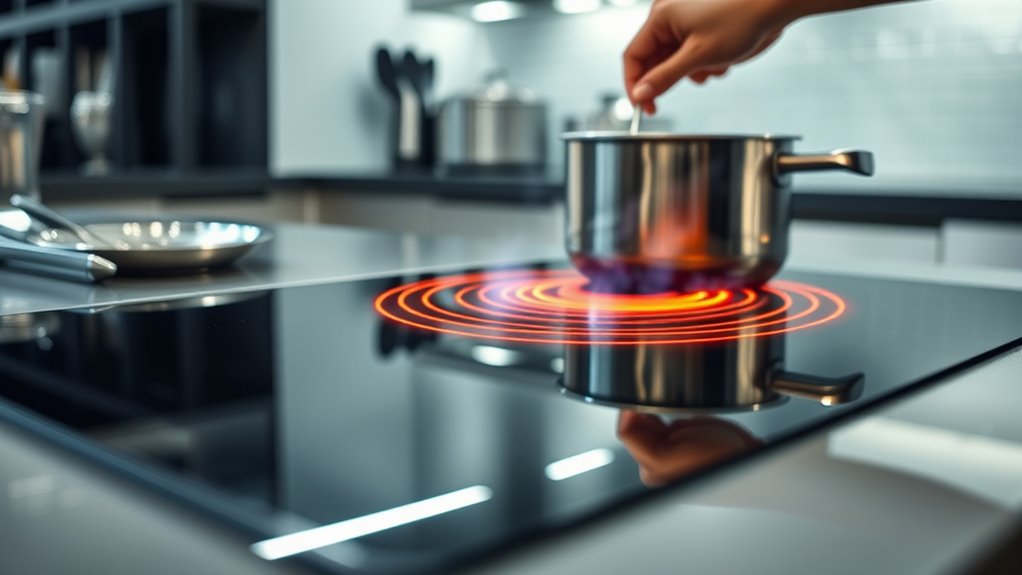

Induction cooktops heat cookware directly using electromagnetic fields, which makes cooking faster and more efficient. Instead of open flames or coils, they generate heat in the pot itself, reducing energy waste and heating up quickly. The surface stays cooler, making it safer and easier to clean. With precise controls and safety features, induction cooktops offer a smarter way to cook. Keep going to explore how this innovative technology can transform your kitchen experience.
Key Takeaways
- Induction cooktops generate heat directly in cookware using electromagnetic fields, enabling faster cooking times.
- They transfer heat efficiently with minimal energy waste, reducing overall power consumption.
- The surface remains cool to the touch, enhancing safety and preventing burns during cooking.
- Instant heat adjustment via touch controls allows precise temperature regulation and better control.
- Built-in safety features like auto shut-off and cookware detection make induction cooktops safer and more convenient.
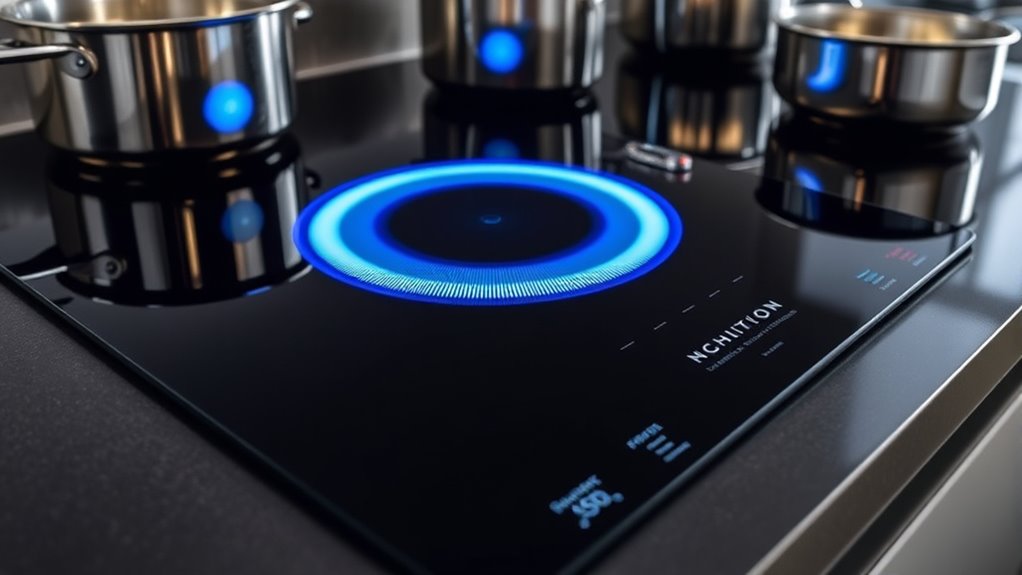
Induction cooktops have revolutionized the way you prepare meals by offering faster heating and greater energy efficiency than traditional stoves. Instead of using open flames or electric coils, induction cooktops generate heat directly in your cookware through electromagnetic fields. This method not only speeds up cooking times but also considerably reduces energy waste, making your kitchen more environmentally friendly and cost-effective. With induction technology, you can go from stovetop to table in a fraction of the time, giving you more control and flexibility during meal prep.
Induction cooktops heat cookware directly, offering faster cooking and improved energy efficiency.
One of the biggest advantages of induction cooktops is their impressive energy efficiency. Because they transfer heat directly into the cookware, less energy is lost to the surrounding environment. Traditional electric or gas stoves heat the air and surfaces around the cookware, which wastes energy and takes longer to reach the desired temperature. In contrast, induction cooktops heat only the pan, allowing you to cook faster and with less power. This efficiency translates into lower utility bills and a smaller carbon footprint, which benefits both your wallet and the planet.
Safety features are another key benefit that makes induction cooktops appealing. Since the cooktop surface itself doesn’t get hot, your risk of burns is greatly reduced. When you remove your cookware, the surface cools quickly, preventing accidental injuries. Many models also include automatic shut-off features that turn the heat off if no cookware is detected or if the temperature gets dangerously high. These safety measures give you peace of mind, especially if you have kids or pets around the kitchen. Additionally, induction cooktops tend to be more precise, allowing you to adjust heat levels instantly. This precision minimizes the risk of food burning or boiling over, further enhancing safety and control during cooking.
Another safety feature worth noting is the responsive touch controls, which eliminate the need for knobs or open flames. You can quickly turn the heat up or down with a tap, avoiding accidental spills or burns caused by mishandling hot surfaces. The sleek, flat surface also makes cleaning easier, reducing clutter and keeping your cooking area safer from mess-related hazards. Moreover, many induction cooktops come with built-in timers, so you can set cooking times and avoid overcooking or forgetting about your food altogether. Additionally, the precision and automation of induction technology ensure consistent results, helping even novice cooks achieve professional-quality dishes with ease.

Walfos Silicone Trivet Mats - 4 Heat Resistant Pot Holders, Multipurpose Non-Slip Hot Pads for Kitchen Potholders, Hot Dishers, Jar Opener, Spoon Holder, Food Grade Silicone & BPA Free (Black)
- Heat Resistant Range: -104℉ to 446℉
- Non-Slip Design: Prevents slipping and sliding
- Food Grade Silicone: BPA free and durable
As an affiliate, we earn on qualifying purchases.
Frequently Asked Questions
Can Induction Cooktops Be Used With Any Type of Cookware?
You can’t use any type of cookware on induction cooktops. They require compatible cookware with magnetic requirements, meaning your pots and pans must have a ferrous bottom. To check compatibility, see if a magnet sticks to your cookware; if it does, it’s suitable for induction. Avoid non-magnetic materials like glass, aluminum, or copper unless they have a magnetic layer. Using incompatible cookware won’t heat properly or may damage the cooktop.
Are Induction Cooktops Safe for Use Around Children?
Are induction cooktops safe for use around children? Absolutely, if you take proper precautions. They’re designed with child safety in mind, featuring smooth surfaces that cool quickly and sensors that turn off if no cookware is detected. While electromagnetic exposure is a concern, modern models emit minimal fields, making them safe when used properly. Keep children away from hot surfaces and unplug when not in use to guarantee a safe cooking environment.
How Energy-Efficient Are Induction Cooktops Compared to Gas?
You’ll find that induction cooktops are more energy-efficient than gas, thanks to their precise heat control and minimal energy waste. Their lower energy consumption reduces your environmental impact, making them a greener choice. Unlike gas, which loses heat, induction directly heats cookware, saving power. Plus, faster cooking means less energy used overall. So, switching to induction benefits your wallet and the planet, while delivering quick, efficient cooking.
Do Induction Cooktops Emit Any Electromagnetic Radiation?
Think of induction cooktops as sleek wizardry on your kitchen counter—they do emit electromagnetic fields, which is a form of electromagnetic radiation. However, these fields are contained within the cooktop and are generally safe, thanks to radiation safety standards. You won’t be exposed to harmful radiation, so you can enjoy faster cooking without worries. Just guarantee proper use and maintenance, and these cooktops remain a safe, high-tech marvel.
What Maintenance Is Required for Optimal Induction Cooktop Performance?
To keep your induction cooktop performing ideally, establish regular cleaning routines using a soft cloth and gentle cleaner to prevent residue buildup. Additionally, periodically inspect the coils or surface for cracks or damage and guarantee proper contact with cookware. Avoid abrasive cleaners and harsh scrubbing. These simple maintenance steps help maintain efficiency, safety, and extend the lifespan of your cooktop, making sure it continues to cook faster and more effectively.
Conclusion
So, next time you marvel at how quickly your induction cooktop heats up, just remember—it’s all about magic… or, well, electromagnetic fields doing their thing. Who would’ve thought that faster cooking would come down to science, not some secret sauce? Irony’s sweet—your kitchen tech’s so advanced, you barely do anything, yet you get dinner on the table in record time. Guess that’s progress, right? Happy cooking—faster than ever!