Smart dishwashers and other connected appliances go beyond just cooking—they use sensors, automation, and Wi-Fi to improve performance and convenience. You can control them remotely, monitor cycles, and customize settings through smartphone apps or voice commands. These appliances also focus on energy efficiency and eco-friendly features while integrating easily with your smart home system. If you want to understand how these innovative gadgets work and their benefits, there’s plenty more to explore.
Key Takeaways
- Smart dishwashers use sensors and adaptive algorithms to optimize cleaning cycles, water, and energy use based on load and soil level.
- Connectivity features allow remote control, status updates, and troubleshooting via smartphone apps or voice assistants like Alexa or Google Assistant.
- Other smart kitchen appliances, such as ovens and refrigerators, integrate automation and customizable settings for enhanced convenience and efficiency.
- Eco-friendly modes, energy monitoring, and certifications like ENERGY STAR help reduce utility bills and environmental impact.
- Future trends include AI-driven personalization, seamless smart home integration, and further innovations in sustainability and automation.
smart dishwasher with Wi-Fi control
As an affiliate, we earn on qualifying purchases.
As an affiliate, we earn on qualifying purchases.
How Smart Dishwashers Work and Their Key Features
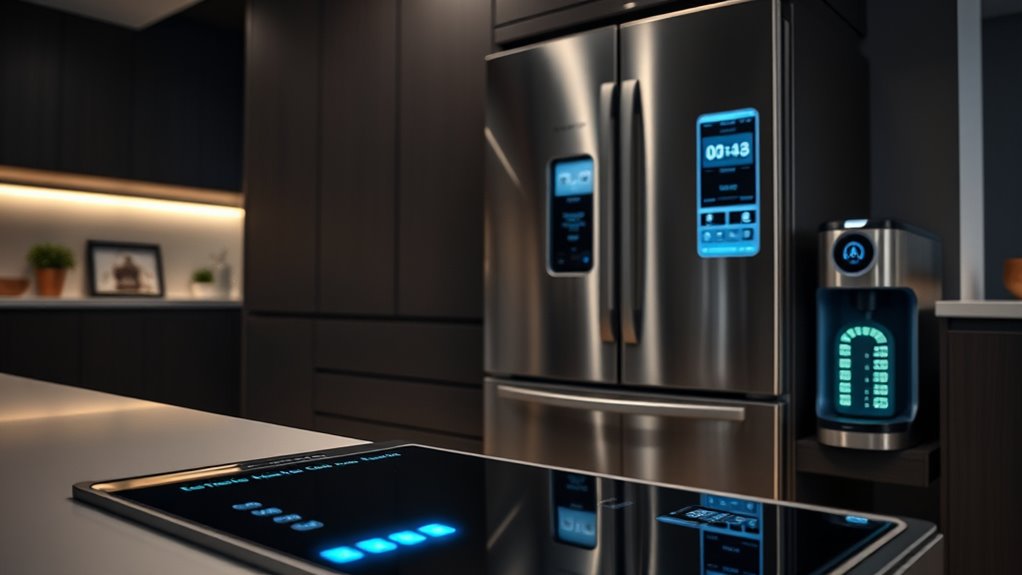
Ever wondered how smart dishwashers differ from traditional models? These innovative appliances use advanced sensors and Wi-Fi connectivity to optimize dishwasher cycles based on load size and soil level. They can automatically adjust water temperature, cycle duration, and intensity to ensure thorough cleaning while conserving resources. One key feature is enhanced water filtration, which keeps water cleaner throughout multiple cycles, leading to better hygiene and longer-lasting components. Smart technology enables these appliances to adapt their functions for optimized performance and resource savings. Additionally, they often incorporate energy management features that help reduce overall utility consumption while maintaining high cleaning standards. These systems utilize adaptive algorithms to further improve efficiency based on usage patterns and water quality. Moreover, many smart dishwashers incorporate remote monitoring capabilities, allowing users to receive notifications and troubleshoot issues remotely. They can also utilize sensor data to fine-tune cleaning parameters and improve results. Smart dishwashers often allow you to start, pause, or monitor cycles remotely via a smartphone app, giving you control and flexibility. They also can analyze water quality and modify their operation accordingly. This combination of intelligent features makes smart dishwashers more efficient, effective, and user-friendly than conventional models.
energy-efficient smart kitchen appliances
As an affiliate, we earn on qualifying purchases.
As an affiliate, we earn on qualifying purchases.
Advantages of Integrating Smart Appliances in Your Kitchen

Integrating smart appliances into your kitchen can profoundly enhance convenience and efficiency. They streamline daily tasks, saving you time and effort. Plus, with smart appliance security, you can monitor and control devices remotely, ensuring safety and peace of mind. Additionally, these appliances boost kitchen appliance aesthetics, offering sleek designs that complement modern decor. Here’s a quick overview:
| Benefit | Description | Example |
|---|---|---|
| Convenience | Automate routine tasks | Self-adjusting ovens |
| Security | Remote monitoring and alerts | Smart security features |
| Aesthetics | Modern, stylish designs | Minimalist smart controls |
| Energy Efficiency | Reduce power consumption | Energy monitoring apps |
| Customization | Personalize settings | User-friendly interfaces |
Smart appliances often incorporate kitchen science & materials principles to optimize performance and durability. They utilize advanced materials engineering concepts to enhance resistance to wear and improve thermal management, thereby increasing the longevity of your appliances. Moreover, they employ smart technology integration to seamlessly connect with other devices and systems, creating a more cohesive kitchen environment. This integration not only improves functionality but also enhances the longevity of your appliances by utilizing advanced materials engineering concepts.
As an affiliate, we earn on qualifying purchases.
Connectivity and Control: Managing Devices Remotely

With connectivity and control features, you can manage your appliances from anywhere using your smartphone or voice commands. Remote monitoring lets you check on your devices’ status instantly, saving you time and effort. Voice command integration makes controlling your kitchen appliances even easier, allowing you to operate them hands-free. Leveraging expert recommendations can help you choose the most reliable and effective smart appliances for your needs. Incorporating smart technology can also enhance energy efficiency and overall convenience in your kitchen. Additionally, understanding connectivity standards ensures optimal performance and compatibility among your devices. Understanding home automation systems can further streamline your kitchen operations and integrate your appliances seamlessly into your smart home ecosystem.
Remote Monitoring Capabilities
Remote monitoring capabilities allow you to manage your kitchen appliances from anywhere using your smartphone or tablet. With this feature, you gain remote access to check the status of your smart home appliances, ensuring everything runs smoothly even when you’re away. For example, you can see if your dishwasher completed its cycle or if your refrigerator’s temperature is ideal. These capabilities give you real-time updates and alerts, so you’re always informed about your appliances’ performance. Managing your kitchen devices remotely adds convenience and peace of mind, saving you time and hassle. Plus, it helps you catch issues early and plan maintenance proactively. Remote monitoring is a key aspect of smart technology that enhances overall home efficiency. Overall, remote monitoring makes your smart kitchen more connected, efficient, and easier to control. Simplifying complex chores is made possible by these intuitive systems that turn technology into a practical tool for everyday living. Additionally, integrating home automation features allows for seamless coordination between appliances, further streamlining your kitchen operations.
Voice Command Integration
Voice command integration allows you to control your kitchen appliances effortlessly using voice assistants like Alexa, Google Assistant, or Siri. With a simple voice command, you can start, stop, or adjust your appliances without lifting a finger. This feature offers convenience, especially when your hands are full or you’re multitasking. Smart kitchen assistants make managing devices more intuitive, enabling you to customize settings and receive updates remotely. You can check on your dishwasher’s cycle, adjust oven temperatures, or turn on your coffee maker from anywhere in the house. Wave and wind integration seamlessly connects your appliances to your smart home, creating a more efficient and hands-free kitchen experience. It’s an easy step toward modernizing your culinary space with smarter, more responsive appliances. Remote control capabilities also enhance your ability to monitor and operate devices, providing greater flexibility and security in your smart kitchen. Additionally, connectivity ensures your appliances stay synchronized with your other smart devices, improving overall kitchen automation and control. Understanding smart home technology can help you optimize your appliance use and create a more seamless cooking environment.
As an affiliate, we earn on qualifying purchases.
Energy Efficiency and Eco-Friendly Benefits
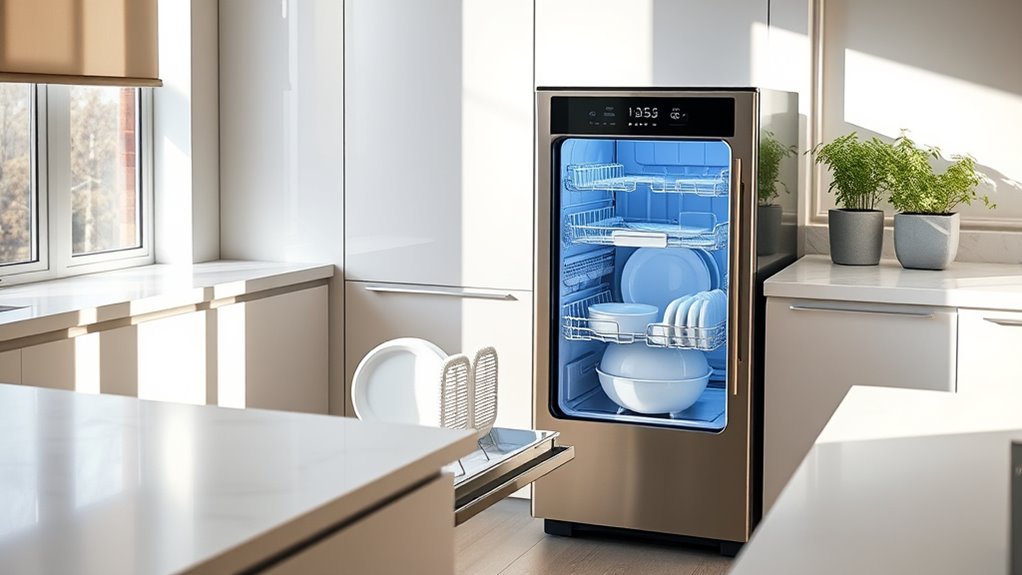
Many modern kitchen appliances are designed to save energy, which not only reduces your utility bills but also benefits the environment. These appliances often feature eco-friendly cleaning modes that use less water and power without sacrificing performance. Additionally, manufacturers are adopting sustainable packaging to minimize waste and reduce environmental impact. By choosing energy-efficient dishwashers and appliances with high ENERGY STAR ratings, you help lower your carbon footprint. These devices optimize water and electricity use, making your kitchen more sustainable. Eco-friendly cleaning features ensure your dishes get clean while conserving resources. Investing in such appliances supports a greener lifestyle and encourages sustainable practices, making your kitchen smarter and more eco-conscious. Smart appliance technology continues to advance, offering even greater energy savings and user convenience. Furthermore, incorporating renewable energy sources such as solar panels can further enhance the eco-friendliness of your kitchen setup. For example, energy monitoring systems can help you track and optimize your appliance usage for maximum efficiency.
Additionally, integrating energy-efficient appliances can significantly reduce overall household energy consumption, contributing to environmental preservation.
Innovative Technologies Behind Modern Kitchen Gadgets
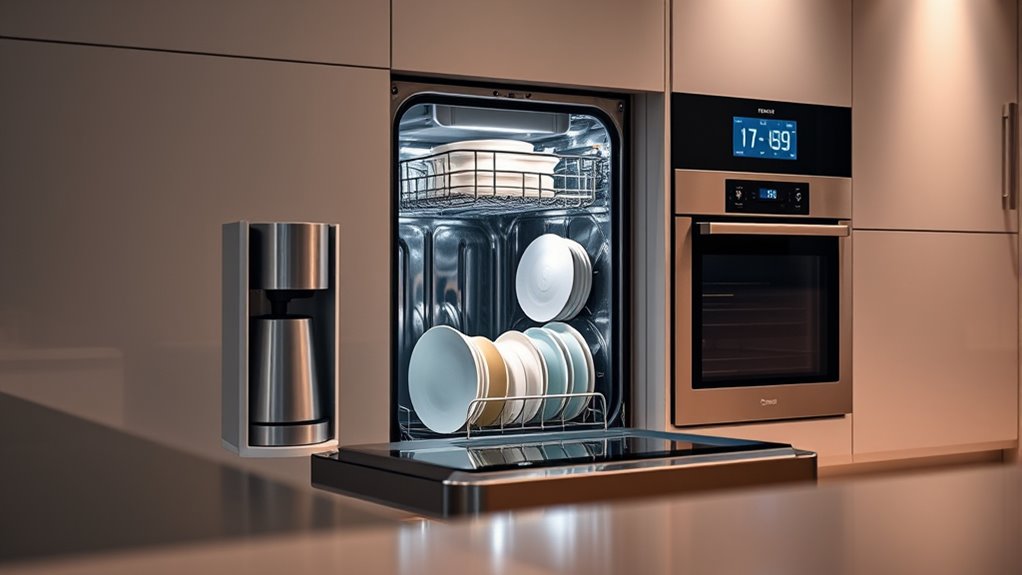
Modern kitchen gadgets incorporate cutting-edge technologies that simplify cooking and enhance efficiency. You benefit from features like sensor-based washing in dishwashers, which optimize water and energy use, making maintenance easier and prolonging appliance lifespan. Advanced filtration systems remove debris and bacteria, ensuring cleaner dishes and reducing the need for frequent repairs. Many appliances now meet strict appliance certification standards, guaranteeing safety and reliability. Smart sensors detect load size and soil level, adjusting settings automatically for *ideal* performance. These innovations reduce energy consumption and streamline upkeep, so you spend less time on maintenance. By integrating these technologies, modern gadgets not only deliver superior results but also promise long-term durability and peace of mind, making your kitchen smarter and more sustainable.
Compatibility and Integration With Smart Home Systems
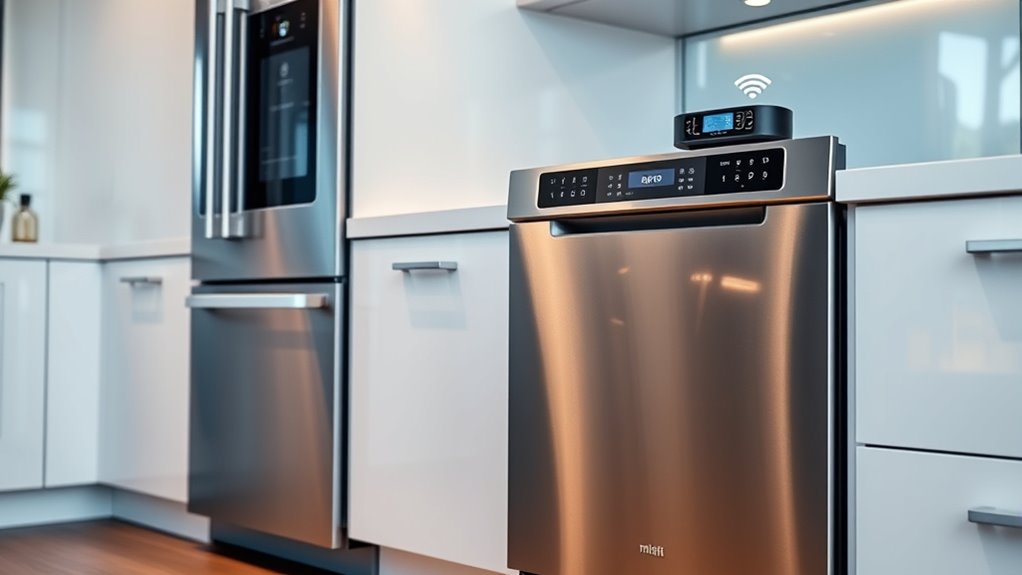
Integrating kitchen appliances with smart home systems enhances convenience and control, allowing you to manage devices seamlessly through centralized platforms. Many smart appliances are designed for easy setup, but some may require manual installation, which can be straightforward or complex depending on the model. Compatibility guarantees that your dishwasher or refrigerator connects smoothly with your existing smart hub or voice assistant, providing a unified control experience. Additionally, look for appliances built with durable materials to ensure longevity and consistent performance over time. Proper integration not only streamlines your kitchen routines but also helps you monitor and troubleshoot devices remotely. Ensuring compatibility and considering appliance durability are key to creating a reliable, efficient smart kitchen environment that works seamlessly with your smart home system.
Tips for Choosing the Right Smart Kitchen Appliances
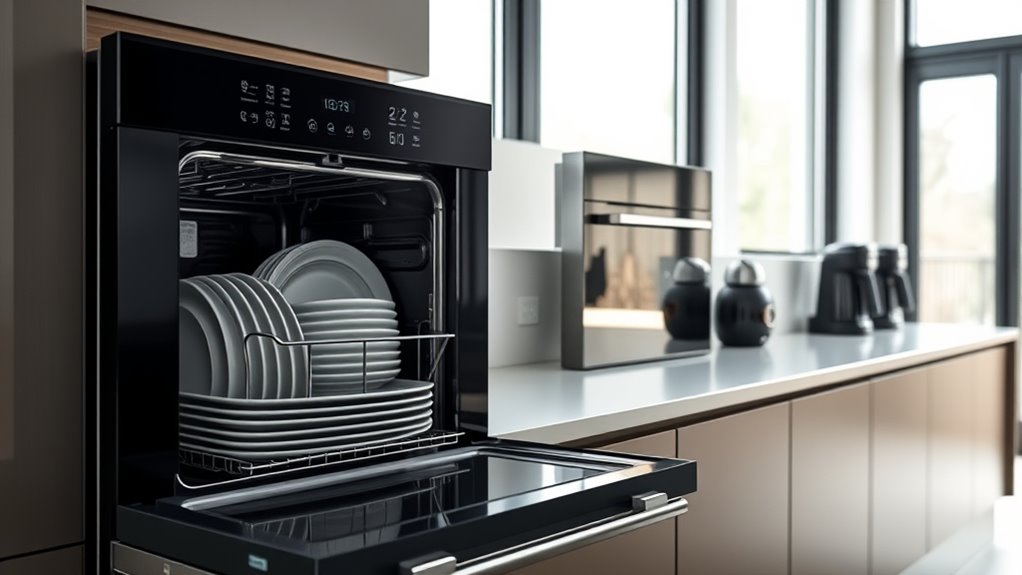
When selecting smart kitchen appliances, consider how well they work with your existing devices to guarantee seamless integration. Look for energy-efficient features that can save you money and reduce your environmental impact. Also, choose appliances with user-friendly controls so you can operate them easily and quickly.
Compatibility With Existing Devices
Ensuring your new smart kitchen appliances work seamlessly with your existing devices is essential for a smooth shift. Check if your appliances support compatible connectivity protocols like Wi-Fi, Zigbee, or Z-Wave. This guarantees smooth integration with your smart home system. Consider whether manual operation remains straightforward after installation—some devices may require initial setup or app configuration. Proper appliance placement is crucial; place devices where they can connect easily without interference. Compatibility also involves verifying if your current devices can communicate or synchronize with the new ones. If your kitchen has a smart hub or assistant, confirm that your new appliances are compatible with it. Doing so now helps prevent frustration and guarantees your smart kitchen functions as a cohesive, efficient unit.
Energy Efficiency Features
Choosing energy-efficient smart kitchen appliances not only saves you money on utility bills but also reduces your environmental footprint. Look for dishwashers with eco-friendly features, such as options for using less water and energy during cycles. Opt for models that support cycle customization, allowing you to select shorter or more efficient cleaning modes when appropriate. Using the right dishwasher detergents can also make a difference, as eco-friendly options often require less water and energy to rinse away residues. Additionally, appliances with energy-saving labels or certifications can help you identify models designed to maximize efficiency. By prioritizing these features, you guarantee your kitchen operates more sustainably, saving you money while minimizing your impact on the environment.
User-Friendly Controls
User-friendly controls are essential for making your smart kitchen appliances easy to operate and maximize their benefits. Touchscreen controls provide a sleek, modern way to navigate settings quickly, saving you time and effort. Look for appliances with intuitive interfaces that simplify complex functions, so you don’t need to consult the manual each time. Clear icons, responsive touchscreens, and straightforward menus make adjustments effortless. Consider how easily you can access features like cycle selection or customization options, ensuring the controls match your tech comfort level. Appliances with well-designed interfaces reduce frustration and enhance your overall experience. Choosing models with user-friendly controls means you’ll enjoy seamless operation and better integration into your smart kitchen setup.
Maintaining and Troubleshooting High-Tech Devices
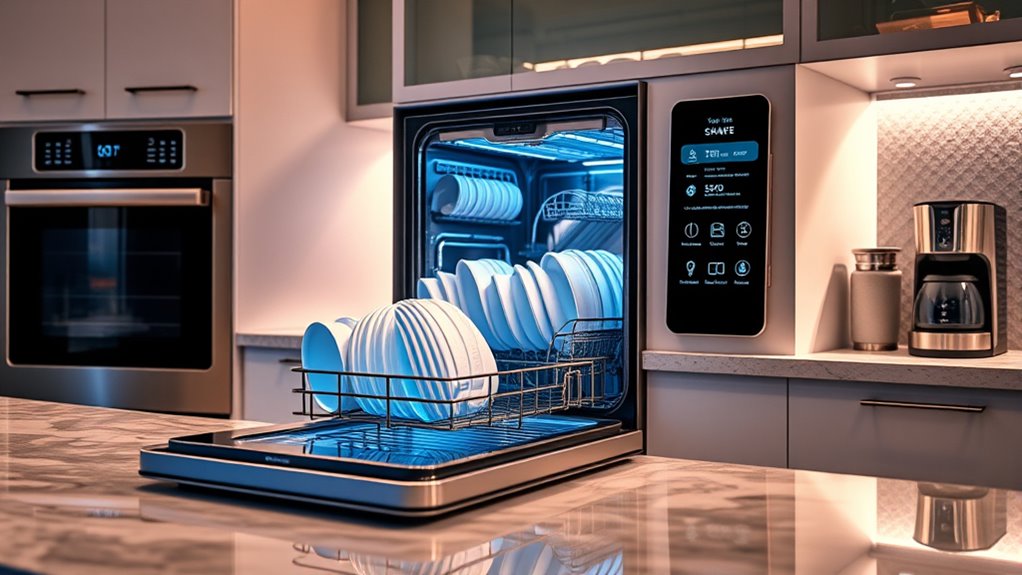
Maintaining and troubleshooting high-tech kitchen appliances requires regular attention to keep them functioning ideally. Start with simple cleaning tips to prevent buildup and ensure smooth operation. When issues arise, manual repair might be necessary, but always consult the user manual first. Here’s a quick guide:
| Problem | Solution | When to Seek Help |
|---|---|---|
| Dishwasher not draining | Check filters and hoses | If persistent, call a pro |
| Control panel unresponsive | Power cycle and reset | If still unresponsive, repair needed |
| Unusual noises | Remove debris or tighten parts | Persistent noise needs expert diagnosis |
Regular cleaning and basic troubleshooting can extend your appliance’s lifespan and prevent costly repairs.
Future Trends in Kitchen Technology and Innovation

As technology continues to evolve, the kitchen of the future will be filled with smarter, more connected appliances that simplify your cooking and cleaning routines. Expect innovations that prioritize smart kitchen etiquette, making interactions seamless and respectful to your needs. Culinary automation trends will lead to appliances that anticipate your preferences, from auto-adjusting ovens to robotic helpers. Here are three key trends shaping the future:
- Integration of AI-powered assistants for hands-free control and personalized suggestions.
- Enhanced connectivity allowing appliances to communicate, optimize energy use, and reduce waste.
- Development of intuitive interfaces that adapt to user behavior, promoting smart kitchen etiquette and efficiency.
These advancements will create a more automated, efficient, and user-friendly cooking environment tailored to your lifestyle.
Frequently Asked Questions
How Secure Are My Smart Kitchen Devices From Hacking?
Your smart kitchen devices are reasonably secure if you stay proactive. They can be vulnerable to hacking if you neglect data privacy measures and ignore firmware updates. Regularly changing passwords, enabling two-factor authentication, and updating firmware help protect your devices. By staying vigilant, you minimize risks and keep your smart appliances safer from cyber threats, ensuring your data privacy remains intact while enjoying the convenience of smart kitchen technology.
Can Smart Appliances Be Customized for Specific Cooking or Cleaning Preferences?
Yes, smart appliances offer customization for your specific cooking or cleaning preferences. You can explore personalization options and set custom settings that suit your routines, such as adjusting wash cycles or temperature levels. Many devices allow you to save these preferences, making future use more convenient. This flexibility helps you optimize appliance performance based on your needs, ensuring better results and a more tailored experience in your kitchen.
What Is the Typical Lifespan of a Smart Kitchen Appliance?
Think of your smart kitchen appliance as a reliable companion, lasting around 10 to 15 years with proper appliance maintenance. While technology updates can extend its usefulness, frequent updates and care guarantee it stays efficient. After this lifespan, parts may wear out, and performance declines. Staying proactive with maintenance and keeping up with tech improvements helps maximize its longevity, so you enjoy seamless cooking and cleaning for years to come.
Are There Any Health or Safety Concerns With Smart Dishwashers?
Smart dishwashers are generally safe, but you should stay aware of food safety and chemical exposure risks. Make sure your dishwasher uses safe detergents and that you regularly clean filters and seals to prevent mold and bacteria buildup. Avoid overloading, which can hinder cleaning, and follow manufacturer instructions. Proper maintenance minimizes health concerns, helping you enjoy a safe, effective appliance without risking food safety or chemical exposure.
How Do Smart Appliances Handle Power Outages or Connectivity Issues?
When power outages hit, smart appliances like dishwashers often pause, but many have a battery backup to keep essential functions running. Connectivity issues can be frustrating—only about 60% of devices restore connection automatically. To fix this, you can manually trigger connectivity restoration or use a Wi-Fi extender. This guarantees your smart appliance resumes operation quickly, reducing downtime and keeping your kitchen running smoothly even during interruptions.
Conclusion
Embracing smart kitchen appliances can truly transform your cooking space, making it more efficient and enjoyable. While some claim these gadgets might replace traditional appliances entirely, evidence suggests they enhance convenience without sacrificing reliability. By understanding their features and choosing wisely, you can enjoy seamless control and eco-friendly benefits. As technology advances, expect even smarter, more integrated kitchen solutions—proving that innovation isn’t just a trend, but a true step toward smarter living.