At high altitudes, smart devices can help you adjust your cooking to compensate for lower air pressure and lower boiling points. Many devices allow you to input your elevation, enabling automatic adjustments to cooking times, temperatures, and settings. Some have pre-programmed high-altitude modes or app-guided tips to optimize baking and boiling results. By using these features, you can achieve consistent and delicious dishes. Keep exploring to discover how these tools make high-altitude cooking more predictable and easier.

Get kitchen gear delivered free — and shop member deals
- Fast, free delivery on millions of items
- Access to Prime Big Deal Days deals on October 6–7
- Prime Video, Amazon Music and more included
Key Takeaways
- Smart devices can be calibrated with altitude input to ensure accurate temperature control during high-altitude cooking.
- Pre-programmed high-altitude settings automatically adjust cooking times and temperatures for optimal results.
- Devices equipped with adaptive controls modify cooking parameters based on elevation to compensate for boiling point changes.
- Apps linked to smart devices provide tailored recipes and tips for high-altitude ingredient and process adjustments.
- Proper device calibration and altitude-specific features help achieve consistent, reliable cooking outcomes at high elevations.
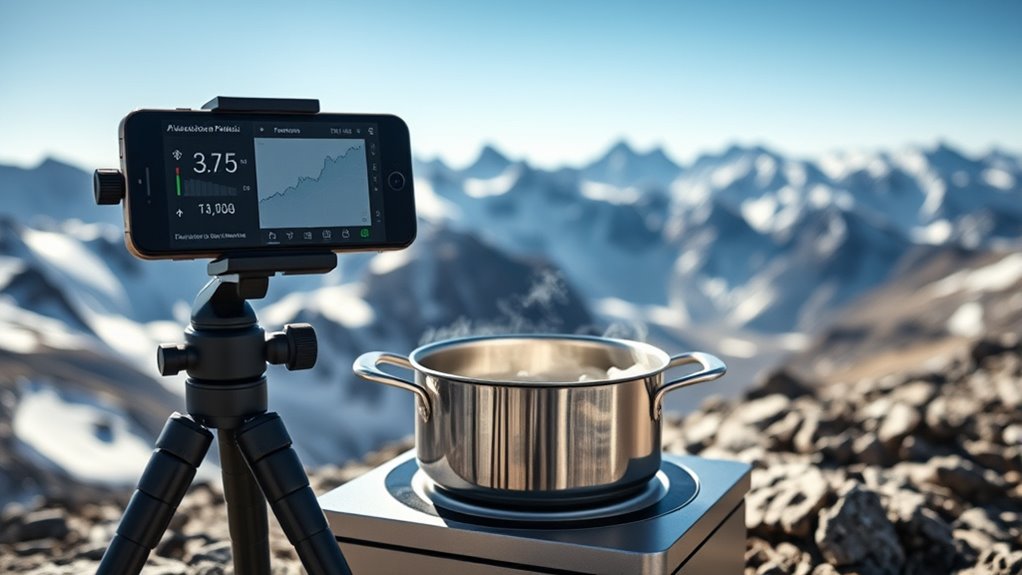
Cooking at high altitudes presents unique challenges, but smart devices are making it easier to achieve perfect results. When you’re cooking above 3,000 feet, the reduced air pressure causes water to boil at lower temperatures, which can throw off your recipes. To compensate, you need to make precise temperature adjustments, and this is where smart kitchen gadgets truly shine. Many modern devices come equipped with features that automatically suggest or even adjust cooking times and temperatures based on your altitude. By doing so, they help you maintain consistency and avoid undercooked or overcooked dishes.
Device calibration is essential to get accurate readings, especially when working at high elevations. Some smart thermometers and cookers allow you to input your altitude, prompting the device to calibrate itself accordingly. This guarantees your oven or sous vide maintains the right temperature throughout the cooking process. Instead of relying on guesswork or manual adjustments, you can trust that your device is fine-tuned to your environment. This calibration process often involves straightforward steps, like entering your elevation at setup or syncing your device with an app that guides you through the calibration. Once calibrated, your smart device will help you set ideal temperature adjustments, making it easier to follow recipes that might otherwise require complex modifications.
Many smart ovens and cookers also feature pre-programmed settings or adaptive controls designed specifically for high-altitude cooking. These settings automatically adjust cooking times and temperatures, reducing the need for constant monitoring. For example, baking at high altitudes often requires longer cooking times and lower oven temperatures to prevent over-browning or uneven baking. With a smart device that’s calibrated properly, you can select a high-altitude setting, and it will take care of the adjustments for you. This not only saves time but also improves the overall quality of your dishes.
Furthermore, some smart kitchen apps provide altitude-specific recipes or tips, guiding you through the necessary modifications for ingredients and cooking methods. They can recommend when to increase cooking times or adjust liquid amounts, helping you perfect your dishes without extensive trial and error. They utilize precise altitude data to optimize the cooking process further, ensuring accurate adjustments. The key is understanding that temperature adjustments and device calibration are vital to high-altitude success. By leveraging smart technology, you can navigate these challenges effortlessly, ensuring your meals turn out just as delicious as they would at sea level. With these tools, high-altitude cooking becomes less intimidating and more predictable, empowering you to experiment confidently and enjoy consistently excellent results.
As an affiliate, we earn on qualifying purchases.
Frequently Asked Questions
How Do Smart Devices Detect Altitude Changes Automatically?
Smart devices detect altitude changes automatically through built-in altitude sensors, like barometric pressure sensors, that measure atmospheric pressure. These sensors send data to the device’s processor, which then uses automatic calibration algorithms to determine your current elevation. This real-time data helps the device adjust its functions, such as cooking settings or navigation, ensuring accurate performance without manual input. You benefit from seamless adjustments tailored to your precise altitude.
Can Smart Cooking Devices Adjust Recipes for Different Elevations?
Like a seasoned conductor, your smart device orchestrates perfect recipes at any elevation. It can automatically adjust for manual tweaks and recipe modifications, ensuring your dishes turn out just right. While some devices may need you to input elevation data, many adapt seamlessly, adjusting cooking times and temperatures. This harmony allows you to focus on your culinary art, confident your smart device keeps pace with the peaks and valleys of altitude.
Are There Specific Smart Devices Recommended for High Altitude Cooking?
Yes, altitude-specific appliances with elevation sensors are ideal for high-altitude cooking. These smart devices automatically adjust cooking times and temperatures based on your elevation, ensuring perfect results. Look for smart ovens or multi-cookers that feature built-in altitude sensors or settings designed for different elevations. These appliances take the guesswork out of high-altitude cooking, making your culinary experience easier and more precise regardless of how high you are.
How Accurate Are Altitude Measurements in Smart Kitchen Gadgets?
A little knowledge is a dangerous thing, so you should know that altitude measurements in smart kitchen gadgets are generally quite accurate, thanks to advanced sensors. However, calibration plays an essential role; altitude calibration helps guarantee sensor accuracy. While most devices provide reliable readings, environmental factors can cause minor discrepancies. Trust your device’s calibration, and remember, “measure twice, cut once”—accuracy in altitude matters for perfect high-altitude cooking.
Do Smart Devices Provide Real-Time Feedback During High Altitude Cooking?
Yes, smart devices often provide real-time feedback during high altitude cooking, helping you make manual adjustments. They monitor factors like temperature and pressure, guiding you to tweak cooking times or ingredient substitutions as needed. This helps you adapt recipes on the fly, ensuring your dishes turn out perfect despite elevation challenges. With these devices, you stay in control and make precise adjustments for ideal results every time.
smart cooking thermometer with altitude calibration
As an affiliate, we earn on qualifying purchases.
As an affiliate, we earn on qualifying purchases.
Conclusion
As you adjust your smart devices for high altitude, remember that each elevation is like climbing a new mountain—challenging yet conquerable. With your tech-savvy approach, you’re turning the sky’s limits into an invitation to master flavorful, perfectly cooked meals. Embrace these tweaks as your secret trail map, guiding you through the thin air and into culinary success. So, keep experimenting and savor every summit—because every elevation offers a new view, and a delicious adventure.
As an affiliate, we earn on qualifying purchases.
smart kitchen device for high elevation
As an affiliate, we earn on qualifying purchases.
As an affiliate, we earn on qualifying purchases.
Fall Picks
fall essentials
As an affiliate, we earn on qualifying purchases.


![Bread 🍞 [Bonnymama7]](https://thesmartsous.com/wp-content/uploads/2026/09/bread-bonnymama7-featured-260x140.jpg)