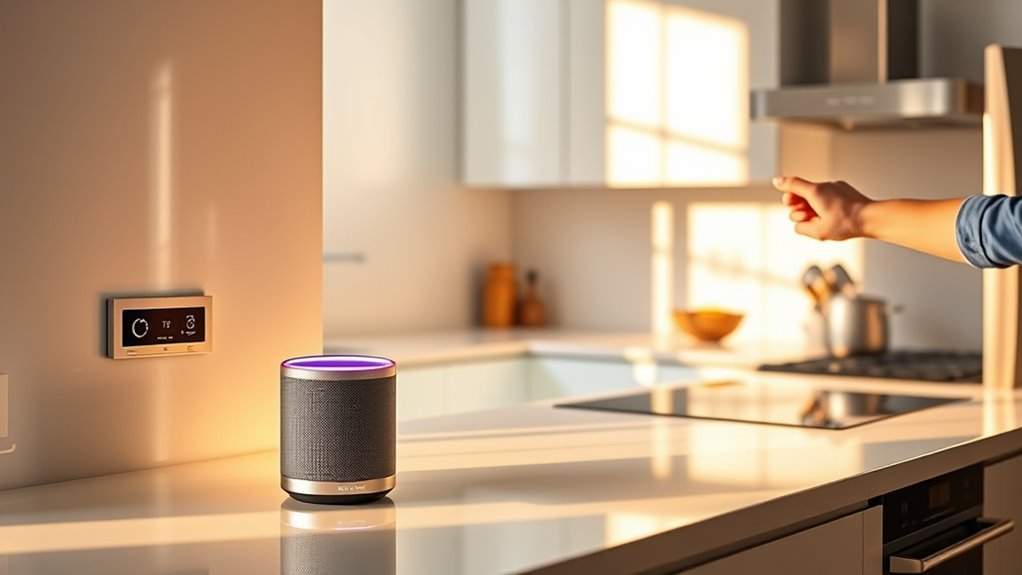
If you’re just starting your smart kitchen journey, a smart speaker is your best first device. It acts as a central hub, allowing you to control other appliances, set timers, and get recipe guidance with simple voice commands. This makes cooking easier and more fun. As you get comfortable, you can add other gadgets like smart lights or safety devices. Keep exploring to discover how each device can make your kitchen smarter and safer.
Key Takeaways
- Begin with a smart speaker or hub to control multiple devices hands-free and set routines easily.
- Choose a smart lighting system to create ambiance and improve visibility during cooking tasks.
- Start with a smart plug for existing appliances to automate and monitor energy use affordably.
- Consider a smart thermometer or cooking device for guided recipes and precise food preparation.
- Assess your needs and space to select a compact, versatile device that aligns with your cooking habits and budget.
Understanding the Benefits of a Smart Kitchen

A smart kitchen offers numerous benefits that can make your cooking experience more efficient and enjoyable. One key advantage is energy efficiency, as smart appliances optimize power use, reducing waste and lowering bills. For instance, intelligent ovens and refrigerators adjust their operation based on your habits, saving energy without sacrificing performance. Additionally, recipe automation simplifies meal prep by guiding you through each step with connected devices. You can set timers, receive cooking instructions, or even have appliances adjust temperatures automatically, making cooking more precise and less stressful. These features not only save time but also help you produce better results. Incorporating smart technology into your kitchen can further enhance your overall cooking experience. Embracing a connected kitchen transforms your space into a more convenient, eco-friendly, and modern cooking environment. Utilizing home automation allows your appliances to communicate seamlessly, creating a more intuitive and efficient workflow. Moreover, adopting energy-efficient appliances can significantly reduce your household’s environmental footprint.
Choosing the Right Starting Device for Your Needs

To choose the right starting device, consider your cooking style and what you want to achieve with smart technology. Think about how much space you have and your budget to find options that fit your needs. Matching devices to your goals makes your smart kitchen both functional and enjoyable. Additionally, assessing device compatibility can ensure your new gadget integrates smoothly with your existing setup. Understanding installation requirements can also help you select devices that are easy to set up and maintain. Exploring kitchen appliance evolution can provide insights into which devices are most reliable and up-to-date for beginners. Evaluating the technology’s safety ensures you select devices that are safe and suitable for your home environment. Considering energy efficiency standards can help you choose devices that are environmentally friendly and cost-effective over time.
Assess Your Cooking Style
Understanding your cooking style is essential when choosing your first kitchen device because it helps you focus on tools that match your habits and goals. Are you someone who loves experimenting with recipe customization or prefers straightforward ingredient management? Your approach influences your ideal device choice. For example, if you enjoy trying new recipes, a versatile blender or multi-cooker could suit you. If you like simple, quick meals, a microwave might be perfect. Consider your comfort level and how much you want to automate or streamline cooking tasks. Being aware of vetted wave and wind factors can also help you select durable equipment suited for your environment, especially when considering sound therapy techniques that improve auditory skills in noisy settings. Additionally, understanding environmental conditions can guide you toward devices that perform reliably in your specific kitchen environment. Recognizing the importance of kitchen ergonomics can further ensure your device selection promotes comfort and efficiency during use. Moreover, evaluating your budget constraints can help narrow down options to devices that offer the best value for your needs.
Match Devices to Goals
How do you choose the right kitchen device to meet your goals? Start by identifying what matters most to you. If you want to simplify meal planning, a device with recipe tracking features can help you save favorite recipes, plan weekly menus, and stay organized. For grocery management, look for devices that assist with shopping lists and inventory tracking, reducing last-minute runs to the store. Consider your cooking habits too—if you often experiment with new dishes, a smart device that offers guided recipes can boost your confidence. Matching devices to your specific goals ensures you invest in tools that genuinely enhance your kitchen experience. Additionally, understanding free floating technology can help you select devices that seamlessly integrate into your existing setup. Recognizing interoperability features can further ensure your gadgets work smoothly together. Focus on features that support your priorities, and you’ll create a smarter, more efficient cooking environment.
Budget and Space Considerations
Choosing the right smart kitchen device involves more than just matching features to your goals; it also means considering your budget and available space. Effective budget planning helps you focus on devices that provide value without overspending. Space optimization ensures your kitchen remains functional and clutter-free. Before buying, assess your kitchen layout and prioritize compact, multi-use devices if space is limited. Incorporating efficient organization strategies can maximize your kitchen’s usability and storage potential. Here are some tips to guide your decision: – Start with affordable, essential devices – Measure available countertop and storage space – Consider multi-purpose gadgets to save space – Set a clear budget limit to avoid overspending – Research compact, budget-friendly options Balancing your budget with space considerations will help you build a smarter, more efficient kitchen over time.
Smart Speakers: The Central Hub of Your Kitchen

Smart speakers have become the heart of a modern kitchen, simplifying your daily routines with just a voice command. Setting up your smart speaker is straightforward—you just need to connect it to Wi-Fi and follow the quick setup instructions. Once configured, you can customize voice commands to suit your needs, making interactions more natural and efficient. Your smart speaker can manage playlists, set timers, answer questions, and even control compatible devices. It acts as a central hub, streamlining your kitchen tasks without the need to touch a screen or device. With voice command customization, you create a personalized experience that fits your lifestyle. This device not only adds convenience but also seamlessly integrates into your kitchen, making it an essential starting point for your smart home. Incorporating home automation features can further enhance your kitchen’s functionality and convenience. Caregiving support can also be integrated through voice commands, helping caregivers stay organized and connected. Additionally, integrating a smart speaker can help you monitor and manage kitchen safety more effectively. As part of a comprehensive smart home ecosystem, your smart speaker can coordinate with other devices to create a safer and more efficient environment.
Connecting Your Appliances for Seamless Control

Once your smart speaker is set up and responsive to your voice commands, the next step is connecting your appliances to create a seamlessly integrated kitchen. This involves ensuring your devices are compatible and connected via the same Wi-Fi network. Regular appliance maintenance keeps everything running smoothly, preventing issues during setup. Also, check for firmware updates, which improve functionality and security. To get started:
- Verify appliance compatibility with your smart hub
- Connect devices through their app or setup process
- Keep firmware updated for ideal performance
- Organize devices into groups for easier control
- Set routines for automatic appliance operation
- Device compatibility is essential for smooth integration and can save time during setup
Following these steps helps you maintain a smooth, connected kitchen environment where appliances work together effortlessly.
Voice Assistants and Their Role in Cooking

Have you ever wondered how voice assistants can transform your cooking experience? With a simple voice command, you can set timers, find recipes, or add ingredients to your shopping list without interrupting your workflow. Voice assistants make multitasking in the kitchen easier and more efficient. However, privacy concerns are valid; these devices constantly listen for wake words, raising questions about data security. It’s essential to understand how your voice data is stored and shared. By configuring privacy settings and choosing reputable brands, you can enjoy the benefits of hands-free control while safeguarding your information. Voice assistants are a valuable addition to your smart kitchen, helping you cook smarter and more comfortably—just be mindful of your privacy.
Smart Lighting to Enhance Your Cooking Environment
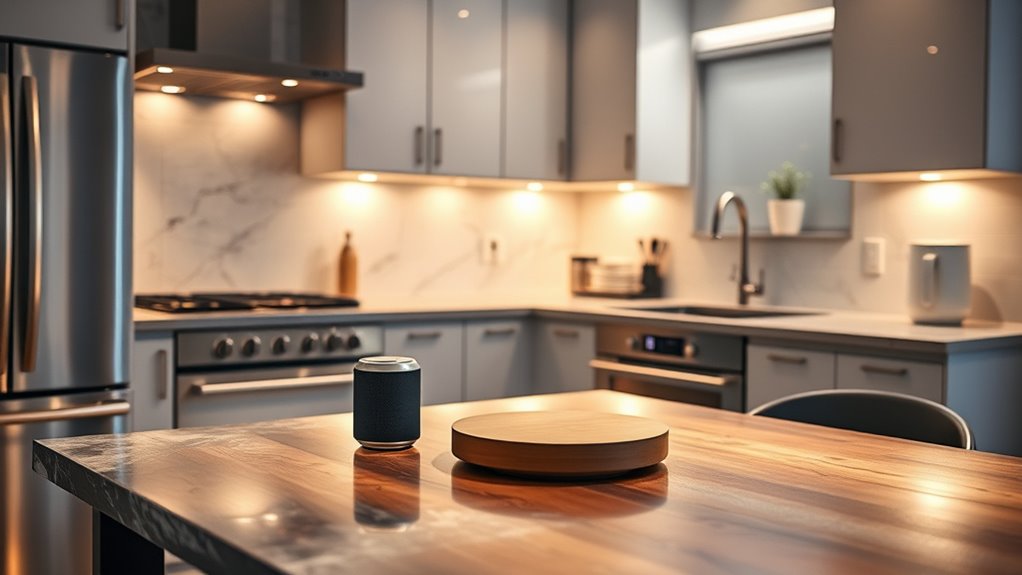
Smart lighting lets you easily adjust brightness to match your cooking needs, whether you want bright light for prep or softer glow for ambiance. You can also set mood lighting effects to create the perfect atmosphere while you cook or dine. With these features, your kitchen becomes both functional and inviting.
Brightness Control Options
Adjusting the brightness in your kitchen can make a significant difference in your cooking experience. With smart lighting, you can easily customize illumination to suit your tasks and mood. Dimming switches allow you to adjust brightness smoothly, creating the perfect environment for prep work or relaxing after dinner. Color changing bulbs offer the flexibility to set the tone, whether you want bright white light or a warm hue. You can also automate brightness levels based on time of day or activity. Smart lighting apps give you control at your fingertips, so you don’t need to manually switch bulbs or adjust switches. These options make your kitchen more functional and inviting. Consider integrating dimming switches and color changing bulbs to upgrade your space effortlessly.
- Easy brightness adjustments with dimming switches
- Customizable ambiance with color changing bulbs
- Automated lighting based on time or activity
- Remote control via smartphone apps
- Seamless integration with other smart devices
Mood Lighting Effects
Creating the right mood in your kitchen can transform your cooking experience from routine to enjoyable. Smart lighting offers mood lighting effects that adjust color temperature to set the perfect ambient ambiance. You can choose warmer tones for a cozy feel or cooler hues for a modern, energetic vibe. Dimming options allow you to fine-tune the light intensity, enhancing focus or relaxation as needed. These features help create an inviting environment whether you’re preparing a quick meal or hosting guests. By integrating smart lighting, you control how your kitchen looks and feels, making every cooking session more engaging. With just a few taps, you can customize the atmosphere to match your mood or the occasion, elevating your overall kitchen experience.
Safety Devices to Protect Your Home and Family
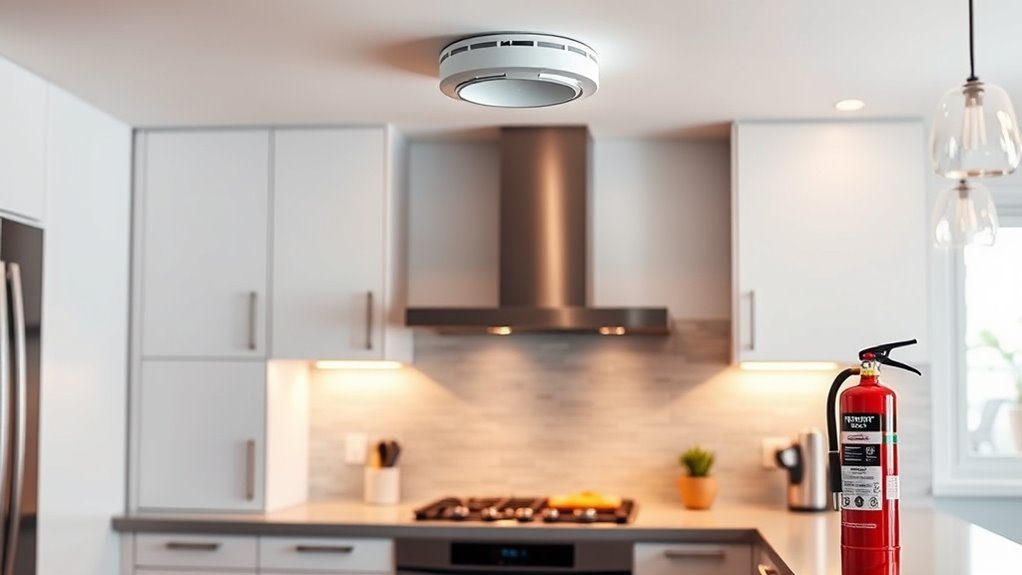
Ensuring your kitchen is equipped with effective safety devices is essential to protect your home and loved ones. Smart safety devices can help prevent accidents and guarantee fire prevention and child safety. By installing smart smoke detectors, you get instant alerts if smoke or carbon monoxide is detected. Child-proof locks on cabinets prevent little ones from accessing dangerous items. Smart fire extinguishers can be remotely monitored and activated when needed. Keep an eye on hot appliances with smart plugs that alert you if they overheat. Additionally, motion sensors can turn off appliances automatically if no one is nearby. These devices provide peace of mind, making your kitchen safer for everyone.
- Smart smoke and carbon monoxide detectors
- Child safety locks
- Remote-monitored fire extinguishers
- Smart plugs for appliances
- Motion sensors for automatic shutoff
Tips for Integrating Multiple Devices Smoothly

To integrate multiple smart safety devices seamlessly in your kitchen, start by creating a centralized control system, such as a smart home hub or compatible app, that connects all your devices. Ensuring device compatibility is vital; verify that each device works with your chosen system to avoid connectivity issues. A user interface that’s intuitive and easy to navigate will help you manage your devices efficiently, reducing frustration. Organize your devices logically within the app or hub, grouping similar functions for quick access. Regularly update device firmware to maintain compatibility and security. Test your setup after installation to identify any glitches. With a streamlined system, you’ll enjoy smooth integration, making your kitchen safer and more convenient to manage.
Frequently Asked Questions
What Is the Initial Cost of Setting up a Smart Kitchen?
Your initial investment for setting up a smart kitchen varies, but you should expect setup expenses to range from $200 to $1,000, depending on the devices you choose. Basic upgrades like smart bulbs, a voice assistant, or a smart plug are more affordable. If you want advanced appliances like smart ovens or refrigerators, be prepared for higher costs. Prioritize what fits your budget and needs to make the most of your investment.
How Secure Are Smart Devices in My Home Network?
Think of your smart devices as guardians of your home—if properly secured, they’re trustworthy. Your home network security depends on strong passwords, regular updates, and device encryption, which protect your data from hackers. While no system is infallible, taking these precautions substantially reduces risks. So, yes, smart devices can be secure, but only if you actively manage their security settings and stay vigilant against potential threats.
Can Smart Kitchen Devices Be Controlled Remotely?
Yes, smart kitchen devices can be controlled remotely through your smartphone or tablet, thanks to their device connectivity features. You can turn on your smart oven or adjust your refrigerator settings from anywhere with an internet connection. This convenience allows you to manage your kitchen appliances on the go, making meal prep easier and more efficient. Just make certain your devices are securely connected to your home network to protect your privacy.
Which Smart Device Offers the Best Value for Beginners?
The best value smart device for beginners is a smart plug. It’s beginner-friendly, affordable, and easy to set up. With a smart plug, you can control your appliances remotely through an app, making your kitchen more convenient. Plus, it’s versatile—use it with lamps, coffee makers, or slow cookers. This device helps you get comfortable with smart tech without feeling overwhelmed or spending too much.
Are Smart Kitchen Devices Compatible With All Home Automation Systems?
Most smart kitchen devices are compatible with popular home automation systems like Alexa, Google Home, or Apple HomeKit. However, you should check each device’s compatibility before purchasing, as some may only work with specific platforms. To guarantee seamless integration, choose devices that support your existing home automation system. This way, you can control your smart kitchen gadgets effortlessly and create a more connected, convenient cooking experience.
Conclusion
Now that you know the essentials, imagine transforming your kitchen into a smart haven—where every device works seamlessly together. But which device will open that future for you? The answer might surprise you, and once you start, there’s no turning back. Are you ready to take the first step into this exciting world? Your smart kitchen journey begins now—what will you choose to upgrade first? The possibilities are endless, and the best is yet to come.