
If you’re considering a high-end blender, you’ll notice their advanced motors, which range from 1,000 to 1,500 watts, provide smoother, faster blending, even with tough ingredients. They also come with smart features like multiple speeds, pulse modes, and innovative blade designs for better consistency and nutrient preservation. While expensive, these blenders often last longer and perform more reliably. To see how these tech differences can elevate your blending experience, keep exploring what’s behind the price tag.
Key Takeaways
- High-end blenders feature more powerful motors (1000+ watts) that handle tough ingredients efficiently and produce smoother textures.
- Advanced technology like multiple speeds, pulse, and vortex blending enhances consistency and nutrient preservation.
- Durable build quality and innovative blade designs in expensive models lead to longer lifespan and lower maintenance costs.
- Costly blenders offer better performance for frequent or specialized use, making them a worthwhile investment.
- For occasional blending, budget models may suffice, but high-end options provide superior results and efficiency for serious users.
Are expensive blenders really worth the extra cost? When you’re shopping for a high-end blender, it’s natural to wonder if the price tag justifies the benefits. The answer often depends on understanding the key differences, especially in blender motor power and blending technology. These factors substantially impact how well a blender performs, especially if you plan to use it frequently or for challenging tasks like crushing ice or making nut butters.
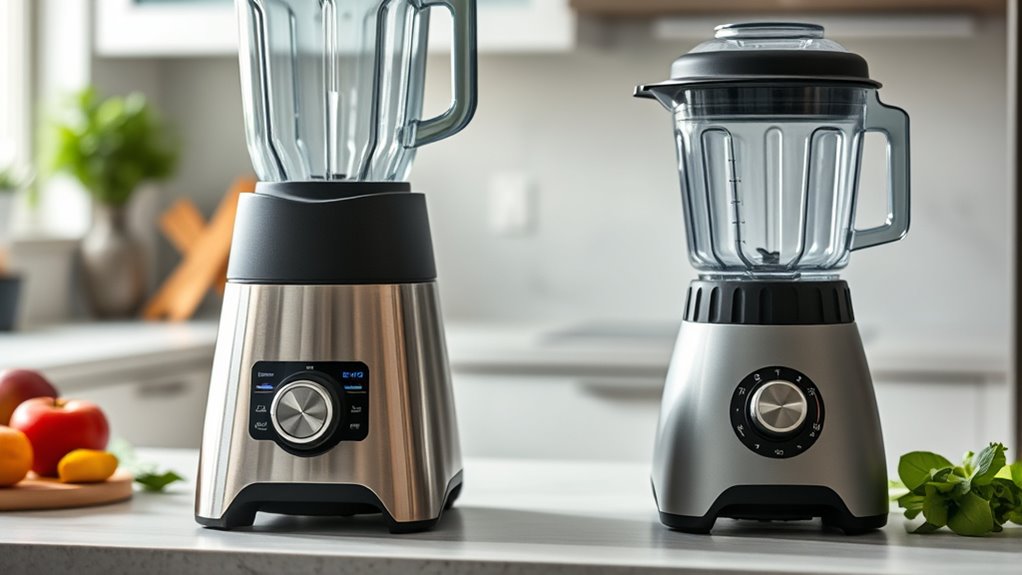
Blender motor power is one of the most noticeable distinctions between budget and premium models. Cheaper blenders typically have motors around 300 to 500 watts, which can struggle with tougher ingredients or large batches. In contrast, high-end blenders usually feature motors ranging from 1,000 to 1,500 watts or more. This extra power means your blender can handle dense foods, frozen fruits, and even fibrous vegetables without overheating or stalling. If you often find yourself blending tough ingredients or making large quantities, investing in a machine with a more powerful motor can save you time and frustration. It also ensures a smoother, more consistent texture every time.
A powerful motor (1000+ watts) ensures smoother blending of tough ingredients and large batches.
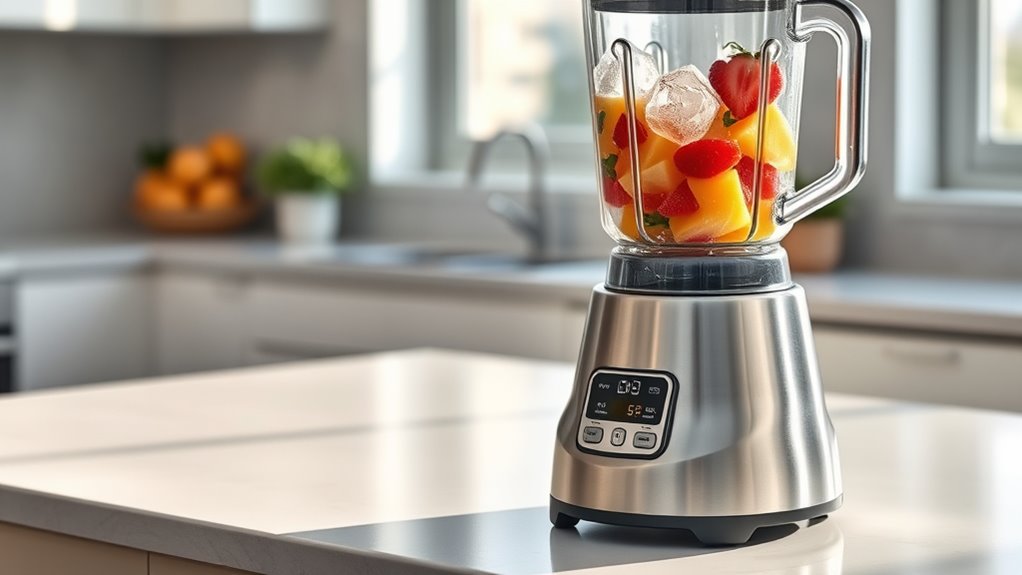
Blending technology is another area where expensive blenders excel. These models often incorporate advanced features like multiple speed settings, pulse functions, and pre-programmed modes tailored for smoothies, soups, or nut butters. They utilize innovative blade designs and motor coupling systems that maximize efficiency and minimize noise. Some high-end blenders use vortex technology, which pulls ingredients toward the blades for even blending, reducing the need for stopping and stirring. Others have precision controls and digital interfaces that allow you to fine-tune blending times and speeds, giving you more control over the outcome. This sophisticated blending technology results in more uniform textures, less air incorporation, and better preservation of nutrients, especially when you’re making smoothies or purees. Additionally, the color accuracy of high-end projectors plays a crucial role in creating a visually appealing and immersive home cinema experience.
While the initial investment might seem steep, the combination of a powerful motor and cutting-edge blending technology makes these appliances a worthwhile purchase if you’re serious about your blending. They tend to last longer, require less maintenance, and provide more consistent results, saving you money and time in the long run. If you’re someone who uses a blender daily or for specific culinary projects, paying more for a model with superior motor power and advanced technology can genuinely elevate your kitchen game. On the other hand, if you only occasionally blend a few smoothies, a less expensive model might suffice. But for dedicated users, the benefits of a high-end blender often outweigh the costs.
Frequently Asked Questions
Do Expensive Blenders Last Longer Than Budget Models?
Yes, expensive blenders tend to last longer than budget models. Durability tests show they often use higher-quality materials, like stronger motors and more durable blades, which withstand daily use better. You’ll notice that their construction is more robust, reducing wear and tear over time. Investing in a pricier blender can save you money in the long run, as it’s likely to perform reliably and last for years.
Can Affordable Blenders Handle Professional-Grade Tasks?
Affordable blenders can handle some professional-grade tasks, but you might find their blender speed and motor durability fall short under heavy use. They often lack the power needed for tough ingredients or large batches, which can lead to overheating or motor burnout. If you need consistent performance for frequent, demanding tasks, investing in a higher-end model guarantees better blender speed and motor durability, making it more reliable long-term.
Are Warranty Periods Significantly Different for High-End Blenders?
You’ll find that warranty policies for high-end blenders are often more thorough, reflecting their brand reputation and the confidence behind their products. While some premium models offer extended coverage, others match standard periods. Investing in a costly blender means you get peace of mind, knowing that if something goes wrong, you’re protected. Ultimately, the warranty period highlights the brand’s trust in durability, making your purchase feel less risky and more worthwhile.
Do High-Priced Blenders Use Safer Materials?
Yes, high-priced blenders often use safer materials, thanks to better material safety and construction quality. You’ll find premium blenders crafted with BPA-free plastics or stainless steel, reducing health risks. Their superior construction also ensures durability and safety during use. Investing in a costly blender means you’re more likely to get appliances built with safer, high-quality materials that last longer and perform better, giving you peace of mind every time you blend.
How Do Noise Levels Compare Across Different Price Ranges?
You’ll notice noise levels vary widely across different price ranges, with high-end blenders often operating at around 70 decibels, comparable to a vacuum cleaner. In contrast, budget models can reach 80-85 decibels, louder than city traffic. This noise comparison shows that expensive blenders tend to be quieter, offering a more pleasant blending experience. So, if quiet operation matters to you, investing in a pricier model might be worth considering.
Conclusion
So, are expensive blenders worth it? If you’re blending smoothies daily, the investment pays off—these models often last longer and handle tougher ingredients better. Did you know that high-end blenders can break down over 1,000 pounds of produce before needing replacement? That’s a game-changer for frequent users. Ultimately, if quality and durability matter to you, spending a bit more can save you money in the long run and elevate your blending experience.