If you want quick, effortless pasta, automatic machines are your best bet—they handle kneading, rolling, and cutting at the push of a button, perfect for busy days. However, if you prefer full control over ingredients, textures, and shapes, traditional methods let you craft pasta by hand, offering a rewarding, artisanal experience. Curious about balancing convenience and craftsmanship? Keep exploring to discover which approach suits your style best.
Key Takeaways
- Automatic pasta makers offer quick, effortless preparation, prioritizing convenience over manual control.
- Traditional methods provide greater customization of ingredients, textures, and shapes, emphasizing control and craftsmanship.
- Automated machines produce consistent, uniform noodles with minimal effort, while manual techniques allow for unique, personalized results.
- Investing in an automatic machine can be cost-effective over time for frequent pasta-making, unlike manual tools which are cheaper upfront.
- Manual methods foster a sense of artistry and satisfaction through hands-on involvement, contrasting with the efficiency of automatic machines.
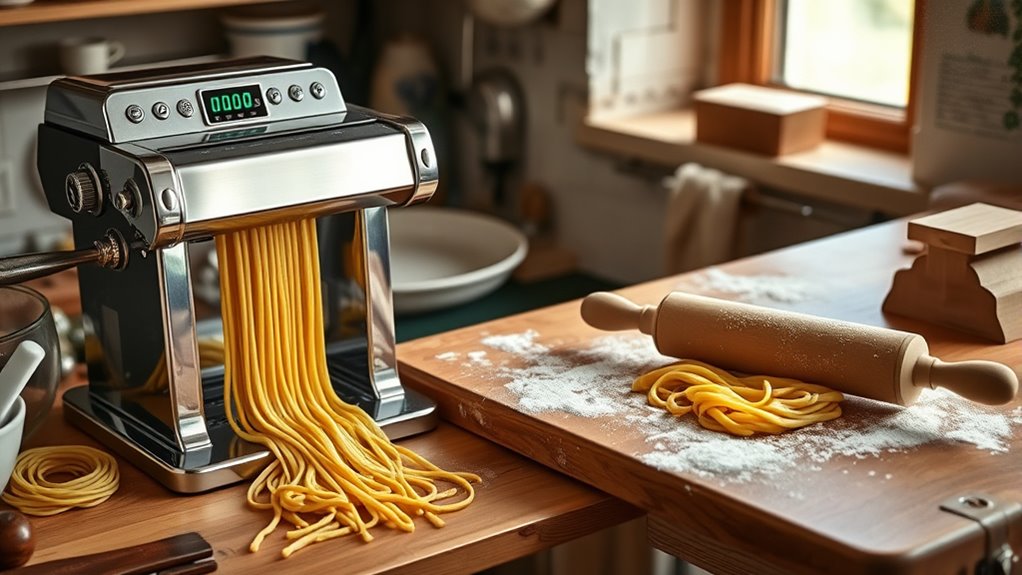
Choosing between automatic pasta makers and traditional methods depends on how much time and effort you’re willing to invest. If you’re after convenience, automatic machines can produce fresh pasta with minimal effort, saving you time and reducing mess. These machines handle kneading, rolling, and cutting at the push of a button, making pasta-making accessible even if you’re short on patience or experience. However, when considering freshness comparison, traditional methods often excel. Making pasta by hand or with a manual roller allows you to control every step, ensuring your pasta is as fresh as possible. You can tailor ingredients, adjust dough hydration, and monitor the process closely, resulting in a product with superior freshness that’s hard to match with machines.
Texture preferences also play a crucial role in choosing your method. Automatic pasta makers typically produce consistent results, which is great if you prefer uniform noodles. But if you enjoy experimenting with different textures—thicker, thinner, more delicate—traditional methods give you that flexibility. Hand-rolling and shaping allow you to tweak thickness and shape effortlessly, creating pasta that matches your desired bite and mouthfeel. Plus, the manual process often results in a slightly rougher surface, which can help sauces cling better, enhancing overall flavor and texture. Conversely, some people find that the consistent, smooth surface from automatic machines appeals to their palate, especially when making delicate pasta like ravioli or thin spaghetti.
Cost is another factor. Automatic machines come with an upfront investment, but they can be cost-effective over time if you frequently make pasta, as they eliminate the need to buy pre-made or store-bought options. Traditional methods, on the other hand, require basic tools like a rolling pin and a cutter, which are generally cheaper and last indefinitely. If you enjoy the tactile experience and the artistry of pasta-making, traditional techniques might be more satisfying, offering a sense of craftsmanship that machines lack. Additionally, manual pasta-making fosters a deeper appreciation for the process and can be a relaxing, meditative activity.
Ultimately, your choice hinges on how much control you want over the process versus how much convenience you need. If you prioritize quick, consistent results and don’t mind sacrificing some control, an automatic pasta maker is your best bet. But if you’re passionate about the craft, seek maximum freshness, and enjoy customizing textures, traditional methods suit you perfectly. Both approaches have their merits, so consider what matters most—whether it’s time, texture, freshness, or control—and choose accordingly. Exploring pasta-making techniques can also deepen your appreciation for culinary craftsmanship and help you decide which method aligns best with your preferences.
Frequently Asked Questions
How Long Does It Take to Make Pasta With Each Method?
With an automatic pasta maker, your preparation time is usually around 15-20 minutes, making it quick and easy even if you’re a beginner. Traditional methods take longer, often 30-60 minutes, depending on your skill level and kneading speed. If you’re new to pasta making, expect longer prep, but with practice, you can reduce that. Overall, automatic machines save time, while traditional methods offer more control over texture and ingredients.
What Is the Cost Difference Between the Two Methods?
You’ll find that automatic pasta makers typically cost between $50 and $300, offering a convenient investment with minimal equipment needs. Traditional methods, however, require basic tools like a rolling pin and pasta cutter, often costing less upfront—around $10 to $50. The price comparison shows that automatic machines involve a higher initial equipment investment, but they save time and effort, while traditional methods are more budget-friendly but demand more manual skill.
Are Automatic Pasta Makers Easy to Clean and Maintain?
Cleaning a pasta maker is often a walk in the park, but automatic models can pose some cleaning challenges. You’ll need to follow maintenance routines like disassembling parts and wiping down surfaces regularly. While they’re generally easy to clean, it’s important to keep up with these routines to avoid buildup. With a bit of effort, your automatic pasta maker stays in top shape, making pasta prep more enjoyable.
Can Traditional Methods Produce Gluten-Free Pasta?
Yes, you can produce gluten-free pasta using traditional dough techniques. You just need to incorporate gluten-free alternatives like rice, chickpea, or almond flour into your recipes. With traditional methods, you have full control over the ingredients, ensuring your pasta is safe and tailored to your dietary needs. It might take some practice to get the right texture, but it’s definitely possible to make delicious gluten-free pasta this way.
Which Method Preserves the Most Authentic Pasta Texture and Flavor?
You’ll find that handmade techniques preserve the most authentic pasta texture and flavor. When you use high-quality ingredients, you enhance the dough’s richness and depth. Traditional methods allow you to control every aspect of the process, resulting in a more genuine, satisfying bite. By focusing on handmade techniques and selecting the best ingredients, you’ll create pasta with a true, artisanal quality that captures the essence of classic Italian cuisine.
Conclusion
So, whether you choose an automatic pasta maker or stick to traditional methods, think of it as choosing your culinary dance partner. The machine offers a swift, effortless waltz, turning flour into pasta with a flick of the wrist. Meanwhile, traditional methods invite you to choreograph every step, infusing your pasta with personal touch and artistry. Whichever path you take, remember, your kitchen is your stage—make it a masterpiece worth savoring.