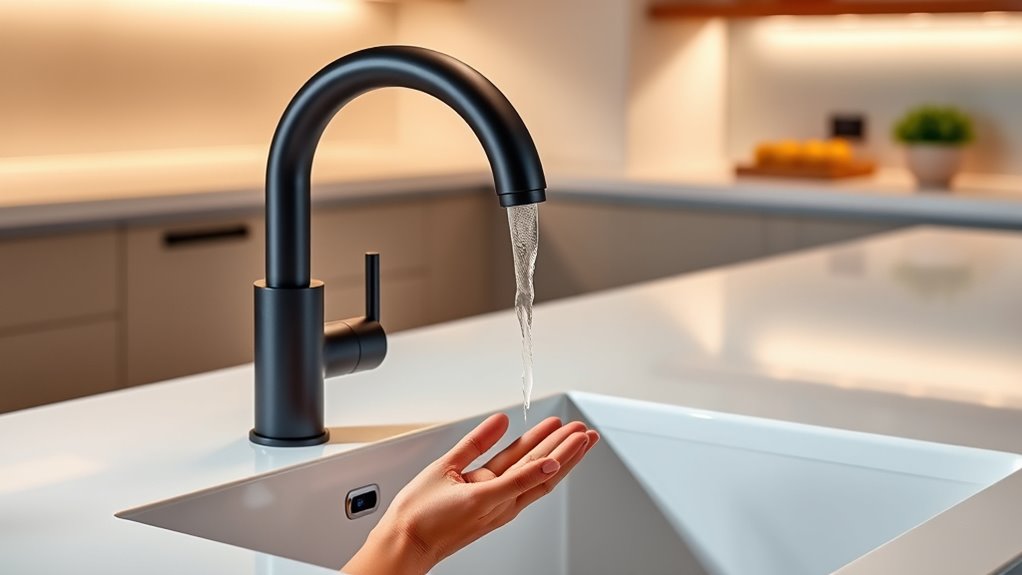

Smart faucets and sinks offer hands-free water control, making your kitchen more convenient and hygienic. With sensor-based operation, you can easily turn water on and off without touching fixtures, reducing water waste and germs. They also feature sleek designs and customizable settings for temperature and flow. Proper installation guarantees smooth function, and regular maintenance keeps them running efficiently. Keep exploring to discover how these innovative fixtures can transform your kitchen experience.
Key Takeaways
- Smart faucets enable hands-free operation through sensors, promoting hygiene and convenience in kitchen tasks.
- They help reduce water waste with precise flow control and motion-activated activation.
- Easy installation ensures compatibility with existing plumbing and network systems for seamless integration.
- Modern designs combine durability with aesthetic appeal, enhancing overall kitchen aesthetics.
- Regular maintenance and troubleshooting ensure reliable performance and maximize water-saving benefits.
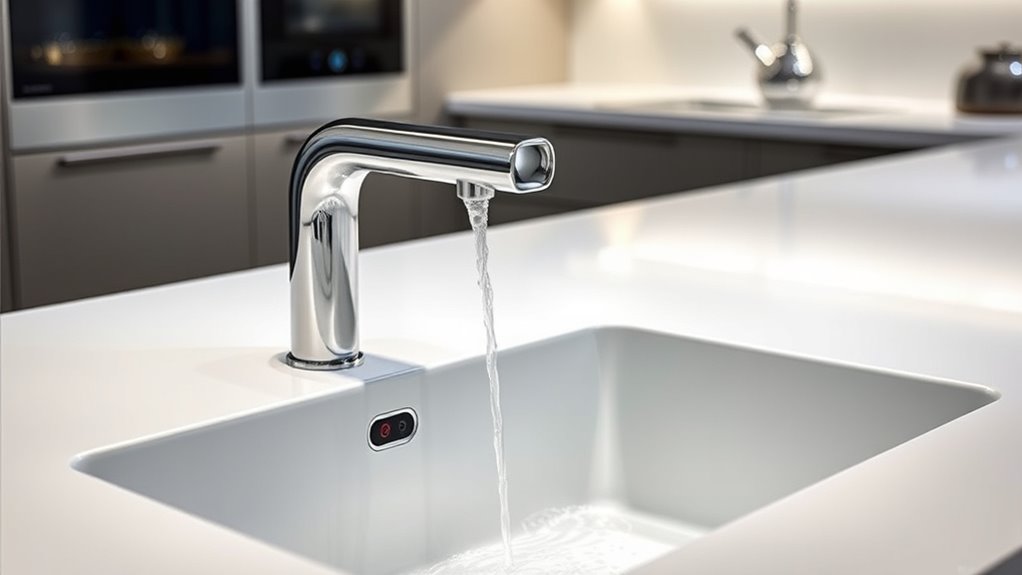
Have you ever wondered how your daily routine can become more convenient and eco-friendly? Smart faucets and sinks are revolutionizing the way you manage water in your kitchen, offering hands-free control that saves time and reduces waste. At the core of this transformation lies design innovation, which integrates advanced technology seamlessly into your everyday fixtures. These fixtures are designed not only to look sleek and modern but also to provide intuitive, touchless operation that minimizes contact and promotes better hygiene. When considering installing a smart faucet or sink, paying attention to installation tips can make a significant difference in ensuring everything functions smoothly.
First, it’s important to choose a model compatible with your existing plumbing and electrical setup. Many smart faucets operate via Bluetooth or Wi-Fi, so you’ll want to verify your home network’s strength and stability before installation. When installing, follow the manufacturer’s instructions carefully, paying close attention to the sensor placement. Proper sensor positioning ensures that the faucet responds accurately to your hand movements, preventing frustration and water wastage. Additionally, check the water pressure in your home; some smart faucets require a specific range to work correctly. If your pressure is too high or too low, you may need to adjust your home’s water pressure regulator to optimize performance.
Choose a compatible model, follow installation instructions carefully, and ensure proper sensor placement for optimal performance.
In terms of design innovation, look for features like customizable temperature controls, adjustable spray modes, and energy-efficient components. Many smart faucets come with preset programs that remember your preferred water temperature and flow settings, streamlining your routine. Some models even include LED indicators that display water temperature or filter status, adding convenience and safety. When selecting a sink to complement your smart faucet, consider the material and size—stainless steel is durable and easy to clean, while composite materials offer a sleek look. The integration of smart technology into the sink area should enhance your kitchen’s functionality without sacrificing style. Additionally, exploring smart home integration options can elevate your overall kitchen experience by allowing remote control and automation.
Finally, maintenance is key to keeping your smart fixtures operating smoothly. Regularly clean the sensors with a soft cloth to prevent buildup, and follow the manufacturer’s guidelines for software updates. If you experience any issues, troubleshooting tips often involve resetting the device or checking the power supply. Proper installation and consistent upkeep will ensure your smart faucet provides hands-free water control reliably, making your kitchen more efficient and eco-conscious. Embracing these innovations means you’re not just upgrading your fixtures—you’re adopting a smarter, greener way to manage water every day.
Frequently Asked Questions
Are Smart Faucets Compatible With All Plumbing Systems?
Not all smart faucets are compatible with every plumbing system. You need to check plumbing compatibility before buying, as some models may face installation challenges if your existing setup doesn’t meet specific requirements. It’s best to consult the manufacturer’s guidelines or a professional plumber to guarantee your system can support the smart faucet, preventing future issues and ensuring smooth installation.
How Secure Are the Voice Commands for Smart Sinks?
Did you know that 78% of smart device users worry about privacy concerns? Voice command security for smart sinks is generally strong, with encryption protecting your commands from being intercepted. However, it is crucial to stay updated on firmware and security patches. While the technology is designed to keep your privacy intact, always be cautious about sensitive information shared via voice commands to prevent potential vulnerabilities.
What Is the Typical Lifespan of a Smart Faucet?
A typical smart faucet lasts around 10 to 15 years, but durability concerns can vary based on usage and maintenance. You should regularly check for leaks or sensor issues, and clean the sensors to prevent malfunctions. Proper maintenance reduces wear and tear, extending the lifespan. Keep in mind that electronic components may need occasional updates or replacements, so staying attentive to performance helps guarantee your smart faucet stays reliable for years.
Can Smart Faucets Be Used Without an Internet Connection?
Yes, you can use smart faucets without an internet connection because many models offer offline functionality. You’ll still be able to control water flow using Bluetooth connectivity or manual controls. However, features like remote adjustments, software updates, or voice commands might require an internet connection. So, for everyday use, offline mode works well, but for full capabilities, keeping your smart faucet connected to the internet is recommended.
Are There Energy-Saving Features in Smart Sink Systems?
Think of your smart sink system as a vigilant guardian, always watching over your energy efficiency and water conservation. Yes, it often includes features like automatic shut-off and flow regulation that save water and reduce energy use. These smart features act like a steady stream of savings, helping you minimize waste and lower utility bills effortlessly, ensuring your kitchen runs as smoothly and sustainably as a well-oiled machine.
Conclusion
With smart faucets and sinks, you gain hands-free convenience that keeps your kitchen clean and efficient. Though they bring high-tech ease, they also remind you that simplicity can be revolutionary. In a world filled with gadgets, these smart solutions prove that sometimes, the best innovation is making everyday tasks effortless. So, embrace the future of kitchen technology—where modern convenience and timeless cleanliness come together seamlessly, transforming your space into a smarter, more hygienic haven.