An air fryer works by rapidly circulating hot air around your food with a powerful fan and heating element, usually made from materials like nichrome. This quick movement creates a crispy exterior similar to frying but uses considerably less oil. Precise temperature control ensures your food cooks evenly without hot spots or dryness. If you want to understand how these high-tech kitchen devices produce delicious, healthy results, there’s more to explore below.
Key Takeaways
- Air fryers use heating elements and a powerful fan to circulate hot air rapidly around food for even cooking.
- The rapid air movement promotes browning and crispiness through the Maillard reaction with less oil.
- Convection currents created by the fan ensure heat is evenly distributed, preventing hot spots.
- Precise temperature controls and proper airflow help achieve consistent, perfectly cooked, and crispy results.
- Modern features like smart technology and noise reduction enhance user experience and cooking efficiency.
The Basic Components of an Air Fryer
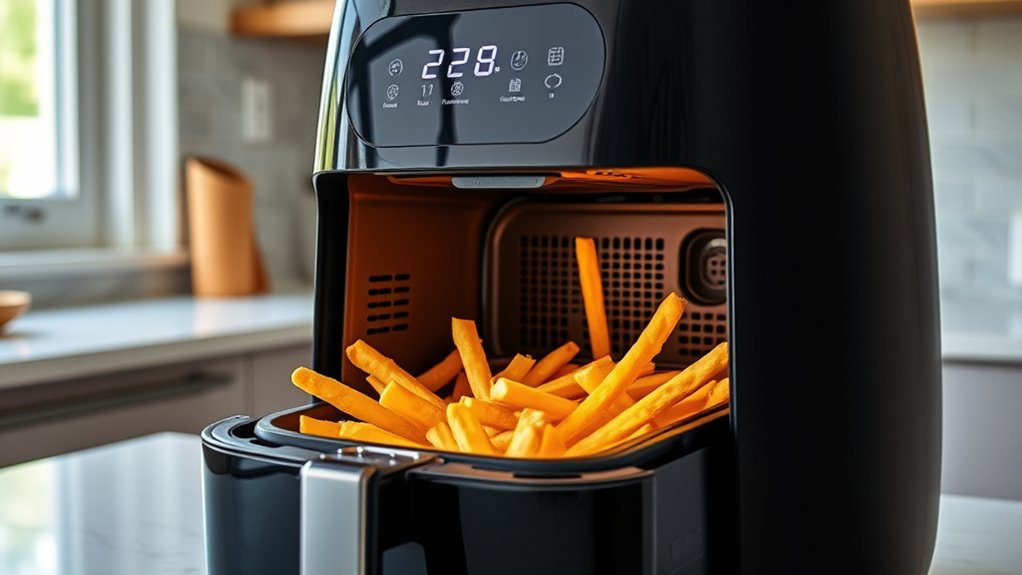
An air fryer is made up of several key components that work together to cook your food quickly and evenly. The air fryer design includes a heating element and a powerful fan that circulate hot air around your food. This rapid air circulation creates crispy textures without extra oil. The user interface is another essential part—it allows you to select cooking time, temperature, and preset modes easily. Modern designs feature digital touchscreens or simple dials, making operation straightforward. The cooking basket holds your food and fits into the main unit seamlessly. These components are built to optimize airflow, heat distribution, and user convenience. A well-designed air fryer also incorporates safety features to prevent overheating and ensure safe operation. Proper airflow management is critical for achieving consistent cooking results across different recipes. Understanding these core parts helps you appreciate how your air fryer delivers delicious, evenly cooked results every time. Additionally, temperature controls allow precise adjustments to match various cooking needs, enhancing the overall performance.
How Hot Air Circulation Creates Crispy Textures
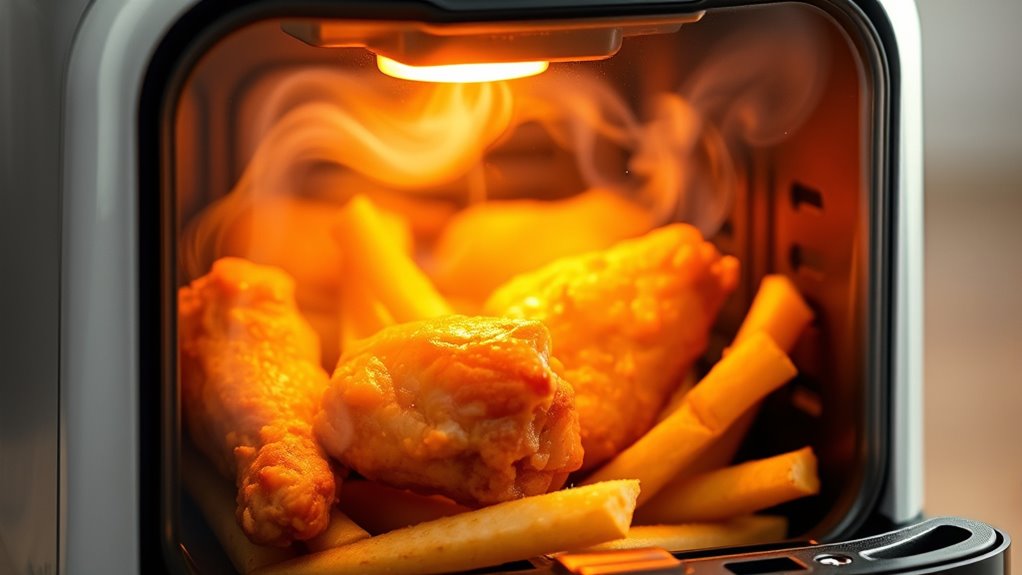
Hot air circulation is the key to achieving crispy textures in an air fryer. As the hot air moves rapidly around your food, it promotes a Maillard reaction, which creates a golden, crispy exterior. This process reduces oil absorption because you’re using little to no oil, helping your food stay healthier. Meanwhile, the fast-moving air also helps retain moisture inside the food, preventing it from drying out. The circulation guarantees even heat distribution, so every bite gets that satisfying crunch. By controlling airflow and temperature, the air fryer crisps your food without deep frying. Additionally, understanding the Free Floating nature of hot air can help optimize cooking efficiency. This combination of hot air movement, minimal oil, and moisture retention results in perfectly crispy, delicious dishes every time. Recognizing the airflow patterns can further enhance your cooking results and overall efficiency. Being aware of the air circulation dynamics can also help you troubleshoot uneven cooking or adjust settings for better texture. Mastering airflow control can lead to more precise and consistent culinary outcomes.
The Role of Heating Elements and Fans

Your air fryer uses a heating element to generate the high temperatures needed for cooking, while the fan circulates hot air evenly around your food. This combination guarantees that heat reaches all sides, creating that crispy exterior you love. Proper maintenance of the heating element ensures your air fryer performs efficiently and prolongs its lifespan. Additionally, the airflow created by the fan helps to distribute heat uniformly, preventing hot spots and uneven cooking.
Heating Element Mechanics
Heating elements are the core component responsible for generating the high temperatures needed to cook food evenly in an air fryer. Their design plays a vital role in how efficiently heat is produced and distributed. Typically, heating elements are made from materials like nichrome, which resist electrical flow and convert it into heat. The design, including shape and placement, ensures even heat distribution. Proper ventilation considerations are essential to ensure safety and optimal performance. When you turn on your air fryer, electricity flows through the circuitry, energizing the heating element. This process generates intense heat that, combined with fans, circulates hot air around your food. The air circulation system is critical for achieving consistent cooking results. The materials used in the heating element can affect the overall durability and efficiency of your appliance. Understanding the mechanics of these elements helps you appreciate how your air fryer cooks so quickly and evenly. Additionally, temperature control mechanisms are vital for maintaining precise heat levels during cooking, enhancing safety and performance. Proper heat distribution ensures that all parts of your food reach the desired temperature without overcooking or undercooking.
Air Circulation Process
When the air fryer is turned on, the heating elements quickly generate intense heat, but it’s the fans that guarantee this warmth reaches all parts of your food evenly. The fans circulate hot air rapidly around your ingredients, creating a convection effect that ensures consistent cooking. This process minimizes oil absorption, so your food gets crispy without excess grease. It also helps with flavor infusion, as the circulating air evenly distributes seasonings and marinades. By maintaining a steady airflow, the fans prevent hot spots and promote uniform browning. Proper airflow management is essential for achieving the desired crispiness and browning in your dishes. Additionally, the design of the airflow system is crucial for maintaining optimal temperature stability, which impacts cooking quality. The efficiency of this circulation directly affects cooking speed and energy consumption, making it an important factor in overall appliance performance. Well-designed airflow systems also contribute to the longevity of the appliance, as they reduce strain on the motor and heating elements. Overall, the combined action of heating elements and fans ensures your food cooks thoroughly, evenly, and with enhanced flavor.
The Process of Rapid Air Movement

Have you ever wondered how air fryers achieve that crispy texture so quickly? It all comes down to rapid air movement. When the heating element warms the air, a fan circulates it rapidly, creating powerful convection currents. These currents generate consistent, even heat around your food, promoting uniform cooking and crispiness. To understand this process better, consider:
- Air Circulation Speed: The high-speed fan accelerates air movement, reaching speeds that facilitate rapid heat transfer, which is essential for efficient cooking.
- Convection Currents: These currents help distribute hot air evenly, preventing hot spots and ensuring every part of your food cooks uniformly. The design of air fryers maximizes air flow efficiency to improve overall performance.
- Heat Transfer Efficiency: The swift air movement enhances heat transfer from the hot air to your food’s surface, resulting in that appealing crisp exterior.
- Enhanced Flavor Development: The rapid circulation also aids in browning and caramelization, enhancing the flavor of your dishes through Maillard reactions.
The Impact of Cooking Time and Temperature

The speed and uniformity of cooking in an air fryer heavily depend on setting the right time and temperature. Proper temperature control guarantees your food cooks evenly without burning or undercooking. If you set the temperature too high, you risk burning the outside while the inside remains raw. Conversely, too low a temperature can result in soggy or undercooked food. Cooking duration also plays a critical role; too short, and your food might be underdone, too long, and it could become dry or overcooked. Adjusting both temperature and time based on the recipe helps you achieve the perfect texture and flavor. Understanding heat distribution is essential for mastering air fryer cooking. Additionally, proper maintenance routines such as cleaning and inspecting your appliance help ensure consistent performance. Keep an eye on your settings and monitor your food to optimize results and enjoy crispy, evenly cooked dishes every time.
How Air Fryers Use Less Oil Than Traditional Frying
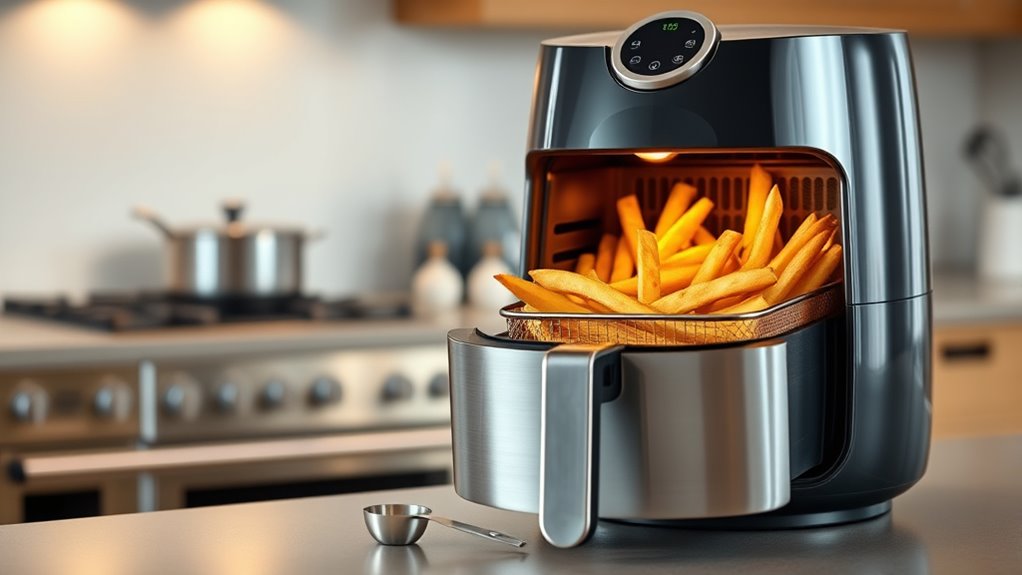
Air fryers achieve crispy textures with considerably less oil because they circulate hot air rapidly around your food, creating a frying effect without submerging it in oil. This design allows for significant oil reduction, making your meals healthier. Instead of immersing food, the hot air creates a crisp exterior through rapid movement and heat transfer. To understand how this promotes healthier frying, consider these points: 1. Minimal oil needed for browning and texture. 2. Reduced calorie intake compared to traditional frying. 3. Less fat absorption, lowering health risks associated with excess oil. Additionally, the use of innovative sustainable materials in some air fryer models reflects a shift toward environmentally conscious kitchen appliances.
The Science of Achieving Even Cooking

Achieving even cooking in an air fryer relies on precise hot air circulation that evenly transfers heat to all parts of your food. This process ensures consistent temperature distribution throughout, preventing undercooked or overcooked spots. Proper circulation also helps retain moisture within the food, keeping it tender and flavorful. When hot air moves uniformly around your ingredients, it promotes a balanced cook, crispy outsides, and juicy insides. The design of the air fryer’s fan and basket encourages this steady airflow, which minimizes temperature fluctuations. As a result, you get predictable results with less guesswork. Achieving this balance between heat and moisture retention is key to perfecting your dishes and enhancing the overall cooking experience with your air fryer.
Common Technologies in Modern Air Fryers
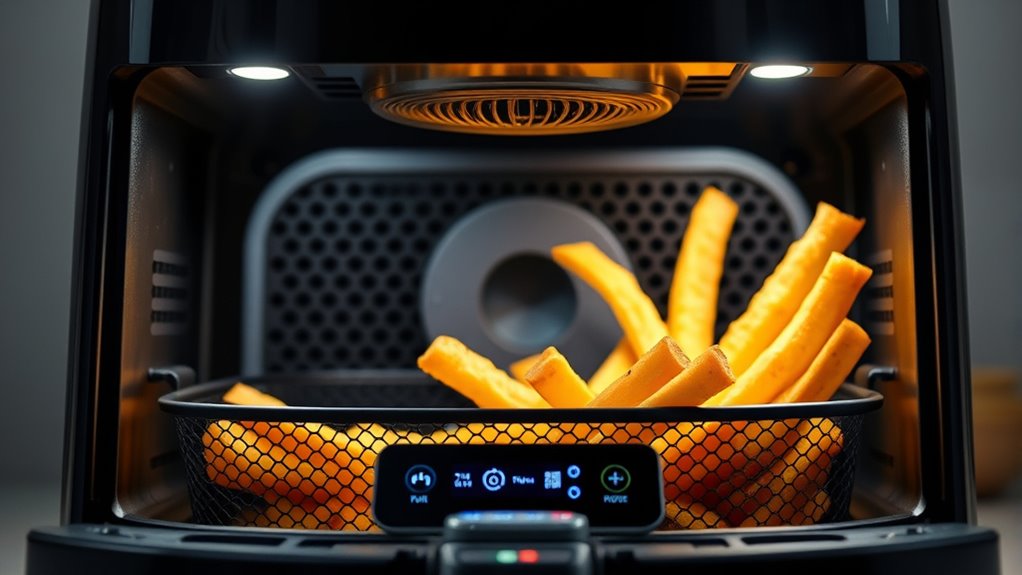
Modern air fryers incorporate a range of innovative technologies designed to optimize cooking performance and convenience. These features enhance flavor infusion, improve noise levels, and streamline operation.
- Rapid Air Circulation: This technology circulates hot air quickly around your food, creating a crispy exterior without excess oil, which helps with flavor infusion and even cooking.
- Noise-Reducing Fans: Advanced fans operate more quietly, making your cooking experience more peaceful while maintaining effective heat distribution.
- Smart Heating Elements: Precise temperature controls ensure consistent results and better flavor infusion, while also reducing unnecessary noise and energy use.
Together, these technologies make modern air fryers more efficient, quieter, and capable of delivering perfectly flavored dishes every time.
Tips for Maximizing Your Air Frying Results

To get the most out of your air fryer, it’s essential to understand how to use it effectively. Start with seasoning tips: toss your ingredients with a light coat of oil and your favorite spices for better flavor and crispiness. Don’t overcrowd the basket; leaving space allows hot air to circulate evenly. For even cooking, shake or turn food halfway through. Keep your appliance clean with simple cleaning tricks—wipe down the basket and interior after each use to prevent buildup that can affect results. Regularly check and replace the non-stick coating if needed. Proper seasoning and maintenance ensure your air fryer performs at its best, delivering crispy, delicious dishes every time.
Frequently Asked Questions
Can All Foods Be Cooked in an Air Fryer Effectively?
You can’t cook all foods effectively in an air fryer, but it’s a handy tool. Remember, “you are what you eat,” so choosing the right foods matters. Some foods, like crispy fries or chicken wings, shine in texture and cook quickly, while others with delicate textures or high moisture content may not turn out as well. Adjust cooking times accordingly, and experiment to find what works best for each dish.
How Does an Air Fryer Differ From Convection Ovens?
An air fryer differs from a convection oven mainly in size and design. You get faster cooking because of its compact size, and it uses rapid air circulation for heat distribution, which crisps food more evenly. While both appliances use similar technology, an air fryer is typically more energy-efficient and heats up quicker. You’ll notice that the air fryer’s small chamber enhances circulation, resulting in crunchier textures and shorter cooking times.
Are There Safety Concerns When Using an Air Fryer?
You should be aware of safety concerns when using an air fryer, like potential fire hazards if you leave it unattended or block airflow. To avoid electric shock, always unplug it before cleaning and make sure your hands are dry. Keep flammable materials away, and don’t overfill the basket. With proper precautions, you can enjoy healthy, crispy meals without worries about fire risks or electric shocks.
What Maintenance Is Required to Keep an Air Fryer Functioning Well?
To keep your air fryer working well, follow regular cleaning routines by washing the basket and tray after each use. You should also inspect components like the heating element and fan periodically for grease buildup or damage. Avoid using abrasive cleaners, and make certain all parts are dry before reassembling. Proper maintenance prevents malfunctions, extends the appliance’s lifespan, and keeps your cooking safe and efficient.
Can I Cook Frozen Foods Directly in an Air Fryer?
Yes, you can cook frozen foods directly in an air fryer, making frozen food preparation quick and easy. Just set the temperature and time according to the package instructions, then shake or flip halfway through for even cooking. This air fryer convenience lets you enjoy crispy, delicious meals without thawing, saving time and effort. Keep an eye on your food to prevent overcooking, and enjoy perfectly cooked frozen snacks or meals every time.
Conclusion
Now that you understand how air fryers work, you’re ready to reveal their full potential. But there’s more beneath the surface—hidden features and advanced tech that could transform your cooking even further. Will your next batch turn out perfectly crispy? Or will a small tweak make all the difference? Stay curious, experiment boldly, and discover how this kitchen marvel can truly elevate your culinary game in unexpected ways. The secret’s just beginning to unfold.