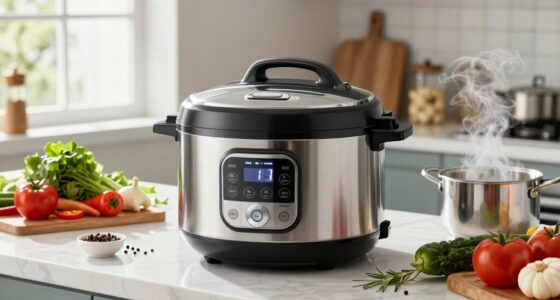
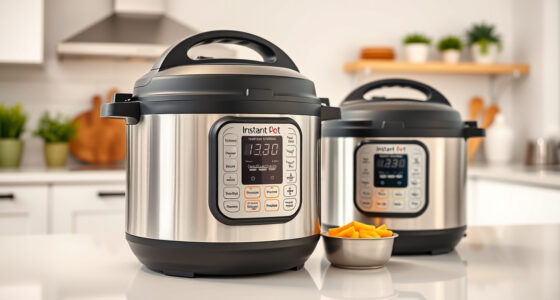
When you get a new Instant Pot, doing the water test first is vital to guarantee it functions safely and correctly. It helps verify that the sealing ring, pressure release valve, and lid work properly, preventing leaks or malfunctions during actual cooking. This test also familiarizes you with the appliance’s sounds and responses. Conducting it promptly allows you to catch any issues early, giving you confidence to start cooking amazing meals. Keep going to learn the step-by-step process.

Get kitchen gear delivered free — and shop member deals
- Fast, free delivery on millions of items
- Access to Prime Big Deal Days deals on October 6–7
- Prime Video, Amazon Music and more included
Key Takeaways
- It verifies the Instant Pot’s proper functioning before first use, ensuring safety and reliability.
- The test checks the sealing ring and pressure release mechanisms for potential issues.
- Performing a water test helps you understand the appliance’s sounds and responses.
- It identifies and addresses any malfunctions early, preventing future cooking mishaps.
- Completing the test builds confidence in operating your Instant Pot safely and effectively.

Performing an Instant Pot water test is an essential step before using your new appliance for the first time. It helps ensure everything is functioning properly and that you’re familiar with how it operates. The water test also allows you to verify the sealing ring’s fit and check the pressure release mechanism, which are vital for safe and effective cooking. When you start the test, fill the inner pot with about 2 cups of water, making sure not to exceed the maximum fill line. Lock the lid into place securely, ensuring the sealing ring is properly seated around the lid’s edge. The sealing ring plays a vital role in creating the airtight environment needed for pressure cooking, so double-check that it’s correctly positioned and free of any debris or wrinkles. If it’s misplaced or damaged, it could cause steam to escape or prevent the pot from reaching the proper pressure.
Once everything is in place, select the ‘Steam’ function or set the manual pressure cooking mode for a few minutes, depending on your model. As the Instant Pot heats up, you’ll notice the pressure building inside. This is when the pressure release valve, usually located on top of the lid, becomes active. During the test, you want to observe how the pressure release works—some models have a float valve that rises as pressure builds, and others have a dedicated pressure release button or valve. Make sure the pressure release mechanism is functioning correctly and that you can manually release pressure when needed. This step is crucial for safety, so you’re comfortable with the process before actual cooking. Additionally, understanding the pressure buildup and release process can help prevent accidents and ensure optimal performance.
After the cooking cycle completes, allow the pressure to release naturally or perform a quick release by carefully turning the pressure release valve. If steam escapes smoothly and the lid unlocks easily afterward, that indicates your pressure release setup is working properly. If you notice any hissing, steam leaks, or difficulty releasing pressure, stop and inspect the sealing ring and valve for obstructions or damage. Performing this water test helps you identify potential problems early, preventing mishaps during regular use. It also familiarizes you with the sounds and responses of your Instant Pot, so you’re confident operating it in the future. Taking these precautions ensures your appliance is safe, ready, and capable of delivering delicious meals without unexpected issues.
Frequently Asked Questions
How Often Should I Perform the Water Test?
You should perform the water test whenever you use your Instant Pot for the first time or after any troubleshooting steps. Typically, doing it once during initial setup and occasionally afterward helps guarantee proper functioning. If you notice issues like leaks or pressure problems, repeat the test to verify everything’s working correctly. Regular water tests keep your appliance safe and in excellent condition, especially if you don’t use it frequently.
Can I Skip the Water Test With a New Instant Pot?
You shouldn’t skip the water test with a new Instant Pot, as it’s vital for proper calibration and safety precautions. Doing the test ensures the device heats correctly, maintains accurate pressure, and prevents potential malfunctions. Skipping it could lead to inaccurate cooking times or safety issues. Always follow the manufacturer’s instructions to verify your Instant Pot’s calibration and guarantee safe, reliable operation from the start.
What if My Instant Pot Doesn’T Pass the Water Test?
If your Instant Pot doesn’t pass the water test, stop using it immediately. You need to contact the manufacturer for troubleshooting, repair, or replacement under the Instant Pot warranty. Don’t ignore cooking safety; a failed test indicates potential issues with sealing or pressure regulation. Address the problem promptly to guarantee safe operation, protect your investment, and maintain peace of mind during future cooking sessions.
Is the Water Test Necessary for All Instant Pot Models?
Yes, performing the water test is necessary for all Instant Pot models. It’s a vital safety precaution and troubleshooting step that helps guarantee your device functions properly before cooking. By doing this, you can identify any issues early, prevent potential malfunctions, and confirm the seals and valves work correctly. Always follow the manufacturer’s instructions for your specific model to keep safe and avoid problems down the line.
How Long Does the Water Test Take to Complete?
The water test usually takes about 10 to 15 minutes to complete. You should expect the test completion time to include the time it takes for the Instant Pot to heat up, cook, and then release pressure naturally. Keep in mind, the exact water test duration may vary slightly depending on your specific model. During this process, you’ll see the display indicating when the test has finished, so stay attentive.
Conclusion
Think of the water test as your Instant Pot’s secret handshake—a simple step that releases smooth cooking adventures ahead. When you do it right, you’re setting the stage for culinary magic, ensuring every dish turns out just right. Skipping it is like sailing without a compass—risky and unpredictable. So, take a moment, run that water test, and let your Instant Pot be your trusty ship on a flavorful voyage. Happy cooking!
Evergreen bestsellers Picks
bestsellers
As an affiliate, we earn on qualifying purchases.