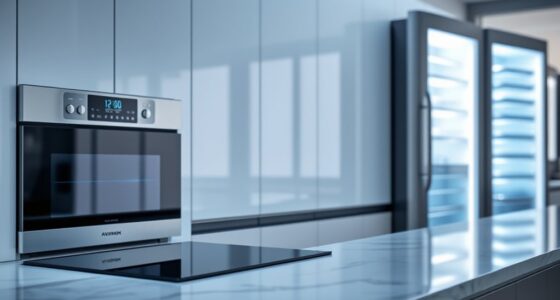
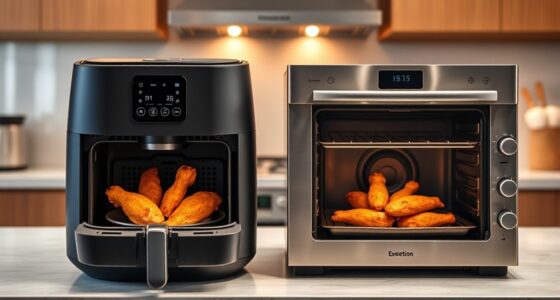
Smart appliances tend to last longer than dumb ones because they constantly monitor their performance, detect issues early, and optimize energy use to prevent damage. They perform preventive maintenance and have safety features that reduce wear and tear on components. This proactive approach minimizes breakdowns and extends their lifespan. If you want to understand how these features work together to make smart appliances more durable, there’s more to discover below.
Key Takeaways
- Smart appliances monitor performance continuously, detecting issues early and preventing damage, which extends their lifespan.
- They optimize energy use to reduce stress on components, minimizing wear and tear over time.
- Built-in diagnostics and alerts facilitate proactive maintenance, decreasing the likelihood of failures.
- Proper use and maintenance are encouraged through automation and remote monitoring, promoting longer appliance durability.
- Traditional appliances lack real-time feedback, increasing the risk of unnoticed issues and shorter overall lifespan.
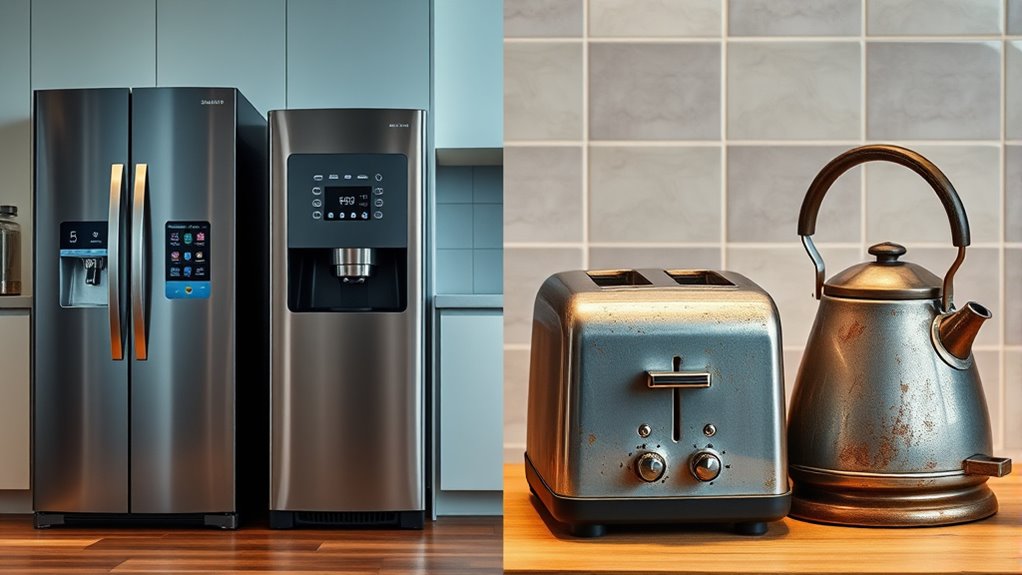
Have you ever wondered whether investing in smart appliances is worth it compared to traditional, dumb appliances? The answer often depends on what you value most—cost, convenience, or longevity. When it comes to durability, smart appliances tend to last longer, and a key reason is their focus on energy efficiency and user convenience. These features aren’t just about making your life easier—they also contribute to the appliance’s overall lifespan. Smart appliances are designed with advanced sensors and software that monitor their performance continuously. This proactive approach helps identify issues early, preventing small problems from turning into major breakdowns. For example, a smart washing machine can detect imbalances or mechanical issues before they cause damage, prompting you to take action or alerting you through an app. This constant monitoring reduces the strain on components, potentially extending the appliance’s longevity.
Furthermore, the energy efficiency of smart appliances plays a significant role in their durability. By optimizing energy consumption, these appliances operate more smoothly and experience less wear and tear over time. They adjust their power usage based on load size, cycle duration, and other factors, which means they don’t overwork themselves. Traditional appliances, on the other hand, often run at a fixed capacity, regardless of real-time needs, leading to unnecessary stress on parts and a higher likelihood of early failure. This energy-conscious operation helps prevent overheating and reduces the strain on motors and other critical parts, ultimately prolonging their life. Additionally, smart appliances often incorporate advanced diagnostics, which allow for more precise maintenance and troubleshooting, further enhancing their durability.
User convenience is another critical aspect that influences the longevity of smart appliances. The ease of use encourages proper maintenance and timely interventions. With features like remote diagnostics, alerts, and automation, you’re more likely to spot issues early and address them before they cause significant damage. This proactive approach minimizes downtime and extends the appliance’s usable life. Plus, smart appliances often have built-in safety features, such as automatic shut-offs or error detection, which protect internal components from damage caused by misuse or faults.
In contrast, dumb appliances rely heavily on manual operation and lack monitoring systems. Without real-time feedback, small problems can go unnoticed until they become serious, reducing their lifespan. They also tend to operate in a more fixed manner, which can lead to unnecessary stress and faster wear. Overall, while smart appliances might come with a higher upfront cost, their focus on energy efficiency, user convenience, and advanced diagnostics often makes them more durable in the long run. They’re built to last longer because they’re better at preventing damage, operating efficiently, and encouraging proper maintenance—all factors that contribute to a longer lifespan compared to traditional appliances.
Frequently Asked Questions
How Do Maintenance Costs Compare Between Smart and Dumb Appliances?
You’ll find that maintenance costs are typically higher for smart appliances because of their complex electronics and software updates. The cost comparison shows they often require more frequent maintenance, like software troubleshooting or replacing sensors, which increases expenses over time. Dumb appliances, on the other hand, usually need less maintenance and have lower costs because they lack advanced features, making them easier and cheaper to keep in good working order.
Are Smart Appliances More Prone to Technical Failures?
Smart appliances are more prone to technical failures like a delicate teeter-totter. They depend on software updates, which can introduce bugs, and user error, such as incorrect setup or handling. Unlike simple dumb appliances, smart devices have more complex components that can malfunction. You should stay vigilant with updates and handle them carefully, or you risk more frequent failures. Proper maintenance helps guarantee they last longer.
Can Dumb Appliances Be Upgraded to Smart Technology Later?
Yes, you can upgrade dumb appliances to smart technology later. The upgrade potential depends on retrofit feasibility; some appliances are designed with compatibility in mind, making it easier to add smart features. However, not all models support retrofitting, so you should check your appliance’s compatibility before attempting upgrades. If feasible, upgrading can extend your appliance’s functionality and lifespan, giving you more control and convenience.
Which Appliance Type Has a Lower Environmental Impact Over Time?
You’ll find that dumb appliances generally have a lower environmental impact over time because they’re more energy-efficient and easier to repair. Since they lack complex electronics, they consume less power and are simpler to fix, extending their lifespan. Smart appliances, while innovative, often involve higher repair complexity and energy use due to advanced technology. So, if reducing your environmental footprint is your goal, sticking with dumb appliances is usually the better choice.
Do Smart Appliances Have Longer Warranty Periods?
Think of smart appliances as having a safety net woven with warranty extensions and stronger consumer protections. They generally come with longer warranties because manufacturers see them as more advanced and worth safeguarding. This means you’re better protected against malfunctions. By choosing smart, you’re investing not only in innovation but also in peace of mind, knowing your device is backed by extensive warranty coverage that can last longer than traditional appliances.
Conclusion
In the battle of smart versus dumb appliances, one thing’s crystal clear—you’ll want the one that lasts a lifetime, not just a few years. Dumb appliances might seem old-fashioned, but they’re tough as nails and won’t leave you stranded in the middle of a crisis. If you’re serious about avoiding costly repairs and endless upgrades, choose durability over gimmicks. Trust me, your future self will thank you for sticking with the tried-and-true—because nothing beats the reliability of good old-fashioned appliances.